
Sign up to save your podcasts
Or



Whispering in Donald Trump's ear is no easy task: just ask Emmanuel Macron. Despite Monday's "broshakes", flattery and mild reproaches, the US still sided with Russia and North Korea on Ukraine at the UN. Maybe one meeting wasn’t enough. Now it's Keir Starmer's turn, and his job might be even tougher. Trump prefers presidents and kings, and post-Brexit Britain is in a tighter financial bind than even deficit-happy France. In a sign of the times, the British prime minister is proposing to fund increased defence spending by cutting international aid.
Keir Starmer is taking a sober approach, stressing that a US backstop remains crucial for European defence. But do citizens on either side of the Channel have the appetite to pay more for security amid warming ties between Trump and Putin? And how will the next visitor to the Oval Office fare?
That will be Volodymyr Zelensky, who the US has told to sign on the dotted line for a minerals deal with Washington on Friday. What exactly the Ukrainian president will get in exchange remains unclear.
Produced by François Picard, Rebecca Gnignati, Guillaume Gougeon and Ilayda Habip.
Can Syria keep its promises? After the fall of Bashar al-Assad last December, the new rulers of Damascus are convening a one-day national dialogue conference. On paper, the outcomes sound promising: transitional justice, inclusive democracy and the disarmament of the country’s numerous militias in favour of a unified national army. In practice, it’s far more complicated. The US-backed Syrian Kurds in the north feel excluded and have no intention of surrendering their weapons while they continue to fight both IS group remnants and Turkey-backed militias.
Integrating them, while also building trust with the Islamist-led factions that brought Ahmed al-Shaara to power, won’t happen overnight.
We explore how this can be achieved and how far the West is willing to go, now that the EU has lifted sanctions. With Israel's ongoing air strikes and its demands for Syria’s military to retreat from the Golan Heights, how can the international community support lasting stability and peace in a country that desperately seeks it?
Produced by François Picard, Rebecca Gnignati, Guillaume Gougeon and Ilayda Habip.
Amid armed conflicts, a climate emergency and the disruptions of the digital age, now comes another layer of uncertainty to worry about. Since Monday, nightly rosary prayers have been taking place in Saint Peter's Square as pilgrims pray for an 88-year old pope who's in hospital for the fourth time. We ask about Francis's health and what change at the top would mean inside the world's largest religious institution, one that doubles as a state recognised by 177 nations.
The first Argentinian pope has championed the rights of migrants and minorities, most recently even publicly clashing with a new US vice president who's a convert to Catholicism. Will Francis's successor be a reformer or a conservative?
More broadly, can 1.7 billion faithful find common ground in an age where bitter culture wars go beyond any one religion? How does the Catholic Church evolve? What lies ahead?
Produced by Rebecca Grignati, Ilayda Habib, Elisa Amiri and Aurore Laborie.
There's no hitting the snooze button on this wake-up call. Germany’s chancellor-in-waiting is savouring victory in Sunday’s federal elections while taking stock of what he faces: with the Putin and Trump-backed far right finishing a strong second, Friedrich Merz is stating that his country and continent can no longer rely on the United States for their defence.
Merz is stepping out of the shadow of the woman who in a previous life beat him to the CDU's leadership. Back in her day, Angela Merkel tried the soft touch on both Donald Trump and Vladimir Putin. We ask what's changed since.
On the third anniversary of Putin's all-out invasion of Ukraine, the French president is in Washington for one last try at keeping the US on side, while leading the push for European strategic autonomy. Are we at a turning point for European defence?
Produced by Rebecca Gnignati, Elisa Amiri, Ilayda Habip.
Sunday's crunch elections in Germany are coming at perhaps the most pivotal moment since the fall of the Berlin Wall. Back then, it was about making a success of reunification. Now comes a reckoning over the German model that ensued. Under threat is the kind of global free trade that powers Germany's export-driven economy. Instead we're seeing Donald Trump's tariffs, a Russian aggression that's inching closer in not-so-far-off Ukraine and an ageing population that needs to replenish its workforce, but doesn't want more migrants.
Seizing on the mood of a nation in recession is the far-right AfD, which polls suggest could finish second behind the Christian Democrats. With the US vice president last Friday passing up a chance to meet the incumbent centre-left chancellor Olaf Scholz, instead seeing AfD leader Alice Weidel on the sidelines of the Munich Security Conference, voters are wondering if the usual warnings of foreign election meddling concern this time the United States more than usual suspect Russia.
The pressure is on in a nation where lead candidates know they that can't bash their rivals too hard. After all, they know that come Monday morning when the ballots are counted, they might have to call them for coalition-building. Could this election be different? If so, how?
Produced by Rebecca Gnignati, Elisa Amiri, Ilayda Habip.
Watch moreA model in crisis: Germans head to polls amid economic downturn
Does the United States already face a constitutional crisis? At what point does a president’s "rule by decree" manner of governing take a centuries-old democracy into unchartered territory?
After one month back in office, the executive orders keep on coming. One of Donald Trump's latest states that only he and his attorney general – what we call here the US justice minister – can interpret what the law is for government bodies, even independent ones. Is the White House breaking down the firewall with the Federal Reserve, guarantor of the US dollar? What about a right to control oversight bodies like Wall Street's watchdog, the Securities and Exchange Commission?
Those who still have faith in the system insist that in the end, the courts will reject whatever's unconstitutional. But what if this White House ignores the courts? What if there is no effective pushback from lawmakers, who under the constitution still hold the power of the purse?
Trump has already pushed new boundaries by bringing in an unvetted private citizen to take an axe to what Elon Musk deems wasteful spending. For democracy to die, what if there is no need for a referendum or another January 6? What if all it takes is cherry-picking which laws you decide to enforce and which institutions you decide to dismantle?
Produced by Rebecca Gnignati, Aurore Laborie, Elisa Amiri, Ilayda Habip.
Three years after Vladimir Putin's full-scale invasion of a sovereign state, what has he gained? The answer seems to be a path to normalisation with the United States and negotiations on Ukraine – without the Ukrainians or the Europeans. Instead, Donald Trump is sending his secretary of state and national security advisor to Saudi Arabia, along with fellow New York real estate mogul Steve Witkoff, who has swiftly pivoted into a Middle East envoy role.
Meanwhile, Brussels is a long way from Riyadh. So why is retired General Keith Kellogg – touted as Trump's steady hand on Ukraine – meeting with EU leaders instead of leading the negotiations? We examine what lies at the heart of this potential deal with Putin. We also assess how far European powers progressed at Monday's emergency summit in Paris, hastily convened after US Vice President JD Vance delivered a stark warning to allies at the Munich Security Conference over the weekend. How much leverage do Europe and the Ukrainians have when the continent's main security guarantor seems more inclined to talk to Moscow?
Produced by François Picard, Rebecca Gnignati, Guillaume Gougeon and Ilayda Habip.
European leaders are meeting in Paris for emergency talks on Ukraine, following last week's call between US President Donald Trump and his Russian counterpart Vladimir Putin. With NATO's most powerful member sidelining its allies in negotiations with Russia, is the US still a reliable partner?
As the Trump administration follows through on its promise to engage with Moscow on its own terms, European leaders are scrambling to support Ukraine and rethink their defence strategy. We discuss the fallout from the Munich Security Conference, where the US vice president warned Europe that Washington would act unilaterally and criticised Germany's ruling party for refusing to govern with a far-right faction ahead of next Sunday's election.
We also examine Europe's military capabilities and deterrence. During the Cold War, that meant nuclear weapons. France and the UK have them, but is it enough to give Moscow pause?
Produced by François Picard, Alessandro Xenos, Guillaume Gougeon and Ilayda Habip.
How about that phone call? The US president has gone over the heads of the Ukrainians and the Europeans by promising talks "immediately" with Vladimir Putin, this on the same day that his new defence secretary told NATO counterparts that returning to Ukraine's borders of 2014 was "unrealistic". Donald Trump may not have forced a sit-down on Day One of his presidency, as he had boasted as a candidate, but here it comes.
What can Volodymyr Zelensky do or say as he meets in person with Pete Hegseth, Vice President JD Vance and Secretary of State Marco Rubio on the sidelines of the Munich Security Conference? The likes of France insist they'll continue to honour bilateral security agreements with Ukraine – with or without the United States.
But by keeping out Russia's neighbours in Europe, is this the beginning of the end of the NATO alliance that kept the peace on the continent throughout the Cold War? With Trump wanting the Europeans to finance Ukraine's reconstruction, what do they ask for in return? What leverage do they have?
Produced by Rebecca Gnignati, Juliette Laffont, Elisa Amiri, Ilayda Habip.
Remember the run-up to Inauguration Day in the US, when Donald Trump's envoy twisted arms to push a Gaza ceasefire over the line? How did we so quickly go to Trump not only doubling down on his plan to forcibly deport the entire Palestinian population of Gaza, but also telling visitors like the king of Jordan to take them in? We ask about the plan, the pushback to the plan and the whether that ultimatum to Hamas to free all its hostages by Saturday noon signals a return to all-out war. Israeli troops are certainly preparing.
More broadly, how much does Trump want to own this conflict? After all, this is a US president known for campaigning against forever wars. Already it seemed like Bashar al-Assad’s fall in Syria might signify a once-in-a-generation reshaping of the region's balance of power.
But now, what to make of the Trump factor?
Produced by Rebecca Gnignati, Juliette Laffont, Elisa Amiri, Ilayda Habip.
From the publisher's feed
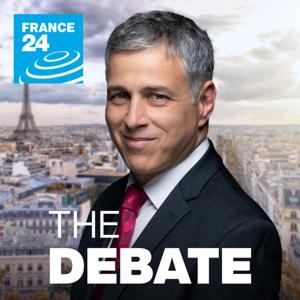
A live debate on the topic of the day, with four guests. From Monday to Thursday at 7:10pm Paris time.

7,580 Listeners

10,709 Listeners

3,369 Listeners

762 Listeners

1,046 Listeners
1,024 Listeners

1,802 Listeners
348 Listeners

4 Listeners
0 Listeners
0 Listeners
2 Listeners
1 Listeners

21 Listeners

181 Listeners

5 Listeners

0 Listeners

4 Listeners
6 Listeners
5 Listeners
39 Listeners

815 Listeners
3 Listeners
4 Listeners

5 Listeners

1 Listeners

16,143 Listeners

0 Listeners
0 Listeners

361 Listeners

0 Listeners

476 Listeners

378 Listeners