
Sign up to save your podcasts
Or



The seven-week wait is finally over. Succeeding France's youngest prime minister of the past century is its oldest yet: Michel Barner. President Macron on Thursday appointed the Brussels veteran to try and form a government that can survive a vote of no confidence. The EU's former Brexit negotiator will now have to muster all his negotiating savvy.
Macron's gamble on snap elections delivered the most splintered parliament since the Fifth Republic while appointing a new Gaullist PM whose party finished fifth. That begs the broader question: Who has got the legitimacy to govern? And with what mandate after those elections?
General de Gaulle introduced the 1958 Constitution which granted more powers to sitting presidents, allowing them to weigh on policy despite lacking a majority in government. How much power does Macron still have now that he has shown his hand and played his cards?
Produced by Alessandro Xenos, Rebecca Gnignati and Juliette Brown.
First the arrest of Telegram founder Pavel Durov, now the ban on Twitter in Brazil. After years of making outrage and tribalism their business model, are tech titans getting their comeuppance? In this edition, we ask about the almighty showdown between the billionaire owner of the social media platform now known as X and the chief justice of Brazil’s Supreme Court who has extended the ban to VPN systems that try to flout the ruling.
Alexander de Moraes just notched up an important win, what with Musk’s Starlink satellite system relenting on initial plans to defy the Twitter ban. There’s the broader question of how to make a digital public square that extends beyond echo chambers without peddling hate and disinformation.
Musk’s own timeline has become the bullhorn of a billionaire tycoon who opposes taxes and immigrants. Donald Trump’s now promised him a role auditing the US government if the Republican nominee wins in November. In an age where so much wealth is concentrated in the hands of so few, what are the limits to one man’s powers?
Produced by Alessandro Xenos, Rebecca Gnignati and Juliette Brown.
Are the gloves off in Israel? After the October 7th attack by Hamas, the nation put aside bitter differences. But after the killing of six Israeli hostages, cue the biggest protests since last year’s attempted judicial overhaul by Binyamin Netanyahu’s hard right government. Demonstrators accuse the prime minister of piling on demands to extend a war that has become his ticket to staying in power.
Netanyahu is doubling down on his decision to now prioritise the occupation of the Philadelphi corridor between Gaza and Egypt, while pushing back against growing pressure from allies. He has also called the UK’s decision to suspend certain arms exports licenses to Israel "shameful". What is the plan in London and Washington?
What is the plan for Netanyahu? Can he lead a divided nation in a war that is also involving the West Bank and the Lebanese border? With all the protests, does Netanyahu he still have the support to keep going?
Produced by Alessandro Xenos, Rebecca Gnignati and Juliette Brown.
Thuringia may represent just two percent of Germany's population, but the eastern state is hardly an outlier. The far right finished first in Sunday's regional elections, while also surging in nearby Saxony. Admittedly, the AfD, whose lead candidate Björn Höcke was twice fined this year for using Nazi-era slogans at rallies, will not be in government.
It is precisely with the Nazis in mind that Germany hard-baked moderation and compromise into its federal system. Still, how will these results impact policy both in both Berlin and Brussels?
There is another layer of Germany’s past evoked with these elections: the sudden inroads made by anti-immigrant left-wing populist Sahra Wagenknecht, formerly of the Communist-rooted Die Linke party. She's playing to a "make East Germany great again" sentiment among voters frustrated by Western-looking policymakers.
Both her BSW party and the AfD denounce military support for Ukraine and enjoy warm relations with Russia, where all the Cold War-era nostalgia can only be music to Vladimir Putin's ears.
Produced by Alessandro Xenos, Rebecca Gnignati and Juliette Brown.
At what point does the French president have to hand over the reins of power? It's business as usual on this last Thursday in August at the Élysée Palace for Emmanuel Macron, meeting the new British prime minister before jetting off to Serbia for an official visit. But it’s been nearly two months since his surprise gamble on snap elections backfired and he’s yet to name a new prime minister.
It's not easy to choose a head of government when parliament is now split three ways between the far right, a coalition of the left and those in between. In fact, it is unprecedented. In a nation that has not known coalition building since Charles de Gaulle changed the constitution back in 1958, how to pass an October budget through a splintered house?
Through it all, the French still went on summer vacation, the trains still ferried fans to the Olympics and Paralympics and parents and teachers still got ready for next week's first day back at school. But how long can the state of limbo last? When does France start to seem rudderless to the rest of Europe and when does it start to matter?
Produced by François Picard, Andrew Hilliar, Ilayda Habip, Meiqi An
What happens when summer turns to fall? After the slow and steady Russian gains in the Donbas comes the surprise Ukrainian counter-invasion in Kursk. Now come harrowing nights of bombings across Ukraine. What to expect when fall turns to winter?
This week has seen consecutive nights of bombings across Ukraine, most recently hitting Volodymyr Zelensky's hometown of Kryvyi Rih in the centre of the country.
Meanwhile, Ukraine is sending thousands of troops into the Kursk region, in what has quickly become the biggest invasion of Russian territory since World War II. It started as what seemed like an incursion on August 6.
After the Russian occupation of the Zaporizhzhia nuclear power plant in the opening days of the full-scale invasion back in 2022, another atomic facility is now in the news. The head of the UN nuclear watchdog is visiting Kurchatov, home to the Kursk nuclear power plant. The frontline is now 40 kilometres away.
Who has the upper hand now? Everything can seem frozen until it is not. What will tip the balance in the days, weeks and months ahead?
Produced by François Picard, Andrew Hilliar, Juilette Brown, Meiqi An
Could we be seeing a turning point for tech titans who reap huge profits for the "anything goes" content served up on their platforms? Free speech absolutists – including Elon Musk – are up in arms over the weekend arrest near Paris of the 39-year-old founder of Telegram. How strong is the case against the Russian-born Pavel Durov and his messaging app Telegram, which is popular among dissidents and pro-Putin milibloggers alike? Durov's detention comes as online hate speech and disinformation continues to spiral, as evidenced with the false narrative spun on social media during the UK's recent far-right riots.
Produced by Andrew Hilliar, Guillaume Gougeon, Juliette Brown and Ilayda Habip.
There is a paradox that is often forgotten: As the United States’ share of the global economy continues to grow, its tech giants rule the world, its culture reaches the whole planet, even where dictators try to put up firewalls. So is this the best its democracy can do? In these volatile times, citizens in the US have the choice between two aging men, one who stands charged with trying to overturn the 2020 election result, and the other whose fitness is doubted by many within his own camp.
We will ask about Joe Biden’s insistence on staying in the race and why it’s proving so hard to contemplate alternate scenarios.
Is it really too late? The last time, millions followed Donald Trump when he made good on his threat to challenge the result if he lost. What further erosion of trust in government? Here in France, snap elections with no clear winner are also testing institutions. Why do politics seem broken on both sides of the Atlantic?
Produced by Alessandro Xenos, Rebecca Gnignati and Juliette Brown.
World leaders meeting in Washington for the NATO summit were sold a show of strength celebrating the Alliance’s 75th anniversary. But beyond the photo ops, there is a feeding frenzy. The White House was swamped by questions over the fitness of a US president who is six years older than the defence and security pact that in those days bound together nations against the threat of Soviet expansion.
Long before Monday’s bombing of a children’s hospital in Kyiv, NATO leaders already knew they were coming up to decision time: whether to keep helping Ukraine defend itself or risk direct confrontation with Moscow by giving Volodymyr Zelensky the planes and missiles his country needs to take Vladimir Putin’s war to Russian soil.
With the US and France preoccupied with domestic politics, NATO’s has a crucial role to play this year with isolationist advocates on the march on both sides of the Atlantic.
Produced by Alessandro Xenos, Rebecca Gnignati and Juliette Brown.
The optics are startling. Russia bombed a children’s hospital in Kyiv while Hungary’s Viktor Orban, who currently holds the Council of the European Union’s rotating presidency, wrapped up a peace tour that included stops in Moscow and Baku before Beijing. At no point during his Kremlin visit did Orban denounce Vladimir Putin’s invasion of Ukraine nor display the EU flag.
Following France's legislative elections, Orban announced that his Fidesz party is joining forces with Marine Le Pen’s National Rally (RN) in the next European parliament. Their new voting bloc called Patriots for Europe is to be chaired by Le Pen’s lead candidate during the French elections – 28-year old Jordan Bardella. Will the RN stick to its newfound support for Ukraine? Will the duo supplant Italy’s Giorgia Meloni as the leader of the nationalist right in Europe?
After recent European elections, it is the start of a new term in Brussels. The last five years saw a pooling of resources in the fight against Covid, the first-ever mutualisation of debt among the 27 state members, the Green Deal, the emergence a common European defence strategy. As Orban and others travel to the NATO summit in Washington, what is in store for Europe the next five years?
Produced by Alessandro Xenos, Rebecca Gnignati and Juliette Brown.
From the publisher's feed
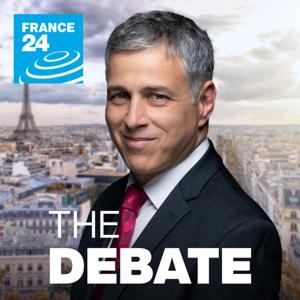
A live debate on the topic of the day, with four guests. From Monday to Thursday at 7:10pm Paris time.

7,580 Listeners

10,709 Listeners

3,369 Listeners

762 Listeners

1,046 Listeners
1,024 Listeners

1,802 Listeners
348 Listeners

4 Listeners
0 Listeners

0 Listeners
2 Listeners
1 Listeners

21 Listeners
181 Listeners

5 Listeners

0 Listeners
4 Listeners
6 Listeners
5 Listeners
39 Listeners

815 Listeners
3 Listeners
4 Listeners

5 Listeners
1 Listeners

16,143 Listeners

0 Listeners
0 Listeners

361 Listeners

0 Listeners

476 Listeners

378 Listeners