
Sign up to save your podcasts
Or



This time, the polls got it wrong. The French stared at the prospect of a far-right win and – despite the start of summer vacation – voted in their greatest numbers since 1981 to stop that populist surge. Instead, a left-wing alliance cobbled together three weeks ago after President Emmanuel Macron's shock dissolution of parliament now boasts the largest bloc.
But it is far, very far from an outright majority. With Marine Le Pen's National Rally hitting another record high in seats and the prospect of another snap election in 12 months if parliament remains stuck in three-way gridlock with the centre right, can the French do the unthinkable and be like the Germans?
That is to say: compromise, find creative solutions, build coalitions based on party platforms, not Bonapartist personality contests? Emmanuel Macron promised the snap elections would clarify France's political landscape.
Instead, with power back in the hands of parliament, politicians are going to have to draw the lessons from this tumultuous election cycle and address the grievances of an electorate that wants change.
Produced by Alessandro Xenos, Rebecca Gnignati and Juliette Brown.
The ink on the campaign posters barely had time to dry. Yet, France’s frenzied snap legislative election races are nearly over. President Macron hoped to clear the air with his shock dissolution of parliament but after the far-right’s unprecedented surge and so many unholy alliances and tactical withdrawals ahead of the runoffs, good luck predicting the makeup of the next National Assembly.
One certainty, Marine Le Pen’s National Rally will boast the most seats. But how many? How close or how far from an outright majority? After the highest turnout in decades in the first round, what will voters think of their options come Sunday? And who do they want to govern France?
Yes, the ballots will have been counted but the horse-trading will be far from over. Can a nation that historically prefers Bonapartist figureheads to Nordic-style policy compromises try its hand at grand coalitions or technocratic arbiters? Or should we brace ourselves for a whole new level of uncertainty?
Produced by Alessandro Xenos, Rebecca Gnignati and Juliette Brown.
While French voters ponder the temptation of the far right, across the Channel they are also campaigning. But there, it feels like the revenge of the moderates. Out with Little Britain Brexiteers, out with Jeremy Corbyn's hard left, in with a more genteel version of the Labour Party. Before 2016, Britain always seemed like that isle of temperance where the tabloid headlines screamed, but that was just a bit of fun to sell newspapers.
So what next for Brexit Britain… and the Conservatives, which have become the party of Rwanda deportation schemes for asylum seekers? Does it, too, swing back to the centre or double down?
If he wins by a predicted landslide, Labour leader Keir Starmer will have managed to capture the silent majority that's not radical. But for how long? With a platform that's light on specifics, he knows he cannot be all things to all people for long.
Produced by Alessandro Xenos, Rebecca Gnignati and Juliette Brown.
A sitting president who goes for it without reading the room. We could be talking about French President Emmanuel Macron's shock dissolution of parliament that this coming Sunday could usher in France's first far-right government since Nazi occupation. Or we could be talking about a floundering US President Joe Biden, who at 81 broke his campaign promise to only seek one term in office and who turned in a disastrously weak performance in last Thursday's debate with Donald Trump.
Will Biden persist? What is preventing Trump from returning to power through the ballot box in November?
More broadly, why are voters in 2024 ready to forgive or condone what happened in 2021? With Covid, the climate emergency and superpower tensions with China and Russia, Western thinkers had thought voters wanted to revert back to a strengthening of institutions and alliances.
Instead, familiar nativist figures who had been written off have come roaring back. Why? And what's stopping them?
Produced by Alessandro Xenos, Rebecca Gnignati and Juliette Brown.
It turns out the polls did get it right. One in three French voters chose the far right in Sunday’s first round of snap legislative elections, putting Marine Le Pen's party on the brink of power with an unprecedented score for an extreme party that's never before won in France through the ballot box. With one short week before the run-off, we ask why and what it will take for rivals to coalesce.
Politics indeed makes for strange bedfellows. With a 577-seat National Assembly, we ask just how hard it will be for old rivals to hold their noses and vote for each other in the more than 400 run-offs where the far right has a chance.
More broadly, what has changed in the two short years since the last parliament got voted in in the wake of President Emmanuel Macron's re-election? What consequences will his decision to dissolve said parliament have on France, Europe and beyond?
Produced by Alessandro Xenos, Rebecca Gnignati and Juliette Brown.
Don't blink, or you'll have missed the shortest electoral campaign in the history of France’s Fifth Republic. Will nineteen days of canvassing have moved the needle since Emmanuel Macron's surprise dissolution of parliament on the night of the European elections? Not according to polls. They suggest the president may regret his decision to clear the air. The far right has never been closer to power since the Nazi collaborator regime of Vichy.
An even shorter sprint starts on Sunday night at 8pm local time, when the polls close in the first round of voting. France's legislative elections are actually 577 individual races that feature a second round the following week. What alliances could we see? What are the chances of an outright majority for Marine Le Pen's National Rally?
What message do citizens of the European Union's second-largest economy really want to send for a national contest … with worldwide consequences?
Produced by Siobhan Silke, Rebecca Gnignati and Juliette Brown.
Many who read the polls might say 2024 seems like the year of living dangerously. No one is arguing about who's got the momentum, only four days out from snap legislative elections here in France and on the eve of the first presidential candidates' debate in the United States.
French voters can argue that they've tried all the others, so why not the far right? They also assume that Marine Le Pen's party will be less Eurosceptic once confronted with the hard reality of governing, like what has happened in Italy with Giorgia Meloni.
But how, then, to explain Donald Trump's brand of politics? He is not untested. On his watch, supporters tried to overturn the outgoing US president's electoral defeat by force on January 6, 2021. Why does he have the momentum?
President Emmanuel Macron has been blasted for gambling away his relative majority on a snap election that does not give citizens enough time to reflect. Americans will have had four long years to do so. In both cases, are the one-third of voters solidly behind illiberal parties bigger risk takers than Macron? Or do they feel that they have nothing to lose?
Produced by Aline Bottin, Rebecca Gnignati and Juliette Brown.
When Iran's ageing supreme leader is urging citizens to get out and vote, you can only guess that what's really at stake is turnout. We ask if there's more than meets the eye to a heavily-vetted presidential contest precipitated by last month's death of Ebrahim Raisi in a helicopter crash.
To stop Iran's sliding abstention rate, this time organisers allowed a candidate billed as a reformist to stand alongside five hardliners. They include regime heavyweights, each of whom – in the land that invented chess – has his own agenda and strategy.
So what kind of a snapshot will Friday's vote offer for an under-sanctions regime that's for now put a lid on the "Women, Life, Freedom" protests of 2022 and cosied up to sometimes rival Russia? How far does the showdown go with an Israel whose leadership wants to dial up the fighting with proxy militia Hezbollah in Lebanon, and a US that is – at least until that other election in November – trying to keep a lid on it all?
Produced by Alessandro Xenos, Elena Colonna, Rebecca Gnignati and Juliette Brown.
In the blink of an eye, France is already into the final days of campaigning; a speed-dating exercise that has got the far right more than ever knocking on the doors of power. Polls suggest that Emmanuel Macron's surprise decision to dissolve parliament just two weeks ago has not sparked a rethink. On the contrary, Marine Le Pen and Jordan Bardella continue to carry the momentum from their record tally at European elections earlier this month.
In fact, a full one-quarter of French voters told an Ipsos poll for the Financial Times that they trust the National Rally more on the economy than Emmanuel Macron's centrists or the left-wing alliance. Other than an unconstitutional pledge to reduce benefits and public services for immigrants, the party that once spooked voters with its now-defunct call to leave the euro still remains fuzzy on how it will pay for all its campaign promises. So why the leap of faith?
Under Macron, unemployment is down and foreign investment is up. But a soaring cost-of-living crisis has stoked genuine fear that middle-class families could slide into poverty. Put the far right's great replacement theory to one side. For these citizens, it feels like a great demotion. Who can best address their genuine concerns?
Produced by Alessandro Xenos, Aline Bottin, Elena Colonna, Rebecca Gnignati and Juliette Brown.
You know you've got a reclusive regime when an outside world hungry for clues salivates at the prospect of a visit by Vladimir Putin. Putin is on his first visit to North Korea in 24 years. We ask our panel what they’ve parsed from reviews of honour guards, official communiqués and hagiographic state media coverage. More broadly, do these images project strength or weakness?
Will Putin get the mortar shells and missiles he needs for his war in Ukraine? Will Kim Jong Un get the sanctions-busting link to the outside world that Pyongyang needs to ease some of its dependence on that other neighbour, China?
And what about the spiking tensions with Pacific rivals, starting with South Korea? We ask about warning shots again this week across the 38th parallel and recent ballistic missile tests in the Pacific that have the South Koreans drawing closer to old rivals Japan. We focus a lot on Taiwan, but what about the Korean peninsula?
Produced by Alessandro Xenos, Rebecca Gnignati and Louise Guibert.
From the publisher's feed
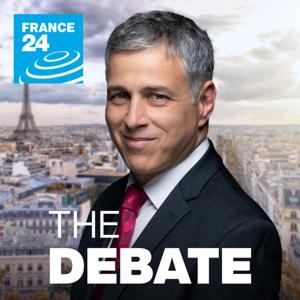
A live debate on the topic of the day, with four guests. From Monday to Thursday at 7:10pm Paris time.

7,580 Listeners

10,709 Listeners

3,369 Listeners

762 Listeners

1,046 Listeners
1,024 Listeners

1,802 Listeners

348 Listeners

4 Listeners
0 Listeners

0 Listeners

2 Listeners
1 Listeners

21 Listeners

181 Listeners

5 Listeners

0 Listeners
4 Listeners

6 Listeners

5 Listeners

39 Listeners

815 Listeners

3 Listeners
4 Listeners

5 Listeners
1 Listeners

16,143 Listeners

0 Listeners
0 Listeners

361 Listeners

0 Listeners

476 Listeners

378 Listeners