
Sign up to save your podcasts
Or



Can Israel ignore the pressure? Young people outraged by the graphic images of the Rafah tent fire that killed dozens of civilians are out in the streets of Paris and Marseille, this as Ireland, Norway and Spain recognise a Palestinian state and international courts mount cases over the war in Gaza.
That war could last another seven months, says a top official in Binyamin Netanyahu's government. Israeli citizens are also traumatised by October 7 and its aftermath, but are not seeing the same images as the rest of the world on their social media feeds.
Then there's Israel’s biggest backer, with a Biden administration that so far refuses to say that Israel’s operation in Rafah crosses its red lines and a Republican opposition that is 100 percent behind Netanyahu.
In past Middle East wars, the US has often been the one to call time. Why, after nearly eight months, is this time different?
Produced by Alessandro Xenos, Rebecca Gnignati and Juliette Brown.
What is Europe's next move, what with Ukraine's Kharkiv subjected to a daily pounding from the other side of a Russian border that's just 20 kilometres away?
It's in the name of Kharkiv that French President Emmanuel Macron, on a state visit to Germany – with Chancellor Olaf Scholz nodding in agreement – said he would allow French missiles supplied to Ukraine to, as he put it, "neutralise" military targets on Russian soil. That comes on top of talk of French military advisers being sent to the front line.
Vladimir Putin was quick to react on Tuesday, with threats against the West as a whole and what sounds like the Baltic states in particular. With Russian troops now on the offensive and Ukraine desperately waiting for supplies of not just missiles but also ammunition and eventually fighter jets, how close is the day when NATO and Russian troops square off on the battlefield? Eleven days out from European elections, how does public opinion feel about it?
And what of NATO's biggest member? The United States for now refuses to allow its weaponry to strike inside Russian territory. Can the Alliance speak with one voice at this crucial juncture?
Produced by Alessandro Xenos, Rebecca Gnignati and Louise Guibert.
What if, this time, the ANC does not win? Since 1994, South Africa has known plenty of ups and downs. But no matter the criticism or defections, the party of Nelson Mandela could always bank, come election time, on a winning machine that has always secured an outright majority. What if it's not the case in Wednesday's vote? And why would that be?
We ask about a sluggish economy, huge inequality, corruption and whether this time incumbent fatigue will finally catch up with the African National Congress. How will those born after the fall of apartheid vote? How do they see a country long touted as the Rainbow nation?
Would a weakened ANC signal a new narrative for what remains a regional and continental powerhouse? The opposition includes those who tout Black nationalism instead of diversity. In a nation that’s still got a vibrant press and an independent judiciary, will the election outcome strengthen or weaken institutions?
Produced by Alessandro Xenos, Rebecca Gnignati and Juliette Brown.
How to stop the slide in the Americas' poorest nation? The last time this show put the spotlight on Haiti was nearly three months ago. The capital had been overrun by gangs who had banded together against then Prime Minister Ariel Henry, who had just secured a deal to deploy a Kenyan-led international police force.µ
The unelected Henry has since handed power over to a collegial Transitional National Council, but the gangs have extended their chokehold on Haiti and the deployment of law enforcement remains on hold.
We bring you an exclusive report on how the Caribbean state is coping. We also discuss how to bring law and order back to Port-au-Prince, which is estimated to be 80 percent controlled by armed groups, and avoid the failures of past international missions there.
Produced by Alessandro Xenos, Rebecca Gnignati and Juliette Brown.
He has literally gone halfway around the world. Now what can President Emmanuel Macron do with his surprise visit to New Caledonia? Critics see deadly riots in the French Pacific island as a crisis of his government's own making, with an electoral reform that indigenous Kanaks say dilutes their voice in upcoming provincial elections. Sovereignists loyal to Paris point to longstanding residents who do not have the right to vote.
The last time New Caledonia witnessed this kind of eruption was the 1980s. Then, too, it was electoral reform that lit the spark. It ended with a carefully-worded deal that granted a special status to an overseas collectivity which the United Nations still lists to this day as an occupied colony.
We ask what it means in the 21st century to fly a French flag in a land that’s more than 17,000 kilometres from Paris. Remember: the majority like it that way. And how strategic is a South Pacific island that's in Australia's backyard, in waters patrolled by the United States and coveted by China?
Produced by Alessandro Xenos, Rebecca Gnignati and Imen Mellaz.
Is it about justice or politics? In the same breath, the chief prosecutor of the International Criminal Court requested arrest warrants against both Israel's Binyamin Netanyahu and Hamas's Yahya Sinwar.
We ask about the alleged war crimes, the measure of the request and the sharp reactions. The US president has branded "outrageous" the accusations against Prime Minister Netanyahu and his defence chief Yoav Gallant, with the likes of the UK, Italy and Germany bemoaning "the inaccurate impression of an equivalence" between both sides.
France is among those that leave the matter to the judges of the ICC, an international court with jurisdiction in 124 nations. The ICC has indicted sitting leaders before, but never a democratically elected one.
What impact will the move have on Israel's reputation and on its politics? And will these charges alleviate the suffering in Gaza?
Produced by Alessandro Xenos, Rebecca Gnignati and Imen Mellaz.
Iran's regime just lost a safe pair of hands. Yes, another hardliner is sure to replace Ebrahim Raisi – known to detractors as the butcher of Tehran for the thousands of dissidents he sent to the gallows as a state prosecutor. But the president's sudden death in a helicopter crash may still change the equation – not so much for a presidential election slated by the constitution to be held in 50 days' time, but in the behind-the-scenes jockeying to pick a successor to Ali Khamenei, Iran's supreme leader who is 85 years old and frail. Raisi – himself a cleric – had been tipped as a possible replacement.
We ask about the crash and the challenges ahead for Iran.
Then there are the country's 88 million citizens. Will they get involved? Since Raisi was elected in 2021, the regime has stared down the massive "women, life, freedom" protests but lost a great measure of its legitimacy. With pragmatists and moderates sidelined, recent legislative elections were marked by record low turnout. Will Iran's decision makers open the door to dissenting views or double down?
Produced by Alessandro Xenos, Rebecca Gnignati and Imen Mellaz.
A black swan moment. The assassination attempt of populist Slovak leader Robert Fico has shocked both Slovaks and Europeans. But in hindsight it is easy to point to security lapses and a climate of verbal violence in a country that finds itself increasingly polarised. Our guests take a look.
When British member of parliament Jo Cox was assassinated by a deranged constituent during the 2016 Brexit campaign, that too seemed like a black swan moment. Are these isolated cases or part of a broader trend?
And who stands to benefit from these heinous crimes?
Slovakia’s government has asked senior leaders in its own ranks to tone down accusations that the opposition and the media are to blame. More broadly, as the whole continent gets set to vote in the EU elections, how much fear and loathing can we expect to see on this campaign trail?
Produced by Alessandro Xenos, Guillaume Gougeon and Imen Mellaz.
Another showdown in the country that launched the so-called coloured revolutions. Georgia’s parliament has shrugged off some of the biggest protests in its post-Soviet history by approving a “foreign agents” bill that mirrors legislation in neighbouring Russia. The opposition argues it is the way for the government to curb media freedom and dissent in a country which only recently graduated to EU candidate status.
Is Tbilisi returning to Russia’s orbit? Or did that already happen when oligarch Bidzina Ivanishvili’s Georgia Dream party won a supermajority back in 2020? That supermajority is now slated to override a presidential veto on what the opposition calls the “Russian law”. Then what?
Ahead of elections later this year, we take a look at what lessons other former Soviet states, like Armenia, Kazakhstan and of course Ukraine - which just 10 years ago was still evenly split between pro-Moscow and pro-EU citizens – can draw from the developments.
Produced by Alessandro Xenos, Guillaume Gougeon and Imen Mellaz.
It’s that place where once a year, high art and hustlers rub elbows, a place for icon worshipers and insurgents, old legends and young upstarts…
Welcome to the French Riviera resort of Cannes and the 77th film festival that bears its name… the first one since French actress and director Judith Godrèche went back on her personal story – her filmmaker's mistress at age 14 – and sparked a MeToo reckoning in French cinema.
Cannes’ not always been ahead of the curve. This year though, it’s premiering Godrèche’s short film about sexual violence and organizers picked as jury president Greta Gerwig, director of the smash feminist hit Barbie. How in synch with the times can a festival… and an industry be?
We’ll raise the curtain on a Cannes that’s always in search of the right balance between the socially relevant and good old fashion star power… a festival that will showcase the new film by Mohammad Rasoulof who had to flee Iran to present his new feature and what may be the last hurrah at 85 for two-time Golden Palm winner Francis Ford Coppola. What will this year’s festival say about the state of movies and the state of our world?
Produced by Alessandro Xenos, Guillaume Gougeon and Imen Mellaz.
From the publisher's feed
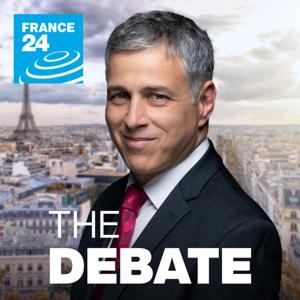
A live debate on the topic of the day, with four guests. From Monday to Thursday at 7:10pm Paris time.

7,580 Listeners

10,709 Listeners

3,369 Listeners
762 Listeners

1,046 Listeners
1,024 Listeners

1,802 Listeners

348 Listeners
4 Listeners
0 Listeners
0 Listeners
2 Listeners
1 Listeners
21 Listeners
181 Listeners

5 Listeners
0 Listeners
4 Listeners
6 Listeners
5 Listeners
39 Listeners

815 Listeners
3 Listeners
4 Listeners
5 Listeners
1 Listeners

16,143 Listeners
0 Listeners
0 Listeners

361 Listeners

0 Listeners

476 Listeners

378 Listeners