
Sign up to save your podcasts
Or

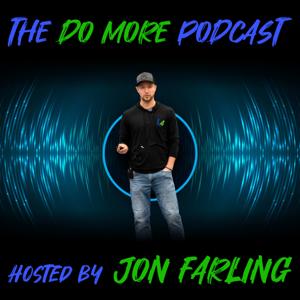


Chris Miles, an expert in financial freedom, joins us to discuss how to break free from the traditional financial system that often leaves people feeling trapped.
Chris shares his journey from being a financial advisor to becoming an advocate for alternative investments and passive income strategies, emphasizing the importance of being "work optional."
He highlights the common misconceptions surrounding 401(k)s and traditional saving methods, arguing that they may not be the best path to true financial independence.
By focusing on creating cash flow and diversifying investments, Chris provides actionable insights for listeners looking to improve their financial situations. Join us as we explore innovative strategies to achieve financial freedom and how to avoid the pitfalls of conventional financial wisdom.
Takeaways:
Links referenced in this episode:
The Do More Podcast
https://creativecommons.org/licenses/by-nd/4.0/
I want to start off by saying a heartfelt thank you to all of you who tune in. It means so much to me that you’re here, and I’d like to take a few minutes to reflect on how far this podcast has come and the amazing growth we’ve experienced together.
Honestly, it’s your support—sharing episodes, leaving reviews, telling friends—that’s fueled this whole journey. The fact that you trust me enough to listen regularly is something I never take for granted, and I’m incredibly grateful for the connection we’ve built.
So, as I get into today’s topic, I want to talk about something that a lot of aspiring investors find both inspiring and mysterious: financial freedom. My aim is to break it down, clear up the confusion, and show you it’s actually more achievable than you might think.
Here’s how I define financial freedom: it’s being able to cover your monthly expenses using the cash flow from your assets, instead of relying solely on a traditional job. I encourage you to think about your own situation—do you know exactly what your expenses are every month? A lot of people don’t, and that’s a big roadblock to making progress financially. So, I always recommend starting with a good, honest look at your finances. Make a simple balance sheet: list out your assets and liabilities so you can see where you stand. It’s not just an academic exercise—it’s the first real step toward making smart decisions with your money and your lifestyle.
As I go further, I want to touch on the different ways people try to reach financial freedom. For example, flipping houses might sound like a quick path to riches, but it’s often risky and unstable. I actually prefer steady, passive income streams—like the ones I’ve built through self-storage investing. There’s a big difference between owning a job and running a business that makes money whether you’re working or not.
By the end of this episode, my hope is that you’ll feel a little clearer on what financial freedom is and how you can start moving toward it. And, as always, if you have questions or just want to talk, please reach out. We’re all in this together, and I’d love to help however I can as we work toward financial empowerment as a community.
Takeaways:
Links referenced in this episode:
The Do More Podcast
https://creativecommons.org/licenses/by-nd/4.0/
Scott Durham joins me to share his journey in the real estate investment world, emphasizing the importance of persistence and strategy in achieving success.
With 20 years of experience, Scott transitioned from a successful real estate agent to a house flipper and rental property investor. He discusses how his background in real estate sales provided him with a unique advantage in finding lucrative deals, particularly through online leads.
Scott's approach to flipping houses includes acquiring properties at a discount, renovating them, and leveraging the cash flow from short-term rentals. He highlights how having a solid foundation of cash-flowing properties offers a safety net, particularly in an uncertain market.
We talk about the challenges of finding good contractors and navigating a changing real estate landscape, all while maintaining a focus on disciplined investment practices that prioritize quality over quantity.
Takeaways:
The Do More Podcast
https://creativecommons.org/licenses/by-nd/4.0/
Flint Jamison joins me to share his remarkable journey from aerospace engineer to real estate investor, specifically focusing on multifamily and medical office spaces.
We get into Flint's pivotal role in designing the wing structure of the Boeing 787, showcasing how his engineering background laid the groundwork for his later ventures. Flint describes the challenges he faced in the high-stress world of aerospace engineering, which ultimately led him to seek a more fulfilling career in real estate.
He discusses his transition into real estate investment, detailing his experiences with a duplex and how they shaped his strategies moving forward. Flint emphasizes the importance of diversifying investments and shares insights on navigating the current uncertain market conditions, including the strategies he employs to mitigate risks in his portfolio.
Takeaways:
Links referenced in this episode:
The Do More Podcast
https://creativecommons.org/licenses/by-nd/4.0/
I wanted to discuss why I believe facing challenges directly is so crucial, particularly when it comes to personal growth.
I’ve got a story about my son and his time in a three-on-three basketball league that really drives this home. His team was up against older, stronger players, and let’s just say they took quite a few losses. It could’ve been a real downer, but honestly, I’ve seen how those tough games pushed them to get so much better—both in their skills and in bouncing back from setbacks.
I can’t help but think about what this means for all of us, you know? So often, schools and even us parents focus on keeping things safe and comfy for kids, but are we missing out on the big lessons that come from competing and even failing sometimes?
I really believe we need to take more risks and embrace the hard stuff, whether it’s on the court or just in everyday life. Those challenges are what shape us and help us grow. What do you think—have you seen this play out in your own experiences?
Takeaways:
Links referenced in this episode:
The Do More Podcast
https://creativecommons.org/licenses/by-nd/4.0/
Bree Hartman joins me in this episode to discuss the transformative journey of entrepreneurship and the world of self-storage investing.
One of the main points we explore is how pivoting and adaptability are essential traits for business success. Bree shares her personal story, which includes a significant transition from a career in state wildlife management to owning and operating multiple storage facilities.
We talk about the importance of taking risks, learning from failures, and the crucial role of mindset in navigating challenges. Additionally, Bree emphasizes the value of community and mentorship in the self-storage industry, highlighting how her experiences have shaped her approach to business and personal growth.
This conversation not only sheds light on the practical aspects of investing in storage facilities, but also, I hope, will inspire you to embrace your own entrepreneurial journeys.
Takeaways:
Links referenced in this episode:
The Do More Podcast
Russell Nersesov joins me to discuss his journey from being a chiropractor to becoming a managing partner of Safe Storage USA and Flex Park Partners.
In this episode, we examine the strategic shift from traditional real estate investments to self-storage and now flex spaces, showcasing the evolving landscape of the real estate market.
Russell shares insights on the challenges and opportunities that come with these transitions, particularly in the current economic climate where interest rates have significantly changed.
We talk about the importance of building a strong network and the necessity of adapting investment strategies to ensure sustainable growth. As we navigate through these topics, listeners will gain valuable perspectives on the dynamics of real estate investment and the critical factors influencing decision-making in this field.
Takeaways:
Links referenced in this episode:
The Do More Podcast
Jimmy Rios, founder of Rios Business Advisors, joins me to discuss the evolution of his advisory firm and the crucial lessons learned over 25 years in the financial services industry.
At the heart of our conversation is the importance of understanding business credit and how it can serve as a vital tool for entrepreneurs looking to transition from traditional employment to business ownership.
Rios emphasizes the shift from a consumer-driven mindset to one where individuals view themselves as business owners, capable of leveraging credit and strategic planning to build wealth.
We talk about the essential first steps for aspiring business owners, including the significance of mental preparedness and the necessity of a solid financial foundation.
Throughout the episode, Rios shares insights on navigating the complexities of buying and selling businesses, highlighting the value of mentorship and well-structured systems for achieving long-term success.
Takeaways:
The Do More Podcast
Thanks for following, subscribing and listening to this episode of The Do More podcast hosted by Jon Farling. To learn more or ask questions, go to l4investing.com.
https://creativecommons.org/licenses/by-nd/4.0/
Entrepreneurs often mistakenly believe they own a business when, in reality, they may just have a job.
This episode explores the crucial distinction between working in a business versus working on it, highlighting that many entrepreneurs often become entangled in daily operations rather than focusing on strategic growth.
I explore practical examples, such as house flipping, to illustrate how being involved in the minutiae of operations can hinder long-term success. By sharing my own experiences in self-storage, I highlight the importance of delegation and the use of tools like organizational charts to clarify roles and responsibilities.
Ultimately, this discussion aims to empower you to step back from day-to-day tasks, enabling you to concentrate on scaling your business and to foster a more effective work environment.
Takeaways:
Links referenced in this episode:
The Do More Podcast
https://creativecommons.org/licenses/by-nd/4.0/
Money does not directly equate to happiness; rather, it serves as a tool that can facilitate a fulfilling life.
I explore the nuanced relationship between financial resources and personal well-being, emphasizing that while it is essential to have our basic needs met, happiness often stems from experiences and the goals we pursue. I've shared my own journey from living paycheck to paycheck to understanding the importance of saving and investing, which allowed me to gain financial stability and time freedom.
This episode delves into the idea that the fulfillment we derive from our financial journeys is more significant than the money itself. Ultimately, it's about who we become along the way and how we leverage our resources to enrich our lives and those of others.
Takeaways:
Links referenced in this episode:
https://creativecommons.org/licenses/by-nd/4.0/
The Do More Podcast
From the publisher's feed

227,419 Listeners

9,663 Listeners

4,441 Listeners
325 Listeners

2,638 Listeners
592 Listeners

10,100 Listeners
40 Listeners
13 Listeners
2,135 Listeners
8 Listeners
3 Listeners
0 Listeners
21 Listeners