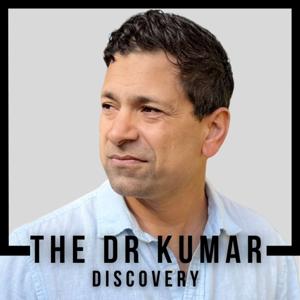
The Dr Kumar Discovery

The Dr Kumar Discovery

By Dr Ravi Kumar MDMedicineHealth & Fitness
Download on the App Store

The Dr Kumar Discovery episodes

  • Episode 16: Why This Neurosurgeon Will Never Use Nicotine

     Why This Neurosurgeon Will Never Use Nicotine

     
    Nicotine is being rebranded online as a clean, safe, even “smart” compound. Influencers call it a focus booster. Companies market it as harmless when separated from smoke. Millions are being persuaded. But what does the science really say?
     
    In this deep dive, Dr. Ravi Kumar breaks down the full story of nicotine, from its plant origins to its powerful grip on the human brain. You’ll learn how it hijacks dopamine, why it damages healing and metabolism, and what the research shows about its supposed benefits for focus, memory, and even Parkinson’s disease. You’ll also hear about the one situation where nicotine might play a short-term therapeutic role, in patients with long COVID, and why that is not the same as using it as a daily biohack.
     
    In this episode, you’ll discover:

    •  How nicotine binds receptors more strongly than acetylcholine itself.
    • Why nicotine is ranked as the third most addictive drug in the world.
    • The biochemistry of dopamine hijack and the cycle of dependence.
    • How nicotine raises blood pressure, damages blood vessels, and impairs healing.
    • The truth about nicotine and Parkinson’s, cognition, and attention.
    • Why nicotine worsens anxiety and stress rather than relieving them.
    • The single medical context where nicotine may have a role in recovery.
    • The most effective, evidence-based tools to quit.

    If you have ever wondered whether nicotine could be good for you, or if you are trying to break free from it, this episode is essential listening. The evidence is clear, and the path forward is possible.
     
    For more health insights, subscribe to The Dr. Kumar Discovery Podcast on any major platform.
     
    To find out more, or to see links to the scientific references used in this podcast, visit: https://drkumardiscovery.com/podcast/
     
    Cheers!
     

    27 min
  • Episode 15: The Boy, the Virus, and the First Vaccine

    What happens when a country doctor risks the life of an eight-year-old boy in the hope of defeating humanity’s deadliest disease? In 1796, Dr. Edward Jenner carried out a bold and deeply controversial experiment: infecting the gardener’s son, James Phipps, with cowpox to see if it would protect him against smallpox. It succeeded—and marked the birth of vaccination. But at the same time, it raised profound ethical questions that still echo today.


    In this episode of Tribulations, Dr. Ravi Kumar guides us through the tension between discovery and morality. You’ll explore:

    • How smallpox shaped civilizations, toppled empires, and even served as biological warfare
    • The global practice of variolation, including how Lady Mary Wortley Montague helped bring it to Europe, despite the serious risks involved
    • Jenner’s defining experiment on James Phipps and the scrutiny it might attract under today’s ethical standards
    • The early resistance and skepticism that greeted vaccination, and how history’s first demonstrable medical breakthroughs stirred fear before acceptance
    • How the dangers of vaccines rare complications like Guillain-Barré syndrome must be weighed against the overwhelming benefits they deliver

    It’s a captivating journey of risk, impact, and the ethical tightrope of progress.


    Resources & References

    • McGill OSS. A White Lie at the Heart of Vaccine History.
    • The Lancet. Smallpox, Vaccination, and the Birth of Modern Immunology.
    • Riedel S. Edward Jenner and the History of Smallpox and Vaccination. Baylor University Medical Center Proceedings.
    • World Health Organization. Vaccines and Immunization.
    • Levison LS et al. Guillain–Barré Syndrome following influenza vaccination.
    • Orenstein WA, Ahmed R. Simply put: Vaccination saves lives. JAMA.
    • Petersen E et al. Vaccine hesitancy and acceptance across time and disease threats.
    • Williams AE. The fight against smallpox: a global public health triumph. BMC Public Health.
    • Bazin H. The Eradication of Smallpox: Edward Jenner and the First and Only Eradication of a Human Infectious Disease.

    Stay Connected

    • Podcast signup: drkumardiscovery.com/podcast-signup
    • Instagram: @thedrkumardiscovery
    • Facebook: The Dr. Kumar Discovery
    20 min
  • Episode 14: How to Make Gout Disappear From Your Life

     How to Make Gout Disappear From Your Life 


    What if one of the most excruciatingly painful diseases in history, once called “the disease of kings”, didn’t have to exist at all? Gout, an inflammatory arthritis caused by uric acid crystals, has plagued everyone from Henry VIII to Benjamin Franklin. Yet today, science shows us it can often be prevented or even eliminated with the right knowledge and choices. 


    In this eye-opening episode, Dr. Ravi Kumar unpacks the history, biology, and modern causes of gout, and reveals why this ancient disease is now a completely optional one. You’ll hear how gout uniquely affects humans, why certain populations are more vulnerable, and even the story of a dramatic case where gout crystals formed in a woman’s brainstem. 


    In this episode, you’ll discover: 

    • Why humans are the only species that develop gout.
    • The historical link between gout, indulgence, and power.
    • How modern diets rich in purines, alcohol, and fructose fuel the disease.
    • The surprising roles of coffee, vitamin C, cherries, and dairy in lowering risk.
    • Why keeping uric acid below 6.0 mg/dL protects against gout and kidney damage.
    • How simple lifestyle changes can make gout vanish from your life.

    Don’t miss this episode, especially if you or someone you love struggles with gout. Understanding its history and science could help you prevent or reverse it.
     
    For more health insights, subscribe to The Dr. Kumar Discovery Podcast on any major platform.

    To find out more, or to see links to the scientific references used in this podcast, visit: https://drkumardiscovery.com/podcast/
     
    Cheers!

    *** Correction: In this podcast I said that humans are the only species to get gout, but I should have said humans are the only mammalian species that get gout. Both birds and reptiles can develop uric acid crystallization within their bodies when they are severely dehydrated or have kidney failure. 


    37 min
  • Episode 13: Roald Dahl and the Valve That Saved Thousands


    What happens when a children’s book author refuses to accept “good enough” in the face of a life-or-death medical crisis? In 1960, Roald Dahl, famed author of Charlie and the Chocolate Factory, found himself fighting for his infant son’s life after a devastating accident caused hydrocephalus, a dangerous buildup of fluid in the brain. 


    In an era when shunt valves failed constantly, Dahl brought together an unlikely team: a pioneering pediatric neurosurgeon, a pediatric brain surgeon, and a retired toy maker. Together, they created the WDT valve, a life-saving device that resisted clogging and became a gold standard in treating hydrocephalus. 


    In this episode of Tribulations, Dr. Ravi Kumar takes you through the gripping history of how creativity, persistence, and cross-disciplinary collaboration changed the course of neurosurgery. You’ll learn: 

    • The accident that nearly claimed Dahl’s son’s life
    • Why existing shunts in the 1960s were dangerously unreliable
    • How Dahl’s relentless curiosity pushed doctors to imagine the impossible
    • The ingenious engineering behind the WDT valve
    • How this invention saved thousands of children, and still influences shunt design today

    It’s a story of ingenuity under pressure, of refusing to accept the limits of conventional thinking, and of how one man’s persistence turned imagination into innovation.

    Resources & References:

    • Till K, et al. A Valve for the Treatment of Hydrocephalus. The Lancet. 1964.
    • Wade, S. Patent No. GB1014164, Valve for Controlling the Flow of Cerebrospinal Fluid. 1963.
    • Sandler, A, et al. Marvelous medicine: The untold story of the Wade-Dahl-Till valve - Historical vignette. JNS-Peds 2012
    • Solomon, T. How family tragedy turned Roald Dahl into a medical pioneer. The Guardian. 2016

    Stay Connected:

    • Podcast signup: https://drkumardiscovery.com/podcast-signup/
    • Instagram: https://www.instagram.com/thedrkumardiscovery/
    • Facebook: https://www.facebook.com/thedrkumardiscovery


    14 min
  • Episode 12: PANDAS – Could Your Child’s Behavior Changes Be Cured with an Antibiotic?

    PANDAS – Could Your Child’s Behavior Changes Be Cured with an Antibiotic?

    Has your child suddenly changed?... Experiencing unexplained anxiety, depression, OCD behaviors, or other alarming shifts? It could be PANDAS (Pediatric Autoimmune Neuropsychiatric Disorders Associated with Streptococcal Infections), an often overlooked condition triggered by a common strep infection.


    In this powerful episode, Dr. Ravi Kumar shares his deeply personal story of discovering PANDAS after his own daughter faced dramatic behavior changes that baffled doctors and devastated his family. Learn why PANDAS is frequently misdiagnosed, leaving families confused and children untreated.


    In this episode, you'll discover:

    • What exactly PANDAS is and how it affects children's brains.
    • Why many doctors still overlook or misunderstand this condition.
    • Dr. Kumar’s personal journey with his daughter's diagnosis and remarkable recovery.
    • The critical role of antibiotics and other treatments in reversing symptoms.
    • What steps parents can take if they suspect their child has PANDAS.

    Don't miss this vital episode. It might be the key to restoring a child's health and happiness.


    For more health insights, subscribe to The Dr Kumar Discovery Podcast on any major platform.

    Or visit: https://drkumardiscovery.com/podcast/

    Cheers!

    24 min
  • Episode 11: The Handwashing Heretic - The tragic story of Ignaz Semmelweis

    In this episode, I share the tragic and powerful story of Dr. Ignaz Semmelweis — a physician who discovered how to save the lives of countless mothers in 19th-century Vienna. His discovery? Something as simple as handwashing. But rather than being hailed as a hero, he was ridiculed, silenced, and ultimately destroyed by the very profession he tried to reform. 


    This story isn’t just about history — it’s a warning. About arrogance. About the reflexive rejection of new ideas. About what happens when certainty replaces curiosity. 


    This is the first installment of a new storytelling series I’m calling Tribulations. If you enjoy this episode, let me know — I’d love to keep bringing these stories to life. 


    Mentioned in this episode: 

    • The origin of the Semmelweis Reflex
    • The tragic fate of a revolutionary thinker
    • What modern medicine (and all of us) can learn from his story

    Prefer visuals? Watch the storyboard version of this episode on YouTube and TikTok.

     
    If you found this episode valuable, please take a moment to rate and review the show. Your feedback helps others discover it.
     

    7 min
  • Episode 10: Two Billion People Are Zinc Deficient - Make Sure You’re Not One of Them

    Dr. Kumar dives into the hidden global crisis of zinc deficiency: covering its fundamental biology, landmark clinical cases, RDA versus optimal dosing, ancestral insights, and practical tips to ensure you aren’t one of the two billion people missing out on this essential micronutrient. 


    Episode Highlights 

    • Why Zinc Matters
    • Discover how this tiny mineral powers hundreds of enzymes and controls key gene switches that keep you healthy.
    • Life-Saving Discoveries
    • Hear the true stories of zinc reversing stunted growth in Iran and curing a once-fatal genetic disease.
    • Core Body Functions
    • Learn how zinc supports immunity, wound healing, hormone balance (insulin, thyroid, testosterone, stress) and brain health.
    • Optimal Dosage
    • Find out why the basic RDA may fall short, what ancestral diets suggest, and why 15–20 mg per day hits the sweet spot.
    • Food and Prep Tips
    • See which foods pack the most zinc (oysters, meat, legumes), simple soaking or fermenting tricks to boost absorption, and when to supplement.
    • Next Steps
    • Spot the top signs of deficiency and get practical actions you can take today to make sure you’re not one of the two billion missing out.

      
    Show Notes
     
    In this episode you’ll learn:
     
    • What zinc really does in the body as a cofactor for over 300 enzymes and 1,000 transcription factors
     
    • The groundbreaking cases that put zinc on the map (Prasad’s Zinc Dwarf in Iran; Barnes & Moynahan’s cure of acrodermatitis enteropathica)
     
    • How zinc fingers, superoxide dismutase, matrix metalloproteinases and other molecular players keep us running
     
    • Zinc’s critical roles in hormone production (insulin, thyroid, testosterone, cortisol) and immune defense (thymulin, NK cells, cold lozenges)
     
    • Clinical evidence for growth recovery, wound healing, blood-sugar control and cognitive benefits
     
    • Why standard RDAs may only prevent severe deficiency and how transporter biology and ancestral diets point to 15–20 mg/day as optimal
     
    • Food-first strategies (oysters, red meat, dairy, legumes) and traditional prep methods (soaking, fermenting) to neutralize phytates
     
    • Why zinc glycinate is the gold-standard supplement, and dosing recommendations for omnivores, vegetarians and vegans


    Subscribe & Follow
     
    • Podcast Signup: https://drkumardiscovery.com/podcast-signup/
     
    • Apple Podcasts: https://podcasts.apple.com/us/podcast/the-dr-kumar-discovery/id1742083523
     
    • Spotify: https://open.spotify.com/show/3UJhg3Y5jjLP8zO6hbpwfT?si=44Db8cYwQaCeNQes6ET5OA
     
    • Amazon Music: https://music.amazon.com/podcasts/109f8c48-0168-43f3-a7ed-f0315473fb84/the-dr-kumar-discovery
     
    • YouTube: https://www.youtube.com/@TheDrKumarDiscovery
     

    Support the Show
     
    If you found this episode valuable, please:
     
    • Share it with someone you care about
     
    • Leave a rating or review on your podcast app
     
    • Subscribe for future episodes
     
    • Visit DrKumarDiscovery.com for blogs, transcripts, and more
     
    • Follow on Instagram: https://www.instagram.com/thedrkumardiscovery/
     
    • Follow on Facebook: https://www.facebook.com/thedrkumardiscovery

    References & Resources

    Discovery of Human Zinc Deficiency: Its Impact on Human Health and Disease

    Zinc Deficiency and Human Health: Etiology, Health Consequences, and Future Solutions

    Zinc and immune function: the biological basis of altered resistance to infection

    Role of Zinc in Health and Disease

    Zinc and the special senses

    Zinc Deficiency - StatPearls

    Discovery of human zinc deficiency and studies in an experimental human model

    Zinc Transporters and the Cellular Trafficking of Zinc

    Zinc Deficiency in Acrodermatitis Enteropathica: Multiple Dietary Intolerance Treated with Synthetic Diet

    Zinc and Immune Function: The Biological Basis of Altered Resistance to Infection

    The effects of zinc supplementation on wound healing

    Zinc Deficiency in Humans: Discovery and Impact

    Zinc supplementation improves glycemic

    Effect of zinc supplementation on thyroid hormone

    Zinc status and serum testosterone levels

    Effect of Zinc Supplementation on GH

    Zinc acutely and temporarily inhibits adrenal cortisol

    Zinc and the aging brain

    Effects of zinc supplementation on cognitive function

    Effects of Zinc Supplementation on Inflammatory and Cognitive Parameters

    Improving Cognitive Function with Nutritional Supplements in Aging

    Serum thymulin in human zinc deficiency

    Effects of zinc deficiency on Th1 and Th2 cytokine shifts

    Zinc enhances the number of regulatory T cells in allergen-stimulated cells

    Short-term oral zinc supplementation enhances Natural Killer cell functionality

    Zinc lozenges and the common cold

    Antioxidant Role of Zinc in SOD1

    Clinical Effectiveness of Zinc Supplementation on Oxidative Stress

    Zinc, aging, and immunosenescence

    Zinc decreases C-reactive pro...

    34 min
  • Episode 9: The Vitamin C Paradox

    Support Gavin’s Journey


    This episode features the incredible story of Gavin—a young boy who defied all medical odds after a devastating brain cancer diagnosis.

    Follow and support Gavin and his family here:

    • Gavin’s Facebook Group
    • Support Gavin’s Journey on GoFundMe

    Episode Summary


    Why is vitamin C—a nutrient most people take for granted—still at the center of scientific debate and miraculous recoveries? In “The Vitamin C Paradox,” Dr. Ravi Kumar explores the hidden complexity behind this essential molecule, from our evolutionary dependence to its overlooked medical potential. Discover how the right dose, at the right time, could change everything from your daily health to survival in the face of severe illness.


    What You’ll Learn

    • Why humans lost the ability to make vitamin C—and the clever ways our bodies compensate.
    • How vitamin C works as a master antioxidant and is uniquely recycled in human red blood cells.
    • Hidden signs of deficiency—and why “modern scurvy” is more common than you think.
    • What science really says about vitamin C for colds, immune support, cardiovascular health, and recovery.
    • The untold story of IV vitamin C—and how one family’s determination changed a young boy’s fate.
    • How to optimize your own vitamin C intake for health, stress, illness, and special situations.
    • Why the RDA might be set far too low—and what our closest primate relatives can teach us.

    Key Takeaways

    • Vitamin C is about more than scurvy. It’s central to immunity, tissue repair, mental clarity, and more.
    • Most people get just enough to “get by.” Far higher intakes may be needed for true resilience—especially in illness or stress.
    • IV vitamin C acts differently from oral forms and shows real promise in cancer care and critical illness.
    • Even today, vitamin C deficiency is surprisingly common and often overlooked.

    Practical Recommendations

    • Daily health: 500–1,000 mg ascorbic acid (plus vitamin C–rich foods throughout the day)
    • During illness or stress: Up to 6,000 mg daily, divided in smaller doses (and stay hydrated)
    • Cancer/critical illness: Discuss IV vitamin C as an integrative option with your healthcare provider
    • Best supplement forms: Plain ascorbic acid is ideal; buffered or liposomal forms may help sensitive stomachs

    Don’t Miss

    • Why the RDA for vitamin C was set only to prevent scurvy—not to optimize health or immune function.
    • What wild animals and primates reveal about human vitamin C needs.
    • How clinical research has often misrepresented the full potential of vitamin C.

    References & Further Reading


    All referenced clinical trials, peer-reviewed papers, and additional resources for this episode can be found on our Vitamin C Episode page.

    (Link to be updated once your references page is live.)


    Help Us Grow


    If this episode made you think differently, please share it with someone you care about and leave a review on your favorite podcast platform. Your support helps bring practical, evidence-based health information to more people.


    Listen & Subscribe:

    • Dr. Kumar Discovery Podcast Website
    • Apple Podcasts
    • Spotify


    Disclaimer: This episode is for informational purposes only and is not a substitute for medical advice. Please consult your healthcare provider before making any health decisions.


    59 min
  • Episode 8: You’re Probably Deficient in Omega-3—Here’s How to Fix It

    Episode Summary 

    In this deep-dive episode, Dr. Ravi Kumar explores why omega-3 fatty acids are foundational to human health—touching on their biochemistry, evolutionary history, robust clinical evidence, and practical strategies for optimizing intake. You’ll learn: 

    • What “omega-3” really means and why your body can’t make these fats on its own
    • Early discoveries by George and Mildred Burr in the 1920s
    • The Inuit paradox: high-fat diets with low cardiovascular disease
    • Landmark trials such as REDUCE-IT and EVAPORATE demonstrating cardioprotective effects
    • Roles across the lifespan: brain development, mood regulation, eye health, immune function, muscle maintenance, liver health, skin integrity, and more
    • Evolutionary insights from traditional populations and enzymatic conversion of ALA → EPA/DHA
    • Practical guidance on food sources, supplement types (triglyceride vs. ethyl ester, krill, algal oil), dosing, safety (oxidation, contaminants), and certification (IFOS)

     Practical Suggestions

    • Daily baseline: Aim for ≥2 g combined EPA + DHA (with at least 1 g EPA)
    • High-dose therapy: 3–4 g/day EPA-rich for hypertriglyceridemia, arthritis, depression
    • Pregnancy: At least 500 mg DHA daily (algal oil option for vegans)
    • Food sources: Prioritize small, low-contaminant fish (sardines, anchovies, mackerel); include wild-caught salmon sparingly
    • Supplement selection: Choose triglyceride-form fish oil, IFOS-certified; watch for oxidation (peroxide/anisidine levels) and contaminant removal via molecular distillation
    • Lifestyle context: Reduce omega-6 seed oils to improve ALA→EPA/DHA conversion; honor ancestral dietary patterns

    References

    1. https://pmc.ncbi.nlm.nih.gov/articles/PMC3657456/
    2. https://pubmed.ncbi.nlm.nih.gov/25604397/
    3. https://pmc.ncbi.nlm.nih.gov/articles/PMC7037798/
    4. https://pmc.ncbi.nlm.nih.gov/articles/PMC7759779/
    5. https://www.sciencedirect.com/science/article/pii/S000291652312911X?via%3Dihub
    6. https://journals.plos.org/plosone/article?id=10.1371/journal.pone.0044926
    7. https://pmc.ncbi.nlm.nih.gov/articles/PMC9228863/
    8. https://pubmed.ncbi.nlm.nih.gov/16825680/
    9. https://www.sciencedirect.com/science/article/pii/S0002916523294861
    10. https://pubmed.ncbi.nlm.nih.gov/12442909/
    11. https://www.sciencedirect.com/science/article/pii/S0002916523275462?via%3Dihub
    12. https://pubmed.ncbi.nlm.nih.gov/7270479/
    13. https://pmc.ncbi.nlm.nih.gov/articles/PMC7761957/
    14. https://pmc.ncbi.nlm.nih.gov/articles/PMC4480667/
    15. https://pmc.ncbi.nlm.nih.gov/articles/PMC3021432/
    16. https://pmc.ncbi.nlm.nih.gov/articles/PMC7561009/
    17. https://pubmed.ncbi.nlm.nih.gov/15857162/
    18. https://journals.plos.org/plosone/article?id=10.1371/journal.pone.0088103
    19. https://pmc.ncbi.nlm.nih.gov/articles/PMC8832668/
    20. https://pmc.ncbi.nlm.nih.gov/articles/PMC3138218/
    21. https://pmc.ncbi.nlm.nih.gov/articles/PMC6155966/
    22. https://pubmed.ncbi.nlm.nih.gov/22023985/
    23. https://www.jbc.org/article/S0021-9258(19)36227-1/fulltext
    24. https://pubmed.ncbi.nlm.nih.gov/28694914/
    25. https://pubmed.ncbi.nlm.nih.gov/12771037/
    26. https://pubmed.ncbi.nlm.nih.gov/24553997/
    27. https://pubmed.ncbi.nlm.nih.gov/11895157/
    28. https://pubmed.ncbi.nlm.nih.gov/28261950/
    29. https://pubmed.ncbi.nlm.nih.gov/21569104/
    30. https://pubmed.ncbi.nlm.nih.gov/26353789/
    31. https://pubmed.ncbi.nlm.nih.gov/22591891/
    32. https://pubmed.ncbi.nlm.nih.gov/21961774/
    33. https://pmc.ncbi.nlm.nih.gov/articles/PMC9406129/
    34. https://pubmed.ncbi.nlm.nih.gov/27541690/
    35. https://www.frontiersin.org/journals/medicine/articles/10.3389/fmed.2024.1440479/full
    36. https://pmc.ncbi.nlm.nih.gov/articles/PMC2812063/
    37. https://pubmed.ncbi.nlm.nih.gov/15555528/
    38. https://pmc.ncbi.nlm.nih.gov/articles/PMC7362115/
    39. https://pubmed.ncbi.nlm.nih.gov/28900017/
    40. https://pubmed.ncbi.nlm.nih.gov/20434961/
    41. https://pmc.ncbi.nlm.nih.gov/articles/PMC10447496/
    42. https://pubmed.ncbi.nlm.nih.gov/23515006/
    43. https://pubmed.ncbi.nlm.nih.gov/17240089/
    44. https://pubmed.ncbi.nlm.nih.gov/17556695/
    45. https://pubmed.ncbi.nlm.nih.gov/12509593/
    46. https://pmc.ncbi.nlm.nih.gov/articles/PMC9355374/
    47. https://pmc.ncbi.nlm.nih.gov/articles/PMC4054797/
    48. https://www.ahajournals.org/doi/full/10.1161/CIR.0000000000000709
    49. https://pubmed.ncbi.nlm.nih.gov/32860032/
    50. https://www.nejm.org/doi/full/10.1056/NEJMoa1812792
    51. https://www.ahajournals.org/doi/10.1161/CIRCULATIONAHA.105.581355
    52. https://www.jacc.org/doi/10.1016/j.jacc.2008.04.018
    53. https://pubmed.ncbi.nlm.nih.gov/4102857/
    54. https://pubmed.ncbi.nlm.nih.gov/38982829/


    41 min
  • Episode 7: Why You Should Be Taking Vitamin K2

     Episode 7: Why You Should Be Taking Vitamin K2 


    Host: Dr. Ravi Kumar MD

    Topic: A comprehensive look at vitamin K2’s discovery, mechanisms, clinical evidence, and why it’s essential for calcium homeostasis, bone strength, and vascular health. 


    📖 Episode Overview 

    • Historical journey from Weston A. Price’s “Activator X” to the Nobel‐winning discovery of vitamin K
    • Biochemical roles of K1 vs. K2: activating clotting factors vs. directing calcium into bones and out of arteries
    • Ancestral dietary patterns that once guaranteed year-round vitamin K2 intake
    • Key clinical findings on bone mineral density, fracture risk, arterial calcification, and beyond
    • Drug interactions: how warfarin and statins inadvertently disrupt K2 pathways
    • Supplementation strategy: MK-7 vs. MK-4, practical dosing, and Dr. Kumar’s personal protocol
    • Next episode teaser on omega-3 fatty acids

    ✨ Key Takeaways

    • Vitamin K2 (menaquinones) is indispensable for proper calcium placement—bones vs. arteries.
    • Traditional diets provided K2 via seasonal greens and fermented foods; modern diets are often deficient.
    • Meta-analyses and RCTs demonstrate up to 57% fewer fractures and slower arterial calcification with K2.
    • MK-7 (180–375 µg/day) offers superior bioavailability and tissue delivery compared to MK-4.
    • Pair K2 with vitamin D and dietary fat for optimal absorption.

    📚 References & Study Summaries

    1. Dietary Intake of Menaquinone Is Associated with a Reduced Risk of Coronary Heart Disease in Older Men and Women
      • Prospective cohort of older adults showing that higher dietary menaquinone (vitamin K2) intake was linked to a significant reduction in coronary heart disease incidence.
      • ScienceDirect
    2. Vitamin K2 Ameliorates Osteoarthritis by Suppressing Ferroptosis and Extracellular Matrix Degradation Through Activation of GPX4
      • Preclinical rodent study demonstrating that MK-7 improves cartilage integrity, reduces pain scores, and lowers osteoarthritis severity by inhibiting ferroptosis and activating the antioxidant enzyme GPX4.
      • ScienceDirect
    3. Multiple Dietary Vitamin K Forms Are Converted to Tissue MK-4 in Mice
      • Animal feeding trial revealing that dietary phylloquinone (K1) and various menaquinones (MK-4, MK-7, MK-9) all serve as precursors for tissue MK-4, highlighting a common conversion pathway across tissues.
      • ScienceDirect
    4. Role of Menaquinone-7 in Bone Health: A Comprehensive Review
      • Systematic review in Frontiers in Nutrition summarizing mechanistic and clinical evidence for MK-7’s effectiveness in enhancing bone mineral density, reducing fracture risk, and exhibiting an excellent safety profile.
      • Frontiers in Nutrition
    5. Effect of Vitamin K2 on Bone Mineral Density and Fracture Risk in Postmenopausal Women
      • Meta-analysis of RCTs involving over 6,400 participants, showing that VK2 supplementation (primarily MK-4 and MK-7) significantly improved lumbar spine BMD and lowered overall fracture risk by approximately 57%.
      • PubMed
    6. Vitamin K Status in Chronic Kidney Disease and Hemodialysis Patients
      • Observational study reporting elevated levels of undercarboxylated vitamin K-dependent proteins (dp-ucMGP, ucOC) in CKD and dialysis cohorts, indicating widespread subclinical K deficiency in these populations.
      • PMC
    7. Dietary Vitamin K Intake and Bone Health in Public-Health Populations
      • Population-level analysis linking higher dietary vitamin K intake to reduced osteoporosis prevalence and fewer fractures among older adults, reinforcing the public-health importance of K.
      • Frontiers in Public Health
    8. High-Dose MK-7 Supplementation and Vascular Calcification Markers
      • Double-blind RCT (360 µg MK-7/day for 3 months) demonstrating marked reductions in dp-ucMGP—a biomarker of vascular calcification risk—in healthy volunteers.
      • PubMed
    9. Long-Term MK-4 Therapy Prevents Vertebral Fractures in Osteoporotic Women
      • Clinical trial showing that 45 mg/day MK-4 over 3 years significantly lowered the incidence of new vertebral fractures compared to control, despite pharmacologic dosing far above dietary levels.
      • PubMed
    10. Comparative Pharmacokinetics of MK-7 vs. MK-4 in Humans
      • Pharmacokinetic study revealing that MK-7 has a substantially longer half-life and higher steady-state blood levels than MK-4 when administered orally, supporting MK-7’s use in supplementation.
      • PubMed
    11. Effect of Low-Dose MK-7 on Osteocalcin Carboxylation
      • Controlled trial finding that 180 µg/day of MK-7 for 12 weeks significantly increased the ratio of carboxylated to undercarboxylated osteocalcin, indicating enhanced bone-matrix protein activation.
      • PubMed
    12. Regional Differences in Vitamin K2 Biomarkers and Bone Health
      • Cross-sectional study of Japanese adults correlating serum K2 levels (MK-7) with superior bone density measures and lower fracture prevalence across regions with habitual natto consumption.
      • SpringerLink
    13. Traditional Dietary Sources of Vitamin K2 in Japanese Communities
      • Ethnographic dietary survey documenting seasonal consumption of natto, fermented vegetables, and dairy in rural Japanese villages, with measured K2 intakes averaging >300 µg/day.
      • Kindai University PDF
    14. Effects of Combined Vitamin K2 and D3 on Coronary and Aortic Calcification
      • Multicenter RCT (720 µg K2 + 25 µg D3/day vs. placebo) in elderly subjects, reporting a nonsignificant trend toward slower CAC progression overall but significant benefit in participants with baseline CAC ≥400 AU.
      • ScienceDirect
    15. MK-7 Supplementation in Hemodialysis Patients
      • RCT administering 1,080 µg MK-7 three times weekly to dialysis patients for 12 weeks, which normalized dp-ucMGP levels by 86% without adverse events.
    33 min

About The Dr Kumar Discovery

From the publisher's feed

Welcome to The Dr. Kumar Discovery, a health and wellness podcast hosted by Dr. Ravi Kumar, a board-certified neurosurgeon. This is the medical podcast for anyone who wants honest, evidence-based answers to the health questions that matter most. No corporate influence. Just a physician who reads the research, questions the dogma, and breaks it down in plain language so you can make better decisions about your own health.

More shows like The Dr Kumar Discovery

The Diary Of A CEO with Steven Bartlett by DOAC

The Diary Of A CEO with Steven Bartlett

8,527 Listeners

Crime Junkie by Audiochuck

Crime Junkie

369,618 Listeners

Feel Better, Live More with Dr Rangan Chatterjee by Dr Rangan Chatterjee: GP & Author

Feel Better, Live More with Dr Rangan Chatterjee

3,602 Listeners

Dhru Purohit Show by Dhru Purohit

Dhru Purohit Show

3,418 Listeners

The Dr. Hyman Show by Dr. Mark Hyman

The Dr. Hyman Show

9,148 Listeners

The Peter Attia Drive by Peter Attia, MD

The Peter Attia Drive

8,001 Listeners

Huberman Lab by Scicomm Media

Huberman Lab

29,204 Listeners

The Mel Robbins Podcast by Mel Robbins

The Mel Robbins Podcast

19,254 Listeners

I've Had It by Jennifer Welch and Angie Sullivan

I've Had It

18,063 Listeners

Candace by Candace Owens

Candace

10,653 Listeners

Good Hang with Amy Poehler by The Ringer

Good Hang with Amy Poehler

12,486 Listeners

The Telepathy Tapes by Ky Dickens

The Telepathy Tapes

8,796 Listeners

unPAUSED with Dr. Mary Claire Haver by Audacy | Mary Claire Haver, MD

unPAUSED with Dr. Mary Claire Haver

1,186 Listeners

Dead Certain: The Martha Moxley Murder by NBC News Studios

Dead Certain: The Martha Moxley Murder

1,683 Listeners