
Sign up to save your podcasts
Or

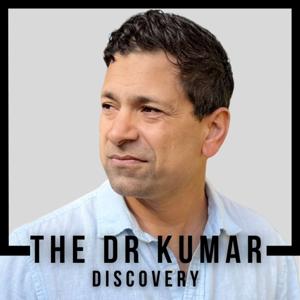


In this episode, Dr. Ravi Kumar uncovers the powerful, misunderstood role of vitamin D in your health—and why nearly half the world is deficient. Far more than a bone vitamin, vitamin D acts as a hormone that regulates over 1,000 genes and plays a role in everything from immune function and mood to metabolism, muscle strength, and even cancer prevention.
Dr. Kumar shares stories from his family, travels, and medical practice—including a powerful transformation in his grandmother’s health—to reveal the often-overlooked symptoms of deficiency and how to fix them. You’ll learn about testing, dosing, and a simple immune-boosting protocol used in his own household, along with the vital connection between vitamin D and sunlight, inflammation, and modern life.
And this is just the beginning. At the end, Dr. Kumar teases the next episode on Vitamin K2, the critical cofactor that ensures vitamin D works where you need it—and not where you don’t.
🔍What You’ll Learn in This Episode
🧪 Key Studies and References
Explore the research behind this episode:
📩 Subscribe & Share
If you found this episode helpful, please share it with someone who might benefit—and don’t forget to leave a review on your favorite podcast platform. It helps new listeners discover the show and supports this journey of discovery.
📌 Stay Connected
Episode 5: The Untold Power of Diet and Lifestyle (Cardiovascular Disease: Part 5)
In this episode, we uncover why real-world interventions—whole-food diets, metabolic health markers, and the simplest “medicine” of all—walking—outperform any pill in preventing and reversing heart disease.
Topics include
📚 References & Resources
EUROLIVE Trial (Polyphenols in Olive Oil)
Investigated how high- vs. low-polyphenol extra-virgin olive oils affect HDL and oxidized LDL in healthy men.
https://pubmed.ncbi.nlm.nih.gov/12386254/
Japanese Diet Systematic Review
Pooled nearly 60 studies on Japanese-style eating patterns and reduced cardiovascular/cerebrovascular mortality.
https://pmc.ncbi.nlm.nih.gov/articles/PMC10386285/
MDPI Diagnostics – Olive Oil Biomarkers
Examined biomarkers of extra-virgin olive oil intake and their clinical impact on lipid profiles.
https://www.mdpi.com/2075-4418/13/5/929
PMC 9248272 – Olive Oil & Lipid Oxidation
Demonstrated that polyphenol-rich olive oil lowers markers of lipid oxidation.
https://pmc.ncbi.nlm.nih.gov/articles/PMC9248272/
PMC 3753679 – Olive Oil Meta-Analysis
Meta-analysis of 26 trials showing high-polyphenol olive oils reduce inflammation and modestly improve blood pressure.
https://pmc.ncbi.nlm.nih.gov/articles/PMC3753679/
PLOS ONE – TG/HDL Ratio & IHD Risk
Case–control study: highest quartile of triglyceride/HDL ratio carried 16× greater ischemic heart disease risk.
https://journals.plos.org/plosone/article?id=10.1371/journal.pone.0052036
GeroScience – Benefits of Walking
Reviewed observational and interventional evidence for walking’s impact on healthy aging.
https://pmc.ncbi.nlm.nih.gov/articles/PMC10643563/
PMC 7706282 – Daily Steps & Incident Diabetes
Prospective cohort of 3,055 seventy-year-olds linking step count to new-onset diabetes.
https://pmc.ncbi.nlm.nih.gov/articles/PMC7706282/
PMC 2576026 – Habitual Exercise & Arterial Aging
Showed regular aerobic exercise preserves arterial compliance and endothelial function with age.
https://pmc.ncbi.nlm.nih.gov/articles/PMC2576026/
Systematic Review: Physical Activity & Post-Op Recovery
Found higher post-operative activity levels predict shorter hospital stays across surgical types.
https://www.sciencedirect.com/science/article/pii/S1743919117305721
Dr. Kumar Discovery – Daily Steps & Mortality Risk
Meta-analysis of 17 cohorts (226,000 people) showing each +1,000 steps/day → 15% ↓ in all-cause mortality.
https://drkumardiscovery.com/posts/daily-steps-mortality-risk/
CORDIOPREV Trial
Seven-year RCT in CHD patients: Mediterranean diet vs. low-fat diet, 22% RR reduction in major CV events.
https://academic.oup.com/eurjpc/article/30/18/1975/7226309
CTT Collaboration – Statin Meta-Analysis (Lancet)
Showed each 1 mmol/L LDL reduction from statins yields a 13% relative risk reduction in CV death over 5 years.
https://www.thelancet.com/journals/lancet/article/PIIS0140-6736(22)00122-2/abstract
Circulation – Rosuvastatin & CRP (JUPITER Precursor)
Early evidence of statins’ anti-inflammatory effect by lowering C-reactive protein.
https://www.ahajournals.org/doi/10.1161/01.cir.99.6.779
PREDIMED Trial – NEJM
Mediterranean diet (plus olive oil or nuts) vs. low-fat diet in high-risk adults: ~30% RR reduction; NNT = 65.
https://www.nejm.org/doi/10.1056/NEJMoa1200303
Lyon Diet Heart Study – AJC
Secondary prevention RCT post-MI: 72% relative reduction in cardiac death/MI; NNT ≈ 9 over 4 years.
https://www.ajconline.org/article/S0002-9149(05)01825-4/fulltext
Circulation – TG, HDL & MI Risk
Landmark 1996 study linking triglycerides and HDL levels to myocardial infarction risk.
https://www.ahajournals.org/doi/10.1161/01.cir.96.8.2520
JAMA (2023) – TG/HDL Ratio & Acute MI
Case–control analysis confirming high TG/HDL ratio as a strong predictor of heart attacks.
https://jamanetwork.com/journals/jama/article-abstract/374290
Korean NHIS – TG/HDL & IHD Longitudinal Study
National Health Insurance data linking baseline TG/HDL ratio to future ischemic heart disease risk.
https://www.researchgate.net/publication/353953093_Triglyceride_to_HDL-Cholesterol_Ratio_and_the_Incident_Risk_of_Ischemic_Heart_Disease_Among_Koreans_Without_Diabetes_A_Longitudinal_Study_Using_National_Health_Insurance_Data
PubMed 35631146 – Nordic Diet Meta-Analysis
Meta-analysis of 15 cohorts & 6 RCTs showing 7–19% reduction in cardiovascular events with Nordic diet adherence.
https://pubmed.ncbi.nlm.nih.gov/35631146/
Blue Zones & Longevity Factors
Explored lifestyle elements—walking, community, diet—in regions with exceptional healthy lifespan.
https://pmc.ncbi.nlm.nih.gov/articles/PMC9630197/
MOJ Public Health – ω-6/ω-3 & MetS in India
Door-to-door study of 2,000+ Indian adults: high omega-6/omega-3 ratio linked to 70% central obesity vs. 12%.
https://medcraveonline.com/MOJPH/association-of-higher-omega-6omega-3-fatty-acids-in-the-diet-with-higher-prevalence-of-metabolic-syndrome-in-north-india.html
PMC 9413490 – Western Diet & Metabolic Syndrome
Cross-sectional analysis of Western dietary patterns and prevalence of metabolic dysfunction.
https://pmc.ncbi.nlm.nih.gov/articles/PMC9413490/
PMC 4808858 – Seed Oils & Inflammation
Investigated inflammatory pathways triggered by industrial seed oils rich in linoleic acid.
https://pmc.ncbi.nlm.nih.gov/articles/PMC4808858/
PMC 4587992 – Endocannabinoids & Diet
Showed how dietary linoleic acid boosts endocannabinoid production, driving appetite and fat storage.
https://pm...
Episode 4: Should You Take a Statin? (Cardiovascular Series: Part 4)
In this episode, we dive deep into statins—the most widely prescribed cholesterol-lowering drugs—and ask the hard questions:
Do they really prevent heart disease? Are the benefits worth the risks? What does the data really say?
Topics include:
🔢 Start Here: ASCVD Risk Calculator
Use this tool during the episode to estimate your 10-year cardiovascular risk.
https://tools.acc.org/ascvd-risk-estimator-plus/#!/calculate/estimate/
📚 References & Resources
Statins for Primary Prevention – NNT Review
Summary of evidence on statins for people without prior heart disease.
ASCVD Risk Calculator
Estimate your 10-year cardiovascular risk using standard clinical inputs.
CTT Collaboration – NEJM 2017 PCSK9 Trial (FOURIER)
Evaluated evolocumab’s impact on major cardiovascular outcomes.
Statins and Myopathy – PRIMO Study
Real-world observational study showing 10.5% statin-associated muscle problems.
Statins and Mitochondrial Dysfunction
Statins impair CoQ10 and heme synthesis, disrupting cellular energy production.
Therapeutics Initiative – Statins for Primary Prevention
Independent review finding no mortality benefit for low-risk individuals.
Dr. Kumar’s Breakdown – JUPITER Trial and Inflammation
How rosuvastatin lowered CRP and what that might mean.
ASCVD Risk Calculator Overestimation
Real-world data shows the tool often inflates predicted risk.
Statins and Cognition – Pilot Withdrawal/Rechallenge Study
Cognitive function improved in dementia patients after statin withdrawal.
LDL Lowering vs. CVD Risk – Regression Model Critique by Ravnskov
Analysis showing how excluding trials distorts the LDL-CVD link.
Statin Use and Mortality Trends in Europe
Statin utilization did not consistently correlate with mortality reduction.
JUPITER Trial Results
Reported a 44% relative risk reduction but only 1.2% absolute difference.
CTT Meta-Analysis – 2012 Lancet Paper
Meta-analysis of 27 statin trials, stratified by baseline risk.
JAMA Meta-Analysis – Statins in Primary Prevention
Found no mortality benefit from statins in low-risk patients.
Niacin and Statin Alternatives – JNRBM Review
Survey of other lipid-lowering therapies and their efficacy.
NNT Review – Statins for Low-Risk Individuals
Found minimal benefit and higher risk of side effects.
BMJ Open – Industry Bias in Statin Trials
Analysis of how pharmaceutical sponsorship shapes outcomes.
Dr. Kumar’s Review – Statin Effectiveness and Safety
A blog summary aligning with this podcast episode.
Dr. Kumar’s Blog – Cognitive Side Effects of Statins
Observational insight into brain fog and memory decline.
Mitochondrial Effects of Statins – Golomb 2006 Review
Review of mitochondrial dysfunction and muscle symptoms from statins.
🙏 Support the Show
If you found this episode valuable, help us spread the word:
Thanks for joining me on this journey to cut through the noise and uncover the truth in medicine. I’ll see you in the next episode.
In this episode of the Dr. Kumar Discovery Podcast, we dive deep into one of the most controversial questions in human health: Does high LDL cholesterol actually cause heart disease?
We explore the historical origins of the cholesterol hypothesis, unpack evidence from traditional societies and modern studies, and challenge the “lower is better” narrative. You’ll learn how cholesterol functions in the body, why LDL may not be the villain it’s made out to be, and when lowering it actually makes sense.
We cover:
Whether you’re taking a statin, being told to start one, or just want a deeper understanding of cholesterol and cardiovascular risk, this episode offers a balanced, evidence-based perspective that cuts through the noise.
References & Key Studies
1. The Origins of Cholesterol Guidelines
2. Traditional Populations with High LDL but Low Heart Disease
3. Risks of Very Low LDL
4. Familial Hypercholesterolemia in Modern Populations
5. CAC Scans: Real-World Evidence of Risk
6. Cholesterol and Atherosclerosis in Autopsy Studies
7. LDL in Heart Attack Patients
In this eye-opening second installment of our series on cardiovascular disease, Dr. Ravi Kumar dives deep into the forgotten history and modern science behind one of the most controversial components of our diet: seed oils.
We’ll explore how linoleic acid—the dominant fat in seed oils—became a staple in the modern food supply, why its structure makes it chemically fragile and pro-inflammatory, and how its oxidation within LDL particles may be the real spark that ignites atherosclerosis.
You’ll learn:
If you’ve ever wondered why heart disease remains the world’s #1 killer despite decades of low-fat advice, this episode will challenge what you think you know—and offer a clearer path forward.
References:
Seven Countries Study – Ancel Keys et al. (1970)
https://pubmed.ncbi.nlm.nih.gov/6739443/
Epidemiological study of 11 579 men in seven countries showing a correlation between saturated-fat intake and heart-disease rates (association, not causation)
Sydney Diet Heart Study – Ramsden et al., BMJ 2013
https://www.bmj.com/content/346/bmj.e8707
Randomized trial replacing saturated fat with high-linoleic safflower oil; intervention group experienced 70 % more coronary events and 62 % higher all-cause mortality
Minnesota Coronary Experiment – Ramsden et al., BMJ 2016
https://www.bmj.com/content/353/bmj.i1246
Randomized trial swapping saturated fat for corn oil; participants aged 65 and over in the PUFA group had higher mortality and no reduction in atherosclerosis at autopsy
Controlled Feeding Trial on LDL Oxidation – Hunter et al. (2000)
https://pubmed.ncbi.nlm.nih.gov/10694774/
Participants on an oleic-acid–rich diet (olive oil) had LDL particles significantly more resistant to oxidative modification than those on a linoleic-acid–rich diet (sunflower oil)
U.S. Adipose Linoleic Acid Trends – Ramsden et al. (2015)
https://pubmed.ncbi.nlm.nih.gov/26567191/
Review showing adipose-tissue linoleic-acid content rose by 136 % since the late 1950s, mirroring increased dietary intake of seed oils
Indian Railway Workers Heart-Attack Rates – Malhotra (1969)
https://www.ncbi.nlm.nih.gov/pmc/articles/PMC487855/
Analysis of over one million workers: North India (high saturated-fat diets) had low CHD rates, while South India (high seed-oil diets) had a 675 % higher heart-attack mortality
Soybean Oil Consumption Increase – Allison et al. (2011)
https://www.ncbi.nlm.nih.gov/pmc/articles/PMC3076650/
U.S. food-supply data demonstrating per-capita soybean-oil consumption rose more than 1 000-fold from 1909 to 1999, driving up dietary linoleic acid
Cardiovascular Disease Part 1: Is Saturated Fat Really the Villain?
Description:
In this first full episode of The Dr Kumar Discovery, we kick off a multi-part series on cardiovascular disease — a condition that touches nearly every family.
Today, we take a critical look at the long-standing belief that saturated fat is the primary driver of heart disease.
Where did this idea come from? How strong is the evidence? And have we overlooked something important along the way?
From the early cholesterol discoveries to the Seven Countries Study, to forgotten randomized controlled trials like the Sydney Diet Heart Study and the Minnesota Coronary Experiment, we dig into the real story behind the diet-heart hypothesis — and why it’s time to rethink what we’ve been told about saturated fat and heart health.
In this episode, you’ll learn:
If you’ve ever questioned the mainstream advice on diet and heart health — or if you just want to understand your body and your health better — this episode is for you.
If you enjoyed this episode:
👉 Please like, subscribe, leave a comment, and share this with someone who would find it valuable.
It helps the message reach more people — and fuels the mission of questioning dogma, cutting through bias, and discovering the real truth about our health.
Thanks for being part of this journey. Cheers — and see you in Part Two!
Dr. Kumar Discovery Podcast – Episode Zero
Title: Welcome to The Dr Kumar Discovery: A Journey Toward Honest Health
🔔 Subscribe to be notified of new episodes:
👉 https://drkumardiscovery.com/podcast-signup/
Episode Summary
Welcome to the very first episode of the Dr. Kumar Discovery Podcast.
I’m Dr. Ravi Kumar—board-certified neurosurgeon, father of four, and someone who’s come to believe that real health lives far beyond prescriptions, numbers, and rigid dogma.
This show is for anyone who’s tired of being told “this is right” and “that is wrong” when it comes to their health—and is ready to explore the nuance, complexity, and truth that exists in between.
In this introduction, I share my story—how I pushed myself to the edge, then stepped away from everything I thought I knew. My family and I left our old life behind, moved to India, and discovered a new path to healing. Now, I’m bringing that journey back to you.
What You’ll Learn
✅ Why the most dangerous thing in medicine might be certainty
✅ How personal health often requires unlearning what we’ve been taught
✅ The importance of context, balance, and individual variation
✅ Why I believe the truth is found in research, tradition, and lived experience—not just textbooks
Join the Journey
🎧 Subscribe and never miss an episode:
👉 https://drkumardiscovery.com/podcast-signup/
🙌 If this resonates with you, please share it with someone you care about.
Thanks for being here. I’m just getting started.
– Dr. Ravi Kumar
From the publisher's feed

8,527 Listeners

369,618 Listeners

3,602 Listeners
3,418 Listeners
9,148 Listeners
8,001 Listeners

29,204 Listeners

19,254 Listeners

18,063 Listeners

10,653 Listeners

12,486 Listeners

8,796 Listeners
1,186 Listeners
1,683 Listeners