
Sign up to save your podcasts
Or




Based on Podcast App listening data
We'll continue to use the same reflection and examen for the rest of the 9th Week of Ordinary Time. New reflections will be added every Monday.
Depending on where you live, it may, or may not, be summer. At least where I live, it is. That means not only is the weather getting warmer, but for many people, their normal routines are being upended. It’s also a time of transition: the school year ends, college students move back home, people go on vacations. But even if this time of year isn’t one of transition, you’ve probably, at some point in your life, felt what spiritual writers call “liminal times.” Those are when you seem “in between” one state of life and another. Maybe you’re in between jobs or in between relationships. Or maybe something is happening in your family or work or with your health, that means a transition. Now, I don’t know anyone who likes transitions, and I know a lot of people who really dislike them. But while these liminal times can be discombobulating, they can also be times of real reliance on God. When everything else seems like it’s up for grabs, it’s all the more reason to focus on our relationship with God. When things change, it’s best to pray more. So, this week, maybe you can be especially conscious of those places in your life that are in transition and see if you can find signs of God’s accompanying you there. In those liminal places, try to see God.
Because today is Monday, we have a new reflection for the week.
Depending on where you live, it may, or may not, be summer. At least where I live, it is. That means not only is the weather getting warmer, but for many people, their normal routines are being upended. It’s also a time of transition: the school year ends, college students move back home, people go on vacations. But even if this time of year isn’t one of transition, you’ve probably, at some point in your life, felt what spiritual writers call “liminal times.” Those are when you seem “in between” one state of life and another. Maybe you’re in between jobs or in between relationships. Or maybe something is happening in your family or work or with your health, that means a transition. Now, I don’t know anyone who likes transitions, and I know a lot of people who really dislike them. But while these liminal times can be discombobulating, they can also be times of real reliance on God. When everything else seems like it’s up for grabs, it’s all the more reason to focus on our relationship with God. When things change, it’s best to pray more. So, this week, maybe you can be especially conscious of those places in your life that are in transition and see if you can find signs of God’s accompanying you there. In those liminal places, try to see God.
A new reflection for the 9th week of Ordinary Time will be added on Monday.
Now that the Easter Season and Pentecost have concluded, we’re back to Ordinary Time. And that can feel so, well, ordinary, can’t it? If you’re a churchgoing Christian, you might start to think, “Well, there’s not much going on between now and Advent, is there?” But that’s a somewhat skewed way of looking at life, at least at Jesus’s life. Because there’s an awful lot between the time he was born and the time he died--to put it mildly. And even when you take out his public ministry—his preaching and healing in Galilee and Judea, which takes up most of the Gospels—you’re left with a big chunk of his life that we know little about. This part of his life, between ages 12, when he’s found in the Temple teaching, and age 30, is called the “Hidden Life.” The Hidden Life is the time that Jesus spent in Nazareth, growing up as a boy, learning to be a carpenter and then working as a carpenter. Remember he’s called “carpenter” more than he’s called “rabbi” in the Gospels. Now, one reason that there’s little about the Hidden Life in the Gospels is probably because it was so ordinary. And yet Jesus is no less the Son of God when he is sawing a piece of wood in his workshop in Nazareth. That ordinary life helped to form something extraordinary. This week, why not ask yourself: What ordinary parts of my life do I want to thank God for? Maybe they’re more extraordinary than you think.
We'll continue to use the same reflection and examen for the rest of the 8th Week of Ordinary Time. New reflections will be added every Monday.
Now that the Easter Season and Pentecost have concluded, we’re back to Ordinary Time. And that can feel so, well, ordinary, can’t it? If you’re a churchgoing Christian, you might start to think, “Well, there’s not much going on between now and Advent, is there?” But that’s a somewhat skewed way of looking at life, at least at Jesus’s life. Because there’s an awful lot between the time he was born and the time he died--to put it mildly. And even when you take out his public ministry—his preaching and healing in Galilee and Judea, which takes up most of the Gospels—you’re left with a big chunk of his life that we know little about. This part of his life, between ages 12, when he’s found in the Temple teaching, and age 30, is called the “Hidden Life.” The Hidden Life is the time that Jesus spent in Nazareth, growing up as a boy, learning to be a carpenter and then working as a carpenter. Remember he’s called “carpenter” more than he’s called “rabbi” in the Gospels. Now, one reason that there’s little about the Hidden Life in the Gospels is probably because it was so ordinary. And yet Jesus is no less the Son of God when he is sawing a piece of wood in his workshop in Nazareth. That ordinary life helped to form something extraordinary. This week, why not ask yourself: What ordinary parts of my life do I want to thank God for? Maybe they’re more extraordinary than you think.
We'll continue to use the same reflection and examen for the rest of the 8th Week of Ordinary Time. New reflections will be added every Monday.
Now that the Easter Season and Pentecost have concluded, we’re back to Ordinary Time. And that can feel so, well, ordinary, can’t it? If you’re a churchgoing Christian, you might start to think, “Well, there’s not much going on between now and Advent, is there?” But that’s a somewhat skewed way of looking at life, at least at Jesus’s life. Because there’s an awful lot between the time he was born and the time he died--to put it mildly. And even when you take out his public ministry—his preaching and healing in Galilee and Judea, which takes up most of the Gospels—you’re left with a big chunk of his life that we know little about. This part of his life, between ages 12, when he’s found in the Temple teaching, and age 30, is called the “Hidden Life.” The Hidden Life is the time that Jesus spent in Nazareth, growing up as a boy, learning to be a carpenter and then working as a carpenter. Remember he’s called “carpenter” more than he’s called “rabbi” in the Gospels. Now, one reason that there’s little about the Hidden Life in the Gospels is probably because it was so ordinary. And yet Jesus is no less the Son of God when he is sawing a piece of wood in his workshop in Nazareth. That ordinary life helped to form something extraordinary. This week, why not ask yourself: What ordinary parts of my life do I want to thank God for? Maybe they’re more extraordinary than you think.
From the publisher's feed
Ranked by our users in the last 21 days

1,857 Listeners
10,140 Listeners
4,426 Listeners

102 Listeners

111,852 Listeners

1,009 Listeners

294 Listeners

5,115 Listeners

404 Listeners

1,147 Listeners

231 Listeners

291 Listeners

3,587 Listeners

1,865 Listeners

576 Listeners

75 Listeners

115 Listeners

3,341 Listeners

355 Listeners

308 Listeners
655 Listeners
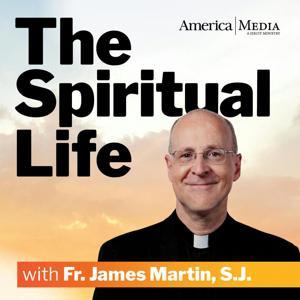
1,138 Listeners