
Sign up to save your podcasts
Or

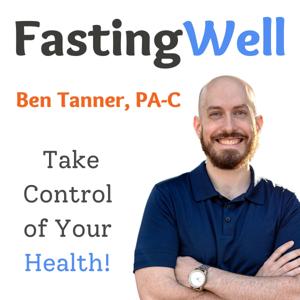


Today I explain various types of intermittent fasting. I also give several tips about choosing the best type of fasting for your individual circumstances. There are infinite versions of intermittent fasting, so I can’t cover all of them! But I tried to at least include all the common ones that you’ll hear about. I cover mini-fasts, time-restricted eating, the warrior diet, OMAD (one meal a day), eat stop eat, alternate-day fasting, and the 5:2 diet. I shared various personal experiences, along with tips and tricks about how to decide when to switch and try something new.
Join the 10-Day No Snacking Challenge: https://fastingwell.com/join-no-snacking-challenge/
Full show notes and resources here: https://fastingwell.com/episode17/
What is hunger? I suspect it’s different for each person. Using mindfulness can help you understand your own version of hunger. And knowing some practical strategies can help you reduce the amount of hunger you feel.
In this episode I explain 2 primary things that I believe cause hunger. Then I explain what you can do if you start to feel hungry when you’re fasting. If you’re fasting and you feel hungry, the first step is to pay attention, or observe. That’s called mindfulness. When you watch and wait, hunger will often go away on its own. The second step is to boost your electrolytes--especially salt. The third step is to use “training wheels”. Typically at least one of those steps will be enough to help you complete your fast, even if you feel hungry.
Blog version: https://fastingwell.com/hunger-while-fasting/
Download the “Dirty Fasting Cheat Sheet” here: https://fastingwell.com/get-dirty-fasting-cheat-sheet/
Full show notes and resources here: https://fastingwell.com/episode16/
Improving your health habits is basically the opposite of making a New Year's resolution. When people make resolutions, they tend to get really excited and try to make a big change, but typically it doesn't last very long. In contrast, building better health habits involves using time-tested strategies, easing into it, and being consistent so you can form a new identity.
Today I'll explain several key strategies you can use to form better health habits. By applying these principles, you'll be much more likely to actually improve your health versus just making a New Year's resolution.
Blog post about creating better health habits: https://fastingwell.com/atomic-habits-fasting-fitness/
Full show notes and resources here: https://fastingwell.com/episode15/
Join the No Snacking Challenge: https://fastingwell.com/join-no-snacking-challenge/
Cutting out snacks is basically the first step step if you want to try fasting. It also has various health benefits on its own. To help you get started, I created a 10-day challenge where you can score points for each "mini fast" you do. A "mini fast" means avoiding snacks between 2 meals (like breakfast and lunch, or lunch and dinner). You use a PDF score sheet to keep track of your progress.
Even though I'm releasing this around New Year's, this is not a typical New Year's resolution. The goal here is to help you ease into fasting slowly, so you can be consistent for a while and start to build a new health identity.
Get the full details and join the challenge here: https://fastingwell.com/challenge
Megan Ramos is an expert on therapeutic fasting. She’s worked with thousands of patients and seen amazing results with intermittent fasting as the primary tool. Today we discuss fasting to reverse diabetes, along with other impressive results Megan has seen with health conditions such as high blood pressure, PCOS, obesity, anxiety, depression, and more. Megan covers the methods she’s used, how long it usually takes to see major improvements, and other insights.
Later in the episode, Megan shares some golden tips about how to use therapeutic fasting in a family setting, and her top beginner fasting tips.
YouTube version of this interview: https://youtu.be/CC8b5uRvdvc
Full show notes and resources: https://fastingwell.com/episode14/
Today I explain the difference between “clean fasting” and “dirty fasting” (aka modified fasting). That includes the pros & cons of each type, as well as how to do a dirty or modified fast. I also share 2 stories about prolonged fasts I’ve done to illustrate some of the key points.
The bottom line? Dirty fasting is a great option for most beginners because it's more flexible, easier to do, but still gives you most of the health benefits you're probably looking for (like improved blood sugar, better insulin sensitivity, or fat loss, to name a few).
Download the “Dirty Fasting Cheat Sheet” here: https://fastingwell.com/dirty
Full show notes and resources here: https://fastingwell.com/episode13/
Today I share several interesting health benefits you can potentially get from extended fasting. I think this is a fun topic, and can be really motivating!
Benefits of prolonged fasting (>24 hours) include improved metabolic health, lower disease risk, an autophagy boost, fewer autoimmune symptoms, a more positive mood, and more!
Full show notes and resources here: https://fastingwell.com/episode12/
Today I’m answering the questions you’ve sent me in recent months. I cover quite a few topics, including various aspects of extended fasting, how to approach weight loss, ketone supplements (aka exogenous ketones), healthy versus unhealthy fats, and several more! If I didn't answer your question today, keep it ready for next time.
Full show notes and resources here: https://fastingwell.com/episode11/
Feasting is a normal part of our culture, but it can also easily get out of hand. Today I share several practical tips to help you limit the damage, and stay in control during holiday feasts or similar occasions. I also share suggestions about how to get back on track after a feast, including how to use time-restricted eating or fat fasting. Hope it helps!
Full show notes and resources here: https://fastingwell.com/episode10/
Brian Sanders started out as an engineer but later dedicated himself to learning about health and nutrition after both his parents died prematurely. For the past 8 years, he’s been on that journey, sharing what he learns through his podcast, his websites, and his upcoming documentary, Food Lies.
Among the topics we discuss: Why are people so dogmatic about nutrition, Brian’s health journey, various health myths, having an open mind, the optimal way of eating, the ethics of food production, the #1 change that will bring you the biggest health improvement...and more!
Full show notes and resources: https://fastingwell.com/episode9/
YouTube playlist w/ several clips from this interview: https://youtube.com/playlist?list=PLwJAJnyj4ISREdtL556TylY6BNaiNcO6-
From the publisher's feed
78,422 Listeners
3,399 Listeners

3,602 Listeners
99 Listeners
404 Listeners

29,204 Listeners

2,031 Listeners

19,254 Listeners
1,285 Listeners