The Fix

The Fix

Download on the App Store

The Fix episodes

  • May Habib: Is Zoom Making Your Work Culture Toxic?

    When millions of U.S. office workers were sent to work from home in March to curb the spread of the coronavirus, employers did something few have done successfully at scale — they sent corporate culture home with them.

    For several weeks in the spring, office professionals banded together to adjust to a new way of living and working online. But as weeks of remote work have stretched into months, it’s becoming clear the toxic environment sometimes housed in office cubicles and shared break rooms is moving into workers’ homes, too.

    On today’s episode, May Habib, CEO of Writer, recently released findings from a new survey that sheds light on the state of workplace communication during the pandemic. The company surveyed more than 1,000 employees on how they interact with co-workers over media such as chat and videoconference and found that racial and ethnic minority participants reported a far higher incidence of toxic communication, such as racist, discriminatory, bullying, and sexually inappropriate messages, than white people do.

    17 min
  • Michelle King: How To Get More Women In Power And Keep Them There

    Last weekend, Kamala Harris made history when she became America's first female, first Black and first South Asian vice president-elect, representing a new face of political power. The California senator's history-making win also represents the millions of women in the demographics -- often overlooked, historically underrepresented, and systematically ignored -- who are now the recipients of that new power for the first time in the country's 200-plus-year history.


    On this special episode, my former UN Women colleague, Selina Suresh, will be interviewing me on how we can get more women, like Kamala into positions of power, and more importantly, keep them there.

    30 min
  • Casey Welch: What The Generation Z Wants

    Americans – Generation Z (“Gen Z”). Born after 1996, most members of this generation are not yet old enough to vote, but as the oldest among them turn 23 this year, roughly 24 million will have the opportunity to cast a ballot in November. And their political clout will continue to grow steadily in the coming years, as more and more of them reach voting age. Members of Gen Z are more racially and ethnically diverse than any previous generation, and they are on track to be the most well-educated generation yet. They are also digital natives who have little or no memory of the world as it existed before smartphones.


    Unlike the Millennials – who came of age during the Great Recession – this new generation was in line to inherit a strong economy with record-low unemployment. That has all changed now with COVID-19. There are already signs that the oldest Gen Zers have been particularly hit hard in the early weeks and months. In a March 2020 Pew Research Center survey, half of the oldest Gen Zers (ages 18 to 23) reported that they or someone in their household had lost a job or taken a cut in pay because of the outbreak.

    Aside from the unique set of circumstances in which Gen Z is approaching adulthood, what do we know about this new generation? To understand the generational differences and why they matter, Casey Welch, CEO of Tallo, a platform that helps Gen Z find scholarship, university, and job opportunities will be joining us on this episode to better understand the challenges and opportunities facing the Gen Z.

    22 min
  • Justyn Hintze: Surviving a Hostile Work Environment

    A survey released this month by Women Who Tech, which includes responses from 1,003 tech employees, founders, and investors, globally found that nearly 50% of women founders and women working in tech have experienced harassment — a statistic that has barely budged since 2017.


    When asked what kind of sexual harassment, 65% of women founders said they were propositioned for sex. In addition:
    • 59% of women experienced unwanted physical contact
    • 56% of women had sexual slurs directed at them
    • 32% of women were groped
    • 24% of women were sent graphic photos

    On this episode, Justyn Hintze, Director of Women Who Tech, will share the report findings and help explain why there has been such little progress when it comes to creating a safe, welcoming work environment for women in technology.

    19 min
  • Benjamin Mertz: How To Heal Racism

    If you are committed to tackling inequality, racism, sexism, classism, ableism, at some point in undertaking this work, you will realize that the work begins with each of us. We have to address our own racist and sexist beliefs on a daily basis, with the curiosity and compassion needed to transform these beliefs.


    Today’s episode is a special one that features Benjamin Mertz, a composer, performer, and song leader who specializes in music of the Black Spiritual tradition. Benjamin is a human rights and racial justice activist. On this episode, you will get a glimpse into how he uses the power of music, storytelling, and human emotions to heal racial divides.

    26 min
  • Jessica Teresi: A Survivor's Guide

    Since the outbreak of COVID-19, emerging data and reports from those on the front lines, have shown that all types of violence against women and girls, particularly domestic violence, has intensified. Isolation makes the situation worse, as women and girls are more vulnerable, because of a lack of established social support systems. The temporary shutdown of non-essential businesses has led to unemployed and economic strain and quarantine conditions are associated with alcohol abuse and depression. All of this coupled with the stay-at-home orders have led to the global increase in domestic violence. This is the "Shadow Pandemic" growing amidst the COVID-19 crisis. As COVID-19 cases continue to strain health services, essential services, such as domestic violence shelters and helplines, have reached capacity. More needs to be done to prioritize addressing violence against women in COVID-19 response and recovery efforts.


    On today’s podcast, Jessica Teresi, survivor of childhood sexual abuse and intimate partner violence, an advocate for change and an expert in sexual violence trauma and prevention will unpack the key factors that lead someone to become a domestic abuser, and what we can do to tackle this important issue.

    27 min
  • Pamela Fuller: Unconscious Bias Training Does Not Work, Here’s How To Fix It

    There is growing research demonstrating how ineffective unconscious bias training is. A longitudinal study found that traditional diversity trainings are the least effective efforts in increasing numbers of underrepresented minorities, while experimental research has shown that presenting evidence that people commonly rely on stereotypes — information often found in diversity trainings — isn’t helpful and can even condone the use of stereotypes.


    One of the major challenges is simply telling people they are biased. Furthermore, telling people that biases are unconscious encourages them to believe that there is nothing they can do about it — as it's unconscious after all! So how can we fix this? The aim is to enable employees to become conscious decision-makers, as they are aware of their biases and know how to overcome them in decision-making processes. To explore how we can make this shift, Pamela Fuller, a FranklinCovey’s thought-leader on unconscious bias, and co-author of the upcoming book "The Leader’s Guide to Unconscious Bias: How to Reframe Bias, Cultivate Connection, and Create High-Performing Teams", will share how we can overcome our unconscious biases and make more effective and equitable decisions at work.

    20 min
  • Rita Clifton: Imposter Syndrome

    Imposter syndrome was first identified in 1978 by psychologists Pauline Rose Clance and Suzanne Imes. In their paper, they theorized that women were uniquely affected by imposter syndrome. Since then, research has shown that both men and women experience imposter feelings, and Clance published a later paper acknowledging that impostor syndrome is not limited to women.


    On this episode, Rita Clifton, author of "Love Your Imposter: Be Your Best Self, Flaws and All" will tackle the myth that you need to 'fake it until you make it', arguing that being yourself is your greatest weapon and why workplaces need authenticity more than employees do.

    19 min
  • Edward Hess: How To Make Your Workplace Human

    Today, employees must manage both a virtual workplace and a work environment at home. This takes different types of skills, like online collaboration, delegation, and time management. For leaders, the primary concern is how to ensure engagement, wellbeing, and inclusion in a virtual work environment. Employee engagement is critical to enabling creativity, innovation, problem-solving, productivity, and profits. And what enables engagement? Leadership.


    On this episode, Edward Hess, author of the new book "Hyper-Learning: How to Adapt to the Speed of Change" and Professor of Business Administration, Batten Fellow and a senior executive with more than 20 years of experience working in corporate America, will share why the old, control and command, fear- and ego-based ways of working and leading won’t survive and why the workplaces of the future will be more human.

    24 min
  • Frances Frei: How To Tell If Your Workplace Is Toxic

    In 2018, Uber Founder Travis Kalanick stepped down as CEO following a number of public scandals, which revealed the toxic organizational culture. Studies show that 40% of women with engineering degrees quit or never enter the profession, with the vast majority leaving due to hostile work environments. But how do so many young tech companies develop these types of toxic atmospheres and what can we learn from cases like these?


    This week, we are joined by Frances Frei, Professor of Technology and Operations Management at Harvard Business School and a workplace culture expert who helped turn Uber's culture around — serving as the company's first SVP of leadership and strategy. In this episode, Frances talks to us about how we can tell if our workplace is toxic and what companies can do to fix this.

    23 min

About The Fix

From the publisher's feed

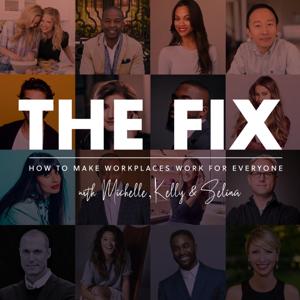
The Fix is a podcast that shares stories of women and men who are taking action and innovating to advance equality in the workplace and beyond.

More shows like The Fix

Hidden Brain by Hidden Brain, Shankar Vedantam

Hidden Brain

43,362 Listeners

The NPR Politics Podcast by NPR

The NPR Politics Podcast

25,768 Listeners

Coaching for Leaders by Dave Stachowiak

Coaching for Leaders

1,458 Listeners

Being Well with Forrest Hanson and Dr. Rick Hanson by Rick Hanson, Ph.D., Forrest Hanson

Being Well with Forrest Hanson and Dr. Rick Hanson

2,518 Listeners

The Diary Of A CEO with Steven Bartlett by DOAC

The Diary Of A CEO with Steven Bartlett

8,527 Listeners

Modern Wisdom by Chris Williamson

Modern Wisdom

4,104 Listeners

Happy Place by Fearne Cotton

Happy Place

915 Listeners

On Purpose with Jay Shetty by Perfect Strangers

On Purpose with Jay Shetty

27,826 Listeners

Life Kit by NPR

Life Kit

4,765 Listeners

A Bit of Optimism by Simon Sinek

A Bit of Optimism

2,211 Listeners

We Can Do Hard Things by Treat Media and Glennon Doyle

We Can Do Hard Things

41,388 Listeners

The News Agents by Global

The News Agents

1,119 Listeners

The Mel Robbins Podcast by Mel Robbins

The Mel Robbins Podcast

19,273 Listeners

HBR On Leadership by Harvard Business Review

HBR On Leadership

156 Listeners

Great Company with Jamie Laing by Jampot Productions

Great Company with Jamie Laing

331 Listeners