
Sign up to save your podcasts
Or

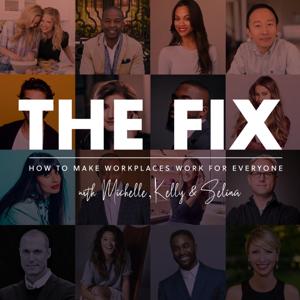


Women who might have been considered for leadership roles often find that their dedication and capability are called into question as they approach motherhood. Simply being at a point in life where society assumes that women might want to have children can stall their career progression. Motherhood is a clear sign women are betraying the ideal worker standard. When women go on maternity leave, return to work, or take up flexible workplace practices, they face a range of beliefs and behaviors that serve to devalue them and their contribution. With COVID-19, these challenges have never been more difficult to overcome, as women are more likely to care for children and support them with homeschooling, while at the same time working from home. Women do all of this and then are more likely to be penalized for it, by their employers as they are perceived to be less committed, ambitious and serious about their work. To support women at work, we need company cultures that provide more than accommodations. We need leaders who adopt and value family-friendly practices.
Today, companies want you to believe that they are not just selling a car, shampoo, or a pair of jeans, but rather they are fighting for gender and racial equality in an attempt to connect with millennials who are willing to spend more money on socially conscious products. Brands have started using progressive values as a marketing ploy and are appropriating social activism as a form of advertising.
Perfectionism, the need to look, act and be perceived in an ideal way is on the rise. As many as two in five kids and adolescents are perfectionists. But, perfectionism is not so much about how you behave and more about how you think about yourself.
The first unemployment wave in the United States due to the COVID-19 pandemic has disproportionately impacted women. When the pandemic first hit in March, over 700,000 people lost their jobs and nearly 60% of them were women, according to the United States Labor Department. Not much has changed since then.
The deaths and disappearances of women and girls in Juarez, which sits adjacent to El Paso, Texas, on the U.S.-Mexico border, and in other parts of Mexico had once dominated international headlines. But in recent years, attention had evaporated.
People are disabled by the barriers they encounter in society, and not by their differences. By viewing it in this way, we can begin to tackle ableism and start to identify all the barriers that prevent people with impairments from having equal opportunities in life. Creating equality and valuing each other in the same way begins with how we view the problem.
We all know that the COVID-19 virus is spreading at an alarming rate, but fear and panic can spread even faster. Fortunately, there are steps we can take right now to boost our emotional response to the never ending anxiety, fear and panic created by this pandemic. Research finds that we tend to be influenced by other peoples’ behaviors and emotions and we might even copy them. While this might not be a problem most of the time, it can be really unhelpful during a crisis.
In order to break down systemic barriers that exist in the technology and venture capital industry, it is important to understand the core challenges that ultimately set the stage for why Black founders receive less than 1% of venture capital. This week’s guest is Dave Jakubowski, co-founder of Ureeka, an online community that connects small to mid-sized underrepresented business owners to peers, mentors and coaches, and vetted resources to access capital.
--
Get a copy of my book "The Fix: Overcome the Invisible Barriers That Are Holding Women Back at Work"
Or get the audio book here:
Audible: https://adbl.co/2sLCbEH
Google Play: http://bit.ly/38w03er
--
To check out episodes you missed or learn how to partner with us, visit thefixpodcast.org
Sign up for my newsletter: thefixpodcast.org/newsletter
Check out my website: michellepking.com
This show is produced by Hueman Group Media.
In the United States, women make up 47% of the total workforce. But professional female pilots constitute five percent of the piloting workforce, a statistic that has remained unmoved in four decades. Compared to other STEM fields and “traditionally” male-dominated industries, aviation has one of the lowest percentages of women.
--
Get a copy of my book "The Fix: Overcome the Invisible Barriers That Are Holding Women Back at Work"
Or get the audio book here:
Audible: https://adbl.co/2sLCbEH
Google Play: http://bit.ly/38w03er
--
To check out episodes you missed or learn how to partner with us, visit thefixpodcast.org
Sign up for my newsletter: thefixpodcast.org/newsletter
Check out my website: michellepking.com
This show is produced by Hueman Group Media.
Managing a remote workforce is not as simple as telling everyone they can work from home. In fact, companies have been trying this for a long time and failing badly. Jodi Geddes co-founder of Circle In, which helps companies to support working parents, will be joining us on this episode to discuss results from a new online global survey her company undertook. The study finds that COVID-19 has changed people’s demands and expectations of working life.
--
Get a copy of my book "The Fix: Overcome the Invisible Barriers That Are Holding Women Back at Work"
Or get the audio book here:
Audible: https://adbl.co/2sLCbEH
Google Play: http://bit.ly/38w03er
--
To check out episodes you missed or learn how to partner with us, visit thefixpodcast.org
Sign up for my newsletter: thefixpodcast.org/newsletter
Check out my website: michellepking.com
This show is produced by Hueman Group Media.
From the publisher's feed

43,362 Listeners

25,768 Listeners

1,458 Listeners

2,518 Listeners

8,527 Listeners

4,104 Listeners

915 Listeners

27,826 Listeners

4,765 Listeners

2,211 Listeners

41,388 Listeners

1,119 Listeners

19,273 Listeners

156 Listeners

331 Listeners