
Sign up to save your podcasts
Or

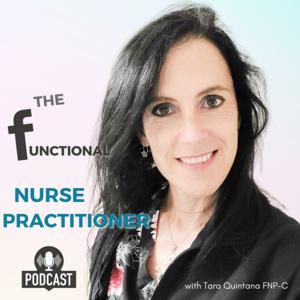


Today I talk with Cynthia Thurlow. We are diving deep into intermittent fasting and get into the benefits, myths, and crucial considerations. Cynthia is a nurse practitioner with over 20 years of clinical experience in both emergency and cardiac medicine. She is the CEO and founder of the Everyday Wellness podcast. Cynthia is one of the leading functional nutritionists and intermittent fasting experts, a two-time TEDx speaker and Cynthia just happens to be a best-selling author of the book Intermittent Fasting Transformation: The 45- Day Program for Women to Lose Stubborn Weight, Improve Hormonal Health, and Slow Aging.
Today we discuss:
Connect with Cynthia Thurlow:
Visit her website: https://cynthiathurlow.com/
Get a copy of her bestselling book: https://amzn.to/3Bqqgfa
Everyday Wellness Podcast on Spotify: https://open.spotify.com/show/5GRmQSxzZtbO0RtAeQl8gM?si=4e02d55dbae34073
Just a quick disclaimer that this podcast is meant for educational purposes only and is not meant to diagnose or be a substitute for medical advice from your practitioner. Never disregard professional medical advice or delay seeking care because of anything you heard on the podcast or on my website.
Schedule a Free Consultation on My Website: https://thefunctionalnursepractitioner.com/
** Follow me on Instagram: https://www.instagram.com/thefunctionalnursepractitioner/
** Follow me on Facebook: https://www.facebook.com/thefunctionalnursepractitioner
Today we are talking about supplementation. This is such a hot topic – one I am very passionate about. I am a fan of supplements – as the name implies, they can supplement your health. What I am not a fan of, however, are blind protocols. You definitely want to listen to this episode!
** Follow me on Facebook: https://www.facebook.com/thefunctionalnursepractitioner
Intestinal Permeability in Inflammatory Bowel Disease: Pathogenesis, Clinical Evaluation, and Therapy of Leaky Gut: https://pubmed.ncbi.nlm.nih.gov/26582965/
Intestinal Permeability, Inflammation and the Role of Nutrients: https://www.ncbi.nlm.nih.gov/pmc/articles/PMC7231157/
Intestinal permeability and inflammation mediate the association between nutrient density of complementary foods and biochemical measures of micronutrient status in young children: results from the MAL-ED study: https://academic.oup.com/ajcn/article/110/4/1015/5544359
Intermediate role of gut microbiota in vitamin B nutrition and its influences on human health: https://www.ncbi.nlm.nih.gov/pmc/articles/PMC9792504/
DNA Adducts: formation, biological effects, and new biospecimens for mass spectrometric measurements in humans: https://www.ncbi.nlm.nih.gov/pmc/articles/PMC6289887/
Genetic polymorphisms in Glutathione S-transferase Omega (GSTO) and cancer risk: a meta-analysis of 20 studies: https://www.ncbi.nlm.nih.gov/pmc/articles/PMC4192632/
Total, Dietary, and Supplemental Vitamin C Intake and Risk of Incident Kidney Stones: https://www.ncbi.nlm.nih.gov/pmc/articles/PMC4769668/
Clinical relevance of St. John's wort drug interactions revisited: https://www.ncbi.nlm.nih.gov/pmc/articles/PMC7056460/
Today we are going to talk about why you should consider working with a Functional Medicine Practitioner! This is going to be a fabulous episode where we really dive into what is lacking in conventional medicine, and what you can expect when working with a functional medicine practitioner.
Chronic disease is a serious issue that affects a significant portion of the US population. It’s alarming to know that 6 out of 10 adults are battling with a chronic disease, while 4 out of 10 are struggling with at least two. Unfortunately, the prevalence of chronic disease is on the rise, and it’s the leading driver of our nation’s staggering $4.1 trillion in annual healthcare costs.
We believe that chronic disease requires a different approach, one that goes beyond conventional medicine and cookie-cutter treatments. Functional medicine offers a cutting-edge approach that seeks to uncover the underlying causes of your symptoms. Instead of just containing the fire, we strive to understand why the fire started in the first place. We need to dig deep and truly understand your unique story to unravel the disease and develop a personalized plan for your care.
Just a quick disclaimer that this podcast is meant for educational purposes only and is not meant to diagnose or be a substitute for medical advice from your practitioner. Never disregard professional medical advice or delay seeking care because of anything you heard on the podcast or on my website.
** Follow me on Facebook: https://www.facebook.com/thefunctionalnursepractitioner
Today we are going to talk about fibroids. We are going to discuss what fibroids are, symptoms of fibroids, risk factors for developing fibroids, and we are going to talk about how fibroids are diagnosed. Then we will get into the nitty gritty of different management strategies. This is going to be a banger of an episode! The more I dove into the research, the more truly fascinating evidence based information I found. And - This is such an important topic as fibroids are very common.
Just a quick disclaimer that this podcast is meant for educational purposes only and is not meant to diagnose or be a substitute for medical advice from your practitioner. Never disregard professional medical advice or delay seeking care because of anything you heard on the podcast or on my website.
** Follow me on Instagram: https://www.instagram.com/thefunctionalnursepractitioner/
** Interesting articles for more information**
Epidemiology and management of uterine fibroids: https://pubmed.ncbi.nlm.nih.gov/31960950/
The role of endocrine-disrupting chemicals in uterine fibroid pathogenesis: https://pubmed.ncbi.nlm.nih.gov/33044243/
Vitamin D and uterine fibroid growth, incidence, and loss: a prospective ultrasound study: https://pubmed.ncbi.nlm.nih.gov/36150919/
Macrophages and Immune Responses in Uterine Fibroids: https://pubmed.ncbi.nlm.nih.gov/33922329/
Burden, Prevalence, and Treatment of Uterine Fibroids: A Survey of U.S. Women: https://pubmed.ncbi.nlm.nih.gov/30230950/
Impact of Contraception on Uterine Fibroids: https://pubmed.ncbi.nlm.nih.gov/34356998/
Estimating uterine fibroid SNP-based heritability in European American women with imaging confirmed fibroids: https://pubmed.ncbi.nlm.nih.gov/31480066/
Fibroids (uterine myomatosis, leiomyomas): https://pubmed.ncbi.nlm.nih.gov/26032466/
The past, present, and future of selective progesterone receptor modulators in the management of uterine
Dietary Natural Compounds and Vitamins as Potential Cofactors in Uterine Fibroids Growth and Development: https://www.ncbi.nlm.nih.gov/pmc/articles/PMC8880543/
Comprehensive Review of Uterine Fibroids: Developmental Origin, Pathogenesis, and Treatment: https://academic.oup.com/edrv/article/43/4/678/6422392
The Role of Cell Proliferation and Extracellular Matrix Accumulation Induced by Food Additive Butylated Hydroxytoluene in Uterine Leiomyoma: https://pubmed.ncbi.nlm.nih.gov/34578952/
Blood cadmium and volume of uterine fibroids in premenopausal women: https://www.ncbi.nlm.nih.gov/pmc/articles/PMC5480419/
Uncovering Evidence: Associations between Environmental Contaminants and Disparities in Women’s Health: https://www.mdpi.com/1660-4601/19/3/1257
Efficacy and safety of traditional Chinese herbal formula combined with western medicine for uterine fibroid: https://www.ncbi.nlm.nih.gov/pmc/articles/PMC7478476/pdf/medi-99-e22039.pdf
Uterine Fibroids: Hiding in Plain Sight: https://pubmed.ncbi.nlm.nih.gov/34964688/
Today is our final segment of the cholesterol series. We will be getting into the nitty gritty of cholesterol management. This is a big topic. I will not be going down different medication pathways as this is so dependent on your unique situation. Instead, we will discuss the basics. Simple and effective management strategies that can be very beneficial not only for cholesterol issues, but also overall health.
** Follow me on Instagram: https://www.instagram.com/thefunctionalnursepractitioner/
** Interesting articles for more information**
Mediterranean diet intervention in overweight and obese subjects lowers plasma cholesterol and causes changes in the gut microbiome and metabolome independently of energy intake: https://www.ncbi.nlm.nih.gov/pmc/articles/PMC7306983/
CORONARY DIET INTERVENTION WITH OLIVE OIL AND CARDIOVASCULAR PREVENTION STUDY (THE CORDIOPREV STUDY): RATIONALE, METHODS, AND BASELINE CHARACTERISTICS: A CLINICAL TRIAL COMPARING THE EFFICACY OF A MEDITERRANEAN DIET RICH IN OLIVE OIL VERSUS A LOW-FAT DIET ON CARDIOVASCULAR DISEASE IN CORONARY PATIENTS.: https://www.ncbi.nlm.nih.gov/pmc/articles/PMC4910622/
Red Yeast Rice for Hypercholesterolemia: https://www.ncbi.nlm.nih.gov/pmc/articles/PMC6822657/
Effect of Monacolin K and COQ10 supplementation in hypertensive and hypercholesterolemic subjects with metabolic syndrome: https://www.ncbi.nlm.nih.gov/pmc/articles/PMC6361161/
Nutraceutical Combinations in Hypercholesterolemia: Evidence from Randomized, Placebo-Controlled Clinical Trials: https://www.ncbi.nlm.nih.gov/pmc/articles/PMC8470433/
Unripe Black Raspberry (Rubus coreanus Miquel) Extract and Its Constitute, Ellagic Acid Induces T Cell Activation and Antitumor Immunity by Blocking PD-1/PD-L1 Interaction: https://www.mdpi.com/2304-8158/9/11/1590
Consequences of Cardiovascular Drug-Induced Nutrient Depletion: https://thoracickey.com/consequences-of-cardiovascular-drug-induced-nutrient-depletion/
Dietary curcumin inhibits atherosclerosis by affecting the expression of genes involved in leukocyte adhesion and transendothelial migration: https://pubmed.ncbi.nlm.nih.gov/22753158/
Probiotics and Their Potential Preventive and Therapeutic Role for Cancer, High Serum Cholesterol, and Allergic and HIV Diseases: https://pubmed.ncbi.nlm.nih.gov/30246019/
Naturally Occurring PCSK9 Inhibitors: https://pubmed.ncbi.nlm.nih.gov/32429343/
Hypolipemic and hypoglycemic activity of bergamot polyphenols: from animal models to human studies: https://pubmed.ncbi.nlm.nih.gov/21056640/
Green tea catechins decrease total and low-density lipoprotein cholesterol: a systematic review and meta-analysis: https://pubmed.ncbi.nlm.nih.gov/22027055/
Supplementation with coenzyme Q10 reduces plasma lipoprotein(a) concentrations but not other lipid indices: A systematic review and meta-analysis: https://pubmed.ncbi.nlm.nih.gov/26836888/
Adding Soluble Fiber to Lower Your Cholesterol Advice from the National Lipid Association Clinician’s Lifestyle Modification Toolbox: https://www.lipid.org/sites/default/files/adding_soluble_fiber_final_0.pdf
The Immunomodulation and Anti-Inflammatory Effects of Garlic Organosulfur Compounds in Cancer Chemoprevention: https://www.ncbi.nlm.nih.gov/pmc/articles/PMC3915757/
The Relationship between Dietary Fatty Acids and Inflammatory Genes on the Obese Phenotype and Serum Lipids: https://www.ncbi.nlm.nih.gov/pmc/articles/PMC3708344/
Today we are continuing our cholesterol series. In part one – we discussed what cholesterol actually is. We learned that our body needs cholesterol in order to build healthy cells. Cholesterol is a part of the outer layer of our cells, the membrane of the cells. It is also the initial part of the steroidogenic pathway. In part two we dove deep into LDL and HDL. We discussed that cholesterol cannot travel throughout the body on its own – it needs a friend. LDL is responsible for moving cholesterol throughout the body to the tissues, whereas HDL’s role is to bring cholesterol from the tissues back to the liver. If you missed either of those episodes, I highly suggest you go back and listen to episodes 18 and 19. The information discussed in those shows will help to build the foundation for better understanding your cardiovascular health. In part three, we dove deep into apolipoproteins. We talked about their role in the regulation of lipoprotein metabolism and their impact on atherosclerotic disease. We discussed the differences between apolipoprotein B and apolipoprotein A. Today will focus on genetics with regards to cholesterol. This is a crucial consideration in order to optimize treatment strategies. We will discuss several different genes that play a vital role with cardiovascular health.
** Follow me on Instagram: https://www.instagram.com/thefunctionalnursepractitioner/
** Level up your products: https://www.ewg.org/ewgverified/
** Find a certified Functional Medicine Practitioner: https://www.ifm.org/find-a-practitioner/
** Interesting articles for more information**
The Relationship between Dietary Fatty Acids and Inflammatory Genes on the Obese Phenotype and Serum Lipids: https://www.ncbi.nlm.nih.gov/pmc/articles/PMC3708344/
Hypercholesterolemia: The role of PCSK9: https://pubmed.ncbi.nlm.nih.gov/28587771/
Guidelines for Diagnosis and Treatment of Familial Hypercholesterolemia 2017: https://www.ncbi.nlm.nih.gov/pmc/articles/PMC6099072/
Familial Hypercholesterolemia: https://www.cdc.gov/genomics/disease/fh/FH.htm
Impact of Statins on Cardiovascular Outcomes Following Coronary Artery Calcium Scoring: https://www.ncbi.nlm.nih.gov/pmc/articles/PMC6309473/
Development and validation of an isoform-independent monoclonal antibody–based ELISA for measurement of lipoprotein(a): https://www.ncbi.nlm.nih.gov/pmc/articles/PMC9352967/
Statin Effects on Vascular Calcification: https://www.ahajournals.org/doi/epub/10.1161/ATVBAHA.120.315737
Lipoprotein (a): truly a direct prothrombotic factor in cardiovascular disease?: https://www.sciencedirect.com/science/article/pii/S0022227520309792#:~:text=Elevated%20Lp(a)%20levels%20have,fibrinolysis%20(86%2C%2087)
Lipoprotein Lipase: Is It a Magic Target for the Treatment of Hypertriglyceridemia: https://www.ncbi.nlm.nih.gov/pmc/articles/PMC9449100/
APOC-III: a Gatekeeper in Controlling Triglyceride Metabolism: https://www.ncbi.nlm.nih.gov/pmc/articles/PMC9947064/
Today we have a very special guest – Dr. Carrie Jones. Dr. Jones is a naturopathic physician, functional medicine, and hormone specialist, with over 17 years of experience in the field of functional and integrative medicine. Dr. Jones is board certified in Naturopathic Endocrinology with a master's degree in public health. She has taught courses in both Gynecology and Advanced Endocrinology and is a former adjunct faculty for the National University of Natural Medicine. Dr. Jones was the Medical Director for Precision Analytical, the creators of the DUTCH test for almost a decade and currently is the head of Medical Education
Today we discuss:
Where to find Dr. Carrie Jones:
Website: https://www.drcarriejones.com/
Instagram: https://www.instagram.com/dr.carriejones/
Tik Tok: https://www.tiktok.com/@drcarriejoneshttps://www.tiktok.com/@drcarriejones
Rupa Health: https://www.rupahealth.com/https://www.rupahealth.com/
Just a quick disclaimer that this podcast is meant for educational purposes only and is not meant to diagnose or be a substitute for medical advice from your practitioner.
** Follow me on Instagram: https://www.instagram.com/thefunctionalnursepractitioner/
** Level up your products: https://www.ewg.org/ewgverified/
** Find a certified Functional Medicine Practitioner: https://www.ifm.org/find-a-practitioner/
Today we are continuing our cholesterol series. In Part One we discussed what cholesterol actually is, as it is often vilified in conventional medicine. We learned that our body needs cholesterol in order to build healthy cells. Cholesterol is a part of the outer layer of our cells, the membrane of the cells. It is also the initial part of the steroidogenic pathway. In Part Two we dove deep into LDL and HDL. We discussed that cholesterol cannot travel throughout the body on its own – it needs a friend. LDL is responsible for moving cholesterol throughout the body to the tissues, whereas HDL’s role is to bring cholesterol from the tissues back to the liver. Today we are going to discuss apolipoproteins, in particular, Apo B and Apo A. We are going to talk about what they are – the role they play in the body – the cardiovascular risks or benefits associated with higher levels.
Just a quick disclaimer that this podcast is meant for educational purposes only and is not meant to diagnose or be a substitute for medical advice from your practitioner.
** Follow me on Instagram: https://www.instagram.com/thefunctionalnursepractitioner/
** Level up your products: https://www.ewg.org/ewgverified/
** Find a certified Functional Medicine Practitioner: https://www.ifm.org/find-a-practitioner/
** Interesting articles for more information**
ApoPred: Identification of Apolipoproteins and Their Subfamilies With Multifarious Features: https://www.frontiersin.org/articles/10.3389/fcell.2020.621144/full
Effect of APOB polymorphism rs562338 (G/A) on serum proteome of
Biochemistry, Apolipoprotein B: https://www.ncbi.nlm.nih.gov/books/NBK538139/
Apolipoprotein B and Cardiovascular Disease: Biomarker and Potential Therapeutic Target: https://www.ncbi.nlm.nih.gov/pmc/articles/PMC8540246/
Physiological Bases for the Superiority of Apolipoprotein B Over Low-Density Lipoprotein Cholesterol and Non–HighDensity Lipoprotein Cholesterol
The Association between Apolipoprotein B, Cardiovascular Risk Factors and Subclinical Atherosclerosis—Findings from the SEPHAR National
Pleiotropic Effects of APOB Variants on Lipid Profiles, Metabolic Syndrome, and the Risk of Diabetes Mellitus: https://www.ncbi.nlm.nih.gov/pmc/articles/PMC9735756/
Apolipoprotein B Displays Superior Predictive Value Than Other Lipids for Long-Term Prognosis in Coronary Atherosclerosis Patients and
ApoB and Non-HDL Cholesterol Versus LDL Cholesterol for Ischemic Stroke Risk: https://www.ncbi.nlm.nih.gov/pmc/articles/PMC9545003/
Glycation Reduces the Stability of ApoAI and Increases HDL Dysfunction in Diet-Controlled Type 2 Diabetes: https://www.ncbi.nlm.nih.gov/pmc/articles/PMC5800833/
HDL Particle Subspecies and Their Association With Incident Type 2 Diabetes: The PREVEND Study: https://www.ncbi.nlm.nih.gov/pmc/articles/PMC8118359/
Apolipoprotein B and Cardiovascular Disease: Biomarker and Potential Therapeutic Target: https://www.mdpi.com/2218-1989/11/10/690
A Role for Proteoglycans in Vascular Disease: https://www.ncbi.nlm.nih.gov/pmc/articles/PMC6110991/
Association of apolipoprotein A1 with osteoporosis: a cross-sectional study: https://pubmed.ncbi.nlm.nih.gov/36864426/
Human apoA-I[Lys107del] mutation affects lipid surface behavior of apoA-I and its ability to form large nascent HDL: https://www.ncbi.nlm.nih.gov/pmc/articles/PMC9926306/
ApoA1 and ApoA1-specific self-antibodies in cardiovascular disease: https://www.nature.com/articles/labinvest201656
Today we have a very special guest – Dr. Heather Zwickey. Dr. Zwickey is a researcher, teacher, and mentor who earned a PhD in immunology and microbiology from the University of Colorado Health Sciences Center with a focus on infectious disease and vaccine development. She then went on and completed a postdoctoral fellowship and taught at the School of Medicine at Yale University where she focused on immunotherapy for cancer at NUNM. Dr. Zwickey then launched the Helfgott Research Institute and also established the school of graduate studies, developing masters’ programs in nutrition, research, and global health. Dr. Zwickey currently leads an NHS funded clinical research training program, teaches at many universities, and speaks at conferences around the world. She is passionate about the microbiome, and in particular the gut/brain axis, neuroinflammation, and psychoneuroimmunology, aiming to spread the word on how the immune system, nervous system, and our endocrine system interact.
Today we discuss:
Where to find Dr. Heather Zwickey:
Website: https://www.heatherzwickey.com/
Instagram: https://www.instagram.com/hzwickey/
Just a quick disclaimer that this podcast is meant for educational purposes only and is not meant to diagnose or be a substitute for medical advice from your practitioner.
** Follow me on Instagram: https://www.instagram.com/thefunctionalnursepractitioner/
** Level up your products: https://www.ewg.org/ewgverified/
** Find a certified Functional Medicine Practitioner: https://www.ifm.org/find-a-practitioner/
** Interesting articles for more information**
The Vaginal Microbiome: V. Therapeutic Modalities of Vaginal Microbiome Engineering and Research Challenges: https://www.ncbi.nlm.nih.gov/pmc/articles/PMC8719494/
Towards a deeper understanding of the vaginal microbiota: https://www.nature.com/articles/s41564-022-01083-2
The Female Vaginal Microbiome in Health and Bacterial Vaginosis: https://www.frontiersin.org/articles/10.3389/fcimb.2021.631972/full
From the publisher's feed

21,788 Listeners

10,590 Listeners

5,194 Listeners

3,337 Listeners

84 Listeners

38 Listeners
1,685 Listeners

333 Listeners

129 Listeners
507 Listeners
106 Listeners

105 Listeners
183 Listeners

18,937 Listeners

1,220 Listeners