
Sign up to save your podcasts
Or

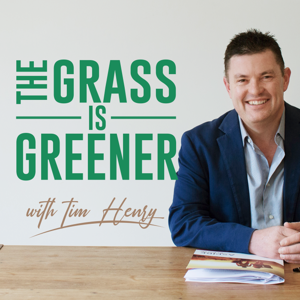


Financial advice is evolving — both in the growing role of women working within the profession and in the way advice is delivered to female consumers.
Following the FAAA Melbourne Inspire Lunch, featuring an inspiring keynote from Jelena Dokic, Tim speaks with five women from across financial services about how the profession has changed and where it needs to go next.
Featuring Amy Parsons from Futurity, Kirrily Stevens from Zurich, Laura Agnello from Count, Natallia Smith from TruWealth and Fiona Shedden from FMD.
Together, they explore the importance of attracting more women into financial advice, mentorship, diversity, financial confidence and why advice needs to be about more than investments.
Drawing on Netwealth's "Women as the New Face of Wealth" research, the episode also considers how financial advice can better engage, educate and empower women.
Because a more diverse profession, combined with a better understanding of clients, can help create better financial advice for everyone.
Connect with our guests:
https://www.linkedin.com/in/amy-parsons-3882a030/
https://www.linkedin.com/in/kirrilystevenszurich/
https://www.linkedin.com/in/laura-agnello/
https://www.linkedin.com/in/natalliasmith/
https://www.linkedin.com/in/fiona-shedden-nee-agnew-89108b64/
Jelena Dokic
https://www.icmi.com.au/jelena-dokic/?google
This week on The Grass is Greener, we're doing something a little different!
Join Tim for an audio diary of a fascinating week, beginning with an AustralianSuper investment briefing before heading to Christchurch, New Zealand, for the Count.ed 2026 annual financial advice conference.
Along the way, Tim shares his personal reflections and key takeaways from leading experts across investments, economics, demographics, leadership and human behaviour.
We also hear directly from two experts discussing retirement income solutions Catherine van der Veen from Allianz Retire+ and Steve Crawford from Challenger
It's a chance to step away from the daily headlines, explore some fresh perspectives and share the insights that really stood out.
Connect with Catherine:
https://www.linkedin.com/in/catherine-van-der-veen-a0aa6249/
Connect with Steve:
https://www.linkedin.com/in/coachcrawf/
Connect with Colette:
https://www.linkedin.com/in/colettewerden/
Challenger Retirement Happiness Index 2026
https://www.challenger.com.au/individual/Campaigns/Happiness-Index
Supporting an ageing parent can be overwhelming — particularly when decisions about care need to be made quickly.
In this episode, Tim is joined by Bec Vaughan and Jacinta Coulston from Care & Co Match to discuss how they help Australian families navigate home care, aged care and future care planning.
We explore the role of a Care Concierge, why families shouldn't wait for a crisis before discussing care, and how having an independent person involved can help when siblings or parents have different views.
Bec and Jacinta also share some powerful real-life examples of families they've supported and explain why the best aged care option isn't necessarily the newest or most impressive-looking facility.
Aspire Planning's collaboration with Care & Co Match is about ensuring our clients and their families have support around both sides of these decisions — the financial decisions and the very human decisions about how and where someone wants to live and be cared for.
Most importantly, this episode is a reminder to start the conversation with Mum and Dad while there's still plenty of time to talk about what they want.
You don't need to be an economist to benefit from understanding economics.
In this episode of The Grass is Greener, Tim is joined by AMP Chief Economist Shane Oliver for a refreshingly simple conversation about why economics matters in our everyday lives.
They discuss how inflation, interest rates, productivity and investment markets affect ordinary Australians — and why understanding the basics can help us make sense of what's happening around us without reacting to every headline.
Shane also shares his thoughts on finding credible information, being wary of sensational headlines, understanding the motivation behind what we're reading, and the importance of putting short-term events into a much longer-term context.
In this episode:
- Why economics affects all of us
- How much economics we actually need to understand
- Finding reliable economic information
- Why headlines can create unnecessary noise
- The importance of understanding context and history
- Why markets don't always react the way we expect
- The danger of reacting to short-term events
- How understanding economics can help us make more informed financial decisions
Perhaps the biggest takeaway: turn down the noise and put things in context.
Connect with Shane:
https://www.linkedin.com/in/shane-oliver-3209542/
Relevant links:AMP Economic Insights
https://www.amp.com.au/resources/insights-hub
Econosights Instgram
https://www.instagram.com/econosights/?hl=en
The cost of educating children continues to rise, and many grandparents would love to help their families — but how can they do it without overstepping?
Tim is joined by Amy Parsons from Futurity to explore how Education Bonds can give grandparents a flexible way to plan ahead for their grandchildren's education.
They discuss how grandparents can retain control of the investment while nominating grandchildren as beneficiaries, provide for multiple grandchildren, and even start planning before future grandchildren have been born.
They also explore one of the more interesting possibilities — grandparents can quietly start building an investment today and decide later when, or even whether, to tell their family about it.
Plus, Amy explains the wide range of education expenses that can potentially be covered and why Education Bonds can adapt as family circumstances change.
A great conversation for grandparents who want to give the next generation a helping hand — without getting in the way.
Connect with Amy: https://www.linkedin.com/in/amy-parsons-3882a030/Relevant links:
Futurity
https://www.futurityinvest.com.au/
Insights
https://www.futurityinvest.com.au/insights
We often talk about the importance of checking in on others and asking “Are you OK?” But how good are we at recognising when 'we’re' not OK — and having the confidence to say so?
In this episode, Tim is joined by Jack Davis, founder of It’s Cool to Cry, for an open and personal conversation about mental health, emotions and why we shouldn't wait until crisis point to start talking.
Jack shares the experiences that led him to create It’s Cool to Cry, including losing his partner Ellie to suicide and his own journey through grief. He explains how trying to suppress difficult emotions ultimately taught him the importance of acknowledging, understanding and talking about how we feel.
We discuss:
**Content note: **
This episode includes discussion of suicide, mental illness and grief.
Connect with Jack:
https://www.linkedin.com/in/jackdavis88/
Its Cool to Cry Website
https://itscooltocry.com/
What if planning for retirement didn't start with money?
In this episode of The Grass is Greener, Tim is joined by author, podcaster and retirement educator Bec Wilson, author of How to Have an Epic Retirement and Prime Time.
Bec challenges the traditional idea of retirement as simply the point where we stop working. Instead, she encourages us to think about the second half of life as a gradual transition — one where we can make increasingly deliberate choices about work, health, purpose, travel, relationships and how we use our time.
Tim and Bec discuss the importance of understanding what "enough" looks like financially. Rather than automatically continuing to climb the career ladder, knowing your number can potentially give you permission to make different choices — working less, changing careers, taking more time off or simply putting greater priority on the things that matter to you.
They also explore the emerging world of Retirement Income Solutions and the role that greater income certainty could play in retirement.
Bec and Tim also discuss the Epic Retirement Tick, Bec's work with Chant West to assess how well super funds are supporting members approaching and living in retirement.
https://epicretirement.net/about-bec-wilson/Epic Retirement Institute
https://epicretirement.net/
Bec Wilsons Book's
https://epicretirement.net/books/
Bec's 'Prime Time' Podcast
https://bit.ly/4gbgukV
You might have a Will, but does that mean your super will end up where you want it to?
Following recent ABC News coverage suggesting around 15.7 million Australians may not have a binding death benefit nomination in place, Tim takes a look at how super death benefit nominations actually work — and why simply naming someone may not be enough.
In this episode, we cover:
- Why your super doesn't automatically form part of your estate or follow your Will
- Who you're actually allowed to nominate to receive your super
- What happens if you want your super to ultimately go to someone such as a niece, nephew, sibling or friend
- The difference between binding and non-binding death benefit nominations
- Why some binding nominations expire and the role of non-lapsing nominations
- The ABC News example where a member's nominated beneficiaries ultimately didn't receive his super
- Reversionary beneficiaries for retirement pensions
- Five simple things to check on your own super death benefit nomination
The key message is simple: don't assume that having a Will means your super is sorted.
Take a few minutes to check your super account, see who you've nominated, whether your nomination is binding and current, and whether it still reflects what you actually want to happen.
A little bit of planning now can provide much greater certainty about where your super ends up when you're no longer here.
Connect with Tim:https://www.linkedin.com/in/henrytim/ABC News Article
https://bit.ly/4g8FWaS
Many Australians assume that because their superannuation is tax-free in retirement, it will also be tax-free when they leave it to their family.
Unfortunately, that's not always the case.
If your super is ultimately inherited by financially independent adult children, part of your balance could be subject to tax—potentially reducing their inheritance by thousands, or even hundreds of thousands, of dollars.
In this episode, Tim explains one of the most overlooked areas of retirement and estate planning. He unpacks the difference between tax dependants and non-tax dependants, explains the taxable and tax-free components within your super, and shares practical strategies that may help minimise future tax for your family.
In this episode you'll learn:
-Why super can still be taxed after your death
-Who is considered a tax dependant for super purposes
-Why adult children often pay tax on inherited super
-The difference between taxable and tax-free components
-How to find your tax components on your annual statement or online portal
-How a recontribution strategy can increase the tax-free component of your super
-Other strategies that may help reduce future tax, including withdrawing funds before death in appropriate circumstances
-Why estate planning should include your superannuation—not just your Will
The best place to start is simple: log in to your super fund and check the taxable and tax-free components of your account. Understanding how your super is structured today can make a significant difference to the legacy you leave tomorrow.
Connect with Tim:
https://www.linkedin.com/in/henrytim/
In this episode of The Grass Is Greener, Tim is joined by Jo Kowalczyk, CEO of Women in Super, an organisation that has spent more than 30 years advocating for better outcomes for women working within the superannuation industry and, increasingly, for better retirement outcomes for all Australian women.
Jo explains why the gender super gap is closely connected to the gender pay gap, lower-paid and part-time work, career interruptions and the disproportionate amount of unpaid caring work still undertaken by women.
The conversation challenges a common way of thinking about women and retirement: that women simply need to save more or start earlier.
As Jo explains, individual action can help — but it cannot completely solve what is fundamentally a structural issue.
Tim and Jo also discuss:
• What Women in Super does and how the organisation began
• Why women continue to retire with less super than men
• The long-term impact of career breaks and unpaid caring work
• Why compounding makes time out of the workforce particularly significant
• Positive changes including the removal of the $450 super threshold and superannuation on government-paid parental leave
• Whether unpaid carers should receive superannuation contributions
• Why caring needs to be recognised as a valuable part of our economy
• The interaction between super, housing, the Age Pension and retirement security
• Why traditional measures of retirement adequacy may not reflect the reality of many women’s lives
One of the strongest messages from the conversation is simple:
The gender retirement gap should not be treated purely as a savings problem requiring women to fix it themselves.
As Jo puts it, we need to look at the systems around women’s working lives, caring responsibilities and retirement — and build a retirement system that better reflects how people actually live.
Connect with Jo:
https://www.linkedin.com/in/jo-kowalczyk/Women in Super
https://www.womeninsuper.com.au/
From the publisher's feed

5 Listeners

13 Listeners

46 Listeners

17 Listeners

123 Listeners
47 Listeners

5 Listeners

343 Listeners

10 Listeners

31 Listeners

4 Listeners
36 Listeners
2 Listeners

6 Listeners

9 Listeners