The Inner Chief

The Inner Chief

Download on the App Store

The Inner Chief episodes

  • Summer Series Ep. 14 - Geoff Lloyd, CEO of MLC
    In this episode we hear from Geoff Lloyd, CEO and MD of Perpetual Limited.
    Geoff joined Perpetual in August 2010 as Group Executive of Perpetual Private and led the development and implementation of the growth strategy for this business. He took on the additional responsibility of Head of Retail Distribution in September 2011 and was appointed Managing Director and CEO in February 2012.
    54 min
  • Summer Series Ep. 12 - Nicky Sparshott, CEO of T2Tea

    In this episode I catch up with Nicky Sparshott, Global Chief Executive of T2 Tea - a global luxury retailer offering the broadest and most imaginative range of teas and teawares from around the world.

    Nicky also serves as Vice President on the Global Leadership Team for Unilever's Refreshment Category, playing a lead role in M&A & E-Commerce.

    She also has experience on the agency side as a Partner at Y&R George Patterson (WPP Group).

    www.t2tea.com

    Key Points:

    "Be brave, because I think the world is changing quickly. What got us here won't get us there, and the best advice I would give to people is go after the dream, but perhaps also be prepared to take the path less trodden to get there, because I think it will hold you in good stead."

    Nicky's top messages include:

    • On what Nicky learnt from a major setback from a failed product launch:

    A couple of really small choices that we thought were small choices, had not been clever and we did not deep dive. These proved to be those chinks in the armour that really let us down, and it was an unmitigated disaster. Be sure to build the right stakeholder relationships outside of the business and leave no stone unturned. When someone asks, "Have you thought about X?" It might feel like an inconvenient truth, three days before you launch, but actually take the time to investigate.

    • The importance of mentors is that you need to have a safe place where you can have those unfiltered sounding board conversations, where you can shoot the breeze, you can explore scenarios, where you're not personally judged for it. And you've got a relationship where someone can say, "Actually, that's not going work," or, "You need to hold yourself to account to a higher order". The value of those mentorships have been really, really important to me and I play a mentorship for many others, because I think you've got to pay it forward.
    • My mindset is to aim for the moon and you might get the stars. I aim high and kind of go big or go home. You sort of play to do something extraordinary.
    • It's important to practice service leadership, which is really paying it forward and recognising that there is no time better spent than in nurturing capability. Especially today, technology is such that things can be replicated with such pace that you need to have an amazing group of people and a culture that is sticky.
    • Bryce Courtenay once said to me, "if you're skating on thin ice, you may as well tap dance." That really appealed to me. To push the boundaries, be courageous and go create some magic. Sometimes you'll get it wrong, but more often than not, you won't.
    • I've taken the path less travelled at times in my career, much to the horror of some of my mentors and some of the people around me, but it's always felt right.
    • Ask yourself, how do you differentiate yourself against a myriad of other people in the market? Because there's some great talent out there, some exceptionally good people. How are you going craft or curate a skillset and an experience list that is different?
    • I write myself for the month, what are the big bets. If I do nothing but what's on this list for the next 30 days, will that create the impact that I want to create in the next 30 days? If it's not on that list, will I spend my time on it?
    • At the end of every week I do a pulse check, "Is there something that has changed that would require me to change my focus?"
    • Every month as a leadership team, we get together and not only measure performance to date and performance to go, but that performance in the context of our three-year plan. What are the risks? Are we investing in the right areas? If we have to dynamically allocate resources, where are we prioritising?
    • Problem shared is a problem halved. There's so many things that we work on that feel hugely challenging and sometimes insurmountable, but the reality is somebody, or a number of people, are probably experiencing exactly the same thing, or have done so before. There are some brilliant people out there, so just getting around the table with other thought leaders, or people from different industries and taking the best practise that's happening in one industry, and being able to adapt it to your own.
    • For me right now, mindset trumps capability quite often. You can have all the best capability in the world, you can be an amazing rock-star, but if you can't bring others on that journey with you, if you can't elevate the performance of the whole team, if you can't get past your own ego to deliver the results, then it'll just be really short lived.
    • My council to anybody that's in a senior management role and aspiring to be in a CEO role, is to get that commercial understanding solid. If it doesn't come intuitively to you, get some mentors and some support in that space and certainly recruit a team that is incredibly capable in that area, and marry that with creativity and intuition, because you need both today to be successful.
    • On the importance of developing a track record - Success breeds success and confidence. It's having done it and experienced it and lived it, warts and all. Because when someone talks about their track record and having delivered something great at the end of it, it's very rarely been smooth sailing to get to that. It's the lessons learned that are as valuable as the success delivered. It is really important to be able to talk from a place of confidence about what you've done, and how you've done it, and how you would do it differently based on the experience that you've had. You've got to get dirty. You really got to roll up your sleeves and do it. I mean one bit of advice that I would give to anybody listening to this is, take opportunities that come up that sit outside of your natural job.

    Recommended Reading:

    Elon Musk's biography, that sort of Tesla, SpaceX ec cetera.

    https://www.amazon.com/Elon-Musk-SpaceX-Fantastic-Future/dp/0062301233

    1 hr 2 min
  • Summer Series Ep. 12 - Nicky Sparshott, CEO of T2Tea
    In this episode I catch up with Nicky Sparshott, Global Chief Executive of T2 Tea - a global luxury retailer offering the broadest and most imaginative range of teas and teawares from around the world.
    Nicky also serves as Vice President on the Global Leadership Team for Unilever's Refreshment Category, playing a lead role in M&A & E-Commerce.
    She also has experience on the agency side as a Partner at Y&R George Patterson (WPP Group).
    www.t2tea.com
    1 hr 2 min
  • Summer Series Ep. 11 - How to Deal With a Micromanaging Boss

    Why leaders micromanage and how you can adjust your approach to improve the working relationship so that it is a. more effective and b. less soul destroying.

    Before you dive in and start trash talking your overbearing boss - it is wise to seek some understanding as to why they might be micromanaging you. Take a few minutes to think deeply and through their eyes about what might be causing them to dip down.

    16 min
  • Summer Series Ep. 11 - How to Deal With a Micromanaging Boss
    Why leaders micromanage and how you can adjust your approach to improve the working relationship so that it is a. more effective and b. less soul destroying.
    Before you dive in and start trash talking your overbearing boss - it is wise to seek some understanding as to why they might be micromanaging you. Take a few minutes to think deeply and through their eyes about what might be causing them to dip down.
    16 min
  • Summer Series Ep. 10 - Daniel Herbert, CEO of SSKB Group

    In this episode you'll hear from Daniel Herbert, CEO of SSKB.

    We are going to be covering some powerful strategies that he learnt through 67 tests for the Wallabies. He was apart of the glory era of Australian Rugby, won the RWC in 1999, the Bledisloe Cup and beat the British and Irish Lions in 2001. He Captained the QLD Reds and was world player of the year in 1999.

    Critically he has now gone to a successful corporate career with the commercial side of the QLD Reds and is now CEO of SSKB.

    We cover what executives can learn from elite sport (and what doesn't translate), about what made him stand out from the pack and how to be indispensible to an organisation. The lessons here are vital.

    Subscribe on iTunes here:

    https://itun.es/au/87Pqkb.c

    Subscribe on Android:

    http://tunein.com/radio/The-Inner-Chief-p1004701/

    http://www.stitcher.com/s?fid=141429

    Key Points:

    "My only message to the next generation is, you have to impress. You have to still do the work, you have to still stand out from the crowd because there is a lot more people coming around, there is lots of competition, don't rest on your laurels. By in large, I think they are smarter than what we were at that age."

    Daniel's top messages include:

    • I think you have to go through some lows to get the highs
    • What people forget is the great era of Australian rugby came from something that wasn't so great.
    • I think I made the most of what I had. I look back and I think, I played with numerous people who were more talented than me. I got to where I got from graft and I had to look for opportunities, take the opportunities and I had to work harder than others did to get there. So that became part of my mantra, I would work when I knew people weren't working. I would deliberately go running at midnight when I knew everyone else would be in bed. I would go on Christmas and kick some goals down the local park because I knew everyone else was sitting at the dinner table and that gave me this confidence that I know no one else is out there working today, I'm out here working, that's going to put me in a good place.
    • Hard work will beat talent when talent doesn't work hard.
    • I've seen a lot of people who were far better, were more talented, had natural abilities that I didn't have. And the only way I could convince myself that I had the right to actually be on the field or in the team ahead of these people was by working harder than them.
    • There will always be weaknesses and yes, you try to improve your weaknesses but I tend to spend more time on my strengths than I do on fixing up the weaknesses, because what I would take into the business environment now is I can get people to fill in my weaknesses but, I can't necessarily get people who have better strengths than me where I think I'm particularly good.
    • Don't be threatened by people who are really good, you've just got to get the best people around you and as long as they are not a real cultural risk to it
    • As a CEO or a senior manager, you have to be a generalist, so you have to be across a lot of different things, but you still have to have something that you focus on, that's my unique point.
    • I worked on the fact that, what I did as a rugby player, I love contact, I love the aggression, I love breaking a line and I love the physical side of it and that was going into the way that Rod MacQueen wanted to play the game when he came in. I knew that he wanted a line-breaking centre, somewhere and he needed someone who could bend the line, break the line. So I got in the gym, I got bigger, I worked on my footwork to get through a tackle and I thought, if I can be that guy, where he builds his game around me, or builds a certain element of his game around me, then that's a little bit unique, because I don't think anyone else necessarily has, in Australia right now, has that skill set.
    • The chairman of the Australian Rugby Union at the time, a guy called Dick McGruther, to John O'Neil the CEO, to Rod McQueen the coach, to John Eales the captain, all four of those guys always seemed to be aligned. They got on well, you knew they got on well, they always seemed to be on the same page and in the team environment, same thing, the leadership group, which I was part of for most of the time there, were always on the same page, and when you walk out of the room, no matter whether you lost your debate or not, you lost your way, you're on the same page. And that was always, and I think, is a really important thing I see in business places where you see general mangers undermining the CEOs or general managers undermining each other because I didn't vote for that and it's always just to win a bit of favour but it's dangerous and that was something, that is one of those analogies that I would take from the sporting world into the business world.
    • So that was probably for me, the most important and harrowing experience that I had because I now am a different person because not only do I know that you're never in control, it's just an illusion but I don't fear things. Even in this job, in my previous job, people threaten you with legal action all of the time, it's used as a bullying tactic. I now don't fear, I've been through it personally where it was a really tough thing for me to go through and for my family to go through, but I don't fear it anymore.
    • What I enjoyed was the business of sport. And it's changing very quickly with all of the things we are seeing, tech and media and sport was starting to become a very professionalised industry and in my job, the teams job was to maximise the commerciality of that
    • You need an opportunity but you've also got to make your opportunity. I don't think you can just sit there and wait and someone is going to come and tap you on the shoulder one day. You've got to make your own opportunity or seize it when you see it. Then you just have to make every post a winner if you can, you've got to work hard. People have to see that you're going to put the shoulder to the wheel and you're not one of these clock in, clock out people.
    • You need to influence the right people. You're never going to please everyone and wherever I have been, I've never pleased all ends of the spectrum and I don't lose sleep about that. But the ones that I need to influence, the ones that I need to be on page with, I need to make sure I spend the time with them. I don't worry about people who are critical or small-minded who aren't going to influence anything anyway. I spend my time on those who are positive and can influence and shape the direction that we are going so they are probably the three things that come to mind immediately.
    • They have got to have skills, but you can teach skills as long as they have got the right make up, they are honest and they are hard working and they are loyal, then that would be how I would like to be perceived by people who have been my leaders.
    • What drives me and why I think I am here on this earth is to be a father and to provide
    • I used to make the mistake of putting 20 things down a day, this is what I am going to get through today. And you would get to the end of the day and you've got two of them done and then you work through the night trying to get the others and it's just not sustainable because the work never goes away, it's always there, it's not going to go anywhere. So I have come to the point now where it's two or three things. And even yesterday, I wrote down two things, I didn't do either of them
    • I also have thinking time, I need to think. I think that's one of the other things where you just become so busy that you're not actually thinking about, should we be doing this at all?
    • I think that is the value of networking, is you have got to make sure you offer them something, there has got to be a value, there is a trade there. You bring people into your network, what are you going to give them and what are they going to give you?
    • When it comes to hiring people, it's not always the most talented, it's not always the most educated, it might be someone who just demonstrates resilience and perseverance and grit.

    Recommended Books

    Good to Great – Jim Collins

    Sapiens - Yuval Noah Harari

    Grit – Angela-Lee Duckworth

    54 min
  • Summer Series Ep. 10 - Daniel Herbert, CEO of SSKB Group
    In this episode you’ll hear from Daniel Herbert, CEO of SSKB.
    We are going to be covering some powerful strategies that he learnt through 67 tests for the Wallabies. He was apart of the glory era of Australian Rugby, won the RWC in 1999, the Bledisloe Cup and beat the British and Irish Lions in 2001. He Captained the QLD Reds and was world player of the year in 1999.
    Critically he has now gone to a successful corporate career with the commercial side of the QLD Reds and is now CEO of SSKB.
    54 min
  • Summer Series Ep. 9 - Why You Should Run Across a Desert... and Love it!
    In this episode I talk about why you should run across a desert (and love it). Huh? What I really mean is why you should do something epic. In 2007/8 I conducted a personal growth experiment by tackling the Gobi March a 250km ultra marathon across the toughest terrain in the world. This is a bit of that story and what I discovered on…and didn't expect.
    10 min

About The Inner Chief

From the publisher's feed

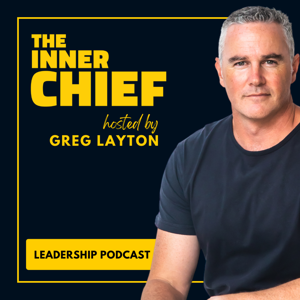
The Inner Chief is a leadership podcast for managers and leaders who want to accelerate their career and build high performing teams. Every episode is dedicated to helping leaders rise above the pressure of work to establish a more meaningful career and life. Through a series of CEO interviews and minisodes, listeners are guided through practical leadership strategies, executive performance habits, career tips and business advice.

More shows like The Inner Chief

Property Investment Podcast Network by Momentum Media

Property Investment Podcast Network

14 Listeners

Mamamia Out Loud by Mamamia Podcasts

Mamamia Out Loud

565 Listeners

Politics Now by ABC Australia

Politics Now

87 Listeners

Investopoly by Stuart Wemyss & Campbell Wallace

Investopoly

13 Listeners

If You're Listening by ABC Australia

If You're Listening

309 Listeners

Equity Mates Investing Podcast by Equity Mates Media

Equity Mates Investing Podcast

72 Listeners

How I Work by Amantha Imber

How I Work

126 Listeners

The Morning Edition by The Age and Sydney Morning Herald

The Morning Edition

70 Listeners

No Bullsh!t Leadership by Martin G Moore

No Bullsh!t Leadership

126 Listeners

The Imperfects by The Imperfects

The Imperfects

395 Listeners

The Money Café with Alan Kohler by Intelligent Investor

The Money Café with Alan Kohler

50 Listeners

Straight Talk with Mark Bouris by Mentored.com.au

Straight Talk with Mark Bouris

326 Listeners

Chanticleer by Australian Financial Review

Chanticleer

23 Listeners

UNEMPLOYABLE by Unemployable Media

UNEMPLOYABLE

12 Listeners

Shaped by Trent Cotchin by Stitch Up

Shaped by Trent Cotchin

17 Listeners