The Inner Chief

The Inner Chief

Download on the App Store

The Inner Chief episodes

  • 77. High Performance Team - Part 1 - Vision
    Leading HP Teams - Part 1 - Vision
    www.chiefmaker.com.au/77
    Over the next 25 weeks I’m going to share the 25 elements that form the Chief Maker HP Teams - Tx Model. The aim is that every Monday we’ll introduce one element so you can spend the week focusing on improving it even just 5 or 10%. After 25 weeks you should have made real world progress and have a measurably higher performing team.
    11 min
  • 76. CEO of WTRI Dr Lia DiBello on Accelerated Learning and Business Expertise

    In this week's Chief interview we meet CEO of WTRI, Dr. Lia DiBello.

    Lia is a global leader in accelerated learning and business expertise. She leads her team to build cutting edge cognitive science into products that can improve performance in business while at the same time advancing research.

    We cover:

    • What is accelerated learning
    • How can we cut the 10,000 hour rule to 16 hours
    • The number one mistake most leaders make in their learning that is costing them
    • How anyone can rapidly increase their rate of learning and improve business outcomes

    See more at www.chiefmaker.com.au/76

    More about Dr Lia DiBello

    Lia is best known for the development of a particular kind of activity-based "strategic rehearsal" approach that has been shown to greatly accelerate learning through cognitive reorganization. Studies of over 7000 people at all levels exposed to DiBello's methods indicate that learning was accelerated by several months in all cases. Other studies indicate that unprecedented performance improvements and significant competitive advantages were achieved by companies using DiBello's methods. The method is now used globally in four continents in industries as diverse as mining, transportation, financial services, IT implementation, manufacturing, pharmaceuticals as well as others. Numerous articles and books have been published on its business benefits and theoretical significance in cognitive science.

    She is also the innovator behind the FutureView™ Profiler, which has been recognized as a theoretical and methodological breakthrough in knowledge elicitation and executive intelligence.

    Since she started directing the research at WTRI, she has been the recipient of 17 basic research funding awards from the National Science Foundation, NASA, and The Russell Sage Foundation.

    1 hr 2 min
  • 76. CEO of WTRI Dr Lia DiBello on Accelerated Learning and Business Expertise
    In this week’s Chief interview we meet CEO of WTRI, Dr. Lia DiBello.
    Lia is a global leader in accelerated learning and business expertise. Lia leads her team to build cutting edge cognitive science into products that can improve performance in business while at the same time advancing research.
    What is accelerated learning
    How can we cut the 10,000 hour rule to 16 hours
    The number one mistake most leaders make in their learning that is costing them
    See more at www.chiefmaker.com.au/76
    1 hr 2 min
  • 75. Navigating Change
    Today, we will cover 7 vital steps that leaders often get wrong in leading transformation but when they get them right it accelerates change and makes it far less stressful. For full summary go to: www.chiefmaker.com.au/75 A very trusted friend of our family is the COO of a national law firm. In the first paragraph of his profile he outlines his expertise in professional services firm leadership. He details how, as COO, he led a company from $3M turnover to over $100M in 8 years. Those are some seriously impressive numbers. They demand attention and they give him immediate credibility when he walks in the room. Few executives ever rise to the top without leaving behind them a clear record of transformation. CEOs are looking for leaders who can demonstrate how they've innovated, led significant change and succeeded without leaving a trail of destruction. Everything up to this point has been preparing you to make a standout impression when your target CEO is reviewing candidates for an executive position. A track record of transformation makes you pop off the page at the resume stage and gives you the real-world stories of transformation you can describe in interviews—ones you can back up with hard numbers. A track record of success is the rocket fuel of any upward career trajectory. It builds unrivalled credibility and magnetically attracts exciting new opportunities. It shows you can unite people to a cause and smash politicking and bureaucracy. It does much more than make a jump to the executive team achievable—it makes it inevitable. But in reality if you're doing it just for your career you're in it for the wrong reasons. In the words of Jack London, ""I would rather be ashes than dust! I would rather that my spark should burn out in a brilliant blaze than it should be stifled by dry-rot." —Jack London All great Chiefs are dissatisfied with the status quo. They want to be one turn ahead of their competitors, so they apply a critical lens to everything, even what is currently working tolerably well. They know that present success guarantees nothing. There's no such thing as a future-proof strategy. Standing still is the same thing as lying down and waiting to be buried. Most managers know that they have to lead transformation to make that next big leap in their careers, but making the change happen in the real world is a complex task riddled with pitfalls. Whole books have been written on Leading and navigating change and the work of John Kotter and others is a solid base that all leaders should know. Today, we will cover 7 vital steps that leaders often get wrong in leading transformation but when they get them right it accelerates change and makes it far less stressful. I've been in the trenches and coached teams from losing to making millions. I've done it in multiple industries and continents. I've seen first hand where it goes wrong...and how the incredible strain on those leading the change. The teams and chiefs I've worked with that got it right are some of the most inspiring people I've met. It has been truly a privilege to play a support role to their enormous efforts. The reason I have picked these is because in the trenches of significant change this is where most leaders really struggle or make a critical mistake that costs them victory or delays it for long periods. They are:
    • Assess the current situation first
    • Set a vision and strategy that unites the leadership team the keep checking in
    • Be courageous and bold
    • Deeply engage stakeholders
    • Raise the bar on standards
    • Set a clear and right sized tactical plan
    • Make it fun and a rich human experience
    For full summary go to: www.chiefmaker.com.au/75
    22 min
  • 75. Navigating Change
    Today, we will cover 7 vital steps that leaders often get wrong in leading transformation but when they get them right it accelerates change and makes it far less stressful.
    For full summary go to: www.chiefmaker.com.au/75
    22 min
  • 74. Co-Founder of The Real Estate Stylist Sara Chamberlain on Personal Beliefs, Being a Rebel and Knowing Your Business

    Out guest this week is Sara Chamberlain, who along with her sister Amy created Australia's premier property styling company, The Real Estate Stylist, in under 4 years. The business has grown from effectively a one sofa enterprise to now employing 15 staff with a multi million dollar turnover and a list of discerning property owners and A-listers including Rebecca Judd, Zoe Foster Blake and the Australia's elite. Launching yet another two businesses under this umbrella since 2013 the group now includes The Artwork Stylist and The Apartment Stylist.

    The Real Estate Stylist is considered the property styling experts in Australia regularly called upon for collaborations and comment with Real Estate.com, Domain, and The Collective.

    A serial entrepreneur, Sara has being in business for 15 years, launching her first internationally stocked homewares range at just 21. Sara has bought and sold businesses, worked on the world's largest advertising accounts in London, (including Coke-a-Cola, Cadbury and Pizza Hut) doubled the turnover of a retail store in under 18 months, launched a business coaching seminar series, published a small business strategy guide and trained as an executive coach.

    Full details at www.chiefmaker.com.au/74

    We cover:

    • How the stories we tell us reflect the life we live
    • How she built resilience through brutally tough health issues as a child
    • The importance of knowing your business and not making your hobby your business
    • Knowing your customer and ensuring it is a human to human experience
    • Being curious and not knowing it all
    • Being a thoroughbred and unemployable
    • How she grew her business by knowing the numbers and strategy

    Key Quotes and Points by Sara

    We are always in our own mind, and what we tell ourselves is what we believe, and what we believe is what we manifest

    My entire mindset was driven by my mother's resounding, compelling belief that her daughter was absolutely fine, and I'll pick her up and I'll take her back to Wagga, and she will be 100% normal and she will miss all of year three at primary school, and she'll just pick up and walk into year four again. That's exactly what happened.

    I've never ever really wanted to follow the doctor's orders anyway. I'm a complete rebel by definition. Doctor's would say come and see us again in 12 months, and I would just delete their number.

    Look, I just don't like playing by the rules. I think you really have to be able to listen to your body, listen to your intuition, listen to your instinct, and then go and show them what you're made of. Do whatever you want to do.

    Look, I've always felt like I was in a rush to run the world. That's been like a fire within me for a very long time.

    I always set it up with the intention of not needing me to run it, that an investor couple could've just come in and sweep it up no matter what the writing on the wall was around the financial economy.

    It's not in my makeup, and you can't do that. I mean I think that comes back to that inner child rebel in me that was like if you told me that I couldn't do something, or I wasn't capable of doing something, then it was like a double dare

    I am pretty adamant about the fact that I'm a business person first and a stylist at the moment, second.

    "Don't go outside of your area of expertise, and don't make your business your hobby." Sorry, "Don't make your hobby your business." Apologies.

    "It would be remiss of us to encourage you in any way, shape or form, to consider a career change or an opportunity if we didn't understand what ... and if you didn't understand what your personal definition of happiness and success looks like, what your goals are, what your risk assessment is, how your family will support you, what skills you can draw upon to bring this into fruition. This is not a game guys. This is your actual life. This is your family, this is your mortgage, this is your children's future and your financial security. This is probably one of the most serious conversations you're going to have. If you think you're here to learn about cushion, you've got another thing coming."

    "It's not about starting up, it's about staying up."

    From a strategy perspective, I think that any business is really only as good as its data. I think you really need to have an understanding of your numbers and what is your important points. So for us we've spent a long time getting a handle on what the figures look like for us. I'm not talking figures in P&L sense. I'm talking figures in if you pull this lever, how does that impact on our overall ability to deliver a product?

    I don't think there's really a bum on seat in any job that doesn't necessarily think that technology could maybe come along in some way, shape or form, and improve how they operate.

    We spend too much time comparing ourself to others. So the questions that they need to ask themselves is, who are they and what is it that make them happy in their life already?

    The way that you overcome boredom is start setting yourself some goals again. Start looking at some of the things that you actually enjoy. When you're not at work, what are some things that get you interested? Are you listening to podcasts around a particular subject? Is there something in a meeting at work that comes up that makes you think, "I'd like to know a little bit more about that?" Is there somebody in another sector in your business that is doing something that you actually end up talking about in the pub?

    I think we become complacent that technology is a tool that will replace the human relationships in the sales space, and by sending something through to somebody and making the assumption that that has been received, read and understood, you're doing yourself a really big disservice.

    The only way you're really going to make cut through, is committing yourself to an ongoing personal relationship, and driving a sense of understanding around what that consumer needs. So we say in your team often, "People don't care how much you know, until they know how much you care."

    The first time you ask them, "What's in this for you? How can we help you meet your target?" Because everyone else has got somebody else on their back, and every single person has a deadline to meet and a budget to hit and a criteria that they have to do, in order for their performance to be what it needs to be for them within their company structure.

    So I say to my team, if somebody can't hit that budget, it's not because they don't want to spend the money, it's because they don't have either the authority or we haven't hit the criteria in that proposal. So you need to understand what that is.

    Well, when did we foster a culture where everybody believe that they have to pretend they know everything? What happened to asking the question of, "I don't know?" And if you can sit there in a meeting and you can drop that guard and say, "I actually don't know that. Can you explain that to me? Can you give me some more insight, how does that work? I'm curious about that."

    Am I looking forward to coming into work, and am I looking forward to going home?

    I think we have to appreciate that what you're doing with your time and how many hours you are committing to your work environment, you really want to be enjoying that. You really want to be able to say that you didn't just go through the motions for 40 years. I think we're moving away from the early days where everyone just had to get a job and they stuck to that job.

    I mean my poor father would be an example of that, he hates being a liquidator, but he had graciously done that to support his family in the way that he has. There are opportunities these days to create your own journey, and to ask a lot more questions around what makes you happy in order for you to have some fulfilment at work, because it's going to be important in your overall healthiness and health. I think that's really important.

    1 hr 1 min
  • 74. Co-Founder of The Real Estate Stylist Sara Chamberlain on Personal Beliefs, Being a Rebel and Knowing Your Business
    Out guest this week is Sara Chamberlain, who created Australia’s premier property styling company, The Real Estate Stylist, in under 4 years. The business has grown from effectively a one sofa enterprise to now employing 15 staff with a multi million dollar turnover and a list of discerning property owners and A-listers. Launching yet another two businesses under this umbrella since 2013 the group now includes The Artwork Stylist and The Apartment Stylist.
    Full details at www.chiefmaker.com.au/74
    1 hr 1 min
  • 73. Accelerate Your Career with the GREAT Method
    Life in the chaos of the modern business world can be crushingly difficult. Many of those caught in the machine describe the daily grind as "soul destroying". They work hard all day, every day on an endless list of tasks at work and home. It might be politics, red tape and antiquated systems frustrating them, or they might just sense that there has to be more to life than this. Many of them feel like they need to escape, but escape isn't the answer. They know the solution is a purposeful and impactful career and a life of significance that doesn't come at the cost of one's soul. Many of them see Chiefs who are living this life. They want the same thing, so they strive to be Chiefs themselves (or at least their dream role). They drive for that title which will give them the authority to make big change. The life of a Chief can look glamorous. Not only do they have the powerful roles, they are also honoured guests at the best events, they are connected to powerful and influential people, and they have the power to make wide-ranging changes with the stroke of a pen. Great Chiefs haven't just walked into these roles, though. Their lives have been anything but a walk in the park. The best have embraced a tough journey that has pushed their mental toughness and adaptability to their limits. The best have been forged in the fires of hard-won, tough-fought lessons. And this is what strikes you when you spend time with the great Chiefs: there is a different essence at their core. They aren't interested in playing political games. Instead, they take a scalpel to bureaucracy and generate profits through purpose. Their ability to get results combines with dignity and humility, which gives them a calming presence. When this presence is united with their vision, well…that is when the magic happens. It's so easy to think that Chiefs are smarter, better connected or more engaging than you, but their intelligence and relationships, while undeniably important, are only a part of their success. Chiefs become Chiefs not because they are lucky with intelligence or networks, but because they have taken to heart a powerful philosophy: ownership precedes victory. They own the outcomes of every challenge they face, relationship they enter, and business they lead. Whether the outcome is success or failure, they are accountable. They demand responsibility for it and they will not share the blame with others. The qualities and habits that make one a Chief are not innate. They are learned. The method I'll share today is a what I covered in my book which is now an Amazon bestseller in careers. It teaches you how to become a Chief. It contains a blueprint for personal and professional mastery in the corporate world. By following the blueprint, you'll learn to make a noticeable impact, and this will help you rise above your competition and earn a seat on the executive team. You'll rise above the politics and overload rampant in the corporate world. You'll learn how to become a master of yourself and your profession. It isn't a quick fix, it will take serious hard work and lots of soul searching. But this will make your victory all the sweeter. The 5-Step Chief Maker GREAT Method drills down on the issues that so many of those in senior management roles are dealing with. These are the issues your peers talk about time and again: • You have no time. You're overloaded with commitments at work and home. You don't feel as though you're controlling your destiny. • You're tired of fighting for respect, tired of trying to prove your point. • You don't feel connected. You don't have friends in high places. • Your team is predominantly made up of average performers. You and a small handful of strong performers on your team carry the load and fix others' mistakes. • You can't escape the bureaucracy and career-killing politics. • You can't find the time for personal growth. Since you're not mastering your craft, career growth has stalled. • Your personal and professional lives are out of balance, which is impacting your family and your physical and mental health. • You feel like you're drifting, as though your career trajectory is entirely out of your hands. • You're no longer sure if you even want a C-Level role. It looks like it requires more sacrifice than you can afford. Deep down, you're only half-heartedly committed to becoming a Chief. If any of these issues resonate with you, this framework is for you. Over the past 15 years I've searched the planet for the most powerful, results-driving performance strategies. I've coached CEOs of multi-billion dollar listed companies around the globe. I've helped sporting legends like Martina Natratilova to coach top tennis players and Super Rugby teams reach peak performance levels. I've taught the world's best coaches how to get the absolute best out of their athletes, and I've helped doctors and emergency response teams become better lifesavers. After a decade of coaching at all levels of business and at the top of elite sport, I was able to distil the most effective peak-performance strategies into a small set of repeatable behaviours. These are the behaviours that separate the career middle managers from the Chiefs. In business, in sport and in life, Chiefs do something different, and these behaviours can be learned. That observation is what drove me to write my book and share a 5 step process that I call the GREAT method to help anyone accelerate their career. I've tested these five steps over more than a decade at the top of business and elite sport, and they get the desired results time and again. Whether it was in the world of business or in sport, whenever an elite performer came to me wanting a competitive edge, these were the five steps we went back to just about every time. This is a system that produces game-changing results: 1. Game Plan 2. Routine 3. Entourage 4. Assets 5. Track Record www.chiefmaker.com.au/73
    19 min
  • 73. Accelerate Your Career with the GREAT Method
    Life in the chaos of the modern business world can be crushingly difficult. Many of those caught in the machine describe the daily grind as “soul destroying”. They work hard all day, every day on an endless list of tasks at work and home. It might be politics, red tape and antiquated systems frustrating them, or they might just sense that there has to be more to life than this.
    www.chiefmaker.com.au/73
    19 min
  • 72. CEO of SalesITV Dean Mannix on Overcoming Your Limitations to Design and Live a Better Life and Selling Like the Best in the World

    In this episode we talk with CEO of SalesITV Dean Mannix on overcoming your limitations to live a bigger life and selling like the best in the world

    Full details at www.chiefmaker.com.au/72

    ABOUT DEAN

    He is the author of Australia's largest library of video sales and service training and has delivered sales performance projects in over 25 countries. Dean is recognised as one of Australia's leading sales performance coaches with 30 years of legal, finance, sales and management experience. He advises, coaches and trains senior executives from many of the world's leading corporations.

    He has also been the CEO of a leading property development and childcare management company which he built to a team of 140 employees. He then developed and led a highly successful sales team in the technology space and simultaneously grew his consulting business.

    Dean has an Executive MBA from the AGSM and he is also a qualified Yoga teacher.

    He is now the CEO of SalesITV.

    We cover:

    - How we coped with the murder of his father at 15

    - How we built a multi-million dollar childcare business and then lost it all by 26

    - How we has become the trusted sales coach of the world's biggest companies

    - Resilience and living a better life

    - The most important steps to sell like the best in the world

    Full details at www.chiefmaker.com.au/72

    54 min

About The Inner Chief

From the publisher's feed

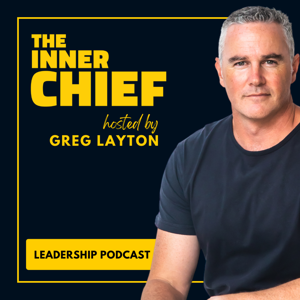
The Inner Chief is a leadership podcast for managers and leaders who want to accelerate their career and build high performing teams. Every episode is dedicated to helping leaders rise above the pressure of work to establish a more meaningful career and life. Through a series of CEO interviews and minisodes, listeners are guided through practical leadership strategies, executive performance habits, career tips and business advice.

More shows like The Inner Chief

Property Investment Podcast Network by Momentum Media

Property Investment Podcast Network

14 Listeners

Mamamia Out Loud by Mamamia Podcasts

Mamamia Out Loud

565 Listeners

Politics Now by ABC Australia

Politics Now

87 Listeners

Investopoly by Stuart Wemyss & Campbell Wallace

Investopoly

13 Listeners

If You're Listening by ABC Australia

If You're Listening

309 Listeners

Equity Mates Investing Podcast by Equity Mates Media

Equity Mates Investing Podcast

72 Listeners

How I Work by Amantha Imber

How I Work

126 Listeners

The Morning Edition by The Age and Sydney Morning Herald

The Morning Edition

70 Listeners

No Bullsh!t Leadership by Martin G Moore

No Bullsh!t Leadership

126 Listeners

The Imperfects by The Imperfects

The Imperfects

395 Listeners

The Money Café with Alan Kohler by Intelligent Investor

The Money Café with Alan Kohler

50 Listeners

Straight Talk with Mark Bouris by Mentored.com.au

Straight Talk with Mark Bouris

326 Listeners

Chanticleer by Australian Financial Review

Chanticleer

23 Listeners

UNEMPLOYABLE by Unemployable Media

UNEMPLOYABLE

12 Listeners

Shaped by Trent Cotchin by Stitch Up

Shaped by Trent Cotchin

17 Listeners