
Sign up to save your podcasts
Or

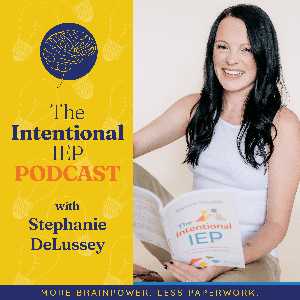


Getting a new student in the middle of the year can feel overwhelming, especially when you are trying to learn their needs, understand their IEP, and get supports in place quickly.
In this episode, Stephanie shares the three things she does every time she gets a new-to-her student and explains why having a simple system can make the transition easier for both the teacher and the student.
Stephanie shares:
She also talks about comparable services for transfer students and shares a bonus tip for creating a new student onboarding system before you need it.
With a clear process in place, you can spend less time scrambling and more time getting to know the student in front of you.
Ready to stop managing IEPs one meeting at a time? Start managing the process with The Intentional IEP System: https://theintentionaliep.com/start-here
Prior Written Notices are a required part of the special education process, but writing them clearly can feel overwhelming, especially when you are trying to make sure every decision is documented correctly.
In this episode, Stephanie breaks down the seven required parts of a Prior Written Notice and explains how to write each section in a way that clearly reflects the IEP team's decision-making process.
Stephanie shares:
A strong Prior Written Notice should help families understand what the team decided, why the decision was made, and what information was considered along the way. This episode will help you feel more confident writing PWNs that are clear, specific, and complete.
Ready to stop managing IEPs one meeting at a time? Start managing the process with The Intentional IEP System: https://theintentionaliep.com/start-here
Sending a parent invite to an IEP meeting is more than another compliance task. It is one of the first opportunities to make sure families have a clear and accessible way to participate as members of the IEP team.
In this episode, Stephanie breaks down best practices for parent participation and communication throughout the IEP process, including:
Parent participation should go beyond simply sending an invitation. Clear communication, thoughtful documentation, and consistent opportunities for input can help build stronger relationships with families and stronger IEP teams.
When families feel included in the process, teams are better positioned to understand student needs, make informed decisions, and work together toward stronger outcomes.
Ready to stop managing IEPs one meeting at a time? Start managing the process with The Intentional IEP System: https://theintentionaliep.com/start-here
Progress reports are more than another piece of IEP paperwork. They show whether a student is making progress toward their goals, help teams make informed instructional decisions, and give families a clear picture of where their child started and where they are now.
In this episode, Stephanie discusses how to write progress reports that are specific, data driven, and clearly connected to the student's IEP goals.
Stephanie discusses:
Strong progress reports don't just fill a required box. They tell the student's story through the data and help the entire IEP team understand whether the current plan is working and what may need to change.
Ready to stop managing IEPs one meeting at a time? Start managing the process with The Intentional IEP System: https://theintentionaliep.com/start-here
New general education teachers may be learning how to manage their classroom while also figuring out accommodations, goals, SDI, behavior supports, and everything else that comes with supporting students with IEPs.
In this episode, Stephanie shares how special education teachers can help new gen ed teachers feel more confident as members of the IEP team. She discusses:
Supporting a new teacher doesn’t have to mean adding another huge task to your plate. A little guidance, context, and consistent communication can help the entire team work together more effectively.
Ready to stop managing IEPs one meeting at a time? Start managing the process with The Intentional IEP System: https://theintentionaliep.com/start-here
Compensatory education can feel confusing, especially when a student has missed services or an IEP has not been fully implemented. In this episode, Stephanie breaks down what compensatory education actually means, when it may be considered, and why the focus should be on educational impact rather than simply counting missed minutes.
In this episode, Stephanie discusses:
The goal is not simply to make up missed minutes. It is to understand what the student lost and what they need now.
Ready to stop managing IEPs one meeting at a time? Start managing the process with The Intentional IEP System: https://theintentionaliep.com/start-here
When a parent wants a more restrictive placement than the IEP team recommends, it can be difficult to know how to respond. In this episode, we’re looking at why parents may request a more restrictive setting, how to listen for the concern underneath the request, and what data teams should consider when making placement decisions.
In this episode, Stephanie discusses:
Placement conversations aren’t about simply defending or changing a setting. They’re about understanding what a student needs to learn, grow, and make meaningful progress.
Ready to stop managing IEPs one meeting at a time? Start managing the process with The Intentional IEP System: https://theintentionaliep.com/start-here
Before writing an IEP goal, teams need to know exactly where a student is starting. In this episode, we’re looking at what baseline data is, why it should be collected with and without supports, and how it helps teams write more meaningful, individualized goals.
In this episode, Stephanie discusses:
A strong baseline isn’t just information included in the IEP. It’s the foundation for understanding student growth and making intentional decisions throughout the year.
Ready to stop managing IEPs one meeting at a time? Start managing the process with The Intentional IEP System: https://theintentionaliep.com/start-here
For more information, check out more of Stephanie's resources:
https://www.theintentionaliep.com/the-intentional-iep-book/
https://www.theintentionaliep.com/
https://www.facebook.com/theintentionaliep
https://www.instagram.com/theintentionaliep
Transition planning may be required in the later school years, but the skills students need for life after graduation begin developing much earlier. Stephanie shares why self-advocacy should be intentionally taught from PreK through high school and how everyday opportunities can help students build the skills they need to communicate, make choices, and advocate for themselves.
In this episode, we cover:
Transition doesn't begin at age 14. It begins when students learn that their voice matters. From the first “help please” in PreK to a student confidently advocating for their needs in high school, every opportunity to build self-advocacy is preparing students for greater independence beyond the classroom
.
Ready to stop managing IEPs one meeting at a time? Start managing the process with The Intentional IEP System: https://theintentionaliep.com/start-here
For more information, check out more of Stephanie's resources:
https://www.theintentionaliep.com/the-intentional-iep-book/
https://www.theintentionaliep.com/
https://www.facebook.com/theintentionaliep
https://www.instagram.com/theintentionaliep
SDI, accommodations, and interventions are terms we hear constantly in special education but they are often used interchangeably. Understanding the difference matters because each serves a different purpose when supporting students.
In this episode, we break down what each one means, how they differ, and how they can work together to support student success.
Stephanie unpacks:
The goal isn't to choose between SDI, accommodations, and interventions—it's to understand the purpose of each and use them intentionally to meet a student's individual needs.
Ready to stop managing IEPs one meeting at a time? Start managing the process with The Intentional IEP System: https://theintentionaliep.com/start-here
For more information, check out more of Stephanie's resources:
https://www.theintentionaliep.com/the-intentional-iep-book/
https://www.theintentionaliep.com/
https://www.facebook.com/theintentionaliep
https://www.instagram.com/theintentionaliep
From the publisher's feed

171,968 Listeners
272 Listeners

22,328 Listeners

369,388 Listeners

99,673 Listeners

12 Listeners

164,465 Listeners

8,512 Listeners

8,803 Listeners

18,915 Listeners

10,591 Listeners

18,916 Listeners

119 Listeners

2,710 Listeners

10,208 Listeners