
Sign up to save your podcasts
Or

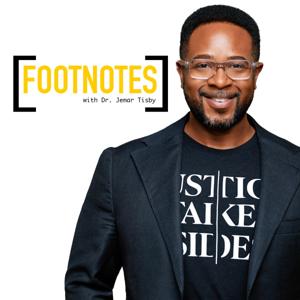
By Dr. Jemar Tisby
The Justice Briefing is your weekly guide to understanding current events through a historically grounded, theologically rooted, justice-centered lens. Instead of framing the world through fear or
... more

4.8
477477 ratings


The podcast currently has 146 episodes available.
The most played episodes among Podcast App listeners.
For decades, the religious right told Christians that abortion was the one issue that outweighed every other. Yet ICE recorded at least 18 miscarriages in its custody from January through September 2025, then lost count, and the movement's loudest voices have barely said a word. In this episode of The Justice Briefing, Dr. Tisby asks why an unborn child's life should matter less because their mother is an immigrant, and how race shaped the religious right from the start. In 1971, the Southern Baptist Convention backed laws allowing abortion in cases including rape, incest, and likely harm to a mother's emotional health, then reaffirmed that stance after Roe v. Wade. Historian Randall Balmer argues in Bad Faith that what first mobilized conservative Christians politically was the IRS denying tax exemptions to racially discriminatory Christian schools like Bob Jones University. So was it ever about life in the womb, or was it about power? Support the podcast: Is this kind of information worthwhile? That's the only question you need to answer. If yes, become a paid subscriber at JemarTisby.Substack.com For $5.83 a month on an annual subscription, you fund the research behind every episode, along with Tisby Media's new course and films.

This episode of The Justice Briefing is different. Instead of starting with a current event and working backward to the history, Dr. Jemar Tisby does what he loves most: he tells stories. Diving back into primary source research for his new Substack series, History Rhymes: Democracy and Voting Rights Edition, left him feeling like a grad student again, brimming with material he could not wait to share. So he devoted a full episode to three of those stories. The first is about the Congress that refused to seat more than sixty former Confederates in December 1865, overrode a president more than a dozen times, and wrote insurrection into the official record. The second is about the 1868 Charleston constitutional convention, the only one in American history with a Black majority, where recently emancipated men wrote the most democratic document South Carolina had ever seen and included the children of the people who had enslaved them. The third is about Amos T. Akerman, a former Confederate and enslaver who became attorney general and prosecuted the first Ku Klux Klan out of existence for forty years. Taken together, the three stories make one argument: Congress has the power, it lacks the will, and history has the receipts.Topics AddressedWhy the first iteration of the Ku Klux Klan disbanded in the mid-1870s and did not reconstitute until 1915The 1868 South Carolina constitutional convention: 76 Black delegates out of 124, and the only Black-majority state legislature in U.S. historyWhat Black delegates actually wrote into the state constitution, including free public schools, protected suffrage, women's property rights, and a permanent ban on secessionThe three Enforcement Acts, and why the Ku Klux Klan Act finally worked by naming the state itself as the defendant Resources ReferencedHere's What Congress Did When Members Had a SpineWhen Black People Wrote the ConstitutionWhen the Department of Justice Prosecuted the Ku Klux Klan Out of ExistenceThe Spirit of Justice by Jemar Tisby: bit.ly/spiritofjusticeA Way Forward: Hope in Uncertain Times, Nashville, August 28-30, with Rep. Justin Pearson, Shane Claiborne, and others. Free, but registration is required: Register here Support This WorkHistory Rhymes: Democracy and Voting Rights Edition runs weekly through the 2026 midterms, roughly twelve installments in all. The episodes are free. The articles are free. The research is not. If this is the kind of work you want more of, become a paid subscriber at JemarTisby.Substack.com. It is $5.83 a month on the annual plan. Less than six dollars for history from a PhD historian who spent years learning the tools of the discipline to bring it to you. Stay informed. Stay faithful. Stay in the fight.
On the 61st anniversary of the Voting Rights Act, Dr. Jemar Tisby closes a full history of the law by turning to the fight over it right now. What took blood and marches to win in 1965 has been taken apart in the thirteen years since 2013, from Shelby County to Louisiana v. Callais, and almost nobody marched. Dr. Tisby refuses to end there. He points to the faith leaders already mobilizing to protect the ballot before the November midterms, from William Barber's 100 days of action to the poll chaplains and peacekeepers being trained in local churches, and he names the moment for what it is: the civil rights movement of our generation. The episode also launches History Rhymes: Democracy and Voting Edition, Dr. Tisby's three-month series tracing the struggle over the vote from Reconstruction to today. In This Episode Why 2026 is the civil rights movement of our generation, and how the April march across the Edmund Pettus Bridge echoed 1965How the Voting Rights Act was taken apart in thirteen years, from Shelby County to Louisiana v. CallaisFaith leaders mobilizing before the midterms, including William Barber's 100 days of actionPoll chaplains and peacekeepers: protecting voters, protecting ballots, and protecting the system itselfThe launch of History Rhymes: Democracy and Voting Edition on FootnotesThe closing charge: register, check your registration, and take somebody with you Resources ReferencedThe Washington Informer, "Faith leaders start 100-day countdown to Nov. 3 election," featuring Rev. Dr. William Barber and Rev. Tony Lee of Community of Hope AME Church: https://www.washingtoninformer.com/faith-leaders-midterm-vote/Black Church PAC and its Freedom Summer events: https://www.blackchurchpac.org/All Roads Lead South Coalition, organizers of the 2026 march across the Edmund Pettus BridgeHistory Rhymes: Democracy and Voting Edition, Dr. Tisby's new Footnotes series: https://JemarTisby.Substack.com Support The Justice BriefingThe Justice Briefing runs on readers and listeners, not advertisers. If it helps you make sense of this moment, the best way to support it is to subscribe to Footnotes at JemarTisby.Substack.com. The annual plan comes to $5.83 a month, it keeps this work independent, and it puts every installment of History Rhymes: Democracy and Voting Edition in your inbox from now through the midterms.
The DNC's Rules and Bylaws Committee just voted to have South Carolina lead off the 2028 Democratic presidential primaries, and Dr. Jemar Tisby explains why that decision matters more than the news cycle will let on. He walks through what a primary actually does, why the order of states determines momentum, money, and makes the case that this is a win for the party. In this episode:What a primary actually is, and why it is not a direct vote for the nomineeWhy the order of states determines momentum, media coverage, donor confidence, and who drops outThe South Carolina versus Nevada split and the case Latino leaders made for NevadaThe progressive objection to a Southern first primary and what it assumes about Black Southern votersSix things candidates should do over the next 18 months to earn Black votes Resources referenced:Previous episode: "What Every Social Movement Must Do"Dr. Tisby's YouTube channel: https://youtube.com/@JTisby Support the show: There are no ads on The Justice Briefing and no sponsors. Paid subscribers are the ones who make this work possible. If the breakdown of the 2028 primary calendar was useful to you weeks before it becomes a headline, become a paid subscriber at JemarTisby.Substack.com.
As the country marks 250 years since the Declaration of Independence, one claim is everywhere: the United States was founded as a Christian nation. In this episode of The Justice Briefing, Dr. Jemar Tisby refuses the flat yes or no and insists on the first move any honest answer requires, which is to define the terms. If "Christian nation" means a country shaped by Christians and their ethics? Does it mean a government with an official, state-sanctioned church? History has the receipts, Dr. Tisby walks through the primary sources, from Article VI and the First Amendment to the Virginia Statute for Religious Freedom and the Treaty of Tripoli, and he traces the longer backstory of Henry VIII and the colonists who fled state religion. In This EpisodeWhy "define your terms" is the first move in answering the Christian nation questionThe sense in which the claim is true and the sense in which it is falseHistory has the receipts: Article VI, the First Amendment, the Virginia Statute for Religious Freedom, and the Treaty of TripoliHenry VIII, the Act of Supremacy, and why colonists fled state religionThe difference between the separation of church and state and the separation of faith and politicsThe Enlightenment roots of the DeclarationWhat white Christian nationalists actually mean, and why the slogan works as a permission structure for powerResources ReferencedThe Christian Past That Wasn't: Debunking the Christian Nationalist Myths That Hijack History by Warren ThrockmortonThe Spirit of Justice: True Stories of Faith, Race, and Resistance by Jemar TisbyThe Color of Compromise (book and video study) by Jemar TisbyRededicate 250, National Mall, May 17, 2026Primary sources: Article VI of the U.S. Constitution; the First Amendment; the Virginia Statute for Religious Freedom (1786); the Treaty of Tripoli (1797); the Act of Supremacy (1534); John Locke, Second Treatise on Civil GovernmentSupport the ShowSupport The Justice Briefing by subscribing at JemarTisby.Substack.com, where Dr. Tisby brings the receipts every week so you can answer questions like this one from an informed perspective.
The podcast currently has 146 episodes available.
569 Listeners
1,132 Listeners

1,099 Listeners
4,430 Listeners
5,095 Listeners

1,347 Listeners

567 Listeners
1,026 Listeners
15,303 Listeners
1,924 Listeners
560 Listeners
855 Listeners
131 Listeners
873 Listeners
915 Listeners