
Sign up to save your podcasts
Or

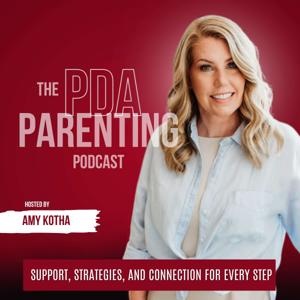


What happens when your child is dysregulated - and suddenly you are, too?
In this episode of the PDA Parenting Podcast, Amy talks with therapist, author, and educator Stacy Nation about what’s happening beneath challenging behavior, why co-regulation matters, and how our own childhood experiences and nervous-system patterns can shape the way we respond to our kids.
They explore co-regulation, empathy, parent triggers, school struggles, and why connection is so important when parenting PDA and neurodivergent children.
In this episode:
A compassionate conversation about helping our kids regulate - while learning to understand and regulate ourselves.
Looking for more PDA parenting support?
Learn more about Amy’s approach and ways to work with her: amykcoach.com.
Connect with Stacy Nation:
Learn more about Stacy, her book What Really Happens in Therapy: Behind Closed Doors: A Guided Journey to Healing, courses, and other resources at gobeyou.org.
Even when we understand PDA, autonomy, nervous system safety, and the difference between “can’t” and “won’t,” old compliance-based parenting patterns can still sneak in.
In this episode, Amy explores how even compassionate, PDA-friendly strategies can quietly become focused on getting our child to comply - and what changes when we replace “How do I get my child to do this?” with “What might I not understand yet?”
Through personal stories about parenting her daughter, Amy talks about fluctuating capacity, invisible disability, scaffolding independence, family-of-origin messages, parental nervous system activation, and the fear that we may be “doing too much.”
The goal isn’t perfect neuroaffirming parenting. It’s noticing when fear and urgency take over, getting curious about what’s happening - for our child and for ourselves - and finding our way back to connection.
Because maybe the opposite of compliance isn’t permissiveness.
Maybe it’s curiosity.
If this episode resonated with you and you’re looking for more compassionate, practical support for parenting a PDA or neurodivergent child, visit AmyKCoach.com to explore resources, coaching, and ways to work with me.
You don’t have to have all the answers. Sometimes the next step is simply understanding what’s happening a little differently.
Why do autistic meltdowns seem to happen over something so small? In this episode of The PDA Parenting Podcast, parent coach Amy Kotha explores why the visible trigger is rarely the true cause of a meltdown.
Through the fictional story of Emma, Amy illustrates how sensory challenges, masking, unexpected changes, and accumulated stress can overwhelm a child's nervous system long before a meltdown occurs. Listeners will gain a deeper understanding of why meltdowns aren't manipulative or intentional - they're often the result of a nervous system that has simply reached its limit.
In this episode, you'll learn:
Looking for additional support?
Amy's 16-week Raising Kids with Big, Baffling Behaviors course + coaching program helps parents better understand their child's nervous system, reduce conflict, and build stronger family connections using brain-based strategies adapted specifically for PDA families.
The course was developed by Robyn Gobbel and is facilitated by Amy. Each week includes a live discussion/coaching session to help you integrate the concepts and apply - in real time - to your specific family.
👉 Learn more here: PDA Parent Course Details
Grief isn't only about death.
Sometimes it's saying goodbye to a season of parenting. Sometimes it's watching your child grow up. Sometimes it's the end of a coaching group, a move, a beloved pet, or simply the realization that life is changing.
In this deeply personal episode, Amy shares a week filled with endings - including the unexpected loss of her family's beloved dog, Keira - and the powerful lessons it taught her about grief, nervous systems, parenting, and love.
If you're raising a PDA or neurodivergent child, you'll also hear why grief doesn't always look like sadness. It may show up as increased anxiety, control, demand avoidance, irritability, shutdowns, or emotional overwhelm. Most importantly, you'll learn why your job isn't to fix your child's grief - but to help them feel safe enough to move through it.
In this episode, you'll discover:
• Why grief is often disguised as stress, burnout, or overwhelm
• How PDA and neurodivergent children may express grief differently
• Why co-regulation matters more than having the "right" words
• How to support highly empathetic children through loss
• The importance of allowing different family members to grieve in different ways
• Why your nervous system isn't looking for perfection—it is looking for connection and "enough"
• How to hold gratitude and grief at the same time
Whether you're navigating the loss of a loved one, parenting through big life transitions, or simply feeling emotionally exhausted, this episode offers gentle permission to slow down, honor your emotions, and remember that grief is evidence of love.
If this episode touched your heart, I'd love for you to share it with another parent who may need this reminder today. And if you're looking for compassionate support as you navigate life with your PDA or neurodivergent child, I'd love to welcome you into one of my coaching programs. www.amykcoach.com/parentcourse
You don't have to do this alone.
What if PDA isn't a behavior problem at all?
In this episode, Amy explores a powerful shift in perspective that can change how parents understand PDA. Instead of viewing avoidance, refusal, aggression, or meltdowns as the problem, what if these behaviors are actually signals from a nervous system working hard to stay safe?
Drawing on the work of Robyn Gobbel, Mona Delahooke, Bruce Perry, and emerging PDA research, Amy discusses the connection between autonomy, anxiety, nervous system states, and protective behaviors. She explains why traditional behavior-focused approaches often fall short and offers a compassionate framework for understanding what may be happening beneath the surface.
If you've ever wondered why your child can desperately want something one moment and refuse it the next, this episode will help you see those struggles through a new lens - one rooted in connection, curiosity, and nervous system safety.
In this episode you'll learn:
• Why PDA may be better understood as a nervous system difference rather than a behavior problem
• The difference between connection states and protection states
• How autonomy and safety are deeply connected
• Why avoidance may be information rather than defiance
• Questions to ask when behavior escalates
• How shifting your perspective can reduce conflict and increase understanding
Want support implementing these strategies in your own family?
Amy's small-group, 4-month coaching program helps parents understand PDA through a nervous-system lens while receiving personalized coaching, education, and community support.
Enrollment is currently open with limited spots available!
Learn more at www.amykcoach.com/parentcourse.
Many parents of PDA, autistic, and other neurodivergent children find themselves exhausted, overwhelmed, and constantly worried about their child's future. But what if fear has quietly convinced you that you're responsible for things no parent can actually control?
In this episode, I explore the difference between helping and carrying, why uncertainty is so difficult for our brains, and how fear can expand our parenting "job description" until we're carrying the weight of our child's emotions, choices, and outcomes.
We'll discuss:
• What fear has convinced you is your job
• The difference between supporting and owning your child's struggles
• Why PDA parenting feels so exhausting
• The Serenity Prayer and learning what we can and cannot control
• A simple question that can transform how you approach challenges: "Whose problem is this?"
• How to stay deeply connected to your child without losing yourself in the process
If you've ever felt responsible for making sure your child is okay, this episode is for you.
Registration is now open!! Learn more about Amy's PDA Parent Coaching Program at amykcoach.com/parentcourse.
After a break for health and recovery, Amy returns with a powerful conversation on boundaries, unpredictability, and nervous system regulation.
If you’ve ever felt like you’re on an emotional rollercoaster - hopeful one moment and overwhelmed the next - this episode will help you understand why unpredictability feels so destabilizing and how to stay steady through it.
Amy explores the connection between control, codependency patterns, and parenting, and reframes boundaries as internal anchors that help you stay regulated without losing connection to your child.
You’ll walk away with a new perspective on capacity vs. consistency, letting go of control, and becoming a grounded, safe presence your child can return to.
If you’re wanting support in actually applying this work in your real life, I’d love to invite you into my 4-month small group coaching program. The summer cohort begins in June, and we start by working through Raising Kids With Big, Baffling Behaviors - guided by Amy and thoughtfully adapted for PDA families.
From there, we continue together with small group coaching, where you’ll get ongoing support as you practice staying regulated, holding boundaries, and navigating the real-life challenges that come up in your family.
This space is designed to help you move from understanding the concepts to truly living them - with guidance, community, and compassion along the way.
Click here to find all the details and join the summer cohort:
4-Month Coaching Program
Amy references insights similar to those taught by Dr. Brad Reedy and frameworks like Al-Anon, alongside the work of Robyn Gobbel.
If you’re parenting a PDA child or teen and food feels scary right now, this episode is for you.
Many PDA kids experience food preoccupation, binge-like eating, weight changes, or rigid food preferences - often as a response to stress, loss of autonomy, or nervous system overload. In this episode, we explore food and eating through a nervous-system-informed, non-diet-culture lens, so you can respond with clarity instead of fear.
You’ll learn:
This episode is especially supportive for parents familiar with nervous system parenting and concepts from Raising Kids with Big, Baffling Behaviors: A Course for Parents by Robyn Gobbel (the base of my now-open PDA parent program!) but who feel activated, scared, or stuck when food and weight concerns arise.
You don’t have to solve this today. Regulation, curiosity, and compassion matter much more than control or perfection.
Scope & Safety Note
This episode discusses eating patterns that can emerge as nervous system responses to stress and demand, particularly in PDA children and teens.
This conversation is not intended to diagnose or rule out eating disorders and is not a substitute for medical, nutritional, or mental health care. Some children do experience eating disorders and require individualized, professional support.
If you have concerns about your child’s physical safety, growth, or medical risk, please seek appropriate professional care alongside listening.
Resources Mentioned
Interested in deeper support?
Enrollment is opening next week for my 4-month nervous-system-informed program for parents of PDA children and teens. This is for parents who want practical guidance, regulation support, and low-demand strategies - without pressure or “fixing” their child.
The core of this program is Raising Kids With Big, Baffling Behaviors: A Course for Parents (created by Robyn Gobbel and adapted for PDA by Amy Kotha).
You can learn more and see if it feels like a fit by clicking HERE.
Traditional parenting programs often don’t work for PDA families - not because parents aren’t trying hard enough, but because the structure itself creates pressure.
In this episode, I share why I stopped offering a weekly parenting class and what flexible, PDA-informed support can look like instead.
What if the problem isn’t you - or your child - but the structure of the support you’ve been offered?
In this episode, I’m sharing why I stopped offering a traditional weekly parenting class for PDA families - and what I created instead.
After listening closely to PDA parents, it became clear that rigid schedules, fixed weekly meetings, and pressure to “keep up” often make support inaccessible - even when parents deeply want help.
Here, I talk about:
The educational foundation of this work is the Raising Kids with Big, Baffling Behaviors: A Course for Parents by Robyn Gobbel, which I offer under license and integrate through a PDA-informed lens with coaching support.
This program is offered on a rolling enrollment basis, with space for up to 12 families at a time. When the program is full, families are invited to join a waitlist until an opening becomes available.
Whether or not this program is the right fit for you, my hope is that this episode offers reassurance, permission, and a reminder that needing a different structure doesn’t mean you’re doing anything wrong.
To learn more or check current availability, visit my website: www.amykcoach.com/parentcourse
From the publisher's feed
A podcast for parents raising PDA autistic kids and teens. Real talk, personal stories, and practical tools to move from chaos to connection - hosted by parent coach Amy Kotha.

2,483 Listeners

963 Listeners
576 Listeners
547 Listeners

8,378 Listeners

414 Listeners

2,865 Listeners

914 Listeners
96 Listeners

41,381 Listeners
3 Listeners

19,146 Listeners

372 Listeners
8 Listeners

719 Listeners