
Sign up to save your podcasts
Or



What happens when learning shuts down - at school, at home, everywhere?
In Part One of this two-part conversation, I’m joined by educator and consultant Danielle Rodda to talk about why learning becomes unsafe for so many PDA and neurodivergent kids.
In this episode, we explore:
This episode is about context and permission - understanding that when learning stops, it’s not because you or your child are failing.
Note: This conversation continues in Part Two, where we shift into rebuilding safety around learning, unlearning harmful narratives, and what learning can look like once pressure is removed.Support for Parents: 12-Week Course Now Open
If this episode resonates, I want you to know you don’t have to navigate this alone!
Registration is currently open for the 12-week parent course:
Raising Kids with Big, Baffling Behaviors, created by Robyn Gobbel and adapted specifically for PDA families and led by Amy Kotha.
✨ Bonus Session Included:
Danielle Rodda, Neurodivergent Consulting, will join us for a bonus session focused on PDA + learning, unlearning, and the return to learning.
🔗 Registration is open now: Click HERE for details!
To connect with Danielle Rodda:
@danielleroddaconsulting IG
Substack
daniellerodda.ca
The holidays hit PDA parents harder - and it’s not your fault.
In this episode, we break down why judgment, comparison, overwhelm, and the “good mom” myth intensify this time of year - and what’s really happening inside your nervous system and your child’s.
You’ll learn:
• why your child’s overwhelm triggers your own
• how identity friction fuels shame
• why holiday environments activate threat states
• the parallel process between your nervous system and theirs
• how comparison becomes a safety strategy
• the difference between belief work and crisis work
• how SOOTHE supports in-the-moment connection
And if you already know you want deeper support, the 12-week January program (created by Robyn Gobbel) is the next step - where we get deeper, turn these nervous system tools into lived, everyday practice and gain parenting confidence.
Registration opens this week! Limited enrollment.
Click HERE for Details + Registration!
* Mentioned in episode: 'Echolocation for worth' concept comes from the work of Kara Loewentheil
In this episode, Amy explores why some kids - especially adopted, autistic, or PDA-identifying kids - avoid talking about their story, whether it’s adoption, trauma, or a new diagnosis. Using personal experiences from raising her two daughters, she explains how these conversations activate the nervous system and why avoidance is often about safety, not refusal.
You’ll learn how to share your child’s story without triggering demand avoidance, how to “drip in” information gently over time, and why honesty paired with safety builds stronger identity and self-esteem. Amy also introduces her SAFE Story Framework to help parents approach disclosure with confidence and connection.
Mentioned in This Episode
Doors Open!! Click HERE for details + registration!
In this episode, Amy speaks directly to the part of every parent that whispers, “You’ve got to fix this.”
Drawing from her own journey - from years of researching and even attending graduate school to understand her child’s behavior - she shares what she’s learned about the nervous system, safety, and why trying to “fix” our children keeps both parent and child stuck in a cycle of stress.
Listeners will hear how Amy reframed her approach to parenting a neurodivergent, PDA-profile child - and how understanding safety as the foundation for behavior can transform family life.
This episode is a powerful reminder that parenting isn’t about control; it’s about connection, curiosity, and co-regulation.
In This Episode, Amy Shares:
Mentioned in This Episode:
Connect with Amy:
In this heartfelt episode, Amy opens up about a recent family crisis that brought her to her knees - and the quiet resilience that helped her rise again. Through personal reflection, she explores the science of co-regulation, the role of community in healing, and what clinical psychologist Dr. Matt Zakreski calls “psychological capital” - hope as something we can actively build through small acts of connection.
You’ll leave with compassion, clarity, and a practical 5-step plan for crisis moments - so you can respond with love, not fear.
Resources Mentioned:
Dr. Matt Zakresky — In the Business of Hope: How to Keep Believing When Things Feel Impossible
Dr. Mona Delahooke — The Developmental Iceberg: Looking Below the Surface of Challenging Behaviors
Crisis & Suicide Lifeline (U.S.) — Call or text 988
Find a Helpline (International) — findahelpline.com
📄 Download Amy’s ND-Accommodating Family Safety Plan - a neurodivergent-affirming guide to help you stay grounded and prepared during emotional storms.
❤️ Get your free copy by clicking HERE
Join the waitlist for Amy’s new 12-week parent course:
“Raising Kids with Big, Baffling Behaviors - a course for parents” - created by Robyn Gobbel and led by Amy Kotha. Adapted for families raising sensitive, PDA, or neurodivergent kids who need a new kind of understanding.
Join the Waitlist → Click HERE
Why is hygiene such a struggle for PDA autistic kids?
And why does pushing only make it harder?
In this episode of the PDA Parenting Podcast, Amy explores the real reasons behind resistance to toothbrushing, showering, and other daily self-care routines. You’ll learn how nervous system responses, sensory sensitivities, and demand avoidance all play a role, and why it’s never about laziness or willfulness.
Amy shares practical, creative strategies that ease the pressure, support autonomy, and restore connection - so parents can move away from shame and toward compassion.
Whether it’s silly characters like “Ms. Helga,” salon visits, or scaffolding with small steps, this conversation offers hope, empathy, and tools for families walking this path.
Want more support? Join the waitlist for my upcoming 12-week parent course, Raising Kids with Big Baffling Behaviors (developed by Robyn Gobbel, led by me, Amy K). You’ll be the first to know when doors open!
👉 Join the waitlist here: https://amykcoach.myflodesk.com/bafflingbehaviors
Parenting a PDA teen means our role is always evolving - and nowhere is that more clear than during big life transitions like starting college, a first job, or moving away from home. In this episode of The PDA Parenting Podcast, Amy Kotha shares how scaffolding, cues of safety, and collaborative strategies can help PDA teens and young adults navigate overwhelming changes without collapsing under the weight of demands.
Drawing on neuroscience, polyvagal theory, and her own experience supporting her PDA autistic daughter as she transitioned into college life, Amy explores:
Whether your child is starting a new school year, leaving home, or facing any big change, this episode will help you reframe scaffolding as a strength - a bridge toward growth, safety, and connection.
Because while this path is hard, your presence, your love, your being - is enough.
* Gobbel, R. (Host). (2020–present). The Parenting After Trauma Podcast [Audio podcast]. Robyn Gobbel, LLC. https://robyngobbel.com/podcast
In this powerful episode of The PDA Parenting Podcast, host Amy Kotha is joined by Diane Gould, LCSW - a veteran therapist, late-diagnosed autistic woman, and Director of PDA North America. Diane shares her personal journey to discovering her neurodivergence and how it informs her professional mission to amplify PDA awareness and advocacy across the continent.
Together, Amy and Diane dive into what it truly means for neurodivergent individuals - especially those with a PDA profile - to find their voice in a world that often misunderstands them. From school struggles and masking to identity, self-advocacy, and parenting with presence, this episode is rich with insight, validation, and practical wisdom.
Highlights:
Resources & Contact:
✨ To learn more about Amy’s work or to get coaching support, visit www.amykcoach.com
What is it really like to grow up with a sibling who has PDA (Pathological Demand Avoidance) autism? In this powerful episode, I sit down with my daughter Devika -an autistic, ADHD teen herself - to talk about her personal experience as the sister of a PDA child. Devi shares openly about the emotional ups and downs, how family dynamics were affected, and what helped her feel seen in a home where one child needed constant support.
This heartfelt conversation touches on the invisible sibling role, neurodivergent family dynamics, and the unique challenges of being both a support system and a child navigating her own needs. If you’re a parent wondering how to support your neurotypical or neurodivergent child alongside a PDA sibling, this episode is a must-listen!
• Growing up with a sister who struggled with leaving the house for school created early confusion and stress
• Feeling the need to stay quiet and not express needs because they "weren't as important" as her sister's
• Taking on the "mascot" role in the family – using humor and distraction to cope with difficult situations
• Finding school to be a crucial escape from home life struggles
• The importance of discovering "safe people" outside the family who see you as an individual
• Learning that PDA outbursts aren't personal: "They take it out on you because they know you're somebody who will never leave them"
• How sibling relationships can evolve positively over time with understanding and communication
• Advice for siblings currently living through difficult family dynamics with PDA
Download the free guide "Invisible Roles in PDA Families" through amykcoach.com to explore the roles your children might be taking on and find ways to better support all family members.
How does growing up with a PDA sibling shape a child’s identity, needs, and voice? In this episode of The PDA Parenting Podcast, Amy Kotha explores the often overlooked experience of siblings in families raising a child with Pathological Demand Avoidance (PDA autism).
Drawing from her own family’s story and her experience as a parent coach, Amy shares:
The concept of survival roles—like the Hero, Mascot, Lost Child, and Scapegoat—has its roots in family systems theory. But in the context of parenting neurodivergent or trauma-impacted children, I lean on the work of Robyn Gobbel, especially in Raising Kids with Big, Baffling Behaviors. She reframes these roles as nervous system adaptations, not character flaws—helping us see them with more compassion and flexibility.
Whether you're a parent carrying guilt, a sibling seeking understanding, or a professional supporting PDA families, this episode offers compassion, clarity, and hope.
🎧 Tune in to learn how to better support all the children in your home - not just the one in crisis.
🔗 Free printable: “Invisible Roles in PDA Households” available at www.amykcoach.com
🟡 Next episode: A powerful conversation with Amy’s daughter Devi on what it’s really like growing up with a PDA sibling!
Resource/Citation:
Gobbel, Robyn. Raising Kids with Big, Baffling Behaviors: The Neuroscience of Connection and Communication.
Jessica Kingsley Publishers, 2023.
From the publisher's feed
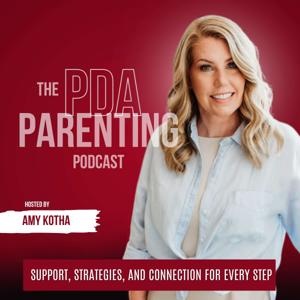
A podcast for parents raising PDA autistic kids and teens. Real talk, personal stories, and practical tools to move from chaos to connection - hosted by parent coach Amy Kotha.

2,483 Listeners

963 Listeners
576 Listeners
547 Listeners

8,378 Listeners

414 Listeners

2,865 Listeners

914 Listeners
96 Listeners

41,381 Listeners
3 Listeners

19,146 Listeners

372 Listeners
8 Listeners

719 Listeners