
Sign up to save your podcasts
Or

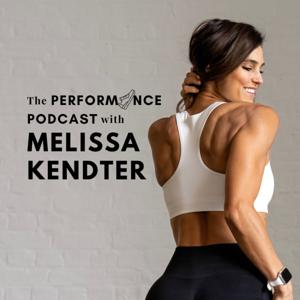


If you feel like you’re doing everything right, but your running still isn’t improving, this episode is for you!
Most runners don’t have a motivation problem. They’re showing up, putting in the work, and pushing themselves. But more effort doesn’t always mean more progress.
In this episode, I break down why your training might not be working, and the key shifts that actually lead to real results.
We talk about:
If you’re tired of feeling stuck, plateaued, or constantly fatigued, this will help you rethink your approach and start training in a way that actually works.
And if you’re looking for a structured approach to your training, this is exactly what I build inside Commit.
Post-marathon recovery isn’t just about rest, it’s about strategy. In this episode, we’re breaking down what actually happens in your body after a marathon, and why jumping right back into training too soon can hold you back more than it helps.
We talk about:
I’m also sharing what’s shifting in my own training as I prepare for my first 50K, how it’s different from other preps, and what I’m focusing on to stay strong, healthy, and consistent.
If you’ve ever wondered, “Am I pushing myself… or pushing too far?” this episode will help you understand the difference.
👉 Are you looking to improve your running performance ?
👉 Are you looking for strength training for runners?
👉 Do you need help with your marathon prep, half marathon prep, 5K prep and more?
📌 Train smarter with the Commit App.
In this episode, we break down the newly updated 2026 strength training guidelines from the American College of Sports Medicine — the first major update in nearly two decades, backed by extensive research and real-world application.
If you’ve ever felt confused by sets, reps, or conflicting advice online, this episode simplifies it all. We walk through what’s actually changed, what matters most, and how to apply these guidelines whether you’re a beginner, runner, busy parent, or just looking to get stronger in a sustainable way.
You’ll learn:
This episode is all about cutting through the noise and helping you train with more clarity, confidence, and purpose — using science-backed principles that actually fit into real life.
Whether you’re lifting at home, in the gym, or balancing strength work with running, you’ll walk away with actionable takeaways you can start using immediately.
📲 Want this done for you?
If you’re listening and thinking “okay but how do I actually apply this?” — that’s exactly why I created Commit. You’ll get structured strength + run programs that follow these principles, so you don’t have to guess. Use the code "commit" to get the yearly price of ~111$ (9.25 per month!).
🔬 Research & Resources:
Ever wondered why shin splints appear out of nowhere or why race pace feels impossible in training? In this episode we break down the science behind medial tibial stress syndrome, the key strategies to prevent it, and why gradual training and strength work are non-negotiable for long-term running health.
We also tackle one of the most common mental hurdles for runners: “How am I supposed to hold this pace for 13.1 or 26.2 miles?” Learn why training pace feels different from racing pace, how the competition effect can boost your performance, and actionable mental strategies can help you push through discomfort.
Whether you’re chasing a PR, building strength, or just trying to move better every day, this episode gives you science-backed tips, practical training guidance, and mental tools to train smarter, race stronger, and handle the tough moments with confidence.
Join the Commit App: Strength and Running Platform
If you've ever felt like your cardio is fine but your legs just can't keep up, you're not imagining it. Running has very specific muscular demands, and there’s often a gap between general fitness and running-specific durability.
In this episode we talk about:
• Why your legs fatigue before your breathing when you first start out running
• The difference between cardiovascular fitness and muscular endurance
• Why running takes time for the body to adapt to
Then the conversation shifts into something every athlete experiences: The messy middle of a hard training block.
The weeks where workouts stack up, fatigue builds, and motivation can dip. If you're deep in training right now, consider this episode a pep talk for staying the course when things feel heavy. Because often the hardest weeks are the ones where the most adaptation is happening.
Want help applying this to your own training?
My strength workouts, running programs, and weekly structure are inside the Commit App.
🔗 START HERE🔗
Are you lifting to look strong or to perform strong? In this episode of The Performance Podcast, we break down the key differences between aesthetic-based strength training and performance-based strength training for runners. With so many “runner strength” workouts circulating online, it’s easy to confuse sweat and muscle burn with actual performance progress.
You’ll learn:
How body-part splits differ from full-body performance programming
Why rep ranges and rest periods matter more than you think
How to structure strength training to improve speed, durability, and running economy
Why lifting heavy won’t make you bulky — but will make you more powerful
If you’re a runner with big goals, this episode will help you align your strength training with your performance — not just aesthetics. Because it's not all created equal.
Commit: Your All-In-One Fitness App
Use the code: "commit" to take 20% off your annual subscription.
Zone 2 training has taken over the endurance world — but is it actually the key to better performance, or just another fitness trend?
In this episode of The Performance Podcast, we break down the science behind Zone 2 training, aerobic base development, mitochondrial health, and polarized training models. You’ll learn what Zone 2 actually does physiologically, why it improves fat oxidation and metabolic efficiency, and where it fits into a smart endurance training plan.
We dive into research from Dr. Iñigo San Millán, Dr. Stephen Seiler, and foundational studies on mitochondrial adaptation and VO₂ max development, plus real-life examples for runners training for a 5K, half marathon, or marathon.
If you’re wondering:
• Does Zone 2 make you faster?
• Should all your runs be easy?
• Is high-intensity training necessary?
• How much Zone 2 is too much?
• What’s the best balance of easy vs. hard training?
This episode will help you understand how to structure your training for performance, longevity, and sustainable progress.
Whether you're building your aerobic base, chasing a PR, or trying to improve your running economy, this conversation will help you train with more clarity and intention.
🎧 Topics Covered:
What Zone 2 training actually means
Aerobic base vs. speed development
Mitochondrial adaptations explained
Polarized training (80/20 method)
VO₂ max and lactate threshold training
When Zone 2 is essential — and when it’s not enough
Train smarter. Recover better. Perform at your best.
Train with intention on the Commit App 📌
Can you train endurance without losing strength, power, or muscle? In this episode we bust myths and break down the science behind concurrent training — showing how strength and endurance can coexist when programmed smartly. This is not about marathon training, or long-distance running in general, but about making running and strength exist together.
You’ll learn:
How the interference effect works — and what research actually says about mixing running and lifting
Why training order matters for strength outcomes when resistance and endurance workouts are combined
Evidence that well-designed concurrent programs can still build strength and endurance without compromise
Practical strategies for scheduling runs and lifts so they support, not sabotage, each other
Whether you’re a strength athlete wanting better conditioning or an endurance athlete lifting for performance, this episode gives science-based solutions — no PhD required.
Run and Lift better on the Commit App.
Ask your coach series! Cold-weather running, knee pain during training, strength splits, carb loading — how do you know what actually works? In this episode of the Performance Podcast, we break down the science behind common training challenges. Learn why breathing is harder in freezing temps, how to manage knee pain safely, the pros and cons of full-body vs upper/lower strength splits, and the evidence-based way to carb load before a key race.
Perfect for runners, lifters, and performance athletes, this episode gives you actionable insights to train smarter, recover better, and hit your goals with confidence.
Train on commit, turn knowledge into consistent results with strength training and running.
Running economy is one of the most important — and misunderstood — factors in endurance performance. While VO₂ max and lactate threshold often get the spotlight, running economy quietly determines how efficient, sustainable, and strong your running actually feels.
In this episode, we break down what running economy really is, how it shows up in your training, and how you can improve it — without lab testing, extreme changes, or chasing fads. This episode gives you practical, science-backed ways to run with less effort and more control.
Commit App — building strength, efficiency, and durability so your training supports real life and your goals.
From the publisher's feed

1,505 Listeners

467 Listeners

1,341 Listeners

369,090 Listeners
3,793 Listeners

7,945 Listeners
2,110 Listeners

27,632 Listeners

65,380 Listeners

7,558 Listeners

15,398 Listeners

18,937 Listeners

1,772 Listeners
364 Listeners

10,241 Listeners