
Sign up to save your podcasts
Or



Based on Podcast App listening data
View This Week's Show Notes
Start Your 7-Day Trial to Mobility Coach
Join Our Free Weekly Newsletter: The Ambush
“Strength training will make swimmers slow.”
“Water polo players should stop lifting before big competitions.”
"Young athletes just need more time in the pool.”
These ideas have shaped aquatic sports for decades… but what if they’re actually holding athletes back?
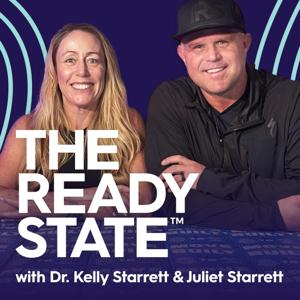
In this episode of The Ready State Podcast, Kelly and Juliet Starrett sit down with strength and conditioning coach Jack Brown, founder of Aqua Strength Performance, to challenge some of the biggest myths in swimming and water polo. Drawing from his own experience as an injured athlete and years spent coaching everyone from middle school beginners to Division I athletes, Jack explains why strength training may be one of the most overlooked tools for improving performance, reducing injuries, and helping athletes stay in the sport longer.
The conversation goes far beyond the weight room. Jack shares why sprinting, jumping, mobility work, sleep, nutrition, and recovery are essential pieces of athletic development—and why many youth athletes are training harder than ever while missing the fundamentals that matter most. Whether you're a swimmer, water polo player, coach, or parent of a young athlete, this episode offers a fresh perspective on what it really takes to build stronger, healthier, and more resilient competitors.
What You'll Learn(0:00) Common myths about strength training for aquatic athletes
(0:28) Jack Brown’s Story and Finding His Path
(7:20) Building Aqua Strength and identifying a gap in youth sports
(10:33) Why swimming and water polo have resisted strength training
(15:13) What parents should look for in a youth S&C program
(22:01) The importance of sprinting and jumping for athletic development
(26:26) Creating a gym culture athletes enjoy
(34:08) Bone health and loading for aquatic athletes
(35:18) Why strength training prepares athletes for college sports
(43:34) What “strength and conditioning” actually means
(52:44) Red flags in youth sports programs
(56:10) Training volume, overuse, and recovery
(1:01:35) Sleep, screen time, and athlete responsibility
(1:06:21) Myth #1: Strength training makes swimmers slow
(1:07:46) Myth #2: Athletes should stop lifting during a taper
(1:16:00) Myth #3: You need a sport-specific strength coach
(1:22:53) The future of aquatic athlete development
(1:28:16) Infinite Shelf recommendation
Huge thanks to our sponsors, Momentous and LMNT.
Welcome back to RECESS — our break from the serious stuff to talk about what we’re learning, what’s making us laugh, and how we’re building more play into real life.
In this episode, we talk about everything from terrible coffee decisions and animal attack close calls to youth sports nutrition, cancer shaming in the wellness world, and the Enhanced Games. We also discuss why parents may be unintentionally under-fueling their young athletes, the growing divide between personal health optimization and public health, and a new term we can’t stop thinking about: NARP Moms.
Along the way, we reflect on Caroline’s graduation week, the challenges of raising healthy athletes, the strange culture surrounding performance enhancement in sports, and why compassion—not blame—should guide conversations about health and disease.
What You'll Learn in This Episode(00:00) — Welcome back to RECESS
(00:30) — Juliet’s latest near-animal attack and Kelly’s divorce-worthy coffee experiments
(02:52) — Caroline’s signing day and graduation season reflections
(05:04) — The Enhanced Games: spectacle, performance, and the future of sport
(11:39) — Follow-up on nicotine pouches and European bans
(14:12) — Zach Coen and cancer shaming in the wellness community
(16:20) — Juliet’s experience as a two-time cancer survivor
(18:18) — Brad Ludden and First Descents
(18:55) — Why blaming people for cancer is dangerous and misguided
(20:28) — Introducing the “NARP Mom”, Shannon Mendez
(22:08) — Why youth athletes need dramatically more calories than adults
(24:45) — Carbs, under-fueling, and sports performance
(25:45) — Soman Chainani's new book, Young World — and how the data shows that fewer kids are reading books
(27:33) — Graduation week and sending another kid off to college
View This Week's Show Notes
Start Your 7-Day Trial to Mobility Coach
Join Our Free Weekly Newsletter: The Ambush
In this episode of The Ready State Podcast, breathing expert Patrick McKeown joins Kelly and Juliet Starrett for a mind-expanding conversation about something you do 20,000 times a day but probably haven’t thought deeply about: your breath. From asthma and anxiety to sleep quality, athletic performance, focus, and recovery, Patrick explains why the way you breathe may be quietly shaping nearly every aspect of your health.
The conversation dives into the surprising science of CO2 tolerance, why most people are chronically over-breathing, and how simple shifts – like nasal breathing, breath holds, and slowing your exhales – can dramatically change your nervous system and performance. Patrick also breaks down why women experience breathing and sleep differently than men, how poor breathing affects kids’ development and behavior, and why many sleep disorders may be going undiagnosed.
Most importantly, this episode is packed with practical tools you can start using immediately – whether you’re trying to sleep better, feel calmer, improve endurance, or simply function better under stress.
What You'll Learn in This Episode(0:00) Intro: Men vs. Women in Breathing & Sleep
(0:22) Patrick McKeown: Breathing Expert & Founder of Oxygen Advantage
(2:46) Kelly's History with Asthma & Breathing
(10:39) Exercise-Induced Asthma & Hyperventilation
(15:32) The BOLT Score Explained
(17:00) The Science of CO2 & Oxygen Delivery
(23:59) Kipchoge’s Closed-Mouth Marathon
(28:01) Women’s Breathing, Hormones & Sleep
(32:21) Why Women Get Misdiagnosed in Sleep Studies
(34:46) The Hidden Sleep Disorder Affecting Women
(38:07) Breathing Practices for Brain Health
(44:31) Dysfunctional Breathing & Mental Health
(46:05) Panic Attacks, CO2 & the Paper Bag
(1:04:38) Falling Asleep Faster with Breathwork
(1:12:54) Breathing Warmups for Athletes
(1:20:51) Mouth Breathing & Facial Development
(1:33:43) Children, Sleep & ADHD
(1:44:55) Breath Holds, Altitude & Hematocrit
(1:54:09) Infinite Shelf & Glymphatic Breathing
Huge thanks to our sponsors, LMNT and Momentous.
Welcome back to RECESS — our weekly break from the serious stuff to talk about what we’re learning, what’s making us laugh, and how we’re building more play into real life.
In this episode, we unpack why social connection may be the single biggest predictor of healthy aging and longevity, reflect on new pediatric guidelines pushing for more school recess, and talk about how adults desperately need more play too. We also dive into Rachel Entrekin’s mindset during her historic Cocodona 250 win, Kelly’s emotional experience eulogizing his mom, and the rise of “prom maxxing” — and why it gives us the ick.
What You'll Learn in This Episode(00:00) — Welcome back to RECESS
(00:40) — Kelly reflects on eulogizing his mom
(02:52) — Travel, burnout, and speaking at a longevity conference
(04:06) — Why adults need more play and movement
(05:43) — The Harvard Longitudinal Study and the importance of social connection
(06:18) — The “Six Points of Connection” and building real community
(10:15) — Kate Courtney, identity shifts, and elite performance
(12:33) — New school recess guidelines from the American Academy of Pediatrics
(15:23) — Why adults need recess too
(17:23) — Rachel Entrekin’s self-talk during her historic Cocodona 250 win
(21:01) — “Happy to be here” vs. competing to win; Tia Toomey's Champion's Mindset
(24:00) — Prom maxxing, parenting culture, and losing the plot
(29:02) — What we’re living for right now
View This Week's Show Notes
Start Your 7-Day Trial to Mobility Coach
Join Our Free Weekly Newsletter: The Ambush
What if the biggest thing holding your health back isn’t what you’re doing, but how you’re thinking about it? Most of us have been trained to see the body in silos: diagnose the problem, treat the symptom, move on. But what if that model is missing the bigger picture?
In this episode of The Ready State Podcast, Dr. Jeffrey Bland – widely recognized as the father of functional medicine – joins Juliet and Kelly Starrett to unpack a more complete, systems-based approach to health. From a simple (and surprisingly accessible) blood test that can reveal your inflammatory status, to the real role of inflammation as both a healing response and a hidden driver of chronic disease, this conversation challenges everything you thought you knew about “being healthy.”
Dr. Bland also shares the deeply personal story that reshaped his entire career and led him to question conventional medicine’s focus on downstream symptoms instead of root causes.
You’ll walk away understanding why everyday choices – like sugar intake, sleep, stress, and even your sense of self-agency – play a far bigger role in longevity than most people realize. Because at the end of the day, health is something you actively create.
What You'll Learn in This Episode(0:00) Intro & Teaser Clips
(0:35) Introducing Dr. Jeffrey Bland, Father of Functional Medicine
(3:11) Dr. Bland Joins the Show / Earth Day Connection
(3:50) How Dr. Bland's Career Began in 1970
(7:33) What's Most Urgent for People to Understand About Health Today
(9:13) Systems Thinking vs. Siloed Medicine
(12:43) A Seismic Life Event That Changed Everything
(15:19) Finding Purpose After Tragedy — The Birth of a Mission
(17:35) Origins of the Term "Functional Medicine"
(19:03) Functional Medicine in The Lancet — 1874
(31:15) Understanding Good vs. Chronic Inflammation
(38:30) The Ibuprofen Epidemic in Youth Athletes
(39:59) The Functional Medicine Model: Antecedents, Triggers & Mediators
(42:47) Big Bold Health & Testing for Inflammaging
(43:33) The CBC with Differential — A $6 Test Everyone Already Has
(45:08) The SIRI Index — Calculating Your Inflammatory Status
(46:25) Immune Cells Renew Every 90–120 Days
(56:03) The 850-Person Clinical Trial on Food & Immune Health
(56:56) Tartary Buckwheat — A 3,500-Year-Old Immune Superfood
(1:02:57) The Healthcare System Isn't Working — A Seismic Change Is Coming
(1:08:13) Rapid Fire: Blue Zones & Eating a Rainbow of Polyphenols
(1:09:47) The #1 Lever for Aging Well — Starting With How You See Yourself
(1:10:56) Where to Find Dr. Jeff Bland & Closing Thoughts
Huge thanks to our sponsors, Kreatures of Habit, LMNT, and Momentous.
Welcome to the first episode of RECESS, a new, more personal series from us, Juliet and Kelly Starrett. In these shorter, looser conversations, we’re pulling back the curtain on what’s going on in our lives, what we’re learning, what’s making us laugh, and what we’re thinking about across health, movement, longevity, performance, parenting, and everything in between.
In this episode, we talk about Kelly’s experience coaching Cal Women’s Water Polo at the NCAA championship and what it’s like to compete at that level. We unpack the “bronze medal mindset” and some of the biggest lessons we’ve learned from elite sport. We also dive into the Dean Potter documentary and reflect on our own experiences in 90s extreme sports culture. Plus, we share why we’re concerned about nicotine being normalized in wellness and what stood out to us at the Stanford Healthy Aging Conference.
And of course, we get into some lighter moments—including Kelly’s definitely-not-a-cat-group: the Meowfia.
What You'll Learn in This Episode00:00 — Why we’re starting RECESS
01:17 — The Meowfia, taco cat, and the funny-off
03:15 — Bringing fun back into health and longevity
03:58 — Kelly’s reflections from the NCAA women’s water polo championship
09:03 — Losing gold, winning silver, and the bronze medal mindset
13:51 — Red Vines, fat-free diets, and 90s athlete nutrition
17:24 — Dean Potter, Dark Wizard, and extreme sports culture
22:45 — Nicotine pouches, health washing, and wellness influence
27:34 — Our biggest takeaways from Stanford Healthy Aging
29:02 — Strength training, creatine, isometrics, and old cat syndrome
32:28 — Parenting, graduation, and figuring out how to cook for two
View This Week's Show Notes
Start Your 7-Day Trial to Mobility Coach
Join Our Free Weekly Newsletter: The Ambush
In this episode, David Epstein explores a powerful idea: constraints don’t limit us – they make us better.
Drawing from his book Inside the Box, he explains why too much freedom often leads to overwhelm, indecision, and worse outcomes. Whether it’s creativity, productivity, or everyday decisions, we perform better when we narrow the field and work within clear boundaries.
Through stories – from failed tech startups with too many ideas to elite performers who thrive under restrictions – he shows how constraints help us prioritize, think differently, and follow through. Even creativity, he argues, doesn’t come from endless freedom, but from being boxed in just enough to spark better solutions.
If you’ve ever felt stuck, scattered, or overloaded with choices, this episode offers a simple reframe: you don’t need more options – just better constraints.
What You'll Learn in This Episode(0:00) Intro – Constraints, Overwhelm, and Why This Matters
(3:37) Meet David Epstein
(6:19) From Range to Constraints
(8:18) The Dizziness of Freedom
(12:05) The Creativity Myth
(14:04) The Green Eggs and Ham Effect
(16:32) Constraints-Led Approach Skill Learning
(19:38) Futsal & Constraints in Sport
(21:16) The General Magic Story
(32:53) HARKing in Science
(51:51) Think Slow, Act Fast
(55:57) Creativity vs. Originality
(1:00:26) Constraints in Parenting
(1:10:19) Commitment Devices
(1:16:06) Make Your Commitments Visible
(1:16:52) Reclaiming Your Attention
(1:21:49) Book Recommendation & Closing
Huge thanks to our sponsors, LMNT, Momentous, Vitality, and Kreatures of Habit
View This Week's Show Notes
Start Your 7-Day Trial to Mobility Coach
Join Our Free Weekly Newsletter: The Ambush
What happens when human biology collides with exponential technology? In this wide-ranging and deeply relevant conversation, Steven Kotler – NYT best-selling author and founder of the Flow Research Collective – joins The Ready State to unpack how AI, information overload, and rapid technological change are reshaping the way we think, work, and live.
Steven breaks down the growing mismatch between our ancient brains and today’s hyper-accelerated world – and why it’s leading to burnout, fractured attention, and loss of meaning. But this isn’t a doom-and-gloom conversation. Instead, he offers a powerful reframe: the future belongs to those who can harness flow, think creatively, and collaborate at scale.
From practical strategies for using AI without losing your cognitive edge… to why attention is your most valuable currency… to how group flow may be the key to solving humanity’s biggest challenges, this episode is both a wake-up call and a roadmap. If you’ve ever felt overwhelmed, distracted, or unsure how to keep up in today’s world, this conversation will change how you think about performance, purpose, and possibility.
What You'll Learn in This Episode(00:00) Intro & Teaser: The AI Attention Warning
(02:56) Meet Steven Kotler & We Are As Gods
(04:18) The World Is 286% Faster Than in 2012
(05:29) Global vs. Linear: How Our Brains Fell Behind
(11:59) Understanding Cognitive Load & Information Overload
(14:17) Exponential Leadership Syndrome Explained
(14:53) The Chain: Overload, Burnout, & Identity Collapse
(17:36) When Is AI Helping vs. Making Us Weaker?
(18:49) The Brain Predicts the Future to Save Calories
(23:54) Cognitive Offloading: The Real AI Problem
(26:00) Rule #1: Always Do Your Thinking First
(28:37) Interoception as the Antidote to AI Overuse
(38:35) What Is Flow State? The Full Breakdown
(39:07) Flow Makes You 500% More Productive
(40:48) Why AI Can't Do Lateral Thinking (But Humans Can)
(43:57) The Key To Maximum Creativity
(46:05) You Need Better Personal Filters – Here's Why
(51:48) The Human Attention Span Is Now 3 Seconds
(52:35) Match Your Screen Time with Meditation Time
(57:51) Challenge & Friction Are Features, Not Bugs
(58:40) The Challenge-Skills Balance and Flow Triggers
(1:02:24) Rethinking Work: Creation vs. Survival
(1:08:39) The Killer App of the 21st Century: Cooperate at Scale
(1:13:02) Master Group Flow to Thrive in the AI Age
(1:15:23) Infinite Shelf & Where to Find Steven Kotler
Huge thanks to our sponsors, LMNT, Momentous, Vitality, and Kreatures of Habit
View This Week's Show Notes
Start Your 7-Day Trial to Mobility Coach
Join Our Free Weekly Newsletter: The Ambush
Imagine standing near the summit of Mount Everest during its deadliest season while battling the internal voice that tells you to turn back. Cesalina Gracie joins Kelly and Juliet Starrett for a powerful conversation about resilience, self-belief, and staying calm under pressure. Drawing on lessons from Brazilian Jiu Jitsu, Everest, and her work in women’s safety, Cesalina offers a grounded perspective on mindset, preparation, and performing when it matters most.
In this deep dive, Cesalina shares her unique upbringing in the legendary Gracie family and how she translated those martial arts lessons into a successful summit of the world's highest peak. You will learn about the psychological traps of self-sabotage and how to reframe your internal dialogue to build unwavering self-belief. Cesalina explains why the mind-body connection is the most powerful tool you possess for navigating both the mats and the mountains.
The conversation also covers vital practical skills from Cesalina's Modern Woman Safety System. From navigating Ubers and elevators to setting firm boundaries in social settings, this episode is packed with actionable advice for women to move through the world with more confidence and awareness. Whether you are an athlete, a parent, or someone looking to sharpen your mental edge, Cesalina's insights on faith and preparation offer a roadmap for personal growth.
What You'll Learn in This Episode(0:00) Welcome to the Ready State Podcast
(3:15) Healing through women empowerment workshops
(8:40) Identifying and stopping self sabotage
(13:50) Growing up in the Gracie family dynasty
(19:15) The true mission of Brazilian Jiu Jitsu
(24:40) Why physical connection and play matter
(30:10) Using leverage and strategy in life
(36:55) The transition from the mats to the mountains
(43:20) Training for Everest in seven weeks
(49:45) Mental toughness under extreme stress
(55:30) Crossing the Khumbu Icefall ladders
(1:01:10) Survival mindset and the death zone
(1:07:45) A lesson in self sabotage at 8000 meters
(1:14:20) The importance of betting on yourself
(1:21:05) Why we need specific training for women's safety
(1:28:40) Practical safety tips for Ubers and hotels
(1:35:15) How to tell if someone has bad intentions
(1:43:37) Closing thoughts and final advice
Connect with CesalinaWebsite | Instagram | YouTube | TikTok
Take Cesalina's brand new course the Modern Woman Safety System! In this women's safety course, you’ll learn awareness, posture, voice, controlling your environment, and self-defense techniques that work for all women no matter your experience, size, or strength. This course gives you the essential tools every woman should learn in a simple, step-by-step program. Don’t leave your safety to chance. Use code READYSTATE20 at checkout for 20% off.
Huge thanks to our sponsors, LMNT, Momentous, Vitality, and Kreatures of Habit
View This Week's Show Notes
Start Your 7-Day Trial to Mobility Coach
Join Our Free Weekly Newsletter: The Ambush
Are you getting the right light signals to perform at your peak? Most of us spend nearly 90 percent of our time indoors, missing the critical biological triggers our bodies need for sleep, recovery, and focus. In this episode of the Ready State Podcast, we dive deep into the world of biocentric lighting and how you can optimize your environment to match your natural circadian rhythm.
Kyle Harris, CEO of BrainLit, joins Kelly and Juliet Starrett to explain why light should be viewed as a biological signal rather than just a way to see. We explore the massive impact that light spectrum and modulation have on our health, from professional athletes in the NBA and NHL to surgeons and shift workers in hospitals. Learn how passive changes to your environment can act as a force multiplier for your health, helping you sleep better and recover faster without adding another task to your busy to do list.
What You'll Learn in This Episode0:00 Intro to Biocentric Lighting and Sleep
3:45 Meet Kyle Harris of BrainLit
7:15 Light as a Biological Signal vs Visual Aid
11:30 Light as a Pillar of Health and Recovery
16:00 The Modern Indoor Environment Problem
20:15 Understanding Different Light Sources
24:30 Lighting in Hospitals and Surgery Centers
28:45 Feedback from Professional Sports Teams
33:15 Impact on Coaches and Staff Performance
37:00 The Red Light Experiment at Home
41:30 Light Volume vs Light Spectrum
45:45 Measuring Light for Health Outcomes
50:00 Creating an Ideal Light Day for Humans
54:15 Simple Home Lighting Hacks
58:30 Jet Lag Mitigation and Future Tech
1:02:00 Infinite Shelf and Closing Thoughts
Connect with KyleWebsite | Instagram | YouTube
Huge thanks to our sponsors, Vitality, LMNT, and Momentous
From the publisher's feed
Ranked by our users in the last 21 days
2,593 Listeners

11,733 Listeners
5,386 Listeners
1,205 Listeners

2,041 Listeners
1,563 Listeners
2,608 Listeners

7,915 Listeners
965 Listeners
376 Listeners
544 Listeners
737 Listeners

29,068 Listeners

179 Listeners

1,221 Listeners