
Sign up to save your podcasts
Or

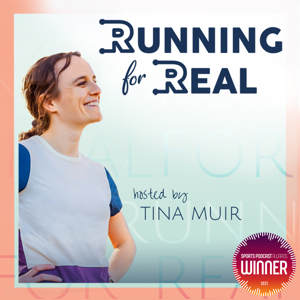


I LOVE the episodes where we focus on the mental side of running, and this one, my friends is absolutely PACKED with information about how to be mentally stronger.
This episode is a little unique to other mental training episodes as Nicole Detling (Sport Psychologist for many Olympians) and I look at the three biggest areas we tend to struggle; nerves before a race, giving up mentally during, and beating ourselves up for not doing enough after.
Nicole explains about the two things runners worry about more than anything else; confidence and pre-performance anxiety. These work together, but at the same time against each other, which makes it hard for us to feel completely ready when it matters.
We break down two scenarios; when training has gone well, and you fear you will mss everything up; and when training has had a lot of ups and downs, and you are not sure how to approach the race itself.
We talk about why we often look for reasons to fail, without looking for the reasons we should be having success, and the change in perspective can make all the difference. Anxiety is not a bad thing, it could be excitement! Your body doesn't know any different.
As runner we forget that we always have anxiety, even before good races, and if we ran well there, that means anxiety is always part of performance, so why is it bad?
We learn how to treat anxiety like an old friend, and remember that we have never done anything great without them
Nicole goes step by step goes through how to get a big goal you want, and what to do if you feel like you are not mentally tough. We learn advice for how to turn yourself back around if you feel like no way going to make it during a race.
We know we are our own worst critic, and we compare worst days to everyone else highlight reel, but there is advice in here for how to stop, or at least limit that.
Remember, mental toughness is pushing past barriers, every time you do that, you are building mental toughness. When most runners push through something hard, they feel like they got lucky, but you need to remember you did that, and you are getting tougher, reward yourself for it!
Finally, learn how to asses a bad race/Injury (anything you consider a failure). It is okay to allow yourself to embrace the suck, but then important to make a plan to make sure it doesn't happen again. What are you going to do about your mindset?
Today's episode is for you if you feel you are not mentally tough (you probably are tougher than you think!) and if you feel like the mental side of things is what lets you down in races and training over and over again.
Today's GuestNicole Detling
Owner of Headstrong Consulting and Assistant Professor at the University of Utah. Nicole has worked with athletes of all levels, from high school teams to Olympic athletes. Nicole has co-authored psychology books and been featured in journal publications, and regularly travels the world giving talks and trainings on mental toughness to athletes, coaches, and businesses.
What You Will Learn AboutInspirational Quotes
I really enjoyed the performance side. That has always been my love and my passion, performance and how do we get the most out of people, maximize potential.
The basic principles of mental toughness are the same, regardless of what that performance may be...we all have to perform every day.
The number one source of confidence is the one thing that we can't deny and the one thing that we can always hang our hats on, is preparation. If you feel, when you get to any competition, that you have prepared the best you possibly can given the circumstances you have had, that is the best source of confidence you can have.
I don't care who you are, what sport you do, how good you are, if you look for reasons to fail, you will find them...but, if you look for reasons to succeed, you will find those too.
Butterflies (nervousness) are good, you just want them flying in formation.
The best athletes in the world do have some pre race performance anxiety and it goes away once the performance starts.
When you have that number in your mind, that goal in your mind, and you want it a lot and try really hard to get it, typically what that results in is a lot of body tension, you end up hitting the wall a lot sooner, your run stride are less efficient, you are less effective, your re not getting as much push, and typically for most people that results in a lot slower times than anticipated.
If you take care of whats important now all along the way, thats keeping your mind in the process of the race, and before you know it, that outcome takes care of itself.
If you feel like things are falling apart, typically what you are doing is connecting what is happening now to the outcome.
When you recognize that you have pushed through a little bit, you release some more endorphins in that moment which is going to help you feel better, feel happier, and help mitigate some of the pain.
When you know your why, you can bear almost any how.
Most people are more mentally tough than they think they are.
Just because you quit in a race, doesn't mean you are a quitter, doesn't mean you are a loser, it just means in that moment in time, it wasn't working out the way you wanted it to. That doesn't mean you can't go back and tackle that race the following year or something similar.
You should celebrate your success just as much as you beat yourself up for your failures.
If something really did not go well, embrace the suck! Acknowledge it, recognize it, value it, it is okay to say that didn't go the way I wanted it to...
...But don't get stuck in the suck, and thats what happens with a lot of people. Allow yourself to feel the suck, acknowledge it, but then what are you going to do about it? How are you going to come back better?
Resources MentionedLast week's interview with Renee McGregor
Headstrong Consulting
Article on how to journal (download the PDF)
Greg Shelley
Aynsley Smith
Keith Henshen
Barry Shultz
Evie Serventi (my sports psych)
Thank you to my new running buddy VI and favorite recovery product BodyHealth for sponsoring this episode of Running for Real.
VI is there to encourage you on tough days, congratulate you on the days you crush it, and remind you of your goals when you need it. You can enter to win your own VI by visiting GetVI.com/running4real
When I was running 90 miles a week as a pro, I would take 5-10 BodyHealth Perfect Amino tablets every day without fail. They helped me recover faster, and feel better. Now they have Perfect Amino XP, which makes it even easier. Get 10% off at Bodyhealth.com using coupon code TINA10
Food Glorious Food! That is how Renee McGregor started her book. That is how we should think of food and eating. It is one of our pleasures in life...yet in recent years, food has been tainted by guilt, frustration, and judgment.
Renee is here to discuss orthorexia, and how much anxiety our obsession with healthy eating can bring...and the isolation that follows, not just around eating, but within our day to day activities and way we feel about ourselves to the core.
Athletes are more susceptible to obsessive eating, as runners already need to be extreme and dedicated, meaning we will do almost anything to achieve our goals. We might not even realize it is happening initially, and may lead to feelings of being unable to eat unless we have exercised enough...so when injuries strike, food becomes very restricted.
Renee and I discuss social media, and how damaging it can be, especially if we are in a bad patch. She shares how many famous food bloggers have recently come out admitting that their social media profiles were all a lie, and they were in fact unhappy and unable to even eat those foods they promoted.
At this time in our lives, it becomes all too easy to base our sense of worth on how many likes or what people said about our shares online. Even if you are the most confident person in the world, social media can make you feel like you are not good enough.
This episode is all about learning how to rebuild yourself and rebuild your confidence to be comfortable with who you are, not the number of likes you get on a photo.
Renee DESTROYS the myth of carbs being bad for us, and tells us why they have been blamed for our health issues, which is why so many people are scared of them, and why cutting carbs is involved in almost every diet.
This is a good reminder that training hard is important, but so is down time, enjoying company of others, and being kind to yourself.
It is too easy for us to get that sense of failure if we try to eat healthy, but end up hungry soon later, it makes us feel like we have messed up, so we binge and feel bad about ourselves. This episode will help you see that thinking, understand that it is not true (and why we are so hungry so soon after), to leave you feeling good about yourself. Let's see if we can make it Food! Glorious Food! Again.
Today's GuestRenee McGregor
Renee McGregor is a leading sports and eating disorder specialist dietitian. She is accredited by the Health and Care Professions Council, the Sports and Exercise Nutrition Register, and is a member of the BDA’s Sports Nutrition Specialist Group.
What You Will Learn AboutInspirational Quotes
I realized how bad it had got, how bad the situation was and it was actually a very difficult experience.
It's not all it seems to be.
The term healthy eating can be interpreted in so many ways. This is where the problem lies...often it is about low carb or having juices or doing a detox. My heart starts to sink a little, as I know actually, healthy eating for me, when I am teaching people with disordered eating and dysfunctional relationships with food, healthy eating when I am educating them is about unrestrained eating, actually about understanding that yeah, the majority of the time, of course we want you to eat well, want you to eat whole grains, fruits and vegetables, we want you to eat dairy, but we want you to include everything in your diet. That does mean, if you quite fancy a piece of cake or you want a bowl of ice cream or a glass of wine, you don't beat yourself up about it.
It should be food glorious food, but actually, everyone is so fearful of food now, they don't know what they should have, they don't know if that is right, should I have it.
There is no real right or wrong, it is really about what is right for you as an individual.
One of the problems with an eating disorder is that you never know when enough is enough, because nothing is ever enough. You are constantly in search of trying to be better.
I am a dietitian, I eat well the majority of the time, but I do also eat chocolate, have ice cream, eat cake, because actually those are important for me to actually be with my friends and family. To me, that is equally as important as putting those good things into my body.
With orthorexia it is more aesthetic, where as with anorexia and bulimia is that it is about calories and control.
It all comes back to the need to control the anxiety and the anxiety is usually fueled by a negative sense of self, that inability to like themselves, to be self compassionate.
You can only compare yourself to yourself.
Social media is a snapshot of someones life, it is not reality.
Carbs have been given such a negative press. We have gone from blaming fats for heart health to blaming carbs. The reality is, its not carbohydrate per say, its the type of carbohydrate you eat and the portion sizes you eat.
Its not that carbs are bad. No one food group is to blame for anything, it is a multifactorial system, and it is about understanding that your body needs something from every group to perform well.
A lot of the statements that have been made out there, have been made by people who have very little understanding of nutrition and biochemistry.
When people start depriving themselves of things they quite like, even if it is a one off, they are not allowing themselves to be compassionate and self caring.
Resources MentionedLast week's interview with Phil Maffetone
Renee's book: Orthorexia: When Healthy Eating Goes Bad
Bee Wilson
Madeleine Shaw
Renee's blog about the Clean Eating Debate
Horizon program on a well known blogger
Anorexia and Bulimia Care
Generation UCAN and BodyHealth sponsored this episode of Running for Real. Two products you can rely on.
Even if you are trying to tweak your diet to be ready for race day, Generation UCAN is the ONLY fuel I needed during my marathons. This is one product that can help you make sure you are well fueled, both in training and in races. I love the bars for every day training, and still have one every morning, they are great for pre-workout, ESPECIALLY if you are prone to stomach upsets. You can get 15% off with code RUNNING4REAL at Generationucan.com
BodyHealth Perfect Amino helped my body recover MUCH faster after runs and workouts, I couldn't imagine my training life without them. You can enter to win a free pack of 6 bottles or get 10% off at BodyHealth.com using coupon code TINA10. Click the banner for more information.
Kelly Roberts is paving the way for runners who have struggled with their weight their whole lives, but are finally realizing that strong comes in many shapes and sizes.
The media has had a HUGE influence on the way we view ourselves for years, and Kelly always thought she needed to lose weight to be beautiful. We are so cruel to ourselves, and we focus on our biggest insecurities.
It was only when Kelly watched the finish of a marathon that she realized every single runner crossing that finish line was changing their life for the better forever by running a that race. The sense of accomplishment in your first race is something we should never forget.
But still, for Kelly it was about losing weight, when in fact, it is not even about the weight, but the body dysmorphia that plagues us even if we do. We have to start thinking about our health in terms of longevity and not the immediate rewards.
Kelly loves to do research, especially about how the media affects us and what it does to our body image. The weight loss industry is the reason we think healthy= thin. However, being thin does not mean you are going to be fast, putting in the work does.
We discuss why we need to stop talking about ourselves in terms of fast or slow, it is not about that, but do you feel strong, confident, ambitious?
We discuss how we can make a change, especially for those of us who want to inspire the younger generations to believe in who THEY are. You HAVE to start with yourself. How often do you look in the mirror and tell yourself that you are beautiful? How often do you say you are beautiful in front of your daughter?
If we can't say it to ourselves out loud in front of them, how are they ever going to believe it?
Today's episode is for you if you believe that we need to make a change to believe in ourselves more, especially as runners, and if you have ever struggled with your weight, this will show you that maybe trying so hard to lose the weight is actually what is sabotaging you.
Today's GuestKelly Roberts
Best known for her Run Selfie Repeat website and Podcast, Kelly Roberts is sponsored by Oiselle for her work she is doing to redefine strong within the running world, inspiring women of every shape and size that they are beautiful and strong.
What You Will Learn AboutInspirational Quotes
I always wanted to be a runner because it meant you would be skinny. My weight was something I always struggled with, I always felt like the fat friend.
Running was this thing that if I learned to love to run then maybe I would lose the weight I had convinced myself I needed to lose to be desirable or to look the way I thought beautiful women looked.
I remember seeing people of all different shapes and sizes (at the end of a marathon), and thinking, WHAT?! This isn't at all what I thought this would be like.
When I started running, I finally came to terms with the fact that there was never going to be a day that it was easy, and even though yes for some people, it is easier than others, everyone struggles.
Running became this thing that even though it felt impossible, and it was horrible, there was a duality to it, it wasn't just awful, I felt better after, and I loved the fact that when I was doing it, I couldn't think about all the things I wasn't doing with my life.
Finally, I have something that makes me feel proud of myself.
I was still convinced that if I could work harder then I could finally look the way I needed to look. Once I started doing the work and not giving up on myself, and nothing really changed, I felt so much more powerful. Running is absolutely a form of empowerment.
Health is not about weight.
Running made me do the work at something I wasn't good at, and it totally changed the way I saw myself, the way I saw self doubt, and I saw the limits I was putting on myself and the intimidation that came with that.
We never ever see a diverse range of bodies, shapes, colors, races, ages. Everyone is going to extreme lengths to be perfect or to become the ideal of thinness and fill these beauty standards, to fit in a box.
Health is not a look, it is a lifestyle.
We never celebrate our wins, all we do is focus on what we do wrong or what we need to be better at or regret. It is so backwards.
It's a balance, learning when to talk about something and how.
Don't ever think that because someone sees the world in a different way than you, that they are right and you are wrong. Things are so complicated, everything is a grey area.
Resources MentionedLast week's interview with Kyle Merber
Run Selfie Repeat Podcast
Sports Bra Squad
Bad Ass Lady Gang
Kelly's Twitter
Women's Running Magazine
Kelly's website (She Can and She Did)
Thank you to my new running buddy VI and favorite recovery product BodyHealth for sponsoring this episode of Running for Real.
VI is there to encourage you on tough days, congratulate you on the days you crush it, and remind you of your goals when you need it. You can enter to win your own VI by visiting GetVI.com/running4real
When I was running 90 miles a week as a pro, I would take 5-10 BodyHealth Perfect Amino tablets every day without fail. They helped me recover faster, and feel better. Now they have Perfect Amino XP, which makes it even easier. Get 10% off at Bodyhealth.com using coupon code TINA10
Most of us can't even imagine how it would feel to run well under 60 seconds for one lap, let alone for four laps in a row, but Kyle Merber has done it 18 times.
I wanted to bring Kyle on the running for real podcast as he is another athlete who is known for being real, sharing the truth, and having fun with his life, rather than hiding it all behind closed doors.
Kyle is sponsored by Hoka One One, and is yet another athlete who raves about Hoka and how much they actually care for their athletes, like making their first priority with Kyle to get him to quit his job to help him improve.
Kyle shares his emotional story of losing his good friend David Torrence just days before David was planning on trying to win his third Long Island Mile (of which Kyle is the race director). He shares how they showed respect for David in a number of ways in the race that day and how the running community has changed for the better, with more appreciation for one another.
Kyle shares insight into life with his coach "Gags", one of the most famous coaches in the running world. He talks about why having a coach that believes in you can make your running go to whole new levels you never thought possible.
We learn about what a week of training looks like for a 3:52 miler, and just how intense it actually is (some days have a tempo in the morning and hills in the afternoon!). Kyle explains how to build up to this level of training, with his advice for runners wanting to run some speedy mile races in the future.
As a pro runner, you would imagine he wants all those workouts to be the best, but actually, trying to hit every workout, or get an A+ on every workout is never going to happen, and its safest to learn to accept that. A good lesson for us all.
As someone who did not go to a big high school or have the support that many other young prodigies have, Kyle had to find inspiration from others. Now he wants to pass that on to incoming runners of the younger generation, showing the running world that is a real person, not a robot, and it is okay to allow your weakness and humor to show through.
Both Kyle and I believe that more elite runners should be open with real, not only would it help individuals to follow and support them as a person, not just a fast runner, but it would help with the spectating side of the sport too.
Finally, Kyle has a fantastic idea for running events, and why he believes focusing on 1-2 event areas at a track meet could bring suspense and excitement, to build a plot that is currently missing from the participation of sport.
Today's episode is for you if you like to learn from elites, but appreciate honesty and being real. Kyle is funny, friendly, and of course fast, but has some great ideas for how to improve running for the better in every way.
Today's GuestKyle Merber
A 3:52 miler for Hoka One One, Kyle has run under 4:00 eighteen times, and has no intention of letting up now. Kyle is knowing for his sense of humor and for being honest.
What You Will Learn AboutSometimes I will have a bad race, but I will still break 4:00 in the mile, and I think the running world is obviously so excited by a sub 4:00 mile at all times, it is such a barrier that it is great for your self-esteem, but sometimes you do it and you lose by quite a bit, so that is a weird situation.
It's not so much what you do one time, but what you can do again and again and again, so it took a couple of races to really prove myself.
If you see someone in the street and say, "nice hoka's" they will tell you a story about why they are in hokas and how much they love them. I think that is pretty unique to the brand.
I don't know if there is ever any way that you can ever truly heal from that, especially for his closest friends and family, but I know it was really good for the running community, and I know myself in the wake of tragedy to come together and celebrate his life.
The people we are racing against constantly, and the people we are traveling the world, racing against, this elite running community, it is so much more than coworkers or competitors, over the years, these are people we have been racing since high school. We really do have a deeper friendship than is what is known on the track. I know that between the Long Island mile, fifth avenue mile, and a third race I did in Alaska, the camaraderie was really high, and I think people appreciate each other a little more than we have taken for granted in the past. Taking a moment to really express to one another, our friendship.
Gags or Coach Frank Gagliano, he is everything you would expect in an 80-year-old Italian man from the Bronx, he is really crushing all potential stereotypes there, showing up in his yankees cap..He is a former football player who never ran track, but just got into coaching it. The fact that someone who never raced anything in his life, the fact that he has found his way to the top of track and field world is an admirable testament to anything being possible.
A coach believing in you goes such a long way, everyone can write a workout or a plan, but having a coach that can convince you that you can be better than you are, I think that's maybe the greatest skill and motivation a coach can provide.
No one workout is the end all be all, it is just about general fitness improvement and stringing as many days and positive workouts together. It is not about an A+, it is about passing.
For the mile it is just about efficiency, getting to the 200m to go mark as efficiently as possible, and to do that, you need to be really strong.
I see myself as a fan in many ways, who has been fortunate enough to come up and be able to compete in the races I was once watching, therefore I want to open up and give back as much as possible.
By being a real person and coming off as a normal human rather than a robot, maybe there is another 15-year-old kid who is running by himself every day, by seeing me on the pro stage, can see that it is possible.
Something that the sport really benefits from is having personalities. The runners that I rooted for are the ones who were sharing.
I think certain athletes can transcend beyond the sport.
Resources MentionedLast week's interview with Tom Goom
Hoka One One
Hoka Clifton 4 (shoe Kyle runs in) MENS
Hoka Clifton 4 WOMEN
David Torrence Mile
New Jersey New York Track Club
5k/10k training plans
Kyle on Twitter
Kyle on Instagram
Thank you to my new running buddy VI and favorite recovery product BodyHealth for sponsoring this episode of Running for Real.
VI is there to encourage you on tough days, congratulate you on the days you crush it, and remind you of your goals when you need it. You can enter to win your own VI by visiting GetVI.com/running4real
When I was running 90 miles a week as a pro, I would take 5-10 BodyHealth Perfect Amino tablets every day without fail. They helped me recover faster, and feel better. Now they have Perfect Amino XP, which makes it even easier. Get 10% off at Bodyhealth.com using coupon code TINA10
Tom may be a recovering cheese addict who occasionally has relapses (yes, we do go into this), but, primarily he has a passion for working with runners in his job as a physiotherapist in the UK, while running the very popular injury prevention (and rehab) blog, Running Physio.
Tom gives us advice on how to sort through the overwhelming amount of information online to know which sources to trust, and how to decide on who is in your "team" who can help you when you need it. We should figure this out BEFORE issues arise, so when those injuries or setbacks do come up, we know exactly who to call, rather than doing a frantic google search for anyone who can help. Your team doesn't have to be in person, as evidence has found that Skype or online consultations can help runners in more ways than we would expect.
Tom explains the three keys critical to staying healthy: If you try to make sure you plan your training and progress it slowly, include targeted strength work to improve performance, and focus on recovery by getting enough sleep, including planned recovery days.
We discuss how to prepare for an appointment with a medicals professional. If you know what you want from the appointment, they will be better equipped to help you. If you are seeing someone and not getting better, Tom gives us the factors to consider before you seek a second opinion, but if you do need to see someone else, there is nothing wrong with that, maybe the person you are seeing does not have the correct skills for your particular injury.
We cover how to know what to do if you don't want to risk taking extra days off and losing fitness when you don't have to, but you are not sure if the injury is completely healed. How to weigh up the risk of more pain and developing further injury vs the reward of training in that moment.
Tom explains how the differences between types of pains are not actually telling us as much as we might think, but how your injury behaves during and after a run is actually more insightful. Believe it or not, shoes are less important than we think, but sometimes our shoes do put us at risk of injury, Tom explains how to choose the right shoes for you.
Finally, we cover the negative effects of stress (any stress, not just running), how stress can slow healing by up to 60%, and affect how we respond to exercise, prevent or reduce gains in fitness, and increase pain perception. On all fronts, we all need to consider just how much our lifestyle could be the reason we are struggling with injuries.
Today's episode is for you if you have ever been frustrated with an injury or felt overwhelmed with the amount of information out there about injuries. Tom gives us a realistic approach to break down the advice, and show us how to help ourselves get better faster, and prevent injuries in the future.
Today's GuestTom Goom
One of the top physiotherapists in the UK, Tom has worked with runners of every level and speed at the Physio Room in Brighton. Tom is the creator of the very popular website, Running Physio where he blogs and shares information about how runners can remain injury free, and run stronger than ever.
What You Will Learn AboutIf you get them, you "get runners", I think that is actually really important because the more I ran, the more I realized its actually harder to rest than to run sometimes...I could really understand with people who came to me with running injuries who were not able to run, how much of an impact it had on them, how much they really missed it.
There is nothing else that is quite the same, that has the same buzz associated with it, so when you don't have it, it is really difficult to replace it.
If you are looking for someone specifically for treatment, then recommendations from fellow runners is a good way to go, perhaps recommendations from other health professionals.
Any medical sites making massive claims, "we can fix everything, we can treat everything, we have these wonderful magical techniques", I would always tend to be a little bit skeptical about that, because often the people that know the most, are the people who are usually a little bit more careful about what they claim as they recognize how complex a lot of things are.
Get it clear, what are the priorities, what are the important things that will actually make a difference? Because a lot of the time, when you get to those debates about things, you are looking at perhaps smaller stuff that isn't a important, and there are some thing that most experts in running would agree on.
No amount of foam rolling is going to help you if you are training far above what your body can cope with.
Before the appointment, really ask yourself, what do I want from this? What am I looking for? What questions do I have that I really want answered? Really that appointment should be about you and what you want from it...If you go in with a clear idea, you get what you want out of it.
It's much harder to manage an injury if you don't really understand it.
When you are not progressing with rehab, there are lots of different potential reasons for that, and it's trying to pick through that and work out what is the reason.
Ultimately, what matters is that the runner gets the best outcome and it doesn't matter where that comes from, whether it is me or another professional, as long as they get the best outcome.
I think health professionals nowadays should be very familiar with the fact that patients will have asked Dr Google, they will come in with an idea of what their problem is. I think really, as heath professionals, we shouldn't be too sensitive to that, and we should take the time to explain if we don't agree with what the patient thinks the problem is.
If in doubt, get checked out.
Running patterns only change a small amount. There is only a small amount of evidence that certain shoes will reduce risk of injury, so when you are looking at relatively small changes to shoes, it probably isn't going to make a massive impact, but it is also very unpredictable as different people respond differently to different shoes.
A lot of us runners, we are quite driven people, and it is that drive that gets us off the couch and gets us running, whereas a lot of people don't have that same drive, but linked to that drive are other features that perhaps we can push ourselves quite hard and be hard to ourselves, perhaps be a little bit of a perfectionist, and that can be lead to injuries too as we push our bodies to more than what they are capable of doing.
Being kind to yourself, and recognizing that your are only human, that can help let go of some of that guilt.
Your injury risk is nearly doubled if you are sleeping less than 8 hours a night.
Resources MentionedLast week's interview with Devon Yanko
Running Physio
Strength Training for Runners program
Tom's Skype consults for tendon injuries
If you feel like you are not getting better Part 1
Mike Sullivan (Tina's chiropractor)
Kyle Bowling Chiropractor (treated Tina's peroneal tendonitis)
Mark Cucuzzella and Josh Emdur (about steady running consults)
Athlete monitoring worksheets to print
Adam Meakins (The Sports Physio)
Dr. Rich Willy
Christian Barton (complete sports care)
Craig Purdam
Pete Malliaras(Tendinopathy Blog)
Tony the Fridge
Thank you to my new running buddy VI and favorite recovery product BodyHealth for sponsoring this episode of Running for Real.
VI is there to encourage you on tough days, congratulate you on the days you crush it, and remind you of your goals when you need it. You can enter to win your own VI by visiting GetVI.com/running4real
When I was running 90 miles a week as a pro, I would take 5-10 BodyHealth Perfect Amino tablets every day without fail. They helped me recover faster, and feel better. Now they have Perfect Amino XP, which makes it even easier. Get 10% off at Bodyhealth.com using coupon code TINA10
Can you imagine averaging 8:40 pace for 100 miles?
Nope, neither can I, but today's guest has done just that, and won many big time races like Leadville 100 mile this year (2017), and has also run a 2:38 marathon! How is that for range?
Devon Yanko talks of her huge success after a long layoff, and her struggles with imposter syndrome and the dark places our minds go when the negative thoughts kick in. Devon is honest and real, and shares the thoughts many of us are afraid to admit, like running well, but not enjoying the process along the way, is it really worth it? Or is it better to run happy the entire time, but finish a little further down?
In Leadville 100 mile this year, Devon had a goal of being the happiest person out there, and made sure to congratulate every runner she saw out on the course, realizing that if you are out there doing something hard, those negative thoughts will be trying to drag you down, and maybe a friendly hello or well done would help (and it did).
Devon shares her amazing idea of yelling, "PLOT TWIST" when things get tough in races, to shake yourself out of a funk, and make yourself smile.
We also discuss how we as runners get too confident in what we are doing, and feel like we are entitled to certain results (guilty!).
Finally, we go over the other part of Devon's life, the part that keeps her balanced, the bakery she owns with her husband, and how they manage to squeeze in 70-90 miles a week when the only available times were 2am runs.
We talk about brands that truly care about individuals, not just the bottom line, and why Hoka and Oiselle are her favorite brands for being good role models to other companies, making the world a better place.
This interview is for you if you enjoy hearing from others who have been given tough life situations, but have made the best of it, and keep a great perspective on life. Devon is real and fun, and I know you are going to love her as much as I do.
Today's Guest
Devon Yanko
One of the best female ultra runners out there, Devon Yanko won the 2017 Leadville 100 mile race while greeting and celebrating every runner she saw on the course. Devon has run the third fastest 100 mile time in history, but is still humble and genuine. Owner of M.H Bakery, Devon lives a balanced, fun, and happy life.
What You Will Learn AboutFor some reason, because of my huge success after this long layoff, I was having really bad imposter syndrome. I went into a very deep, dark place in my mind, a lot of self-doubt and questioning my worth, and that Javelina was just a fluke, an outlier.
I had gone into western states super prepared, very zen, very calm, and then the first thing that happened that I hadn't considered threw me off, and I ended up making mistakes.
I had to watch the race pass me by.
It is really important to me that I am a good person while I am doing this. It had been a hard year for injury, recovery, and personal stuff, so I thought leading up to Leadville that I am a version of myself I really like, and I want to be a good person out there.
I would rather be happy the whole time, than be miserable and win, because that it detracts from the experience.
I am just thinking about how big the climb is, and something flashed in my mind, a perspective of just keeping happy even when things are hard and I yelled out loud, "PLOT TWIST!".
I am a very process driven person, and I find when I lose focus on the process and start focusing on the outcome, like I deserve this PR or when am I going to do this thing I set out, if you focus on the process towards that, if you are doing everything you possibly can, genuinely doing all of the things to produce an outcome that is physiologically capable for you, then a lot of times you need to just go back to the process and focus on that, rather than getting wrapped up in the time.
Make sure whatever that goal is, you are working towards that goal and you are willing to do the work and focus on the process. Point yourself towards that goal, but you shouldn't have everything wrapped up in the outcome.
When you start wrapping up your identity with outcomes, it's just very dangerous, you start thinking this is who I am, and if I am not that, I am somehow unacceptable.
(About Trail running) Other than the fact they are approximately, within a couple of miles, the same distance, they are completely different, that really helped me to keep that perspective that I am not just wrapped up in time. That also translate to not just having myself think,I just focus on my running.
For the majority of people, having the other aspects of their life, helps keep balance.
The relationship and what the company stands for, what they are willing to get behind is important.
The best way for people to go about finding their own success is to be willing to experiment with things.
Resources MentionedLast week's interview with Phil Maffetone
Leadville 100 mile
Javenlina Jundred
Devon's blog post on Leadville 100mile
M.H. Bread and Butter
Dave's Killer Bread
Hoka One One
Oiselle
Hoka Adweek Women Who Fly Videos
Devon's Twitter
Devon's Instagram
Generation UCAN and BodyHealth sponsored this episode of Running for Real. Two products you can rely on.
Even if you are trying to tweak your diet to be ready for race day. Generation UCAN is the ONLY fuel I needed during my marathons, and you can get 15% off with code RUNNING4REAL at Generationucan.com
BodyHealth Perfect Amino helped my body recover MUCH faster after runs and workouts, I couldn't imagine my training life without them. You can get 10% off at BodyHealth.com using coupon code TINA10
From the publisher's feed

1,507 Listeners

1,330 Listeners

375 Listeners

2,042 Listeners

1,343 Listeners

4,122 Listeners

1,839 Listeners
493 Listeners

1,366 Listeners

1,875 Listeners

463 Listeners

15 Listeners
1,422 Listeners

1,773 Listeners

365 Listeners