
Sign up to save your podcasts
Or

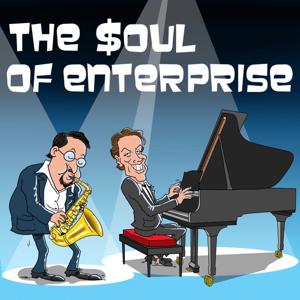


What happens to the accounting profession when the data entry disappears? Ron and Ed welcome Rob Hamilton and Jeff Seibert, authors of the new book Zero Entry: The Unstoppable Forces Reshaping the Accounting Profession—and the Opportunity of a Lifetime. They explore the technological, economic, and demographic forces converging on accounting, why AI represents far more than another efficiency tool, and what firms must do to thrive as routine work is increasingly automated.
Rather than predicting the demise of the accountant, Rob and Jeff make the case for something much more interesting: technology can free professionals from tedious work and elevate the distinctly human capabilities of judgment, trust, ethics, and strategic guidance. The conversation examines what the next few years could mean for firm business models, talent, technology, pricing, and the changing relationship between accountants and their customers. Is AI a threat to the profession—or the opportunity accountants have been waiting for?
Guest biosJeff Seibert is co-founder and CEO of Digits, an AI-native accounting platform. Previously Twitter's Head of Consumer Product, Jeff co-founded Crashlytics, acquired by Twitter in 2013, and Increo, acquired by Box. A Stanford computer science graduate and longtime entrepreneur and investor, he also appeared in the Netflix documentary The Social Dilemma. His experience building technology companies gives him a distinctive perspective on how AI will reshape accounting. Digits
Rob Hamilton is Head of Partnerships & Business Development at Digits. His career spans technology, finance, and strategic partnerships, with previous roles at Amazon, Twitch, Alexa, Twitter/Gnip, FactSet, and Apple. His years working at the intersection of technology, partnerships, and the accounting profession inform Zero Entry's examination of how AI and automation are changing firms—and the opportunities those changes create.
In this episode, Michelle Weinstein joins Ron and Ed to challenge many of the assumptions accountants have about sales, pricing, and client relationships. They discuss why so many professionals undercharge despite delivering tremendous value, how to overcome the discomfort of selling, and why moving from compliance work to trusted advisory starts with changing your mindset. Whether you're struggling to raise your fees, attract better clients, or simply become more confident in business development, this conversation offers practical insights for building a more profitable—and more abundant—practice.
Michelle Weinstein believes that technical expertise alone isn't enough to build a thriving accounting firm—you have to be able to confidently communicate your value. As founder of The Abundant Accountant and The Pitch Queen, Michelle has helped accounting professionals add millions in revenue by replacing fear-based selling with authentic, value-driven conversations.
Michelle's Bio
Michelle Weinstein is a seasoned entrepreneur, sales strategist, and founder of The Abundant Accountant. She helps accounting, tax, fractional CFO, and bookkeeping firm owners own their value and confidently sell high-level services without pressure or burnout. Her clients have collectively added over $38 million in additional revenue to their firms, all without working more hours, chasing more clients, or doing anything they didn't want to do.
Ron and Ed welcome John Dierkhising of Bottom Line Accounting Services and returning guest Shannon Kaiser of Summit for a conversation at the intersection of accounting, technology, and service. John brings the perspective of a practitioner who supports businesses using Sage and other accounting technologies, while Shannon brings deep experience in application hosting, cloud infrastructure, and managed services. Together, they explore how the right technology environment can remove friction, improve support, and allow firms to serve more clients without adding unnecessary complexity. Expect a practical discussion about Sage, hosting, scalability, reliability, and what accounting professionals should really be looking for from their technology partners.
About John DierkhisingJohn Dierkhising is the owner of Bottom Line Accounting Services, a Minnesota-based firm providing accounting, bookkeeping, and financial software consulting. John and his team specialize in helping businesses get more from systems including Sage, QuickBooks, Crystal Reports, and related technologies. A longtime Sage practitioner and consultant, John brings a hands-on perspective on how accounting technology, support, and hosting can help firms operate more efficiently and serve clients at scale.
About Shannon KaiserShannon Kaiser is General Manager of Application Hosting at Summit and a veteran technology executive with extensive experience in cloud infrastructure, cybersecurity, application delivery, and managed services. He has led engineering, operations, and technology teams and today focuses on helping organizations build secure, scalable technology environments that support growth while reducing operational risk. Shannon previously joined TSOE for Episode #590, "Security, Scale, and Trust."
Ron and Ed welcome back Fr. Robert Sirico, co-founder and president emeritus of the Acton Institute, for a wide-ranging conversation about human dignity, liberty, economics, and the moral foundations of a free society using the framework of Leo XIV's encyclical, Hagnifica Humanitas. Drawing on decades of work at the intersection of theology and economics, Fr. Sirico explores why the human person must remain at the center of economic life and why markets, entrepreneurship, and business are ultimately about far more than material prosperity.
Along the way, they discuss the relationship between freedom and virtue, the dignity of work, the moral responsibilities of business, and the institutions necessary for human flourishing. It's a conversation that goes to the very soul of enterprise: How do we build an economy that recognizes not merely what people produce, but who they are?
About Father Sirico
Rev. Robert A. Sirico is co-founder and president emeritus of the Acton Institute, which promotes a free and virtuous society grounded in individual liberty and religious principles. A Catholic priest, author, speaker, and commentator, he has written extensively on economics, ethics, religion, and civil society. His work explores the moral foundations of markets and the essential place of human dignity, freedom, and responsibility in economic life.
What happens when there's no guest, no predetermined topic, and possibly only one host? It's time to bring back the spirit of Free-Rider Friday.
With Ed potentially sidelined by jury duty, Ron raids his ever-growing stack of articles, ideas, observations, and assorted intellectual curiosities for a wide-ranging tour through whatever has captured his attention lately. Economics, business, technology, culture, pricing—and probably a few things that defy categorization—are all fair game.
No agenda. No guest. No guarantee where we'll end up. Just the kind of intellectual free ride longtime listeners of The Soul of Enterprise will remember fondly.
Twenty-five years to the day after the attacks of September 11, 2001, Ron and Ed commemorate a day that changed America and changed each of us in ways both large and small. They share personal stories and memories from that time, reflecting on where they were, what they experienced, and what remains vivid a quarter-century later.
Against the backdrop of America's 250th anniversary, the conversation broadens to consider the country we were then, the country we are now, and the ideals that have endured through crisis, conflict, and change. Along the way, Ron and Ed offer a few additional USA 250 reflections on liberty, citizenship, national character, and the remarkable resilience of the American experiment.
A personal and contemplative episode about memory, gratitude, loss, and what it means to remember.
What makes an experience unforgettable? Why do some ideas, brands, museums, and attractions merely inform us while others permanently change how we think, feel, and act?
In this episode of The Soul of Enterprise, Ron and Ed welcome Bob Rogers, founder of BRC Imagination Arts and author of Deep Story: The Complete Guide to Creating Transformational Themed Attractions. Drawing on decades of experience designing award-winning visitor experiences for organizations ranging from Disney and NASA to Coca-Cola and the Abraham Lincoln Presidential Library and Museum, Bob explains the difference between entertainment, engagement, and true transformation.
The conversation explores the power of storytelling to shape identity, create lasting emotional connections, and inspire action. Bob shares the principles behind "Deep Story," the framework he developed for creating experiences that move audiences beyond awareness and into meaningful change. Together, the hosts and Bob discuss what business leaders, educators, marketers, and experience designers can learn from the world's most successful attractions—and why the future belongs not merely to the Experience Economy, but to organizations capable of creating transformation.
Whether you're building a brand, leading a firm, teaching a subject, or simply fascinated by the art and science of storytelling, this episode offers a masterclass in creating experiences people never forget. About Bob
Bob Rogers is the founder of BRC Imagination Arts, a globally recognized design and production company that creates transformative visitor experiences for leading brands, museums, and cultural institutions. A filmmaker, inventor, writer, and master storyteller, Bob has earned Academy Award nominations, received the IAAPA Thea Award for Lifetime Achievement, and helped shape attractions for organizations including Disney, NASA, Coca-Cola, and the Abraham Lincoln Presidential Library and Museum
Professor Michael Munger returns to The Soul of Enterprise for a fourth visit and once again, the answer is transaction costs. Ron and Ed catch up with the Duke University economist, political scientist, author, and host of The Answer Is Transaction Costs to explore some of the provocative questions he has tackled in the podcast's latest summer episodes.
Why is being late an economic problem rather than merely bad manners? How have social media dramatically lowered the cost of coordinating outrage? Can transaction costs even explain the battle between the person who makes a resolution tonight and the same person who breaks it tomorrow?
Along the way, we'll explore Munger's larger argument that transaction costs are hiding in plain sight, shaping markets, institutions, cooperation, incentives, and everyday human behavior. It's another wide-ranging conversation with one of TSOE's favorite economists and the Knower of Important Things. About Michael C. Munger
Mike Munger is the Pfizer/Edmund T. Pratt, Jr. University Distinguished Professor at Duke University, with appointments in Political Science, Economics, and Public Policy. A former president of the Public Choice Society and former FTC staff economist, he studies markets, institutions, regulation, and the sharing economy. He is the author of Tomorrow 3.0 and The Sharing Economy and hosts The Answer Is Transaction Costs podcast.
Ed and Ron (mostly Ron) empty out the overflowing stack of stuff and roam wherever intellectual curiosity takes them. On the docket: how Adam Smith's invisible hand actually works; what we should make of the latest government files on UFOs and UAPs (color us skeptical); whether standing desks are really healthier than sitting; the strange economics and crony capitalism of the college textbook market; encouraging news in the fight against dementia; and, in what may amount to professional heresy, the case against CPA licensing.
And because no serious program on economics, business, and human flourishing would be complete without it, we'll investigate an important question of Western civilization: Does Britain really have more cheeses than France?
What does it take to lead one of the largest state CPA societies through one of the most transformative periods in the profession's history? In this episode, Ron and Ed welcome Denise Froemming, President and CEO of CalCPA, for a wide-ranging conversation about the future of accounting, professional associations, and leadership in an era defined by AI and rapid change.
Drawing on her experience leading major professional organizations, Denise shares how CalCPA is reimagining its role—from serving members to building a vibrant professional community that helps CPAs thrive amid shifting business models, changing talent expectations, and emerging technologies. The discussion explores the profession's pipeline challenge, the evolving value of the CPA credential, the importance of authentic leadership, and why curiosity and adaptability are becoming the defining traits of successful professionals.
Whether you're a CPA, firm leader, educator, or simply interested in how professions reinvent themselves, this conversation offers practical insights into leading through change while keeping people at the center.
More about DeniseDenise Froemming, CPA, CAE, MBA, is President and CEO of CalCPA and the CalCPA Education Foundation. An accomplished association executive, she previously served as CEO of the Institute of Real Estate Management (IREM) and held executive leadership roles at the American Health Information Management Association (AHIMA). Denise is recognized for driving organizational transformation, fostering inclusive cultures, and advancing innovation to help the accounting profession thrive in a rapidly changing world.
From the publisher's feed

190 Listeners

280 Listeners
109 Listeners
1,935 Listeners

2,206 Listeners

257 Listeners

3,983 Listeners
17 Listeners

4,454 Listeners
343 Listeners
510 Listeners
37 Listeners
856 Listeners

111 Listeners

67 Listeners

462 Listeners

3 Listeners

2,649 Listeners

71 Listeners

10,139 Listeners
27 Listeners

26,562 Listeners

15,908 Listeners

60 Listeners
1,294 Listeners