
Sign up to save your podcasts
Or



Imagine you were gifted a home, in Ghana. It’s your motherland, but not the place you grew up in. Would you move? That decision proved to be one of the most challenging ones that Afia had to make. She documented some of the most difficult conversations, honest observations and some self reflection that has us asking- should Afia be telling us all of this? Yes she should, she did- and you should hear it.
Hana's immigrant generation is called the 'one and a half'- those who came to the U.S. with their families as young children. Not 1st gen like her mom- they're more attached to their home countries. Not 2nd gen like her kids- they're settled in their Americanness. She's caught in the middle- and it's weighing on her. Where is home? We hear the stories of two women and their mothers- Khadega from Sudan, and Melly from Haiti- plus Hana ponders with her own mom and daughter.
Imagine a space where everyone’s invited to cuddle up. We’re going to a Brooklyn cuddle party, where strangers and familiar faces negotiate being close, but it’s not all about touch. Producer Natalie Peart wanted to explore closeness- and ended up learning the importance of consent. Featuring Malika Cumbie of NYC Love house- plus, we get to meet some cuddle party guests.
U.S. media companies are producing new glitzy reality TV shows in Africa. It’s a different kind of portrayal of Africa - something Hana has always wanted: a change in the narrative of poverty, war and famine. But something doesn’t feel quite right. She’s trying to just get her popcorn and enjoy the drama and messiness, but she’s conflicted and she’s wondering why. She talks it out with Nigerian writer Damilola Oyedele - someone else who is watching, and thinking at the same time. Plus, we go to Lagos, Nigeria- to hear how people there are reacting there.
You see each other from across the room. You lock eyes, slowly walk towards each other and the dance begins. We're reminiscing about slow dancing - the rhythm, the beat, the Blackness of it all- and we’re wondering- is it still alive? We talk to Chicago Steppers who break down the power of the slow jam. Let’s slow it down and snap to the beat..
You walk into a restaurant all ready for a lovely evening, and you get this feeling - an expectation - that you’ll be treated a certain way. Whether it’s being seated near the bathroom, getting asked for another glass of water, or being totally ignored- sometimes we react, sometimes not, but are we reading too much into this? Why do we sometimes go into restaurants with our guard up? From Europe to the U.S., we talk to three people about their experiences dining out. This is definitely something we need to chew on..
Jameela means beautiful in Arabic- a description Black girls seldom would hear about themselves growing up in Arab countries. Beauty standards in the Middle East have been based on white Arabness- light skin, and long silky hair. So what is it like to navigate industries where what you look like matters? We meet three Black Arab women - models and influencers - who are part of a movement to push back on racist beauty standards, and redefine what it means to be beautiful.
It’s Season 7! And it’s the annual fundraising time for Radiotopia, they’ve asked artists across the platform to weigh in on the theme “Making Trouble” and here’s our take! We’re wondering, is it fair to charge kinkier textures more when it comes to hair braiding? We asks stylists and each other, what’s the deal with the tax on our naps? We talk with natural hair stylist Marilyn Burks in Mississippi, as well as other stylists and get their take on some of the strict requirements for 4C hair. And we talk with writer Kovie Biakolo who has been asking many women why they’re going back to relaxers?
Welcome to the Stoop Comedy Club! It's our last episode of the season and we are laughin’ it up with three African comedians - Nigerian-American Beverly Adaeze, Kenyan-American Dubai Denis, and Sudanese-American Ahmed Abdelrahman. Each has their unique style, and each has to deal with a complicating question that has to do with their Blackness in America. Plus, Leila tries to break into the comedy scene!
We explore what it’s like to be a Black autistic adult with the story of artist, author, and illustrator Ayanna Davis, AKA ‘Phenomenally Autistic.’ We also hear from advocate and autism media consultant Diane Wright, plus special education professor Dr. Jamie Pearson breaks down why Black autistic people are diagnosed so late in life.
From the publisher's feed
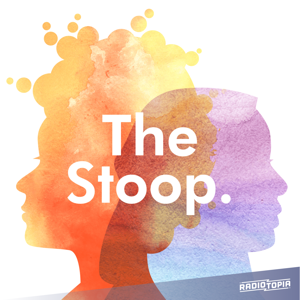
The Stoop podcast digs into stories that are not always shared out in the open. Hosts Leila Day and Hana Baba start conversations and provide professionally-reported stories about what it means to…

21,603 Listeners

2,143 Listeners

8,431 Listeners

1,251 Listeners

2,533 Listeners

7,667 Listeners

10,458 Listeners

14,658 Listeners
3,799 Listeners

5,677 Listeners
9,078 Listeners
2,204 Listeners

9,586 Listeners
5,214 Listeners
3,240 Listeners
3,559 Listeners

1,117 Listeners

4,832 Listeners

13,021 Listeners
5,852 Listeners
145 Listeners

271 Listeners

445 Listeners
116 Listeners
567 Listeners

551 Listeners

71 Listeners
13 Listeners
36 Listeners
199 Listeners
0 Listeners

0 Listeners
48 Listeners

102 Listeners

215 Listeners