
Sign up to save your podcasts
Or

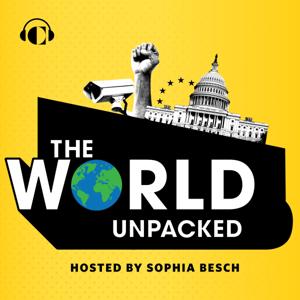


On September 1, 2020, more than twenty journalists worldwide learned they had unwittingly joined a Russian influence operation. One of them was Laura Walters, a journalist who had recently become a freelancer as she moved from New Zealand to London. Laura explains her interaction with Peace Data, the red flags she missed, and her reaction to learning that she had been involved in a Russian disinformation campaign.
Then, Alicia Wanless, director of Carnegie's Partnership for Countering Influence Operations joins the show to do a deep dive into the world of foreign disinformation campaigns. Alicia and Laura discuss why influence campaigns have long targeted journalists, how non-experts can spot bots and trolls, and what the policymaking community should do to address this growing threat.
Read more:
Last month, Bahrain and the UAE moved to normalize relations with Israel, signing a peace deal dubbed “The Abraham Accords.” Veteran Middle East peace negotiator Aaron David Miller joins Laura to talk about what the newly signed deal really means for Middle East peace.
Aaron and Laura discuss the likelihood of future deals in the region, how Iran views the move, and where the deal leaves the Palestinian cause. They also examine how U.S. policy toward the Middle East may change depending on the outcome of November’s election.
Read more from Aaron:
Arab-Israeli progress seemed impossible. That’s because of old assumptions.
Good News for the Gulf and Israel Mean Bad Tidings for the Palestinians
Don’t let the United Arab Emirates play us the way Mohammed bin Salman did
The Middle East Just Doesn’t Matter as Much Any Longer
Success in the UAE-Israel Accord Is Good News for Everyone Except the Palestinians
Rosa Balfour, the director of Carnegie Europe, joins Laura to discuss the challenges and opportunities presented to Europe by the coronavirus pandemic.
In this wide-ranging conversation, Rosa and Laura talk about regional challenges facing Europe, including Brexit, rising anti-EU sentiments, and the protests in Belarus, along with foreign policy challenges, like Europe’s role in the U.S.-China standoff and countering a resurgent Russia. They also talk about Europe’s evolving leadership role in the world.
Read Rosa’s piece on the future of Europe as part Carnegie’s new digital magazine, “The Day After: Navigating a Post-Pandemic World.”
Author Kim Ghattas joins Laura as part of Carnegie’s new digital magazine, “The Day After: Navigating a Post-Pandemic World.”
Kim and Laura discuss how countries across the region are handling the coronavirus pandemic and its devastating economic and social impacts. As we look ahead to a post-pandemic world, they talk about what governments should ask themselves to help mitigate the damage, the contrasting views from Tehran and Riyadh, and the hope of the region’s youth.
To read Carnegie’s digital magazine, click here.
Bishop Garrison, Director of National Security Outreach at Human Rights First, joins Laura for a wide-ranging discussion about how human rights issues impact policymaking at home and abroad.
They talk about the evolution of norms and values, how government leaders grapple with sometimes competing goals, and the role of nonprofit, corporate, and civil society actors in promoting human rights. Bishop also tells Laura about his work supporting former U.S. military translators in Iraq and Afghanistan, the impact of the Black Lives Matter movement on national security, and what makes him hopeful for the future.
Reading list:
An Appeal to the National Security Community to Fight Racial Injustice
Congress Must Act to Protect Those Who’ve Supported Us in Syria
Veterans Praise Bipartisan Legislation Providing Lifelines to Afghan Allies
In late June 2020, Beijing passed a new national security law for Hong Kong. Among other things, the law carries harsh penalties for acts of secession, subversion of the government, and collusion with foreign powers. It also tightens government oversight of media outlets and NGOs. And it creates parallel law enforcement and judicial channels in the city that answer to Beijing.
Shibani Mahtani, the Hong Kong bureau chief for the Washington Post, joins Laura to talk about what the changes mean for the people of Hong Kong and the city's identity as a cosmopolitan center of global commerce.
Read more from Shibani here.
In October 2019, millions of Lebanese demonstrators took to the streets to protest widespread corruption amid deteriorating economic conditions. Since then, the economy has plunged into free fall, with simultaneous banking, currency, and public finance crises.
Laura talks to Maha Yahya, director of the Carnegie Middle East Center in Beirut, about what Lebanese citizens are experiencing, how the country’s economy got to the breaking point, and what meaningful reform would look like.
Programming note: This episode of The World Unpacked was taped one day before this week’s tragic set of explosions in Beirut, which killed more than 100 people and wounded thousands more. While the full details of the incident are still becoming known, we have added a brief addition from Maha about how this week’s tragic events are likely to impact the country’s already fragile state.
Read more from Maha:
All Fall Down
At A Breaking Point
A Storm of Imperfection
Lebanon’s Economic Crisis: A Ten Point Action Plan for Avoiding a Lost Decade
In the months since George Floyd’s murder by the police, protests have erupted across the US and spread around the world. Demonstrators are not only standing in solidarity with Black Americans but also confronting systemic racism and legacies of colonialism in their own societies.
This week, Laura speaks with Carnegie visiting scholar Ashley Quarcoo about how Western democracies must address the role racism plays in undermining the legitimacy of their institutions and the strength of their global example.
Note: Both Ashley and Laura recorded this podcast from home, so children playing upstairs made some unexpected cameos. Please excuse any imperfect audio.
Read more from Ashley:
Global Democracy Supporters Must Confront Systemic Racism
Three Takeaways on the Protests for Racial Equality
In January, Russian president Vladimir Putin announced sweeping reforms to the country's constitution, resulting in the surprise resignation of his entire cabinet. The 200+ amendments make a number of changes, including outlawing gay marriage, increasing the minimum wage, and removing term limits for the Russian presidency. The amendments were put to a referendum, with voting taking place June 25 - July 1.
Andrei Kolesnikov, senior fellow and the chair of the Russian Domestic Politics and Political Institutions Program at the Carnegie Moscow Center, joins Laura to discuss what the referendum results suggest about Russian support for Putin and his ideology.
Read more from Andrei:
The Eternal Putin
Putin’s Majority 3.0
Did Putin Just Appoint Himself President for Life?
Planning for a (Not-So) Post-Putin Russia
What Are Russians Protesting About?
The coronavirus pandemic, coupled with a massive reduction in global demand for oil, has left Saudi Arabia in a dire economic state. MBS has been forced to sideline his ambitious Vision 2030 plan while implementing a series of austerity measures that could undermine the regime’s stability. Add in pressing foreign policy challenges, including the humanitarian disaster in Yemen and the complexities of the US-Saudi relationship, and the kingdom is facing a perfect storm.
This week, Laura talks to Yasmine Farouk about how the kingdom and MBS can weather the storm. They discuss Saudi Arabia's rapid and effective containment of the coronavirus, the implications of the country’s economic downturn, and how it should best navigate its foreign policy struggles.
Additional reading:
Updating Traditions: Saudi Arabia’s Coronavirus Response
Saudi Arabia: Aid as a Primary Foreign Policy Tool
From the publisher's feed

3,383 Listeners

593 Listeners

1,053 Listeners

6,275 Listeners

715 Listeners

817 Listeners

420 Listeners

2,539 Listeners
81 Listeners
13 Listeners

136 Listeners

403 Listeners

144 Listeners

21 Listeners
11 Listeners

359 Listeners

494 Listeners

475 Listeners

2 Listeners
2 Listeners