
Sign up to save your podcasts
Or

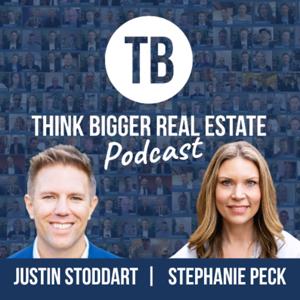


Hey, welcome back to the Think Bigger Real Estate Show. I'm here with some of my favorite people and they kind of look like me a little bit, don't they? What's up kids? So these beautiful children just got home from school. We're missing one. He must be with his mom. We're missing a few others too. They must also be with mom. I was sitting and listening to a mentor of mine yesterday and he was talking about his legacy and what he wanted to have on his tombstone and how that should correlate with what he shares on social media. And he said, I don't have pictures of my kids on social media because that's not what I want to have on my headstone. I want to have my headstone be sales and marketing guru. And I was like, "That's the dumbest thing I've ever heard."
At the end of the day, if your biggest legacy is something other than your family? I'm sorry, but I think you're screwing up life, period. You're screwing up life. Like you're missing the big boat. Like, what matters are, is your family. So I'm going introduce you to some people. a little bit six and working mom today I have these beautiful children with me. So, my point is, is that our businesses should simply fund our perfect life. They shouldn't be our perfect life. That at the end of the day, what I want on my headstone, that's where I was going. What I want on my headstone is that I was an amazing husband and father, like too much else doesn't really matter. But
I also want to be known as someone who has stepped out and served a lot of people. And that's where this Think Bigger Real Estate community comes in. And the way that I hope that I can serve you is by helping you achieve a really great business so that you can be a really great parent because that's what matters.
Kids. Do you think it would matter at my funeral if none of us had a relationship, but if you came and heard about all the cool stuff I did with the real estate industry. Would you care?
If I came and heard like a bunch of different things that everyone says that you've done that we don't know because we never were with you. That would actually be sad.
I love it. Corbin, when you think of that, like if you, and I really didn't know each other or didn't get to hang out much, but you came to my funeral and other people said nice things about me...
I would just feel like I didn't have a good connection with you and I'd be sad because I've like spent practically my whole life with you so far. And I just really enjoy having you in the family and I love you Dad.
Oh, thanks Corbin. That wasn't planned. Okay Aretta, what do you think? Do you care more about me spending time with you or me about spending time with other people, helping them with their business? Would you prefer to have me hanging out with you or would you prefer me hanging out with other people? Anyway, she's pretty sweet.
Think about that, like who's getting the best of you and what is your legacy? Do you care about how many homes you sold or do you care more about your family? It, your business, should be a vehicle to help you get a better life, which is impacting more greatly the people that matter the most to you. So enjoy! Kids, thanks for being my impromptu guests and peace--out!
I'm excited about having Laura Gillott here with me today. Laura, thank you for joining me.
Thank you for inviting me.
Yes, I'll start by saying I've got a more sultry voice, than normal. So, if the audience is wondering like, this is really enjoyable, don't worry, I'm not going to charge you for this episode. This one will also be free despite how much you might enjoy my relaxing voice.
So with that being the case, let's dive into the topic, Laura. Let's share some of your statistics, your with the Gillott Home Team out of Lebanon, Oregon.
Yup. Small town.
How many people live in Lebanon?
16,800 people.
16,800 people. Last year from Salem to Eugene, you guys serve 523 families.
526 families.
526 families were served by your team. So one would have to think if you serve that many families, you must have a massive Zillow budget. You must have a massive cold market marketing machine. True or false?
False. Very false.
Okay.
Yeah. We buy no Zillow leads. We are a premier agent on our listings. [engine roaring in the background]. Sorry. We have someone trying to drag race in front of our building.
It is Lebanon!
Right? Yes, good old Lebanon. Our budget is small there with Zillow where we're just a Premier agent with our, with our own leads there. About 80% of all of our business last year was just based off relationships.
Wow. So let's do the math. Let's say 80% of 523. Now, I made a commitment once to never do math in public, but that's gotta be somewhere around 450? I'm assuming somewhere in that range.
Yep, yep. Either past clients or referrals you guys closed. Meaning that's how much business you closed by referral from your sphere.
Yes. We include sphere in that or people who have referred themselves from our reputation and things that. For example if they just came in and said, "Hey, I want to list my home with you." "I'd like you to help us find property." And part of that is because we meet a lot of people through our events and we offer classes to help the community in buying homes. And then that helps us get those people walking in wanting help.
So I think one of the big myths, again, that real estate face is "Do I go quality (sphere) or do I go quantity (cold leads)? Some would believe, "I could never possibly know enough people to generate a mass amount of business by sphere." Right? So let's talk about, it's not just your sphere, right? You have a a great team.
We do. We do. When we get their sphere involved in this too and we market to that sphere. We give them the newsletter each month. We invite them to the events. Of course all of our past clients we offer items of value. We do the pies twice a year our client database. Anybody that gets the newsletter is invited to the rest of the events. We pair up with the Chamber and do National Night Out. Next month we have Biz Expo. We'll invite the whole database to the Biz Expo, let them know if they visit the booth, that we have something special for them. You're just trying to get as much face to face time with their clients as possible.
I love it. That's the goal, right? Face to face time with your clients in an era filled with bits and bytes where there's so much convenience in doing things electronically, that's been your secret sauce is getting face to face with people.
Yes. Getting face to face and then you know, it's for us, we don't do any cold calling, but what we do is lead with items of value or leave with contribution. So we'll call and say, "Hey, we've got an investor class coming up on Saturday. Do you have any interest in coming? Or do you know anybody that does?" And so that way we're just not calling saying, "Hey, give me your business, give me your business, give me your business."
I love it. So again, the way that I see you solving these two problems, or busting these myths, BTW--this episode's gonna be Mythbusters. The first one is that a combined sphere, you've got a good size team and all those people contribute who they know. The second myth that people hold is, "Even if I have that many people, how can I possibly take care of them? How can I possibly get face to face with that many people?" And what I hear you saying is a key to your success has been events, both ones that you're putting on, right? Like client appreciation events and then also events that you're not even hosting. Like the Biz Expo. It's not your event. You've got to space there and you're using it as an opportunity to reach out and invite everybody to come participate at that event.
Yeah, the Boys and Girls Club did a Brewfest and they shut down Main Street. We asked have a booth there and then we gave away a growler and then we invited people to come down to visit us at the event, helped market the event for the Boys and Girls Club and helped them raise money. When they signed up for the growler, we had over 500 people sign up for the growler. A handful of them said, "Yes, I would like a market analysis," or I would like a list of properties and I would like to be on your newsletter."
And now once they say they would like to be on our newsletter, we can continue telling them about the other events that are going to be happening in the area where we're going to be at. So we can continue that connection with folks. You do it on a mass level without spending that much many.
Right! What does a booth at the Biz Expo cost you?
A couple hundred dollars.
A couple hundred dollars turns into probably thousands of invitations and contacts.
Yes.
Hundreds of face to face contacts with a couple hundred dollars and some people staffing an event. Right?
Right, and the agents go and we just take turns, rotating in and out of there. We try to make the most of every event. So even at that event, because there's going to be 150 other booths there, we like to get protein packs, a water bottle and we go around and visit the other booths, give them an option to get something out of our cooler and thank them for coming. We learn a little bit about their business, ask them if they have any clients with real estate needs and let them know that we'd like to be their connection. We connect with them, they connect with us. It's a way to go around and talk to people without just saying, "Hey, we're a real estate team. We'd love for you to give us your business." If instead you go with contribution and give them the protein packs and a water, and of course we have them labeled with our team on there, it's a way to break the ice and to come from contribution.
The intentionality is strong with what you guys do, right? You don't just show up at an expo. We've all probably been a part of some sort of expo where we're like, "This thing is kind of a bust. Nobody's here!" But you're looking another layer below that to say no, there are people here just sitting in the booths like us thinking "This thing is maybe not as strong." And I'm not saying this about their expo. That's a mentality of "What if we go to this expo and there's nobody there?" Well, there's actually going to be somebody there. It is going to be other vendors at minimum, right? Go create some new contacts, offer value to them right now. You brought them into the fold, into the family.
Yup--so there's definitely people there. When we're there we're not looking at our phones, our heads are up and we're engaging. We're asking people to sign up for our drawing. We're offering them a free piece of cake. It is just the little things that we can do just to get the buzz going. And then again, you have to invite your database to come to the event because then people want to stop at your booth because people want to come by.
You know, if I were putting on a big expo, your team would be the first one I would call. I would say, "Get the Gillott Home Te...
I have with me someone who's going to help solve this problem: How do millennials really want to be treated? What is their ideal process? I think there's some myths in the marketplace and I happen to have a true expert with me today, Kristin Messerli. She founded the organization called Cultural Outreach. So first of all, let me start by saying, Kristen, thank you for being on the Think Bigger Real Estate Show.
Thank you so much for having me, Justin. Great to be here.
Great to have you. So I actually met Kristin a couple of weeks ago. She spoke here in Portland at the Oregon Mortgage Broker's Association and I was super impressed. I thought, this is knowledge that more people need to know about. The room was packed, but I'm excited to get this content, and her mission really, out to more people. So let's talk about this a little bit, Kristen. I think that you have spoken on the biggest stages, including Gary V's, big event. I know you're touring around the country sharing this knowledge. Let's dig into a little bit about maybe some of the myths that are utilized to characterize how millennials want to be treated. Is it true that they actually don't want to talk to anybody? They don't want to meet with anybody? They just want to text and use Facebook messenger?
Definitely not. I think that this is something I'm so passionate about because I think people assume that because Millennials are using social media, are texting, want convenient and have access to things, that we don't want the human touch. And we really want to have someone that is going to guide us through this process. I mean, buying a home for the first time, making the biggest financial decision of our lives, we want someone that is going to to help guide us through that process. And I think that texting and convenient communication, Facebook Messenger, all those kinds of things are important to get the communication going and for quick communication, but technology should always be about enhancing the relationship and increasing that kind of connection with your buyer, particularly someone who's a first time buyer and for Millennials, we're seeing that trend even more so with Gen Z where they want that individual relationship with a person or brand. They want to feel like they can trust that person. I think that we miss that a lot of times when we think about our generation.
I love it. So, two big potential risks here is number one, Millennials are underserved, right? That they aren't getting the level of service that they want because of these stereotypes. And number two, that real estate agents are missing a huge opportunity because they're assuming that they want to be treated a certain way and we're giving them something else. So I really appreciate you clarifying that. There are some forms of quick and convenient communication, but it shouldn't stop with that. Is what I'm hearing you say?
Yeah, exactly. I do think it is shocking how much Millennials, well-off Millennials--successful Millennials--don't know anything about buying a home where, or who to talk to about it. And I think there's just this huge gap between them feeling like they know someone who is an expert in that, who is a real estate agent for instance, that they feel comfortable enough to reach out to and not be immediately sold to, not feel like they are stupid for not knowing these things, you know? So I think that element of being underserved, it really is a big deal when we talk about our generation. I think that it doesn't stop with a quick text or with more social media in any respect. It's using that as a way to build your network and provide convenient access to you and then going from there to a person-to-person or video kind of communication that really improves that trust and relationship.
I love it. Let's talk about this now: I know you've been a buyer, in addition to being the founder of Cultural Outreach, I know you're also the editor of Mortgage Women Magazine. So again, you're involved in a lot of places really influencing. Let's talk about even your personal scenario. I know you've been a buyer and a seller before and you described to me how some people tried to earn your business and it didn't work very well. Talk to us about that.
Yeah, so it was interesting because when I bought my home, this is about six years ago or so, maybe seven years now, I remember going through that process and how my real estate agent and I had a sit down at the beginning and I honestly didn't even really vibe with him that much. I thought this guy is like a typical salesman, whatever. But when we started going through the process a little bit, I realized, man, he really knows his stuff. He is educating me on all these things that I feel like I could reach out to him about anything about buying a home. I mean, if he didn't know, he was going to know someone who knew. And so that was super valuable to me. And then also when we were going through looking at homes, he would point out stuff by saying: I know your goals are X and Y, so I don't know if this home is a good fit for you.
So he had my goals in mind and I felt like he had my back. So from that point on, I was totally sold on him. But when I was selling my home I posted something about it and I had already started the business. I wanted to know how real estate agents would reach out to me and, and that kind of thing. And I put my home up on Zillow and I got a million phone calls and I was so annoyed by all of that. And a couple people texted me and said, "Hey, are you available, or can you jump on a call to talk about this?" And then I would respond to the text messages. And one in particular stood out where she sent me a first-time home buyer guide, or rather, it was a seller's guide. And, she texted that over and then said, "Hey, here's a resource for you. Let's chat when you have a second." And I thought, okay, this is the right way where t's convenient for me to schedule something. I don't drop everything to pick up a call and get sold to. And then I'm more prepared, you know. So I think that that was a good example of using technology to get to the relationship.
I'm going to dissect this a little bit. So I think this is super fascinating and it's a perfect case study, right? So you went to buy a home and you found that person. Were they referred to you? How did you find that first Realtor who was your buyer's agent?
Yeah, so my Realtor, the first time was referred to me and I think I approached that a little bit differently than most people my age are in my age range. At the time my dad worked for a mortgage company in the area and so I was taking a referral based on one of his contacts. I do think most people get referrals from someone they know but usually it seems like people are getting multiple referrals and then looking those people up and deciding who they want to contact. The other one was just me posting on Zillow and seeing what happened.
I'm curious the first, agent was not a Millennial, I'm assuming?
No, he was in his forties or something. One thing that he could have improved on was being more authentic. He had his sales pitch ready to go and was in a suit and that's fine wear a suit if you're comfortable in it. But it felt very much like I was getting sold to, As soon as I realized he had my back and was educating me then I didn't care anything about that. And we're still close today.
This is a question you haven't been asked before, rather than going back to that agent, you went about finding a Realtor differently the second time. Why was that?
He moved out of my market. I would have absolutely sent him my business and not even questioned it. I sent him a lot of business after closing as well because he stayed in touch with me. That was a really cool thing that I know a lot of people do this, but he would like text me, call me every couple mo...
Welcome back to the Think Bigger Real Estate Show. Today's topic is going to be on building community. Is it simply a publicity stunt or does good actually come of it? I have with me today a good friend of mine and a Senior Escrow, sorry, not Senior Escrow Officer. I'm used to saying that from my role, Senior Loan Officer, branch manager of Advantage Mortgage, who is making some waves in our marketplace. Kahren, thank you so much for being on the show today.
Hi Justin. Thanks for having me. I appreciate it. This is awesome.
Yes. For those of you who don't know Kahren, she recently is a part of a newly launched, I should say, mortgage company here in town and I have to share something before we get into today's topic. I saw something that Derek Hill had posted online that was comparing Quicken Loans to the prices that you guys have. And I think consumers need to know that, just because it has flashy advertising, it's not necessarily the best deal. Even though they may say that it's the best deal and that it's super fast, it may not actually be the best deal. And then I think the phrase was that was quoted that I loved is that "Whenever a big brand has fancy TV commercials, somebody's paying for that and that somebody is the clients." So, before we get going on the topic, talk just a little bit about that--what you're excited about with Advantage Mortgage. And I know you guys have a huge heart. That's what really we're going to talk about today, but you're also doing some pretty cool stuff on the pricing side too.
Absolutely. You know, I think that a lot is changing in the mortgage space and our goal is to provide education and transparency around that. Everybody has choices with their mortgage and with their financing and it's true glitzy commercials or expensive trips or you know, those things cost money and they come from somewhere, and really we want to educate the consumer and let them know that they're paying for that. And so really that's our goal is providing that transparency and giving the consumer the power in this negotiation and really understanding--how interest rates are comprised, how fees are set up and really enabling them to understand really where that comes from. Your large retail lenders in this large space, they're not always going to provide the best value for the consumer. So, we really just want to educate our consumers and talk to people through that and provide as much transparency as we can in that space.
Awesome. So rather than paying for Super Bowl ads and other forms of fancy advertising on TV, you've taken a different approach, which is to get out and build the community. Talk to me a little, talk to the audience a little bit, about how you came to the conclusion that you wanted to build your business this particular way.
I think Derek and I both love people. We love interacting with people. Both our customers our referral partners our people that work for us and work with us and out in the community really getting that excitement and involvement because we love people. So, I think really that's where it all started is just knowing that my super power is working with individuals and I love talking to people. I'm definitely an extrovert in that way. I get my energy from talking to people and from sharing what I'm passionate about. So really that's where it started is really just wanting to connect with other individuals abd connecting in that way that was meaningful for us.
And you believed at your core that you could go contribute to the community and build the community instead of just focusing on building business that you could build community and it would come back around like that. People would appreciate that and value that more than a glitzy commercial on TV.
Yeah. It's, it's kind of more of a service over self mentality and really knowing that giving back so much more comes back to you. As an aside, I became a big sister about 12 years ago at a time where I really felt like I needed to give back. I knew that children were unfortunately not going to be in my future and I love kids and I wanted to spend that time. And so I thought, well, Gosh, I'll go invest my time and improve the life of a child. And I connected with Lindsey who is now in college and we've maintained this connection over almost 12 years now. She gave so much more to me than I gave to her that I really realized years ago that when you give, you receive so much more in return. And that's just a small example of really what giving has done in my life. Derek is very much the same way and it just allows us to really, truly, authentically give and so much more comes as a result. And it feels great. I think she gave me more than I than I ever gave her.
I think that's the beautiful thing when we set out to only pursue our own success, we find that we don't really end up with a whole lot, but when we seek the success through other people or for other people--or rather seek significance--I agree, something magical happens. We change, our hearts change, our priorities change and naturally we begin to attract the people that are like us, people that would like to have that kind of impact in the community as well. I think it's a beautiful way to build business and community. I would hope that those that are listening to this, that may not be in the mortgage or real estate industry at all, may start to choose who you work with differently because of what Kahren is teaching us today. It's not just about who shows up in front of you via fancy marketing, but get to know the people at the core. First of all, the pricing may not be as advertised. You may actually have a better price by going to somebody who does business this way. And in doing so, you're contributing to the community in a much bigger way.
Absolutely. Well, and like attracts like, so it feels great. We're very hyper focused on who we're giving to and why. We choose organizations and we make connections that are very, very local. We're very passionate about certain organizations within the organizations that we live and work. A lot of these organizations--Sparks of Hope, the Canby Center--these places don't have a ton of paid positions on staff. It's really, really important that we're connecting with organizations to where it goes back to the community. It's not paying for all this infrastructure. Just in the same way that we don't want to have this big organization that has all this infrastructure and expensive ads paying for leads and, you know, that's just not in our wheelhouse. It's not in our hearts. We want it to go to the consumer just like we want it to go to the community when we're doing these things. And it really comes back in such big amounts. It's insane. And when it's authentic, and when that's really coming from your heart and that's how you feel it's even more impactful.
Let's say that there some real estate agents out there right now that are hearing this message and it's resonating with them. "I also love to connect people. I also want to actually make a difference, not just in my own business but in my community and actually seek out organizations that help." What would you say would be a key step for someone, a first step to take to get involved and to start to build the kind of business that you guys have built?
You know, I think there's a bunch of different facets that go into that. I started by just really feeling and figuring out what I love to do and what makes me happy. I had a business coach one time, asked me if you could design the perfect world, the perfect day, what would that look like? What would you want to spend your time doing? And you know it was a simplistic viewpoint, but I really said I want to drink wine and pet my dog. That sounds so funny, but you know, I love animals and I love community with people and sharing with people. And that was really the essence of what it wa...
Welcome back to the Think Bigger Real Estate Show. Realtor safety--is it a real thing? Is it something that you need to be concerned about? That's today's topic. I'm passionate about this topic because I happen to have a lot of real estate agents that are very good friends and I don't know that the world that we live in is getting to be any safer. And so for today's topic I brought on an individual who has a very storied background in self defense. He's a former marine, a former police officer, a current private investigator and a security consultant. I'm excited to have him on the show. I met him a few weeks ago, and I was very impressed with him as I actually heard his presentation on Realtor self-defense that you're going to be hearing more about and are actually going to be receiving an invitation to attend. But in the meantime, I want you to be safe until you have a chance to attend that. So I want to welcome to today's episode, John Jayne. John, thanks for being on the show.
Thanks for having me. I appreciate it.
Yeah, so let's get into this. John is this hype? Are people blowing out of proportion the threats that real estate agents are facing?
Absolutely not. No way. It's a, it's very real. It's very current and it's growing.
Okay. Tell me some evidence behind this. What makes you say that? Is this your gut feel or is there some data to back that up?
No, there's a lot of data out there. It's sometimes hard to access, but what I've found is the National Association of Realtors puts out a report every year on safety and statistics on attacks. A big surge lately, which isn't really my forte has been electronic data security. There's been a lot of identity theft, which has increased over the years. Forgeries, fraud, stuff like that whereas my expertise is in the physical security and those numbers are growing as well. When I first got into this topic, I started going through it.
Let's talk about what some of those numbers are. I know there's 1.2 million real estate agents in the nation today. Is that number right?
Correct. Roughly.
Okay. Talk to me about how many of those on a percentage basis or actual number basis have felt some sort of threat.
So, of those polled, 38% reported being threatened or had felt unsafe during a showing of a home or an open house,
Thirty-eight percent!! So over one in three real estate agents at some point have felt a potential real threat.
Correct. And that could range anything from just the hair on the back of their neck standing up, to an actual attack happening.
Now I know we've heard of situations, actual homicides, terrible tragic stories--a handful of those we've heard about. I know that as you start digging into this to see if this really was a real area of need you uncovered, and not that I want to go into necessarily the gory details, but you found more than what you expected to find, didn't you?
Way more than I expected to find. What really got me started in this area was I was hired to do some consulting for an apartment complex. They had one of their leasing agents attacked showing an apartment. So I kind of started delving into the statistics and some case studies. And then obviously, I know a lot of Realtors as well, and I started looking into this aspect of it. And the number of stories, the new stories, just if you Google real attack on Realtors, it's unbelievable how often this happens and how extreme the attacks are.
Jeez. Okay--so it's real. I know having stayed close to a forum here that's a pretty popular one, Masters in Real Estate that it's not just in other parts of the country, right? There's stuff happening right here in Portland, Oregon. I know my audience extends beyond that and I'm sure that people outside of Portland can validate that as well, that it's happening all around us. I would say in part because of the rise of access to pornography and other things as I'm sure things other than just that it's increasing the number of predators out there. Would you agree with that?
Absolutely. One case that I became familiar with while putting this presentation together, it really unfolded as if it were some sort of a kind of a pornographic fantasy where a real estate agent was showing a home, they made it up to the master bedroom and he attempted to seduce her from the bed as if he had watched this maybe in a video of some sort. And luckily that case didn't turn out to be the case that I used as an example of success. She had been trained, she had practiced and thought through tactics and mindset stuff to where she knew exactly what to do in that situation and made it out safely. But it could've been, it could've been much worse.
So that we don't end on the downside, right, we're here to talk about how to prevent this. So let's give them two points, John. Let's, give them two key points. And obviously you have an entire training that they're going to be invited to in the very near future that will give them a much more kind of robust set of tools to defend themselves, but what are two things? If you had to choose two things to help people really feel safe or safer, what would they be?
Well, it's hard to pick two out of so many that could be helpful. But the first thing that I would tell people is if it doesn't feel right, it's probably not right. Trust your instincts. Trust that little spot in your stomach. That something isn't right here and back out of the appointment, reschedule it. Safety first. And if it turns out that we've overshot the mark and it wasn't a big deal, we can always reschedule and everything will be fine, but you know, we've been given instincts for a reason and we just need to trust that instinct.
If you feel that something is not right--don't ignore it. You're saying don't ignore that. Okay, good.
Yeah. I think the most common thing that can happen is, "Oh, you know what? I'm probably just being paranoid." The moment we tell ourselves that, we're setting ourselves up to be a potential victim.
As you dug into some of these more horrific stories where stuff unfolded, was there a pretty complete consensus of those where bad stuff did happen that they thought ahead of time, "This maybe isn't such a good situation" where instincts were warning them and they didn't listen to them?
Well, unfortunately the most extreme cases of what I looked into where with somebody being deceased. We weren't able to get their feedback, but of the ones where it might've just been an assault where it ended up in a stolen purse or maybe a sexual assault, largely there was the feeling of "Something doesn't feel right."
Yeah, pay attention to those. I love it. Great tip, John. Alright, what would be the second point? Let's say that they find themselves in a bad situation. Either they didn't get the instincts or they didn't listen to them and they find themselves in a predicament, in a precarious situation. What do they do?
Yeah--Get out of the house!! Inside that house once you enter the home with the person that you're showing the house to or the client or whatever, or the bad guy, that door closes and it's like in the ultimate fighting championship when the octagon door closes. I mean it's a free for all in there. If something happens to go sideways, head out into the street and get out in public view and make a scene, yell, scream, get somebody's attention. The longer we're in that house, the more vulnerable we are to an attack.
Throw a chair through the window or, I mean extreme, right?. Getting out of the house, cause a scene. Okay.
Cause a scene. Get out of the house is the most important thing. To follow up on that, it could be hours before the next Realtor comes along or the homeowner returns. I mean, you could be captive in there for hours.
Yeah, yeah--sobering tips John, but necessary ones to protect th...
Welcome Back to the Think Bigger Real Estate show today you're getting yours truly, just me. If you've not yet read this book, High performance Habits. I highly recommend it. Point number one that he makes is about CLARITY--that every high performer out there creates clarity both in their own life as well as for the people that they serve, that they lead. I'm going through the process right now of having a website built and it's interesting how much I could say. Probably those of us in sales, to my real estate agent audience, there's no shortage of things you could be saying. We talk for a living. That's what we do. And the challenge with that is we tend to overstate everything as opposed to saying what is the one thing that people need to know that would help them to take the next step, or to take action and how few words can I say that in?
And that's typically not how most of us think. I want you to look at your website. I think websites, traditional websites are really in trouble and why is that? It's it's a maze. When you go to anybody's website, there's all these options, there's all these words, there's all these videos, there's all these blog posts and it's kind of a mess.
I think one of the greatest innovations in real estate websites recently has been, you show up to the website and there's a box, enter the zip code where you want to search for homes now, and it's clarity. I'm here because I want to shop for a home and you're giving me that option to shop for a home.
I think beyond just shopping for a home, you need to take a look at your website and say, what else might I want people to do and how can I use that same simple format. Make it so easy that it's not about how much can I say here? How much can I provide? It's "What's the one thing that people need to know now so that they'll take the next step?"
In our noisy, cluttered world, there are so many information avenues coming at people that they're inundated. And if someone shows up to your website and in five seconds can't identify what you do or they can't get clarity on your message before they have to scroll, they're gone. They're gone.
So I would encourage you to go look at your website today. This is the call to action for everybody listening. Go look at your website. Try to the best of your ability to pretend like this is the first time you're going there in five seconds try and identify what it is that you do and what makes you different from every other real estate agent out there. And my guess is that for some of you, you're going to have a hard time because you've been so excited to create this big flowery site with so many options that people cannot come to that conclusion in five seconds and they have to scroll to really figure out what makes you different and/or your website looks like so many other websites that it's just noise. You're a commodity. And so again, clarity is everything.
What, what I'm reminding myself through this process is what is the one thing that people need to know that hooks them, that makes them want to learn more? Think of your website as a resume. When you create a resume, for example. Let's say you're searching for a new job and you create a resume. The purpose of that resume is not to get you the job. The purpose of that resume is to get you the interview and then the interview gets you the job. And so my question to you is, is your website trying to be the interview or is your website trying to be what it's meant to be? Which is the resume. It's supposed to be this thing that gets you in connection with your ideal people. Don't try and turn your website into the one on one conversation with people. Keep your website what it's designed for, which is to help people take one more step that gets them in communication with you, that gets them to accept one more offering from you. Maybe it encourages them to get on a Webinar or to reach out to you or give you their contact info. But again, keep it super simple. That's what people want today. They want simplicity. Yes, they want content, but they want it delivered in a very simple format. So anyway, thoughts, ramblings from me about clarity in this noisy world--the less we can say and the more clear the message can be, the better. Have a great day.
Welcome to the Think Bigger Real Estate Show. I'm excited to be broadcasting this week from Kona, Hawaii. That's how committed I am to this audience and really, this passion project for me of delivering value to real estate agents. So, I apologize for any poor a bandwidth issues out here from this rock in the middle of the sea. The topic I want to talk about is this: YouTube advertising, number one, "Why would you do it?" And number two, "How hard is it?" So, I have with me today, Jackson Wilkey with NextHome Realty Group. Jackson is a great real estate agent and really forward thinking when it comes to the digital space. He and Jesse Dau, if you're in the Portland area, you've probably seen them for sure. They've developed a FB group called Digital Mayor Now, which I'm going to really encourage you to go check out. I'm learning things from it every day. They're fantastic guys. And so today, Jackson, thank you for coming on the show. I really appreciate it, man.
Yeah, no, I'm excited to be here.
So let's talk about this YouTube. And I'm gonna come at you a little bit. I want you to defend this because, I'm a guy that does business by referral. I'm very relational and, you're telling me that I should take some of the money that I may be spending on my sphere, or maybe not, maybe you're saying you should come up with new money to advertise on Youtube. So first of all, let's talk about why would somebody do this? What is the point of advertising on Youtube?
Well, YouTube is obviously owned by Google now, as everybody knows. And if you don't, Google owns YouTube. So whenever you're searching anything on Google, they're really trying to push videos upfront, which I actually saw the other day, they were actually putting some Facebook videos up there too. It's crazy, but interesting. I think living in the youtube space that video never goes anywhere. It's there forever. And if you can start really pinpointing with SEO and keyword optimization, things people are searching, your stuff is going to really start rising to the top. Because competing with blogs these days is impossible. There's billions of blogs. So, you know, having that video available is going to help bring you to the first page. And Google and YouTube are super cheap right now. I mean it's super, super cheap because I think it's a really tough thing to learn, but once once you get it, um, and, and in our group, I teach exactly how to do it. You can really start getting in front of a lot of people.
Okay. So let's, let's go back to this. Let's say that I'm a real estate agent in Portland, Oregon or Sacramento, California or Los Angeles. And let's say again that I, I want to do business by referral. Does that still make sense or does this really just work for someone who is buying leads and is doing business more via cold market prospecting?
It's funny because you're going to get a guy who cold calls and feels that's the only way you should do business. And you get a guy who, you know, door knock. So, I'm a video guy. I'm doing videos every day. To me I feel it's so important. We are competing not against other real estate agents in this community. We're we're competing against these huge names, the Redfins, the Opendoors. I mean they're not going away. And I see that as my, my competitor, not these local real estate agents. So I've got to get out there ahead of everybody else. And there's 5 billion videos being watched on Google or on YouTube a day. And so people are living in that space and Google is ranking those videos. I feel if you're not in those spaces, you could get washed away because even your closest friends are starting to see these, Redfin's every day and the Opendoors. My whole premise behind it is just I get out to the masses like really quick, really cheap and I'm getting better at the call to action for these people to start clicking on these ads.
Okay. So I get your point of what you said. Yes. Redfin, Opendoor these companies are starting to infiltrate even our databases. That makes sense to me. Let's say that I've got $30 and I've got someone who's given me 10 referrals over the past three years. Does it make sense to take that $30 that I could go buy a book that is very centered towards what that person cares about and they've given me referrals and instead put it in YouTube to just get in front of a bunch of strangers?! Defend that a little bit.
Okay. And I should have answered that at the start. Here's the thing. I don't know how many people really delve into doing videos. What I would say to that is take that $30 and brand yourself, like you build your brand, take your phone and do a very personal video to that person. I'm starting, I've done that to you know, open house clients or past clients and you will not believe the response you get. It's better than going and giving them a book. They can't believe that you actually shot them a video. It's a very emotional thing that you've done for them. So I would say them a really personal video or say, "I'm sending you this $5 gift card to your favorite spot to go get coffee. But I just wanted to tell you how important you are to me." And then take the other $25 and put into branding. Because again, what's interesting is we're living in a space where branding is going to be huge. I'm sure everybody listening here has listened to Gary V, but we're in that space where your personal brand means so much and keeping those sphere client's happy can be as simple as sending them a very simple thank you video. People love them.
So, what you're telling me is if I had $30, spend $5 on the past client and couple that with a free video that I can send them. Then take the other $25 and put it into branding.
I mean, look, you're going to get people who do bat an eye at that. That's fine because we all have different beliefs. And I think if you're already this ginormous influencer in this town who has worked with hundreds and hundreds of clients, I haven't yet. Yeah, those personal relationships, the Buffini model really works for them. I'm just saying, and I'm an up and comer. I'm coming up. So I've got to get out to the absolute masses. And then I take care of the clients, personally by doing really heartfelt videos and they eat them up. They love them.
So one thing that I want to say that's going to support what you're saying, because part of me disagrees. So I'll, be frank. I think there's people around you who if you delve deeper into those relationships, the ROI on that would be far better than just having views. However, in defense of your stance here, we're entering into an entire new realm of buying, of how people choose who they're buying from and working with. And one thing that I heard you say is that YouTube videos are going to last forever, right? And obviously the more you do, the better you do them. You start to become, for lack of a better term, a 'Digital Mayor,' and you're not just betting on today's business, you're building this catalog of business for the future. Right? If things are trending that way, they're not going to go backwards. People are not going to stop looking at video in order to choose providers. That's only going to increase, is my belief. And so what I hear you saying is that now while YouTube is cheap, it's actually a really good time for you to get in and build this audience. Then, you'll be able to monetize in the future. Is that, is that what I hear you say?
Yeah, totally. Totally. And I'll, I'll take it back a second too, because I'm not like totally saying go away from your, your sphere. Like, absolutely not. You know, advertising. It just makes sense to build your personal brand because you wouldn't believe how many of your sphere watches what you do and is interested in what you do. And you can take a little bit of ad spend and get in front of your entire sphere in one day with a really cool video. So, I'm not j...
Hey, welcome back to the Think Bigger Real Estate show. I'm excited to be here today in kind of in a unique setting underneath an airplane, apparently. I just saw that. I'm with my productivity coach Jay Puppo. Jay, thanks for being willing to do this--love this guy. He's become a very dear friend of mine and I thought it'd be interesting today, to have this broadcast come from Jay and my coaching session. I think any time you're being coached, it is essential to not just look at the business. I was taught once that if your personal life ends up in shambles, it will act as an anchor to the rest of your business goals. It will really slow you down. So I know that some of the first questions that Jay asks me when we sit down in a productivity coaching meeting is how are things? How's life? How's the family? How's your health--things that he covers, areas that aren't necessarily business--and then we dig into business. I know that I feel strongly that that's by intention, by design--one because we've got a personal relationship, a friendship, a deep friendship. But in addition to that, it's all part of the big picture.
It's definitely part of the big picture. You know, one of the things I love about Mr Keller's book, the ONE Thing is that he starts out by talking about the most important thing, which is your spiritual life. You just have to have a center--this whole thing. And so he says, start with your spiritual life, then think about your body, then think about your key relationships and the very last thing you think about is money, right? Yeah. So you have to start with the core.
I love that. Jay and I were talking in advance of this and there's really seven key areas of life that we focus on that Jay holds me accountable to. And we would encourage, I guess an invitation for everybody here is that habits are the fastest way to change your life. And so, we would encourage, or an invitation, as you think about this concept that if you really want to increase your business, you're going to have to be a better person. You're going to have to improve habits outside of just your business life, otherwise they won't be sustainable. And so we have an invitation, that we want to talk about, which is to take one step forward with something non business related. It's the weekend, and now although many of my real estate agent clients will be working part of the time, but not all the time, hopefully. Jay, what advice would you have for somebody if they're like, "You know, I really want to change either a health habit or relationship habit or a spiritual habit." What advice would you give them?
Yeah, I would encourage you and anybody who might be watching to think about the focusing question. Mr. Keller says, what's the one thing? So we're looking for one small thing. What's the one thing that I can do such that by doing it, everything else will be easier or unnecessary. I've have been thinking about this. You know, this vessel that I live in called my body and how do I make it healthier? How do I make it stronger? And you know, you can think of a million different things like: eat better, and I have got to go to the gym for 900 hours a day and I have got to do this and I have got to do that. It becomes overwhelming and you do what?
Nothing.
Nothing--Yep. And so this weekend I'm committing, live to your audience and to you, that I am increasing my water intake.
Cool.
Because I've noticed that my skin's a little bit dry or I noticed that my mouth is a little bit dry or I've noticed I'm a little bit low energy and probably I've had too much caffeine this week. So my goal is 100 hundred ounces of water over the weekend, which is way more water than I normally drink. And so we're not trying to change the world overnight, we're just trying to look for that one little habit that you can do that will have massive impact.
I love it. And so I would invite you: Is it your health? Is it your spiritual life? If it's spiritual, maybe it's say a prayer. Maybe it's go to church. If you're not religious in any way, maybe it's go give service. Go find someone to serve and help and tap into that deeper purpose, whatever that looks like for you.
Or have gratitude.
I like that.
You know, just just being thankful. One of the things I teach my clients is when you're sitting in the car and you hit a red light, that's the universe's signal to you to take a timeout and look around and say, "What am I thankful for?" And use this phrase, go like this, "I am grateful for..." And look around you and say, for example, "Man, that tree, I'm grateful. That's a beautiful tree. Holy Cow. I'm grateful for that tree." "I'm truly grateful for the stop sign because it made sure that nobody crashed into me." Just all of the things that you can be grateful for. I promise you, if you get to five, your whole attitude, your whole day will be different. Just be grateful.
Man--powerful stuff. Thank you for sharing that, Jay, again, let's put this into action, right? It's one thing to listen to some people talk about some ideas. My intent is not just to have you thinking bigger, but also acting bigger--implementing these things, improving your life so that your business can also improve. So, this weekend we invite you collectively to pick one area, one non-business area of your life, and start a new habit this weekend. And I think you'll find that business will be better as a result. Your energy will be better and you'll be a better person and a happier person as well. So, Jay, thank you again.
Have a good weekend.
It's a pleasure. Thank you all for tuning in and we'll catch you next week.
So, you hit the nail on the head. You know, over 80% of the businesses that I run into are exactly like what you mentioned. I was exactly like what you mentioned, very entrepreneurial out there doing a lot of the business and not focusing on the back end of this and I got myself in trouble that way and I had that paradigm shift. So yeah. For me and the businesses that I work with it is paying attention to your numbers and that can mean a lot of different things depending on who you're talking to. For me, I pay attention to where my business comes from. It comes from who were my best referral sources. Is it different networking groups. Is it websites? Is it something else, etc. Figuring out where my new clients are coming from, figuring out if they have worked with me over time and things like that.
The second thing I track when it comes to my numbers is that I'm also revenue based. I pay attention to what types of services. For us, it's controller work or consulting or bookkeeping. And is it a bookkeeping cleanup or bookkeeping maintenance or is it some of the other ancillary services.
For real estate agents, is it buying, selling, referral? Is it commercial or residential? You can break this down quite a bit as far as where the business comes from. Does it come from Zillow? Did it come from referral? Did it come from a past client? Things like that. So splitting revenue is a big one. The other part of paying attention to your numbers is simple budgeting, figuring out and making a plan. So number one thing that has helped our business grow is that we do everything in our business with intentionality. We don't do anything by chance.
If you're doing something in your business, you should know why you're doing it. There's the old turkey or the old Christmas ham analogy where the girl asked her, mom, "Why do we cut the ends off the ham?" He says, "Well, I don't know. We've always done it that way." So they go talk to mom, dad and grandma and they say, "Well, you know, my mom always did that and let's go ask her if she's around." She says, "Oh, well, when I was growing up, the pan was too small. So my mom used to always cut off the ends." So it went through four generations and we keep doing the same thing over and over, and we don't know why. So, paying attention to why you're doing things, which for me is I follow that up with all of my spending. So we create a spending plan, we figure out our budgets, and that doesn't mean we always stick to it, but we know what our plan was.
So now I can see what am I spending on advertising per listing. What am I spending for meals or client acquisition, things like that. These tools and managing that money wisely gives you more. At the end, you're managing it better. So it, it helps when you're paying attention to your numbers. You're not driving blind, you're not going somewhere, you haven't gone without a map or a GPS. You're paying attention to this regularly.
So those two things, at the base level for taxes, keep things separated. On the other level, pay attention to your numbers and figuring out what those numbers are and acting with intentionality. Those are the two biggest things that I've found for any business, but especially real estate.
Perfect. I love it. So, again, keep things separate and then also know your numbers and you gave us some great examples there of what the possibilities are with that. You could actually say, this past year I earned this much from my sphere and I spent this much on my sphere, therefore my ROI on my sphere is 'X'. Boy, I ought to spend more on my sphere or grow my sphere further.
And then what I recommend is that this is the content strategy. This is something you can do whether you're you're 18 and freshly licensed or whether you're 70 and been in the business for 50 years. So I would recommend starting off with what is the one type of type of niche in your industry that you love. So let's talk real estate. Let's talk luxury real estate. If you love luxury real estate, they need to start saying no to the mobile homes. You have to actually define your lane, which requires saying no to the wrong thing. And a lot of people say, "Well I have to eat this month." This is a personal opinion, but I'd rather go to the plasma center and be in my lane then selling out. Because the more yeses you say to the wrong thing, the more you repel the right thing. Okay, and that that becomes a downward spiral.
I would agree with that wholeheartedly. There was a Steve jobs quote that said, "For every yes, there were a thousand no's." At some point you have to take a stand for who you are and who you want to serve. And I know a repellent for people is that, if for example, you want to be luxury and they see you list a home that's far from luxury, in their mind you're actually not who you say you are. Yet. It doesn't mean that someone on your team can't service that person. Doesn't mean that you, if you get a referral from a close partner, you don't help them, but maybe your marketing looks different. You may just need to learn to say no and refer it out. That's probably a better strategy because with every yes, there's an opportunity cost. I've learned for myself that every time I'm meeting with an agent, that takes up space, and so that better be a good meeting. It better be a productive meeting and not all agents are productive. And so I have to be very careful with whom I choose to work with because there's an opportunity cost to that. I could be sitting in meeting with somebody and it takes the same hour to meet with somebody that will close 150 homes this year, compared to someone who will close four this year. Same hour, but the result is very, very different. And typically the one that's closing 150 they hear my value offering different and better. And so there's this whole added layer of that's actually even a better fit. It's not even just the opportunity costs. It's actually a better fit for not just who I want to serve, but who I can serve.
Insurance is where I spend a lot of time doing coaching and training and the differences is insurance agents are fishermen, real estate agents are whale hunters. You could get a deal as a real estate agent and pay your bills for three months. You will die as an insurance agent on that strategy. If you get one sale every three months, like you will literally die, you will starve to death. And so it's a different market. We have to get more deals every month in the insurance world. But it's still the same. I want to build that luxury brand and you have to take a deal in let's say a starter home to pay your bills--take it, but don't, don't make it public.
Obviously you have to promote the house to sell it, but like don't celebrate it. Celebrate the luxury homes. Put that out there, make that your brand, communicate that. So this is a content strategy. Once you've defined your lane, you know what you want to stand for, the first thing that you post regularly, 33% of your content should be about the one thing that if you could do this for the rest of your career would make you just ecstatic. If that's luxury real estate, then that's the one thing that you talk about. The next thing is, because there's three parts to this, the next thing is what's the one thing that you absolutely need as a human being to function. To some people that's faith, to some people that's family. So if you have a god that you worship, if you have a family that you fight for every day, what is that one thing?
Your "why" that you need this as a human being. That needs to be something that you share. You have to share. If you want to be successful in 2019 and you'll hear this from anybody, If you watch anything from any, Agent 2021 influencer or marketers sharing the reality of the situation is that if you want to survive longterm, you have to be willing to connect with people. Because if we're not willing to connect with people, and we're going to be them a digital avatar, then we're not going to be able to beat the big brands who have the big budgets, right? So we have to be vulnerable people. And so make your Facebook profile public. And if you've got pictures of your kids and you don't want to share those, make those friends only and that's fine.
But for the most of you, make your profile public so people can share and connect. And then make every three posts, or 30% of your posts, about the one thing professionally that you love. Let's call that luxury real estate.
The next thing is the one thing that you need as a human being, let's call that family, right? And then the third thing is what is the one thing that you like to do outside of work that if you didn't have to pay bills and if you were a trust fund baby, you would just do that. And so let's say that's travel or that's flying, that's the third thing. If you rotate through these three things on repeat like luxury real estate, family, travel... luxury real estate, family, travel.
If you do that you will have success, because what you're going to end up doing, and it's not immediate, and this is just like you and I talked about, it's a long game and that's everything. There's no short game anymore. And so if you play the short game, you will lose always. And so unless you get lucky, but then it's just deceitful to yourself. So when you're playing this long game and you're going through this three categories, the cool part is that stuff starts to get shared in those networks. And you start to attract the other people who like luxury real estate, their family, and travel. And before you know it, not only are you doing more of what you love to do, making more money, now you're actually having fun doing it because you're not flipping mobile homes anymore trying to pay your bills, talking to people who like things that you don't care about at all. Now you're literally spending time with your people because you've defined your lane and you've given them something to fight for. They're going to support you. They're going to fight for you and the people have to be willing to be slightly polarizing, right? It's not about being better than something, but it's about being a professional. A brain surgeon makes more than a general practitioner all day, every day, right? You have to be willing to go, "You know what, it's not that I'm too good for starter homes. It's just not my business model. So I'm going to connect you with one of my partners so that you can be best served for your situation."
And then what ends up happening is that person's gonna respect your honesty and transparency. And when they have an uncle or a cousin or whatever that is in the luxury real estate market, they're going to go, "You know what, I didn't get to work with him, but they sound like they're dope at this, so you should talk to them." And if people start to identify with the fact that this is what you do. So that's, that's really what it's about is, is defining your lane, letting people know what is important to you in work, outside of work and just at your core as a human being. And then those people will orbit around you. And then those people will build a tribe around you. And then once you get that, that audience of people, it just grows on its own. As long as you're consistent.
I love it, man. One thing that came to mind, when you open up Instagram, when you go look at your profile. It shows your nine most recent images. What I'm hearing you say is that three of those ought to be w...
From the publisher's feed
The road to success for real estate agents is well-marked. The road to significance is not. Here, we help you to Think Bigger than just your business. We inspire you to seek success AND…

16,684 Listeners
697 Listeners

32,768 Listeners
1,105 Listeners
2,508 Listeners
13,963 Listeners

111,852 Listeners
4,458 Listeners
27,856 Listeners
907 Listeners

19,223 Listeners
114 Listeners
21 Listeners