
Sign up to save your podcasts
Or

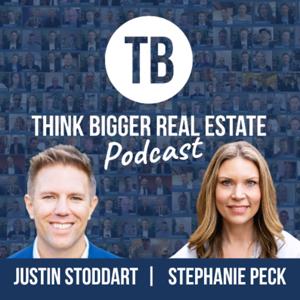


Hey, welcome back to the Think Bigger Real Estate Show. My name is Justin Stoddart. I'm your host and my goal, and my mission really, is to help you think bigger and grow yourself so that your business can follow suit. I know that when that happens, you're going to have more options, including the ability to have a greater impact, which is I think fundamental for any of us that want to have a great life. I'm excited today to have a fellow big thinker, with me today from Nashville, Tennessee. Let me tell you about him here just a second, but the topic we're going to cover is house warming parties and what a gold mine they can be if done right. So, I'm excited to have Josh Anderson of Josh Anderson Real Estate Group with me today. Josh actually started his business in 2006, which is, probably, what some would see as an inopportune time to get into the real estate industry. But he's thrived. He did 86 million in volume last year between four agents. They did about 215 transactions and his business is 75% referral/past clients. So, he obviously does some things very, very right and well. Josh, I'm excited to have you here pouring value into the Think Bigger Real Estate audience. Thank you for your time today.
Absolutely. Thanks for the opportunity.
Yeah. I know Josh came highly recommended from a friend of mine and Josh has, let me just kind of lead with this: Josh has a great business that services a lot of referrals from agents, both gives and receives. So if you ever have business in Nashville and you need a great agent, Josh is your guy. So we'll get that out of the way. So Josh, you, aside from being a dad of two young boys, which I'm sure it keeps you on your toes at home, I'm sure, have a very robust real estate team. Tell me, how do you keep balance between the two? That's a passion of mine is home life, being a great leader in the home and outside of the home. So tell us how you find balance among the two.
Yeah. You know, I don't know that I believe in balance, but I think that there's a lot of counter balance that goes on. It's one of those things that you just work around. I work our schedule, very rarely do I work after hours. I don't do a whole lot of weekends. One of it's just doing it and there's times when we have to be in really good communication with husband and wife in so far as who's grabbing the kids.
I love it. That helps It sounds like you've got a great partner in crime.
We're going back and forth and we've got the NFL draft is in town this week and we've got lots going on in Nashville and lots going on in the family part of it. So, it's really just kind of counterbalancing. There's times when the kids come up to the office with me if it's on a weekend or after hours and it helps that my office in my house are 300 yards apart.
It does.
Well, yeah, it's just a lot of counterbalancing and making it work.
Great. Awesome stuff, man. I think great leaders like you are going to create the next generation of great leaders. So thank you for sharing that. Let's get into this concept of house warming parties. I'm enamored, enamored with what you're doing. I hear too few agents doing this and I really think there's a gold mine. Walk us through this concept of a housewarming party. Do you do it for all of your clients or just those that ask for it or those that agree to it? What does this look like?
Yeah, so we offer it to all of our clients. There's a pretty decent amount that don't take us up on it. You know, for whatever reason they're like, "We're too busy... kids... whatever." We've done them for a long time, and we go in and out of doing them at very high levels, or doing big volumes of them versus not. We just did one this past weekend. So it's really great timing on talking about it. It's one of those things that, because so much of our business, is past client and some type of referral, it's the perfect piece for us to finish the transaction, thank them for allowing us the opportunity to work with them and also getting to meet all their friends or their family or whoever's at that housewarming party suits, you know, we really kind of take it and run with it the whole way and do everything for them.
So paint this picture. You've got a past client or an existing client, I should say. I'm actually trying to eliminate the word past client because you want to service them in the future. But this client, right, who's now happy with your service, they're in their home... how many people, for example, this one you had this past weekend, how many of their friends and family were at the event?
So that was the one this past weekend. They had 44 people that RSVPd and I think 100% of them showed up. So it was really awesome. You know, most of them are somewhere... We've always kind of said, we've looked at it and said it's about $250 or $300 that we spend and about 20 to 25 people usually show up. This one was a little bit different. He's one of our top, top referral sources and clients. And so we spent a little bit more with this particular housewarming party. So, we had more people, more food, more drinks, more everything. We usually do real invitations. We also do a paperless post or an e-vite, but our goal is we're capturing all of their contact information because that's who we want to work with and we do all of it to make it really simple.
If it becomes a big chore for the client, they're not going to do it. The whole idea is that we're selling, and we sell it throughout the transaction, we tell them, "Hey, you know..." halfway through the transaction, that it's going to be so great once you guys get settled in and we're going to do the housewarming party for you guys. You aren't going to have to do a thing. So we kind of talk throughout from start to finish and after. So, this particular housewarming party was probably two to two and a half months post-close. So it gave them plenty of time. They did a couple of things after closing and so it gave him time to do that and get really get settled in and the house really where they wanted it to be to entertain and have people over. So, we do invitations, we do the email invite, we call them, we text them. We just want to make sure that everybody shows up that is supposed to be showing up. So it's a good turnout and it's a win for everybody.
So you get from them a client list or guest list. Then, you guys reach out and say, "Hey, on behalf of our client, we're hosting a housewarming party for them. They've requested that you be there. We'd love to have you." Then follow up with of course phone calls and emails, just to remind them, I'm assuming that's kind of what that looks like, the logistics?
Yeah. And it's nothing about real estate. It's literally just reminding them and making sure it's on their calendar and you know, there were three of us that were there from the team. That's partly key also is somebody from the team has to be there. Yeah, and it doesn't necessarily have to be me. I happened to be at that one because it was a friend and you know it was during the day on a Saturday. It was from 12 to 4, and it was just awesome. We had it catered, we had Chewy's, it was great. When we first started out people were throwing out all kinds of crazy ideas. So we do themed party. So, it's Mexican, BBQ or pizza just to make it really cool. From there, that creates the whole theme of the party. So Mexican food, Mexican Beer margaritas, all of those things.
Compare that Josh, with four hours that people spend at an open house where you're hoping to get a few people to come in and potentially have some buyer leads. But again, these are cold leads. I'm not downing the open house strategy. I think it's a good one, but now, there's proof of concept all around you. You're standing inside what you did for this client and you're with them. Typically when people come in to an open house, they...
I'm excited today about today's topic because I think it's essential to what's happening in the real estate market in order for real estate agents to continue to thrive and offer the value to consumers that they'll respect and appreciate enough to allow you to have a business with the margins that you want to have. We're going to go into a topic about how to become the CEO of your business and I have with me today somebody who's brilliant at this topic. Those of you who know him probably admire him first as a loving husband and father, which is something that is very dear to me. Those that work along with him, despite the accomplishments I'm about ready to read, all those that know him best say he's a very humble man to which I would attest to that as well. So, Chris Suarez, he's a real estate agent here in Portland. He's sold himself over a thousand transactions and over $250 million in volume. He actually didn't ask me to say that, so he's probably a little bit embarrassed that I did say that, but nevertheless someone with great accomplishments. He's somebody who has ownership as a broker owner in five different offices for Keller Williams up and down the I-5 corridor, he has an expansion team, meaning other brokers around the country of which he's the CEO. In addition to that, he still goes on buyer and seller appointments and balances that out with his other responsibilities of being a CEO and a big thinker. So Chris Suarez, thank you so much for joining us today. It's a great pleasure of mine to get to spend some time with you and share your genius with the think bigger real estate audience.
Awesome. Well, I appreciate being here. I appreciate the opportunity to connect. We talk a lot face to face, but now we're talking screen to screen and happy to share anything I can. But also I'm really thankful for what you continue to do for the community and our industry as well. It's a love for the real estate industry. I think that drives us both. So I'm happy to be here.
Yeah, no, it's true. I've been asked before "Justin, have you ever thought about getting your real estate license?" And that comes up often and I think my passion isn't necessarily to be with buyers and sellers, it's to be with real estate agents. So all day every day, in my role, I get the opportunity to be knee to knee talking strategy and finding ways to add value to agents. So, I appreciate that, Chris, that means a lot coming from you. Let's get into a little bit here about this topic of becoming a CEO. I've studied your teachings on this and others where there's a real difference between an entrepreneur and a CEO. Would you just share for the audience, what are some tactical differences in mindset in their activities, and just how they show up and be, that really differentiates somebody from being an entrepreneur. Which a lot of people embrace and love, but maybe they're hitting a ceiling and they're tired of hitting a hitting a ceiling and they want to do more in their business and/or just have a better quality of life. Let's talk about the how embracing the role of a CEO will help them.
Yeah. Justin, I think one of the interesting things about our industry is everybody starts as an entrepreneur. Like if that wasn't, if that wasn't our core, we wouldn't be in real estate. And so typically you look at a founder of any, any company, real estate or non real estate, and they have incredible drive. They have natural ability, right? They have intuition. They have enthusiasm. And depending on your level of any one of those things, that's sort of the level of your natural ceiling of achievement or the size of the business that we're going to create that makes a phenomenal entrepreneur. And then as we're really, really good at that, and as we care about people, our business is going to grow naturally. And at a certain point in time, I think our industry has told us, "Well then, you'll naturally be the owner of the business."
And so since you own it, we start putting three letters on our business card and it just says, you know, Chris Suarez, CEO and by nature, the fact that we call ourselves that, we just think that we'll just continue doing what we've always done. And now we're just the CEO of a business because we hired someone or we added people or we've grown. Interestingly enough, I think that was me, early on, right? I sold real estate and I sold more real estate and then more real estate. And I thought, well, "Gosh, I'm going to have people now because I need them to deliver service." And so now I was just automatically a CEO and as I started researching founders of different companies outside of our industry and the founders that, that stayed CEOs of their business versus the founders that hired CEOs of their business--and there are incredible companies that went either way--the founders that stayed as a CEO had to change dramatically what they did, what their skill set was, what they focused on. In fact, they had to go from like dry, natural ability, intuition, enthusiasm. And then all of a sudden their skillset flipped to focus, strategic options, systems, models, accountability. And that's not natural. And one of the things I came across in my research was this statement that the number one reason why tech, I was researching tech, which we might as well just call that real estate now anyway, but I was researching tech and it said, "The number one reason why tech companies failed was because the founder stayed a founder." They didn't become a CEO. And so I thought, "Gosh, well how do we become a CEO?" And the four things that showed up was the CEO is responsible for creating.
And you think, well, so is a founder. A CEO is responsible for truly planning. And you think, well "Yeah, so is a founder," but the next two was implementing and integrating. And that's where I think most real estate agents, right, entrepreneurs fall down. We are great at creating. We love creating. In fact, we create too much and we love planning. And so we all have goals, but it's the implementation and integration that falls on the shoulders of a CEO that ultimately takes a lot of time and we just don't typically put enough time into becoming that CEO or being the CEO for a business. So I know that's a lot, but that, that really sort of reframed my thinking of who do I want to be for my business or any business that I'm involved in. Am I the founder? Like am I the entrepreneur? Like I love being that. But if I'm going to put a CEO title or those letters on any organization that I run, I have to be something different for the business and for the people that I've invited into the business.
It's powerful that you say that, Chris. You're right, there's this concept that an entrepreneur is a noble role, to, which I agree. I think it is. I think many of the problems that are solved in the world come about because of entrepreneurs and business owners who are willing to take a risk in order to create a solution for the market; however, you've pointed out something interesting here, which is that one can't stay in that mode forever or their impact will be limited if they simply get to a certain place where now they've got to become something else and they refuse. And so it's easier to jump to a new venture, which you see oftentimes, which is an entrepreneur jumping from thing to thing to thing without necessarily either bringing in somebody else or becoming somebody else to take that business and impact to the next level. And so what you're saying is you've studied that in big businesses. But you're seeing that even on a micro level within the real estate community, that real estate agents themselves need to become something different than what maybe got them started in the business.
Yeah. I think just going back one second and you said, "Well, we see people that jump from one thing to the next thing, to the next thing." Those are called serial entrepre...
Let me give a little background on the topic that you and I want to solve today and then I'll give some background on you to speak to some credibility of your story as to why you're the right person for them to listen to on this topic. So, I see agents, as I have a chance to be knee to knee with them all day every day, I see them spending a lot of time and a lot of effort walking past people that already know them, like them and trust them to spend resources, time and money to convince other people to know them, like them and trust them. And I really feel like they're, they're headed out into the diamond mine going down, risking everything, to go down to find these diamonds when they're walking past fields of diamonds right in front of them. Do you ever feel that way Jennie?
Oh, preach! That is, I mean that is so true. And that's been honestly my mission over the past years when I discovered that I truly love to empower agents. That is why, is because we already have all these people that know us, like us and trust us, and we're just not pouring into them more or squeezing them with more love to get referrals and recommendations out of them. So I'm with you on that.
Perfect. Well, we're going to dive into that topic and how agents, some real tactical strategies that you've employed to master this database topic in your business. So some background on Jennie. Jennie and her and her team last year had the privilege of serving 135 families. And that's exactly how she stated it to me, which again tells me a lot about how she feels about her people. She didn't say 'sell homes or houses.' She 'served families.' Okay. So there's probably a, a built in lesson within that. She's been in business for 18 years, but you actually got to a point, Jennie, where you felt almost a little burnt out, like this business is making me not like people. And you said that that's a problem. So talk to us about how with you being so relational, how even you said at times like, "I'm kind of burned out." What, what happened there?
Well, thank you for leading me up to that because I think that's an important part of the story because now people can see where I am or where we are as a team and they can make assumptions that we've just always been this awesome, right? That's not the case. We've had so many fail forwards during the process and like I shared with you in 2010 and 11 is when I took my first BOLD and got to a coach and my production doubled and I was a single agent still. And so what happens when your production doubles? Things start breaking, you start losing your mind and getting pretty stressed out. So I sloppily started building a team, not following any of the proper processes that are lined out for us. And by hodgepodging a team together, I was still, yes, I had some leverage and relief, which was awesome and at the same time, maybe I didn't hold them accountable correctly. I was still learning how to be a leader myself and so then I'm still hanging on to way too many things, not properly leveraged. What does that cause? Frustration and and really just getting to a point of like I shared: hating people, I hated people. I say it out loud in the classroom and people always laugh out loud and I know it is because they have been there and we cannot hate people in this relationship business that we're in. And so that's where I had to take a step back and reevaluate why in the world am I really doing this business? What do I love and how can I apply doing what I love to helping families buy and sell homes.
Let's talk a little bit about the root of this, of this hate and I'm not going to try and be a psychiatrist, but I would imagine, I know you're the loving mother of a beautiful little girl and I would imagine you had people that were imposing upon that time with her and they were demanding. And because you felt like, now this is pre team and I know some teams get a bad rap and that's probably accurate. Other teams don't deserve that bad rap that actually serve clients at a really high level. And I know based on what I've heard about you from Patrick and others and that you teach this business by referral at a high level, that's not you, right? But with these people, while you were just a solo agent you had on 15 hats at a time and the hat that you wanted to wear the most, which is that of being a mom was always on the sideline. Is that what caused the root of that hate?
How did you know all of that?
I am a dad. I get it. Right?!
That it, that is so true. And so many and dads are awesome as well. I can speak to the working moms because I am one. That is our struggle. You know, there's a book on it. It's called the ONE Thing, by Gary Keller and Jay Papasan. And by using that book as a tool, it really helps so much along with the Six Personal Perspectives, like we mentioned early on, the whole value of time blocking and knowing your calendar and family is on your calendar. So every day for the past four years, "Pick up Mia" is on my calendar and "Family time" at four o'clock. And so that was real easy for me to say, I'm sorry I've got an appointment at that time. Instead would noon tomorrow or you know, you pick the time that, that works for you. And I think that's it. That's the number one thing is taking control of your calendar. And that allows people to not stress you out. And so if you don't have a calendar, you will allow people in at all times that you get frustrated and you start feeling burnout. So that's key.
Yeah. Let's talk about this. You showed be a little something that you have on your desk that says E to P. Will you pull it out for the audience.
Yeah. My friend Missy Webb from Norman, Oklahoma, she sent this to me. I think it was after I taught a Six Personal Perspectives class and I said that one's my favorite. I love them all. I love all of the perspectives. The E to P though, every bit of our lives, personal lives, business, lives can be plussed and be better and we can have more focus and purpose with them.
Let's talk about what that is. There's probably a group of the audience that knows what that is, right? You and I do. In fact I was teaching it to a group yesterday, but going from like an entrepreneurial style to a purposeful style, and I want to parlay that into what you described, how you had this pivot. I would imagine before, when you were starting to dislike people, it was because you were working more entrepreneurially, right? Where it was like, "Yeah, like bring it on and I got this, I got everything." And there wasn't like a purpose behind it. You weren't being purposeful of like, "Okay, what matters most to my business?" Okay, this is on my calendar, this is what matters. Most of my relationships picking Mia at four o'clock, this is going on my calendar. That was that kind of where you started to to really embrace and implement this concept of E to P?
Yeah, I think so. And even the term counterbalance when that has been shared and if you really think about it as sometimes you do go extreme in your work life and you just have to know that it will come back together. You know, there's a straight line and you get extreme and work sometimes you may go extreme family and that's okay. So the goal is to really keep yourself balancing, counter balancing between the two. And that's where like Mr. Gary Keller says, as you start your year by planning out your calendar, starting with your family time, your vacation time first, and then all the rest gets filled in. And so I think that's key for keeping your head straight in this business.
Let's talk a little, I love that, and I couldn't agree more. I mentioned to you earlier, for those that don't know, I'm a father of six kids. Uh, that wasn't by accident. Yes, we've been asked by every elderly person we know if we know how that works and we actually started off wanting to have six. My wife comes from a fami...
Welcome back to the Think Bigger Real Estate Show. I'm your host Justin Stoddart and this topic today is very meaningful to me. Even having this guest on today is an exciting thing for me. I'll introduce her here in just a second. But here's the problem that I want this episode to help you solve, which is: There's endless amounts of tactics and strategies and ideas for real estate agents to grow their business. And the opportunity is most of them will work if you grow into being the right person. The challenge is if you don't grow as a person, none of them will work. So I have with me today, Sarita Dua. Let me first of all say Sarita thank you for coming on the show today.
Thanks so much Justin, for having me.
I'm excited to have you here. For those of you that don't know Sarita, let me give a little background on her and I know many of you do. Over the past two years, her team, a very small team, has produced over $130 million in real estate volume. Pretty impressive for a small team. In addition to that, she has entered into the executive MBA program at MIT. For those of you who are familiar with MIT, it's a very prestigious university and to be accepted in means a lot. She loves teaching and training. It's really a passion of hers. Maybe some of you have seen her on some of the biggest stages including Keller Williams big annual event, Inman Connect, the big event that they have multiple times a year. And all over the place on podcasts and other places. So I'm, again, fortunate to have you here today, Sarita, pouring into the Think Bigger Real Estate audience. Thank you for again for your attention and your time.
Of course. I appreciate it.
So let's, let's dive into how are we going to solve this now. I know Sarita, you have developed and followed a growth plan and you say that that is an essential component of helping you to produce at the level that you have and I want to talk through some of the things for you that are a part of this growth plan? And, uh, maybe let's start with something that you put into the growth plan first, which is your fascination with travel. Talk to us about that because most people think that has nothing to do with real estate. That's what you do when you're not doing real estate. But for you, that's been an essential component of helping you produce at the highest level. True?
Yeah, absolutely. And if somebody asked me like what are the three things that mean the most to me and I can't put individual people in my family, then it would be honestly my family, education and travel. And one of the things I love about travel is that it's a perfect intersection between family and education because anytime we go anywhere, we're learning and we're together. And so it isn't this, you know, a quest to fill my passport, although I do love that part of it. What I found is as my kids were young and active and I was working quite a few nights and weekends, we realized that when we connect, the few times we have, let's say we had an hour here or like 30 minutes between appointments, I would try to connect with my family and guess what, they were busy. They'd have soccer games or lacrosse or birthday parties or whatever.
So if it was a good time for me, it may not have been a good time for them. And what we realized is anytime we went anywhere, the four of us, and we reconnected, whether it was a long weekend or for a week, we would just come back synchronized and recharged. And then, my husband especially, he's a bit of a nerd and he loves like these educational field trips. So anytime we go on a trip, he's going to make us go see the largest ball of twine or how cashews are made. And we always, you know, the kids, especially "Daddy," and they roll their eyes. But the funny thing is we started playing this game called Trivia. We were at a restaurant, we were waiting for a two hour wait and I was trying to keep them awake. They were jet lagged. So I was like, "Hey guys, we visited Google today. What were the colors of their logo?" I didn't even know most of the answers. I was asking questions and I didn't even know the answers. Or, "What gate were we at?" Or, "What seats were we in?" Or, "Who was our flight attendant?" And it was so funny because my son was like maybe six or seven, "Momma ask me another question." And since we started doing that too, we've become very observant when we travel. And you're always learning when you're just looking around and your present. Right? So it really did bring our family together. So, one of the best coaches I've had in my career said, "Hey, you don't always have to have a goal of how many houses and what's your production. It could be [for me] how many days, how can you maintain your production and how many days out can you take?" So every year I start with what are all the days I'm going to take out and then I cram all my real estate in in those days that I'm not out of the office.
Which typically is not how it works. If I have time this year we'll go on a vacation. What you're saying is "This is a big rock. Put the big rocks in first and then business will happen around it."
Absolutely.
And the cool thing is is that you have enviable production, Sarita. You would think that someone that started with that, "Let's go play first," they wouldn't have produced. What you're telling us is that actually helps fuel your ability to produce at a high level.
Yeah. I mean I don't know if you guys remember when you were in school or when you have a deadline, the more you have to do, like if you have something due every night, you're going to have to time block and get it done. If you have a month to do it, like let's say taxes, right? There's a lot of us that are going to, probably on the 14th, "Shoot, I got to get these done." But if you don't have time and you have to slot a bunch of other things and you just get it done, right?! So I did find that it actually made me more efficient and more productive.
I love it. An enticing deadline is what you've created. Let's talk about your speaking and teaching. This is part of your growth plan. Obviously you've agreed to come on today to really benefit this audience. You are on stages. You've been a MAPS coach in the past and that's really become a part of your passion in your life. Talk to us about why that's an essential part of agents becoming the person, growing into being the person, that can then grow a business to the level that they want it to.
Okay, sure. I mean, everyone has a different reason. I'm not going to sit here and say, "Golly shucks." You know, I, you know, at the end of the day, like we all have reasons for doing things. Some people want the visibility, some people want referrals. For me, I'm focusing on getting comfortable with the idea of being uncomfortable, right? So the more uncomfortable you can be and start being okay with it, then you always learn. So for me, teaching and coaching has just, you know, there's that phrase, the teacher becomes the student. You actually get way more than you give. Even when I coach a client one on one who might be a newer agent and I'm talking to them about systems and models. I mean, who do you think is learning that? Like for me, it's very difficult to talk about how you should make your contacts and work your database and then I hang up and I don't do that? Then I would feel like a fraud. So for me, it's just another way to sharpen the pencil. I'm not the greatest public speaker. In fact, I do quite a few educational videos to my clients. And I used to really get nervous about, "Well, does my hair look okay?" and "I just flubbed this up," and I should retake it 10 times so that I sound like, you know, like an anchor woman or like the weather person" or whatever. And you know the more authentic, like when you actually screw up and you say, wait, I like lost my train of thought, let me rephrase and you're actual...
Hey, welcome back to the Think Bigger Real Estate Show. I'm your host, Justin Stoddart. I'm very excited about today. A very good friend of mine a very experienced mortgage loan officer who has been in the business for 17 years. He has been wowing people with value for a long, long time, Mr. Tony Gillard. Tony, thanks for being on the show today.
Happy to be here.
Let's set this up properly. You know, Tony, you run your business like a business and the topic of today is, is really one way in which agents can do that. And I think this term of lead generation is synonymous with real estate agents. More leads, more leads, more leads always seems to be the answer, but maybe it's not the answer. Maybe it's not about more leads, more leads, more leads. Maybe just maybe it's about better converting on the leads you have. We're going to talk some specific strategies around that. Tony, what are your thoughts on this concept of more leads, more leads, more leads?
Well, it's certainly a topic of discussion with every agent. I sit down, every agent, uh, they want more leads and when we start to peel back some of the layers of their business, we find that it's not necessarily more leads that they need, but more conversion on the activities and opportunities that they're already generating. And so, you know, especially when we start talking about like work life balance--can you do more with less? Can you do more things with fewer interactions or really is it a matter of just an equation of pouring in more leads? I don't think that it is based on the conversations that I'm having and specifically I'm just sitting down with the agents and finding out what their track record is and starting to, to ask the questions that are more business related. I know that a lot of agents are in the business because they're really good people.
People's personalities--they're outgoing. They have a servant's heart. And sometimes what is maybe lacking is just the lens, the business lens, looking at their operations and finding out the efficiencies that they could maybe tweak a little bit. And that to me all comes down to what's your longterm client plan because statistically we call this the other 98 because statistically 2% of your database or 2% of the people that you interact with are going to be ready to conduct business right now. And so we always ask, what about the other 98, what kind of client plan do you have in place to incubate these people over time? Just create a relationship of value so that you're the obvious choice when they come back around. And that's in a world of Zillow leads the lead part is really the weakest component of that funnel because the value proposition is being built by Zillow.
You know, they, they come into Zillow's funnel and that funnel provides them a really pretty platform with search tools, a lot of like information and recon, so to speak, for the buyer. And so all the value is being provided by Zillow. And by the time that that buyer wants to make a buying decision, the agent in that equation is the commodity. And so if you're not cheaper, better, faster, if you're not willing to open a door during dinner on a Sunday night, it just gets moved to the next one. And I feel like because of the activities that agents engage in on a really, really regular basis, there's so much opportunity in just those engagements that they're already conducting.
Whether agents are getting their business primarily via referral or via some online lead source, if they're actively growing their business, they're actively in real estate related conversations on a very regular basis, on a daily basis. What would you say Tony, would be the average as you've interviewed agents? What's the average number of real estate related conversations that an agent is in on on maybe an annual basis?
So I have my notes from the last interview that I just did and I'm referring to these because it's fairly common. This is a very kind of common breakdown that I'm coming across in these agent interviews. So this agent I recently sat down with, I asked how many families they helped last year. They said they had closed on 30 transactions last year you know, a mixture of listings and buy side and you know, so it's a decently medium producing type of agent. They were a single operator and I said, how many real estate related conversations of people that are looking to buy or sell do you think you had in order to help those 30 families? And as we started to dig deeper, you know, talking about open houses and barbecues and past client referrals, the networking activities that they engage in, we really kind of identified that they're speaking to about one person a day on a real estate related type of conversation.
Okay. So we're talking about five conversations a week, you know and I'll always kind of lead them down the path of like, well, do you take a couple of weeks off for vacation and so forth. And so in this particular case they had determined that they spoke to about 250 people over the course of that last year to have to help 30 families. Okay.
So about 10%, a little bit higher than that.
But if you look at it, the way that I often like to look at it is there were 220 people that either didn't do anything or did something with somebody else. Right. And so for me, that's where the opportunities are. There's 220 people that showed some level of interest in real estate. These are 220 opportunities that the agent spent time doing and what's in place? What system?
I actually, it was funny because I've watched your podcast and there's a reference that you've made a number of times and I think you and I were both at the same event where, Mr Lou Raja, the keynote speaker at that event said that "Systems beat intentions all day long." And I would take it even a step further where I think you could be the most well-intended human being, but without a system, I think it's just setting up for failure. And so the question for me then becomes what type of system do you have in place to help incubate those 220? For us in our model to help agents with their business is is just looking at the lost opportunity because if we could only, let's say based upon having a system in place, that agent can convert simply 10% of those lost leads, right? So 220 10% that's 22 additional transactions over the course of that 12 month period of time.
That's a massive impact on a medium producer's business.
And so like 10% that's not, that's not some unreasonable number, right? That's not unbelievable to think that somebody could do that and could convert 10% more of those conversations.
Well this was where it became interesting for me in preparation for today. I, this was last night, I just jotted down based on the notes that I'd taken and then I actually went into my own metrics. So we track our metrics. Our branch initiative is to track our daily activities and find out exactly what our conversions are. We've been doing this since October of last year, so this is a little bit of a transparent moment because I'm really hoping that through the efforts of our branch and the things that we're doing on our path to elite is to increase some of these conversion numbers.
But I just wanted to play these out based on this one agent that I spoke with, which seems to be a fairly common among agents I've spoken with, but when you take a look at those 22 deals with an average commission of about $7,000 that's on a, I think a $350,000 house. So average commission would probably be higher for most agents. I just wanted to be conservative. Twenty-two deals would represent about $154,000 in additional income or gross commission earned. And so I took my conversion metrics to apply to that simply as a funnel. Right? So in other words, if those people simply came into my funnel, how would that look? And so I did 20 conversations...
Alright everybody. Welcome back to the Think Bigger Real Estate show. Boy, I feel honored today to have two people with me here today who are making quite the stir in the real estate industry and the kind of a stir that I think the real estate industry needs. I want to welcome today here on the show, Tonya Eberhart and Michael Carr. You may have heard of these names. They're bestselling authors of the book Brandface. We'll be talking a little bit more about that. A little more on their background here in just a second. Before I go into that, I want to talk about the problem that we're going to solve so, and you're going to want to know who these people are. So the problem that I see so often is, real estate agents chasing, hunting and the consumer feeling hunted, feeling chased, which is not necessarily a good position to be in. Whereas what Tonya and Michael teach is a way to brand yourself to where people chase you where people are anxious to try and find time to get on your schedule. I want to thank both of you for coming on today to discuss this very important topic.
Hey, thank you Justin. We are honored to be here. Thanks for having us.
Thank you so much.
Yeah. So, let's get a little bit more into your background and, and they've got such a comprehensive bio that I won't be able to cover it all. Let me start with you Tonya. You really have become synonymous with building brands in the real estate industry and really helping people stand out in this "sea of sameness." I love how you said that. That's so true here. You know, in the market where I work directly, there's over 8,000 real estate agents just in our city and very few of them really stand out. So many of them say the same things, market the same way, have the same tag lines, have the same posts. I mean, it just looks so much the same. I know that you really specialize in helping people stand out.
Yes, yes we do. So, you know, one of the things that I thought I'd start with Justin is kind of what's going on in today's real estate industry. And that is, it's no surprise to anybody listening today that there are tons of new agents coming into the industry. They're entering or reentering the industry. And then you also have lots and lots of new marketing platforms and tools out there that didn't even exist 10-15 years ago. So there's so many ways to market yourself, but the real problem comes when you mix those two together. You've got all these agents using all of these marketing tools and systems exactly the same way, right? To your point, everybody kind of then starts to look the same and that's why we refer to it as the sea of sameness. And that's not really coming from us. It's coming from all the agents we've been dealing with these last several years. They're saying, oh my gosh, everybody around here is marketing exactly the same. And when that happens they tend to kind of blame the marketing platform. Oh, Facebook ads doesn't work. Um, newspaper doesn't work. Radio doesn't work. Google ads don't work. Zillow doesn't work. Right?! And so that really is not always the truth, right? There are some platforms that are better than others, but most of the time if your ideal customers on the other end of that platform, it should work for you. Most of the time what hasn't happened is they haven't set themselves apart. They haven't differentiated themselves in such a way that they stand out from everybody else. And you've got to do that before you can expect to be treated differently.
You know, I'm a big fan of the book Blue Ocean Strategy and what you're talking about sounds sounds similar to that. You know, what they teach there and I'm sure your book, which I'm so excited to read by the way really takes a concept of standing out and really deeply applies it to the real estate industry. Like, how important is that?
Right? It does. And you know what I'm going to hand this one off to Michael because he's actually the first real estate professional that I worked with with the Brandface concepts and that's actually why he's a partner in the company today. So I'm going to hand that one off to Michael.
Hey Michael, before you get started, let me just share with the audience who you are. They're like, who is this Sean Connery looking figure in the middle of the screen. So, some context here. Michael is actually America's top selling real estate auctioneer and the 'Abundant Life Broker.' During your 26 years experience, you've been actively involved in over 74,000 transactions. Like that's phenomenal; And licensed in as many as 27 states in the Continental US. Now let's talk a little bit about how you guys met. You kind of alluded to it, Tonya, that you actually implemented these ideas in Michael's business. True?
It's absolutely true.
Yeah. The way that all worked out is I was an auctioneer by trade. I still am. And the guy that taught me the industry said, get your real estate license because you might want to call a sale, a farm sale or something like that in rural Georgia, South Carolina, Tennessee, Alabama. So I did. So, then I opened up a brokerage in 2000, but mainly I did it to buy my own stuff and help family members. I really wasn't pushing the idea of an arms length transaction brokerage. And then in 2006, I partnered with a company out of Irvine, California, and we brokered a deal in Georgia and it turned into the Bear Stearns residential portfolio when they went under and we thought they would end up being about three years worth of work. It turned out to be six or seven over the course of that time. And so that's where a lot of those licenses came from. I had an office in Atlanta, had an office in Irvine, California, and an office in Seattle, Washington. And we were just trying to liquidate these properties at the time and praying at the same time that our regular arms length transaction businesses would all come back because I was an investor first and a real estate agent/broker second. I was hoping for the recovery just as much as everybody else was but when that happened and we began to see that that was going to happen, I knew that I needed marketing. And so I went about it on my own and I said, okay, I need to stand out. I need to be different. I need people to notice who I am and why.
But I didn't have all those concepts actually pulled down into one concept of differentiation. I had an agent that helped me start the brokerage. She kept saying, you need to talk to my niece. She's in marketing, she's a genius. She's great, she's awesome. And by that time I was so passed it, I was like, I'd already had heard all the stories. I've heard about this is the path for us and none of them are going to work. Like I was too busy building systems and too busy doing this. And so at the same time she was going to Tonya saying, "Michael is expecting your call. Michael is expecting your call." Or, "You got to help Michael. He's waiting on you to help him." And so we laugh about it now because she's still with us but she sort of tricked me and Tonya in to coming together and then the rest is pretty much magic.
When she came into my life, told me what I needed to do I saw right quick, she knew what she was talking about and I'm like, "Okay, this is a person that can conceptualize all of the different platforms and media that you're using to try to get people to come to you and pull them into one message." She had already been doing that through Brandface for other professionals and businesses and she wanted to apply that to me in the real estate business and it continues to work. We still every day practice all of the Brandface principles in this brokerage and it continues to grow.
You know, I appreciate what you shared Michael because I think there's a lot of real estate agents that maybe fall into a similar category as you, which is they're really, really good at the business of real estate. They really...
Welcome back to the Think Bigger Real Estate Show. I'm your host Justin Stoddart and I am so excited today to introduce to you somebody who was recently introduced to me who has just created a magnificent legacy in real estate. She's the kind of person that is giving back to the community and I'm privileged and honored to have her here sharing with the Think Bigger Real Estate audience today. So I want to start by welcoming Kendra Cooke to the show. Kendra, welcome. Thank you for coming on today.
Thank you so much Justin. I'm very excited to be here.
Thank you. So, a little background on Kendra. Kendra has been serving annually over a hundred families on a consistent basis while working, this is the kicker, while working less than 40 hours. I'm so excited to dig into that because that's not what most people experience or think is a reality if you're serving that many families. In addition to that Kendra also serves as senior leadership within The Core Training for real estate agents. So again, not only is she producing at a very high level, but she's giving back and serving and coaching and training at a very high level. So again, thank you for being here Kendra. I know some of the questions that are probably in the minds of people is, number one, where do your leads come from? To serve over a hundred families a year, there's got to be some sort of online lead generation mechanism. True or false?
False.
False?
No generated leads from the Internet, 100% percent referral based business.
Wow, and over a hundred families and that's coming by referral.
That's right. And so what you should really try to achieve in your career is to build a relationship based business. So building relationships with people and casting a deeper net versus a wider net. So what I figured out is if I would work with people who knew, liked, and trusted me from the get-go, then they respected my boundaries, they respected my family time, they respected me. And so there wasn't that disconnect. And you shouldn't show me houses 24-7 and you shouldn't always be on call. I got to work with people who, when they were referred to me, were like "Hey, so and so said you are the best I should work with you." So it goes from a relationship of selling them to a relationship of building deeper relationships which warrants continued referrals.
I love what you said Kendra. I want to go into this a little bit more and expound upon your analogy here of "instead of a wider net, a deeper net." Now, I'm not a deep sea fisherman, but I know well enough that these big fish fishing boats in Alaska, they don't just have nets on the surface, but they have nets that go down very deep because that's where the better fish are at.
That's right. We want to chase the bigger fish, right? So you want to have business partner relationships, you want to have VIP relationships and then you will have your database relationships. And so when we talk about going deeper, it's not a surface relationship. So the people that are in my business referral network, or in my VIP group, I know their families, their children, their hobbies, their charities. I want to be in the flow with them if you will. So, you know, if we're going to a charity event and I know somebody is very passionate about that charity event and they are a business partner, referral partner or whatever, I want to bring them with us. So now we connect on a deeper level. Real estate has become such a transactional business for the most part because leads come in from the Internet. We don't really have a relationship. We have a transaction, we get the money and we run to the bank and it's over. And it was always really shocking to me that we tell everyone we want to be your Realtor for life, yet when the transaction is over, we're done. And so I just found that is a really crazy concept. So I feel like if I stayed in relationship with these people and we connected on a common bond, whether it was community involvement or I'm a runner. You might see the medals back there. I love to run, I love to meet people in the community that run. I love to run for charity. So if I can bond on a connection with the charity or a hobby or a community involvement, that relationship is just really consummated on a relationship versus a transaction, if you will.
I love that. So valuable to the real estate community to hear what you're sharing right now. You segmented your database into three different parts. Would you go over that again?
Yes. So the general database is about 400 people in our general database. These are people who have bought and sold with us. Maybe my kids' families or their friends and family. So, their contacts, if you will. I'm one relationship with them, but maybe not deep relationships. Those people may refer you once every three to five years. Okay. So if you have 400 people, let's say you get 15-20% of those that refer every single year. We didn't generate some leads for you but not a plethora of leads. And then we go to the business partnerships that we have and those are people who can refer you a couple times a year. They have the opportunity, whether they're a financial planner or a banker or private banker or something like that.
And then my VIPs are really people that I'm really, really, really in the flow with, meaning that they might refer me four to eight times a year. So that could be a builder or that could be a developer. That could be somebody that you really connect with on all levels of life and they're continuously filling you with referrals. So I think you really have three buckets, if you will. I know when I first got in real estate, my bucket was just to chase everybody and there's only so many hours in the day. I want better relationships and deeper relationships versus just throwing myself out there for everybody. So those are my three buckets if you will, my VIPs who are really in the trenches with us and are very heavy on helping us lead gen, the business referral partners who have three to five per person per year. Then your database is going to turn over some general leads for you every single year.
Those three groups right there are responsible for helping you serve over a hundred families a year.
That's it. That's it. I don't buy any leads from anyone. I won't say I've never tried it. We tried it with a partnership with a lender one time. They're like, we're going to generate all these leads and it was the most miserable 30 days of my life for me and my team. And I just at that point said, that's not my business model.
Let's talk about that a little bit. It's probably a perfect segue into the next topic we wanted to cover, which is creating boundaries. I would imagine that those 30 days were miserable because those boundaries that you had set up so well started to disappear. True?
Yes, and that usually happens when you come from fear or a scarcity mindset, if you will. Where's my next deal going to come from? Where's my next lead going to come from? So, every time the phone rang, you jump. Or every time somebody wants to see a house, even into 7:30 at night, when you're in the middle of dinner with a family member or friends, you have to jump and go. And those boundaries go out out the window. And when you get referral business referred into you, it's usually, "Hey, you saw my neighbor's house, took great care of them, you're involved in the community, etc." When I sit down and do my listing presentation I say "These are our work hours, 8:30 to 5 and we work by appointment only on Saturday. We're closed on Sunday." People accept that. Just set the expectation and tell them what it looks like and then just adhere to it. But what happens is maybe business slows down a little bit and we start letting our guard down. And somebody texted you at seven o'clock at night and you text them back. You just gave them pe...
Welcome back to the Think Bigger Real Estate Show. I'm your host Justin Stoddart and I am thrilled today, I'm absolutely thrilled today, to have with me a legendary real estate trainer, coach, leader, Mr. Don Hobbs. Anybody who's been in the industry for any period of time will know Don's name. In fact, prior to real estate he was, in fact, we were just talking about his personal relationship with Jim Rohn and Tony Robbins, which are some of the biggest minds in personal development. So before we get into the topic, I just want to thank you, Don for taking some time to be here in porn into the audience today.
Hey Justin, I'm so happy to be here. I love your energy. I love who you are and what you're doing and I'm thrilled. It's always a fun thing to get a chance to talk to a group like this.
It's awesome. Well, I know they're going to be thrilled to hear what you have to share with them today. So let's dive in. The way I've set up today's conversation is that there are agents in the country that Don knows, that Don's coached, that are not lowering their commissions amidst industry disruption, they're raising their commissions. They're going 7%, 8%, 9%, even 10%. Is that feasible? It almost seems like that could not be possible in a world where you've got 1% listing offerings everywhere you go on all the billboards and buses that drive by, right?
Or Redfin or whoever, right?
Whoever. Yeah. How are people doing this Don? Is this real. You're telling me that, you know people that are doing this and they're having success with it, not just once on an unassuming buyer or seller. Like they're doing it, they demand that.
Yeah, in fact it was just funny you went for that right away because that's such an interesting thing. There's so much pressure and there's so much sameness amongst Realtors and Justin, that's the challenge, right? We're just a giant commodity group. You know, if you think about any commodity, I don't care if it's, you know, I can buy Lexus here, a Lexus there, but here it's $1,000 cheaper. I mean, if things are the same, then price is the only thing that matters. When things are not the same, we don't mind paying more for more. We don't mind. We don't mind paying more for it--a brand we trust a name we know. But we do mind paying more for the same. And that's the challenge. And Realtors have made themselves that way. So I think the biggest thing I would say is it's really about branding and, and really about building something that people can identify with and hold on to is "She's the expert." Or, he knows my market. He is the guy, or she is the gal, you know that makes it work and we're not afraid to pay for that. I had somebody the other day where I walked in and he said, his listing contract is already filled out at 7%, and he was concerned about the commission and he thought it was going to be a pressure down. And they said, "We thought you'd be more." I just laughed my butt off when I heard that. I was like, how cool is that to think that the expectation of value was so high, they were shocked and surprised pleasantly at 7%. It's really cool, but that has to do with the brand. And you can't do that by just being a Realtor. You can't do that by being one of the multitude. You can't do that by doing what most Realtors do. You can't. It's not going to happen, right?
I love that. You and I have studied some of the same sources and there's this concept about becoming an expert. And I know that's one thing that you, when you coach and teach and train, it's how do people, as you identified, separate themselves from the masses and truly become an expert. Let's talk about this concept of gaining expertise so that one can be moving in the direction that these agents you're talking about are moving, which is we're not lowering our prices. And if in fact we may be doubling down on our value, therefore we're more valuable and can charge more.
Yeah, absolutely. I know you and I talked about a book that we both like and, and have in our libraries called Expert Secrets. So let's start with a recommendation. Let's give our man Russell Brunson a good plug right there and sell some books. But you know, Russell Brunson has got this concept of being the attractive character, the interesting character. You know, that person, and I think that agents don't see themselves that way, which you realize today if you look around, if you're at all observant, you see that there are people with less talent in almost any industry that have made themselves somebody by raising their profile and becoming the expert. One thing I want to make sure, and again, I'm certainly going to promote that the agent needs to get to be good. I mean, they need to be an expert. They need to find out, you know, what that niche is and then everything about that group and that style o property or whatever it is. But the biggest thing is remember that we don't find out if you're good or not good until after we've called you. So the reality is that only leads to the legend of more. By the way, thanks for the word legend. It makes me feel, when you said that was, I think that means I'm old, but I'm alive. I'm living legend, so it's okay. It makes them the legend that this is who we need to call. So it's more the, how we get people, the perception of expertise. That makes me feel like they're the answer to my problem--the solution to my real estate needs. Right, and it comes down to how do we become somebody's Realtor, Justin, before they actually need one. And most Realtors don't think that way. They're like, how do I get to them just as they need one how do I get to be one of the three or four or five being interviewed and I'm saying, how do we just eliminate the competition and get them to call and say, Justin, come list me. Right. That's, that's the end all be all. Yeah, there's Nirvana.
Yeah, where you have somebody calling saying "Don, do you have time to come list my house? I know you're really busy. I know you are highly sought after." Yeah.
And when they do that, what happens, and this is what's so perfect about this scenario is, I call you and say "Come list me." When you come, you're not having to justify your price. You're not having to tell me all the things you're going to do. There's no over promising because it's almost like whenever you do that sells everything we see around here, do that for us. That's what happens when you reach that level of brand and recognition.
And we talked a little bit about that first step in Expert Secrets, right? It's becoming an attractive character. And we're not talking about your physique and how good your hair looks, it's really about taking on a persona and taking on this level of expertise, this leader role, right to where people know that you can get them from where they are to where they want to be and you've positioned yourself over time repeatedly to where people recognize that if I'm here and I want to be there, then Don is the one to get me there. That this agent is the one to get me there. And you become this attractive character to them that you're the missing link in the story that I want to create.
Yeah. That's awesome. Looking at the comments, Chris. I don't know who Chris is but...
Yeah, Chris Angel. Chris Angel. Hey, Chris is validating the way I introduced you and Chris is the real deal. So there you go, Don.
Yes, I think you're right on with Justin. It's really how we get people to see the things, and by the way today, where it used to be that you had to be an expert and then it would take a long time for that expertise to be known, today it's video, it's social media. There are so many ways of demonstrating and it's not bragging, it's personal branding, personal marketing. Any of this that we're talking about becoming that expert is not about bragging and boasting. It's really about demonstrating value. It's about demonstrating ...
Hey, welcome back to the Think Bigger Real Estate Show. You're going to notice again that my voice is kind of sexy today. I won't to ask for forgiveness because I know some of you will probably enjoy it. This time of year, we're coming up on the end of the first quarter, and we're at a point where we're checking in to see how we're doing. Hopefully if you're like me, you have a business plan and that business plan had specific goals as to what you wanted to achieve for the year. You probably then broke that business plan down into quarterly and even monthly milestones, or checkpoints. And we can see the end of March. It's just over a week away. And, in that timeframe we have Spring Break. So some of you may be taking off and want to be cognizant of maybe lesser activities during that time.
So right now might be a good time for you to evaluate to see how your first quarter went. And if you're like me, maybe you ran into some things that you didn't expect. I've been out for the past number of days. Maybe that's why you haven't heard from me and why I'm even broadcasting from home today, because I didn't want to get anybody sick. So thank you, or you're welcome that I canceled some appointments with some of you... and kept it with some of you other people. I'm sorry for those of you with whom I didn't cancel. But it was actually per your request that you thought you could handle it. So, I want to go through four points really quickly, as to what you can do, what we can do, if we find ourselves behind on our goals.
So, the first thing that you should not do is, say, "Well, I guess this is going to be a lesser year, so I'm going to adjust my plan down or I'm going to adjust my goals down to meet reality because this is, this is the reality, right?" Because that's what happens a lot of times as we get into this mindset of, "Well, I had these plans but then I got sick," or then the market did this..." So, we start backpedaling on what we committed... To the life that we actually wanted, the business that we actually wanted. And a commitment to you of being a part of Think Bigger Real Estate is to help you get beyond those silly excuses and realize that, "No, you made a commitment to yourself and your family to have a certain business, have a certain life and I'm gonna hold you to it." And I'm going to hold myself to it. We're going to hold ourselves to it. How about that?
So the first thing we need to do is stop with that stinking thinking; To stop telling ourselves, you know, it's circumstantial. It's a result of the circumstances and it's just something that I need to accept. You can accept it or you can choose not to. So step number one is to change your thinking and stop telling yourself, or stop talking about the excuses. Every time you talk about, "Well, the market has done this..." or "I was a little bit sick..." as I cough. See how powerful the mind is. When I say sick, I start coughing. Stop talking about those things. Stop talking about the reasons why you haven't and start filling that void with the reasons why you can and the things you need to do.
So that's step number one, change your thinking. Number two is you're going to need to change your plan. You actually need to readjust the fact that now you've got three quarters left and you maybe have more than three quarters of the work yet to do. So adjust your plan. It doesn't mean you do need to do it all in the second quarter, but it might be a good idea to adjust your plan to where you've now leveled out the rest of the year to equate for maybe where you're behind. Number one change your thinking. Number two, change your plan. Number three is you're going to need to change your activity level. We are going to need to change our activity level. So, what I mean by that is you're going to actually have to work harder. Which really means you're going to have to say no to some things that are pretty comfortable right now and that might be going home early and that might be not showing up late. You're going to have, we are going to have to get rid of some of those things and we're actually going to have to work harder in order to achieve those same goals in less time.
That's point number three. Point number four is is working smarter. You're gonna have to change how well you convert. This means you're probably going to need to be taking appointments with people that can get you there faster. You might need to prescreen your people a little bit better as far as who you're meeting with. I know I am. You probably also, when you're in those appointments, going to need to need to be more effective. Like a two hour sit down meeting is probably going to be too much. You may need to start cutting those appointment times in half and doing more appointment in less time, if that makes sense. So again, that's the fourth point is start working smarter.
My guess is if you had some reason that you really, absolutely had to find success in the way that you set out to at the end of last year, you'd figure it out. For example, let's say one of your children or grandchildren gets cancer. And the only way to get the treatment that they need is by you having a certain amount of money to qualify for the program. My guess is you would figure this stuff out. You'd start thinking differently, your plan would quickly be different, you would probably start working a lot harder and you'd probably start working a lot smarter because you would figure this out. So that may not be your circumstance. But the second that we give ourselves leniency and we stop treating things as if they are serious and pretty soon our life becomes lukewarm and pretty mediocre. So again, my commitment to you is to help you think bigger, have a better business so you can have a better life and greater impact. So, hopefully this has been helpful. If it has, please comment, share, and I look forward to communicating with you in the next video. Have a great day everybody.
From the publisher's feed
The road to success for real estate agents is well-marked. The road to significance is not. Here, we help you to Think Bigger than just your business. We inspire you to seek success AND…

16,687 Listeners
697 Listeners

32,765 Listeners
1,106 Listeners
2,507 Listeners
13,964 Listeners

111,874 Listeners
4,457 Listeners

27,855 Listeners

907 Listeners

19,270 Listeners
114 Listeners
21 Listeners