
Sign up to save your podcasts
Or

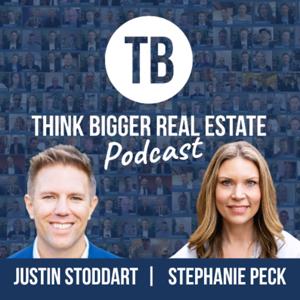


Justin Stoddart 0:00
Hey, welcome back to the Think Bigger Real Estate Show. I'm your host Justin Stoddart, very, very excited about today's episode, somebody who I respect and admire, and he is just a wise man. And I'm learning more about him. And he's somebody who is being featured on some pretty big places around the country for the work that he's doing. He's a 25-year industry veteran out of the Dallas Fort Worth area recently featured on WaterCooler Is that right? Jay?
Jay Marks 0:27
Yeah, WaterCooler, right,
Justin Stoddart 0:28
With Chris Smith, and Jimmy Mackin. And Jay and I've met a couple of times, and been following each other on social media for the past while and just has a lot of really great things to share. And I thought, if I can convince this guy to come on the Think Bigger Real Estate Show, it's going to be great for everybody who listens. So, Jay, thank you good for your time for being here. On a post-Memorial Day episode of the Think Bigger Real Estate Show.
Jay Marks 0:52
I'm glad to be here. And you forgot to mention also that you and I are good buddies, so help a friend.
Justin Stoddart 0:58
Thank you. And that's true Jay, Jay's a man of faith, good man all the way through. And he and he has a great perspective on the real estate industry. And so let's dive into this, Jay, kind of the topic of today is Oh, my goodness, the sky is falling. Yet at the same time, everything's gonna be just fine.
Jay Marks 1:20
Everything's gonna be just fine. That's right.
Justin Stoddart 1:22
Let's talk about that. I think that's it, that's great, because there is a bit of a reality check is that like, for some real estate agents, I believe they're, they're at the brink of extinction. Now I say some real estate agents, because some, in my opinion, are not doing what's good for the consumer. And we're living in an era more and more where the consumer is going to win. So for those agents, I think there will actually be applause that like, thank you, right, that those agents aren't with us anymore. Now, will there always be a bad apple infiltrating into every industry, of course, but I do think that those agents that are not innovating, they're not truly adding real value that the consumer will be replaced by a robot. And yet, there are people like Jay marks who are doing some incredible things with their clients, with the community and adding real value to where there's nothing to fear. So Jay talks a little bit about more kind of your perspective on that, why you say, the sky is falling, yet at the same time, everything's gonna be just fine.
Jay Marks 2:23
Right? You know, first of all, it's been a statistic for years, that 87% of all real estate agents don't seem to get past the, to your first two years of their career. You know, as I walk into a room, I'm 25 years in the business, I can count on one hand, how many people been there, as long as me or between 17 and 25 years, there's not a lot of us up in the corner talking about the old days. But I will tell you this, that it doesn't really matter who takes over what and who buys who and what new technology if you are being authentic and being you, and most of all, staying in contact with your customers in your sphere of influence. You know, just this morning, we had our Monday morning meeting, and a part of our Monday morning meeting is to look at every closing. And at the end of every closing, we look at how the transaction goes how the client experience ago and is this person, someone that we would like to put in as a VIP, or someone that we want to make sure that? Yeah, let's include them in future marketing at a higher level. And someone really wants to in touch with you get referrals and things like that. And, you know, some closings are smoother than others. But we are we want to make sure we're adding value prior during and after the closing, we want to be the resource ever. Sorry, long answer.
Justin Stoddart 3:40
Well, I think it's interesting what you just said there, Jay, if you're actually asking your team, is this somebody that we want to add into our VIP list because I think there tends to be a bit of a feel of like, if the person is has a heartbeat, then, of course, we want their business. But there are people out there that recognize the value and those that don't. And all they want to do is Jeremy on price when they don't have eyes to see the fact that there's a value that you're offering. And so the fact that you guys are making a decision, is this somebody that we want to invest our time in, right? Is this somebody that we want to invest time and resources into, to add superior value because they're going to get it and they're going to receive it and they're going to want to continue to reciprocate in the form of future business as well as referrals.
Jay Marks 4:26
Right? You know, just recently Justin we had, we just put it under contract, we're going to close here in a couple of weeks. But I had a wonderful opportunity to put a house on the market of a friend of mine. And the friend of mine was very clear on the phone, we were talking he goes just so you know, I'm interviewing XYZ company and XYZ discount company. And he made it perfectly clear Matter of fact, when I wrote for my ride for my appointment, a road, that's a new word. When I arrived at the appointment, he'd already interviewed Company A and it was me then it was company see afterward, who was touting the I can do all of that for a really, really low price, like 1,500 dollars, something like that. And I was successful in convincing him of my value, and what we had to offer. And when we were putting the house under contract, I brought him here to my office and feel it behind me I've got a big TV on the screen there with the table, and I put all the offers on a spreadsheet on the screen. And that's what started going through him. He actually commented his wife, that company could not have done this. Because it was so no frills. And yes, there is a time and place for a discount and a quick transaction. Yeah, like whenever you're buying a book on Amazon. But whenever you're buying a house or selling a house, there's so much more to it. And it was neat to watch him realize the value without me having to say anything.
Justin Stoddart 5:51
You know, a friend of mine mentioned to me that he doesn't believe that, that robots will ever entirely replace real estate agents because real estate is such a large wealth determiner. And I thought about that. And I thought, if and I'll add this in, if a real estate agent is actually in the business of helping people determine wealth, or increase wealth through real estate, I totally agree with him. There's some that don't write that actually, the only thing they do is help somebody buy and sell as opposed to teaching them how to buy, how to sell, like, where to buy, where to sell, when to buy, when it's like the things that you described you put up on the screen was data and insight that actually allows people to make decisions that will increase their wealth to where your fee becomes irrelevant, right. Whereas people aren't offering that then I'm concerned about them. And they ought to be, as I mentioned before, replaced by a robot and or they just need to up their game, right.
Jay Marks 6:54
So I think
the thing that the most current thing you just said there is people need to up their game. You know, whenever you show up for a if you're going out on a date, you're you've got nice clothes, a clean car, you know, you have an evening planned, you're ready to go. The same thing when you go on an appointment, you know, you want to be ready, you want to be on time and have all your facts and data...
Justin Stoddart 0:00
Hey, welcome back to the Think Bigger Real Estate Show. I'm your host Justin Stoddart thrilled about the topic today. It's one that I'm passionate about. And I was so fortunate to be introduced to really an influencer in this space, somebody who helps with a personal brand, helping people find the greatness within them and share that with the world. So please help me welcome, Jennifer Powers. Jennifer is a master certified coach, top 3% of coaches worldwide. Pretty impressive. She's the best selling author of the book "Oh, Shift". In addition to that, she has actually been a keynote over 250,000 people. So needless to say, I feel humbled to have a big thinker. How appropriate for this show a big thinker isn't today to help us solve the problem of how do we help unlock people's potential and help the world know about these people so that they can make the impact that they're supposed to make? So Jennifer, thank you for coming on the show today. It's such a privilege such an honor to have you.
Jennifer Powers 0:58
I'm giddy, I'm giddy be here, thanks.
Justin Stoddart 1:02
We're gonna have a blast. I know that we've had conversations before. And I'm just thrilled that you agreed to come on the show today. And I'm thrilled that my audience, the think that your real estate audience gets a chance to know who you are, and getting some access to the resources. In fact, I'm going to ask a favor. At the end of this show, I know you have this best selling book, if there's even a part of it, that you could share maybe a digital portion that we could put in the Think Bigger Real Estate Group. So people can kind of get a taste for that. So can I put you on the spot and say, will you?
Jennifer Powers 1:34
Whatever, you need Justin, you've got it,
Justin Stoddart 1:36
you are the best. Okay, so here's something that I've noticed. And I'm really going to kind of present this as a challenge that all of us are facing in today's day and age. And then I want to really tap into your expertise to help us solve this. And the problem that I'm seeing is that because of information overload, because there are so many ways in which people are gaining information, that we are all happy to make split decision on the brands that we support the people the products, the services, we don't have a lot of time to evaluate. And so as a result, people who are not clear on their brand people who maybe aren't outspoken, and letting the world know who they are, are going to get passed up. Would you agree?
Jennifer Powers 2:20
Yeah, definitely. And I think it's becoming more and more so because the competition is becoming more and more. So it really is important to get really clear on that. Yeah.
Justin Stoddart 2:31
So so I'm excited to kind of dig into that with you. But I think that there's a lot of people, again, my this audience is probably very heavily saturated real estate agents and mortgage loan officers. And at a time when their competition isn't just the real estate agent down the street, right, or the mortgage loan officer down the hall, like their competition, is now Wall Street and venture-backed tech companies that are spending massive amounts of dollars to not only create technology platforms that minimize what a real estate agent doesn't get paid. But they're also spending billions of dollars to change the consumer mindset, that maybe the traditional path of hiring a real estate agent isn't as important or isn't necessary like it once was. And for any of us that have been on the backside of a real estate transaction to see kind of below the tip of the iceberg. Everything that a real estate agent does and the value that the good ones really bring that thought is not well grounded, right. And so real estate agents have to more than ever be good at speaking up and sharing who they are. In fact, I was teaching a video class yesterday. And one of the big challenges that that agents are facing is the courage to speak up. And I know you absolutely specialize in helping people step into that role. So So please take the mic for me and teach us what you do what you teach people what your book teaches people, how would you help us solve this problem?
Jennifer Powers 4:01
So here's the thing, I want to start by saying, yes, that is an incredible problem that is facing, I think, more than just the real estate, mortgage agents. But overall, there is a move toward, or I should say, away from the human interaction toward something that's their main storyline. But here's the thing. And we got to remember these humans, no matter how much AI can take over humans are always going to be humans and humans have a very special need. And that is a connection. So I think in order to stand out among all of those, we need to use what we bring each individual as humans. And that is the power, the richness, the intimacy, the service, the person ability of connection. And I know that sounds like so doll, right? But now more than ever, you're no longer competing with just someone else, you can also now you're competing with something that's going to just streamline the whole process and kick you out, right? So I think we all need to tap into that unique aspect of ourselves that people connect with. So maybe you need to take a poll and ask people that you know, or that know, love and trust you. What is it about me that makes it easy to connect with me, some people it might be a smile, some people might be their conversation skills, some people it might be that they always have a compliment, or, you know, positive words to say, some people might just be like, you are so intelligent and educated on your experience that just draws me in. So like find that one unique element that you bring and then exploit it, exploit it, exploit it. And I think that's where a lot of folks are missing Justin is they're trying to do all things and be all things all people and they're getting lost in the noise, right that everyone else is trying to do all things that all people are expecting. So I think we need to sort of rising to the occasion to bring our, the greatest asset of ourselves to the table fearlessly. without apology. You know what I mean, by that?
Justin Stoddart 6:16
How do you when somebody is searching for that? And I think probably most of us know the things that bring us energy, right? They know the things where it's like, man, if I could do that all day, like number one, my energy level goes up. And number two, like I light up other people like I'm really good at that. And maybe it's the paperwork side of the business. Maybe it's speaking maybe it's, it's been an in, you know, negotiations? Is there some other way that you found people to really identify what is their sweet spot?
Jennifer Powers 6:45
Yeah, yeah, yeah. It's easy. You have to stop doing the things that you don't like doing and that you're not good at it's simple. spend the majority of your energy on the things that you excel at and enjoy joy, right? That doesn't necessarily mean the things you have experience? Because just because you have experienced something doesn't mean you should be doing it right. Do you like it? Because that's when you're going to shine. You know, that's when you are in your brightest, greatest state of being is when you're doing things that you are really enjoying. And I don't mean just the job. I mean, the things that you're more the way your marketing like so for example, people have said to me for years old, Jen, you should really do a blog, you should you know, you should write a blog. I'm like, you know what, I don't want to write a blog. I hate right here. What
you should be on Facebook is you know what, I don't like Facebook, no offense, Facebook, we'r...
Justin Stoddart 0:01
Hey, welcome back to the Think Bigger Real Estate Show, I am your host Justin Stoddart and absolutely thrilled today to bring to you someone who is a friend of mine and an absolute icon in the industry in the real estate industry. She acts as the Senior Vice President, national marketing manager for Old Republic title. And I get opportunities to learn from her. And I thought today how appropriate it would be to share some of that and allow those that that tune into this show, get a chance to meet Michelle, and hear her sharing some really awesome stuff that she's learned in how many years in the industry, Michelle?
Michelle Lenahan 0:36
Oh, my gosh, I think I'm 23 now, can you believe it?
Justin Stoddart 0:38
cool, coming up on a quarter century in this wonderful industry? And so first and foremost, thank you so much for taking the time and making the effort. I know, like many of my guests, video is not something that you love to do.
Michelle Lenahan 0:54
So my kryptonite, it's my kryptonite.
Justin Stoddart 0:57
You're, you're awesome at it. So I think everybody's gonna probably private message you in fact, if you have like, find value in what Michelle says today, will you please let her know do more video. Awesome. Let's dive into this. As as you know, Michelle is you've probably heard me say before, is it my mission and passion is really to help people think bigger and to help them as a result of that grow themselves so that their business can grow. You know, you and I both know that businesses don't grow, at least they don't grow sustainably unless there's the personal growth behind it. And I know for that reason alone, you've risen to the heights that you have. And the ability that you have the impact in a large degree because you're deeply committed to like developing yourself and constantly learning. And I love that about you that you like, every time I talk with you, you've got like, stories from your previous positions, stories that you're learning now. Like, there's always just something top of mine, that you're identifying a lesson, and then you're sharing it with other people? Did you have to grow into that and kind of learn that ability to, to identify, to start really picking out the lessons in life? Or have you kind of always been just a curious student like that, you know,
Michelle Lenahan 2:09
what it's, it's absolutely at a time totally curious about everything. And I have to tell you, really, my passion is people, I love to learn and grow. And if there's one thing that I say, every single day, please let me learn from others. So I don't have to fall into the same pits that they fall into. If I can avoid one pit by learning from someone else, then that to me, is worth a million dollars. And so studying people and learning from them and seeing what's working and what's not. And just being super curious, I think, you know, people, people are so amazing, at every level, and there's so much to learn. And I love it when I talk to someone, and they sort of hit me upside the head and make me think differently. And that those are the moments that I'm that I pull from to say, how does this affect my personal life today?
Justin Stoddart 3:00
I love that, you know, my, the signature question that I asked at the end of nearly every episode is, what do you do to intentionally think bigger? Like what like, how do you position yourself to where your possibilities are always expanding? And I think you might have already answered that question is, is it you're just a very curious student of what other people are doing?
Michelle Lenahan 3:20
Absolutely. That, you know, I had a professor in college who said, Never make up a story. Because what people will tell you, it's not possible for you to dream up. We were actually doing a project where, to go out and interview people. And she said, Don't try to skip over this interview part. Because I guarantee you, if you try to write this paper without having done the work, I'll know it because you are not you can't possibly dream up what people are really going to tell you.
Justin Stoddart 3:52
Isn't that interesting? And is that true in life to in business, that, you know, kind of fake and it only gets you so far, like you actually have to do the work. Now some people get lucky. And they, you know, lat like land a couple of big deals. But if you aren't doing the work behind the scenes, eventually it shows up in the business doesn't last like and you know, I don't even add to that if you're not growing into the person that can sustain that success. Pretty soon the tide goes out, and you're left without your shorts.
Michelle Lenahan 4:19
Absolutely. And I think Justin it's so important for you to learn it here. But you've got to learn it here. Because if you just learn it here, it won't translate when you learn it here in your heart. That's where the magic happens.
Justin Stoddart 4:33
What have you found on that note? Before we get into the kind of the content of today, I'm fascinated by this topic, what have you found Michelle to take it from head to heart? is there some have you identified, like, what lessons go from here to here and how you get it to do that, any thoughts on that?
Michelle Lenahan 4:50
You know,
you really have to apply things to your own personal life. And the most important piece to get it to translate from your head to your heart is his judgment. And don't pass judgment, because I guarantee you when you're learning things here in your head, and you're trying to translate them if you're passing judgment, because we all learn and it there are many different teachers out there, and you read books. And if you're passing judgment on the things that people are doing, you're never going to internalize it, the moment you stop to say, this person is smarter than me or wealthier than me or the converse is, they're not as smart as I am, or they don't have as much as I do. And you pass judgment, that's when you stop learning. Because when you look at all of these people, is there something to learn at every stage, that's when your heart is open to be able to internalize that so that you really can get the message
Justin Stoddart 5:44
that's cool, almost opening your heart to the people that you're learning the lessons from absolutely helps with that process. A lot of great stuff. And and and also, as you said, where you have to do it, right, like wisdom comes as you apply knowledge. And like you said, I think there's a there's a really practical component of everything that you learn unless you apply it, it's going to stay in your head and eventually go. But if you start to live it, then you as your soul starts to really buy into that, that this is my new identity this, right?
Michelle Lenahan 6:14
Absolutely. And it's like, it's kind of like riding a bike, people can watch videos about riding bikes, they can hang out with Lance Armstrong, they can, you know, have a bike and dust it off and read all about it and watch every YouTube video out there. But at some point, you got to get on the bike, and you got to pedal because you've got to translate that from your head to the physicality of it. And you're probably going to fall and you're going to be off balance. And but don't delay riding the bike thinking you're going to study it and become a student. And then, you know, before you ever get on the bike.
Justin Stoddart 6:49
Great points. I love it. And what a great segue into us having some really cool things kind of some cool conversations to talk about. So let's talk about for those that are going away for the ...
Justin Stoddart 0:00
Think Bigger Real Estate Show, I'm your host Justin Stoddart thrilled about today's episode, I think it's going to give a lot of real estate agents a solution to a problem that they've always wanted to have solved, which is how do I get more time in my life? You know, there's endless coaching programs, endless ideas, even here on the Think Bigger Real Estate Show. We're constantly giving you ideas of how to improve your business and how to improve your life. And the reality is, none of those are any good if you don't have any time or capacity to implement them. So I want to welcome today's guest, Bob Lachance. Let me give you a quick rundown on him. And then I'll let him talk a little bit because he's the guy that actually you know, I listen to, he spent eight years playing hockey at some of the highest levels. And he both here and in other countries, got into the industry in 2004. He's founded multiple real estate coaching businesses. And he now does a lot of investment properties. He's done over 1,000 In fact, investment properties, over 700 short sales. And I'm one thing that he's really excited about that we're going to talk more about today is the company he founded called Reva Global, which is a company that helps real estate agents outsource things that they should not be doing so that they can focus on doing things they should be doing. So Bob, apologize for the long intro, but man, it's your fault. You've got too many accomplishments. So thank you for being on the show, man. Super excited to have you here.
Robert Lachance 1:17
Absolutely. Well, I definitely appreciate you having me, you've had an incredible list of individuals on your show and I'm a huge fan so I really appreciate you having me.
Justin Stoddart 1:26
Yeah, man. I appreciate that. That's super fun to hear. Let me start by this so so for those of you that are just tuning in Bob and I found that we have something else that we're passionate about beyond just the real estate industry which is that of being dad's you should have heard Bob light up his he started telling there are we start telling stories about kids growing up and having them experience kind of athletics. So, Bob, you played sports at the highest level. We're going to get to that here in a second. Let's talk first and foremost about what is your favorite part about being a father?
Robert Lachance 2:01
I think it's probably teaching them and seeing them grow up. I know you have six kids, which is absolutely insane to me, I have three kids my oldest is 15. But I think it's teaching them the little things in lives and in their lives and also coaching them so I coach ice hockey for them all the youth sports grown up so it's really a pleasure to see them grow and teach them the little life lessons that you know I'm sure that you've you're teaching your kids as well. Yeah,
Justin Stoddart 2:28
yeah, that's awesome man. I'm part of the mission of this show, is to not just help people have better lives are better businesses as a result of what we talked about, but better lives. And I think you know, one of the greatest impacts that people can have is within the confines of their own home and the impact they can have on the next generation so super love the fact that you are a committed dad I think that that says a lot about you so super. Thanks so much for sharing that. Let's talk about your hockey career again. We're going to start with all the good stuff. Everybody gets into real estate stuff at the end but you played all the way up to NHL level right?
Robert Lachance 3:06
Yes, I got drafted by the St. Louis Blues who happens to now be in the Stanley Cup Finals against the Boston Bruins which is pretty cool. So it is my team I played in the-so the equivalent of the triple-A in baseball, I played triple-A and hockey for four years here I played one exhibition NHL game, proud to say point a game so that's pretty good. One is this one. And then I took that over to Europe. I played in Italy, Milan, Italy, Hamburg, Germany, Switzerland, core Geneva, Lugano, Switzerland, for the remainder of my career, and then I happened to jump in a real estate right after that.
Justin Stoddart 3:49
How does hockey compare over there in Europe to here is it more popular as popular that's popular?
Robert Lachance 3:57
It's in different countries. So I played on and obviously soccer as they call football over there and not our football but soccer is extremely, extremely popular. So hockey, not so much Germany a lot more. Switzerland, very, very popular.
Justin Stoddart 4:13
Very cool. Now, tell me what's the biggest lesson that you learned from hockey that's benefited your real estate career.
Robert Lachance 4:20
You know what I think the most important thing in any business is actually the work ethic, you have to have to be successful in anything. It's, you know, you put in hours an hour, it's kind of like, you know, if you're a Top Producing real estate agent, you just don't fall out of bed and be a Top Producing real estate agent. It takes the years of practice the years of creating systems, falling through those systems consistently and implementing those just like anything, right? You have all the training, but you also have to take the action and implement all of that training to be successful. So I think that is probably the biggest thing for me.
Justin Stoddart 4:54
And I just saw that you say that the ratio of practice time versus playtime was pretty one-sided right? You practice and you like you said, you follow systems and processes in order to get better not to say that you should spend all of your time planning and prep right we learned that on our previous episode Justin Okay, that that's a bad idea.
Robert Lachance 5:16
What a great episode too.
Justin Stoddart 5:19
But this this concept of, of actually having a process and I'm sure that to become a hockey player at the highest level, you had to be organized, you had to have, like, just put in massive amounts of time to get to that level, which is what you're saying is very similar to get to the point to where now you've done over 1000 investment properties, those same principles carry through.
Robert Lachance 5:42
Yeah, and here's one of the things I do want to say it takes patience to, you know, if you set a goal to sell, I don't know $10 million of real estate as an example, it's not going to happen in the first month. It's not going to happen the second month unless you live in I don't know San Diego or LA or something and you get that one deal that is lucky but to do it on a consistent basis. That is important for everyone to know that it takes the time it takes building and as you go along you have to build your team you build your partnerships, you know a lot of those the past episodes that I listened to from like Lars Hedenborg, I believe that's a say and Jim- yeah Hedenborg. So he talked a lot about for he's from the real estate B school, he talked about setting up systems in getting help in reference to implementing those systems and doing it consistently. I think that's, that was a really big takeaway took away from that. And he's 1,000%. Correct.
Justin Stoddart 6:37
Let's talk a little bit about your passion for helping agents outsource and which is kind of down the path, you know that you're headed right now. Interesting. mentor of mine, Chris Suarez mentioned how NAR did a study that identified that real estate agents 80% of their time is spent on functionary activities. So 14 out of 15 hours right now spent doing activities that aren't fiduciary activities that don't necessarily require you...
Justin Stoddart 0:00
Think Bigger Real Estate Show. I'm your host Justin Stoddart.
My passion and my mission are to help you think bigger so that you can have a life of more possibilities and more impact. And today I have with me, somebody who is going to personify and redefine for you what it means to think bigger. His name is Joseph McCabe. He's out of Philadelphia, Pennsylvania. He is the owner of REMAX experts Philadelphia. He also owns home first mortgage owns a title company and an insurance company. In addition to that, in the past five years, he's picked up 112 investor- excuse me, units as an investor, and is raising money to do to pick up about 400 more. Needless to say, these past five years have been a pretty fruitful five years for Joseph McCabe and I don't see any signs of him slowing down. So let me first begin by saying thank you, Joseph, for being on the figure real estate show today.
Joseph McCabe 0:50
Yeah, no problem. Thanks for inviting me. excited to see what I can do to help everybody out.
Justin Stoddart 0:54
I love it, man. So again, 26 didn't finish college and I understand you correctly?
Joseph McCabe 1:01
No, I finished I just did it. Pretty accelerated way. Okay. See, I
Justin Stoddart 1:06
kind of seems like your style.
Joseph McCabe 1:08
Yeah. Oh, yeah, definitely. Definitely. Yeah, they actually they were like, yeah, you need to talk to a counselor, you're going to take 24 credits. That's part of taking action everyone is so they think everybody's like a snowflake kind of week. And you know, they can't handle it. We better talk to them. So no, I did two years of Penn State. Then I enlisted in the Army, went to school became an MP. Military Police with the army, got out, started training people at GNC or started training people to LA Fitness, working at GNC while getting my real estate license while going to Cabrini. So for two semesters, I took I needed like 50 or 60 credits. So I took 24 credits each semester and graduated a year early. And while I was training people, I think in that first semester, maybe over the summer, when I got out of the army, this guy was like driving in a nice Mercedes, I found out that later, you know, I didn't know anything. So it wasn't the nicest Mercedes. So he could have done better. But I used to make fun of it. And he told me he was in real estate. And so I got my license, and I jumped at I started working out long and foster pull off you start
Justin Stoddart 2:15
and an end. And that's where it all began.
Joseph McCabe 2:17
That's where it all began.
Yeah. So then, uh, you know, because as I do it, my first two weeks, I had two deals right off the bat. And nobody there would help me. I was just kind of brought in and left to myself. So thank God for Google. I just went out there and started Googling what to do, ended up going to an independent and then eventually Keller Williams, open up my title company, Keller Williams, and then realized I didn't like the culture, I wanted to do something, start my own Colts or start my own company. And that's when I decided to buy a REMAX franchise. Although, when I did that I still wasn't sold on I'm going to be in real estate for the rest of my life. So I was still in the process to be a Philadelphia cop.
Justin Stoddart 3:01
So you're buying a franchise and you're still deciding as to whether or not it's
Joseph McCabe 3:07
I think my mind was made up but I couldn't tell myself that, you know,
made up but
but ya know, it was a good experience and my initial partner in REMAX was a Philadelphia cop. My whole family's filled up with police officers, my brother's a cop, and I was a cop in the army. So something that for some reason, I wouldn't let go out right away. But, you know, thankfully, now I did because the income potential was much better.
Justin Stoddart 3:32
Yeah, to say the least. Um, it's funny recently, I was listening to Tony Robbins talks about how we live in North America, where there are endless amounts of opportunity, yet most people don't make the kind of money that they want, they are the shape that they cut that that they want to be in. They don't have the relationships that they want to have. And he said the biggest reason for that is because they don't take enough action. And I want to get into that with you. Because I feel like that's the great Golden Nugget, I'm sure there's a ton of golden nuggets that we can extract for you today. But I feel like you pouring into this audience, what it means to take a step when you don't know what the outcome is going to look like. or even if that's even the right step. Talk to us there when you are present an opportunity to buy you know, purchase a title company or insurance company or a real estate company and you don't know how it's going to turn out you do it anyway and decide later. Talk to us through mine.
Joseph McCabe 4:29
Yeah, I mean, I think that, um, you know, people, people spend all day spreadsheets, and paralysis analysis on every single, every single real estate deal every single, you know, an opportunity that comes up to them, how are they going to get started being a realtor? How are they going to get into the mortgage industry, if you're going to be a loan officer? And it's like, dude, just, it's pretty freaking simple. You need to get out there and talk to people and get applications where the real estate business you need to get out there, talk to people get them to go look at houses, you know, it's not even that it's complex. You're overthinking. And maybe really, in your head, you're like, I don't know if I want to actually take that type of action. And I wish there was a magic bullet. And I think or Yeah, I guess a magic bullet. But when I first got into real estate, I, at some point found Grant Cardone. So you know, I don't agree with everything he says. But a lot of what he says it's true. It's like, you know, no one really cares where you came from, what happened to you, you know, why you're holding yourself back, but you need to get out there and take action because no, no one's going to do anything else for you. So whenever I heard him, say, you know, commit, first do the rest of the, you know, figure the rest out later, that's when I started. Just going out there finding awkward to opportunities would find me, to be honest. You know, whether it was jumping on Toby Salgado show or Pat Hiban show. And now your show, you know, if you put yourself out there enough, you take enough action, you can always take more action, you can create 24-hour action, you have a CRM talking to people three in the morning, and while you're asleep, I would encourage that. But the more action you can take, the more money you're gonna make. It's, it's a simple formula for success. That's it.
Justin Stoddart 6:07
So your take is rather than learn, learn, learn so that I can apply you say Do do do so that I will learn.
Joseph McCabe 6:13
Yeah, four years learned in college, and I use none of that. So I didn't learn that way. I learned a lot in the army, but the army is a lot of, you know, trial and error, get out there and figure it out. And it's a lot more aggressive in the army, but then it isn't college.
Justin Stoddart 6:31
So So obviously, that the reality of going out and getting an application for a loan, or getting a listing is probably far less scary, right? And busting through a door like a police officer, right? You know, on the front lines in the army. I would imagine some of that military training some of that cop training you to like be like guys, we should not be fearful o...
Justin Stoddart 0:00
Hey, welcome back to the think bigger real estate Show. I'm your host Justin Stoddart and I am really excited today to be here with a good friend of mine with James Adair, of Sierra Pacific mortgage to talk about this, how to differentiate in a crowded marketplace. James and I've had this conversation before that so many agents do what every other agent does. They show up the same way. They say the same things, and they all lead to generating the same way. And that today, I'm going to have James share with us some absolutely brilliant ideas that he helps, that he really mentors and has a process and a system to help real estate agents really stand out. And in again, accredit marketplace. So first and foremost, James, thanks for being on the show today.
James Adair 0:36
Sure, can we get some confirmation from anybody that's on online? Did they give up? So?
Justin Stoddart 0:44
Yeah, if you're watching this live, if you would type live, if by chance you're watching this, as a replay, please put replay once you see this that kind of help us know who's watching the show. So anyway, we'll kind of keep an eye on that. So, James, let's get this.
James Adair 1:00
Let's get into it here. Right,
Justin Stoddart 1:02
Yeah. Right, let's, let's bust this out. So how common is it for you to hear real estate agents say that all their businesses coming from cold market prospecting, open houses, online leads?
expired for sale by owners? Like, how common is that?
James Adair 1:19
Well, I know it's common in town for and I think it's more common for newer agents who are trying to build their book, you know, it's like, All right, let's call some expired. Let's call some fizz bows, let's do some open houses, let's just get in the mix. And fight it out for opportunities. Right. So and I, I don't think that's a bad idea. I think that's a, it's got to be a part of every new agent's business. But I do see a lot of teams that really just prospect focus, prospecting focused, and this is they just crank and crank and crank. And I think it can be exhausting. It can be demoralizing. And it's hard to get the right kind of momentum. If you don't, if you aren't connecting. And you aren't getting some easy wins every so often, right? And so when I say an easy win, I guess what I'm talking about is a referral. So someone saying, oh, man, you gotta call Justin he'll sell your house, he's the best. And then someone calls you like, hey, James told me to call you, I need to sell my house and then use get right to work. You don't have you're not. So there's a difference with prospecting. And there's a difference in selling. And we need to do both. But we really need to be focused on selling, selling is where the money is made. Right. And if you get a referral, you can really compress that timeline. The more referrals you get, the more often you're just selling and educating your clients on how this works, and how you can help them not trying to convince them to choose you and then go into selling, you know, yeah. So I wanted to do a little call back to an episode you did a while ago when you talked about the book Blue Ocean Strategy, which is such a cool concept. It's actually kind of a, it's kind of a classic now, right? I mean, it was that that came out in Oh, six, I think it's an older book. But it's basically about trying to find ways to make it operate in parts of the market, that not everyone else is operating in, operate in a place or in a way that you're not competing with as many people if you call it for sale by owner, it's like that person's just getting you to know, 20 phone calls a day until they list with an agent. And then in this just make it's like part of the value proposition of that for sale by owner is make my phone stopped ringing with other agents, please. But what we're going to talk about at our this Wednesday, we're sharing the stage again, on the third command performance of the exponential referrals workshop, you've got a great piece of content, Nick Crowder, has got a great piece of content about leveraging referrals from retiring agents, such a huge idea that he's got a great system built around. But I'm going to be talking about what I call the homebuyers playbook strategy, which is about leveraging your existing business relationships and turning those into referrals. There's, there's plenty of businesses that everyone uses every day for their own selves, their own families. And well, first of all, most of them, not most of them, but maybe more than you'd like to say, don't even know that your real estate agent. Don't even know that your lender. So make sure everyone knows what you do that if it's a business that you're frequenting, make sure that they know what you do.
And then you want to get into a conversation around. How does your business work? Right, you want to ask them that I'm getting into now this is sort of the, this is the formula for getting your existing business relationships to start referring business to you. Like if you go into a dry cleaner, or if you go into your I have a great story. But my optometrist, I'm not wearing my glasses right now. But I have them. I don't need them all the time. But I do wear glasses sometimes. And I have an optometrist up the street. And I got into this conversation with her, I was strapped into the machine. And I asked her how does this business work, she's actually kind of new. So she had just bought the practice a year before. And it was only the second time I'd seen her. And I'd seen her predecessor in months before. So I was asking her like how the transition was going and just ask her some business questions. And how he asked her how, how do you build your business? And is it a, you know, is it something that's automatic? Or do you something is that something you struggle with, and she just really, really lit up and said, It is something we struggle with, it is something I wish we could devote more energy to, you know, we have a good client list, we have a good location and a parking lot and all the things are in place. But there's definitely room to improve. And we just really started getting into that kind of conversation. And she's, I mean, she's a medical professional, and a highly, you know, specialized kind of service provider. But she's running a business, and it's a retail business. And you know, there's ups and downs, and she has to manage that part. And probably no one's taught her how to do that. And you know, you and I've talked about that all of these highly trained professional services are just winging it, you know, and as a lender, as a real estate agent, we've been able to probably get more training around marketing around client conversion, client retention, around scripts, you know, we can really bring a lot of value to these people. And so just asking, how do you build your business? And, you know, hey, would it be? Would it be okay? I mean, I really enjoy coming here, I have a book that I hand all my clients, it's just a home buyers playbook. And I feature all of my preferred business partners in town, and I'd say, you know, keep this book, it'll show you how to buy the house, and you know how to maintain the house, but in the back end has all kinds of pre-screened vetted local professionals for all kinds of services, not just Home Services. And would it be okay, if I featured this business in my book, I'm going to give out at least 100 of these books this year, maybe more? And she just stopped in her tracks and was like, that would be amazing. In fact, my husband, I am thinking about buying a house right now, it was like a $1.1 million purchase that she and her husband were looking to do. And I uncovered that. And then more referrals just by offering to be curious, having a system in place that I ...
Justin Stoddart 0:00
Hey, welcome back to the Think Bigger Real Estate Show. I'm your host Justin Stoddart
partnerships. Are they a good idea, are they not? Today we're going to talk about how partnerships can leverage can be a powerful source of leverage to allow you to take your business to the next level. I want to, first of all, thank James Becker, owner and founder of fusion growth partners for being on the show today. James has spoken at Inman before. He's built Fusion Growth Partners and is a business incubator for emerging mega agents. You probably have not heard that before. So we're going to talk all about what partnership could look like. James, first and foremost, thank you for being on the show today.
James Becker 0:38
Thank you for having me. I'm looking forward to it.
Justin Stoddart 0:40
Yeah, good stuff. So, James, we were talking here before, and I kind of wish we would have started the broadcast a few minutes ago because so the stuff that he was sharing was absolutely fantastic. So I'm hoping to be able to pull that out of him again.
But here's what I think of James, when I think of a partnership, or how most real estate agents think of a partnership is they think, boy, I'm getting busy. Susie over there in the office doesn't look as busy. Hey, Susie, why don't we team up and let's go list. I go on vacation, you can cover my stuff, you go on vacation off cover your stuff. That's about as complex of a partnership that you typically see in real estate. And really what you guys are doing is coming in creating partnerships, almost investing in real estate agent businesses to take them to the next level, like less of a mom and pop shop, and more into a really established business that offers big value to the clients. So I'm interested really interested in having you share kind of your story. How did Fusion Growth Partners come about?
James Becker 1:40
Well, I started selling real estate back in 1989, we had a great market in 1989. And then we had Desert Shield when we had the first Iraqi war. We had boots on the ground, the market literally went to a stop. I was newly married, I have a pregnant wife, and I needed to pay some bills. And so I sat down and I cold called until my fingers bled. And I did very well doing kind of the mike ferry process. Yeah. And. And back in 1990. Before there are mega-agents, my best year I did about 65 transactions with one TC. And those do all the prospecting myself, I was in 1% of the agents across the country as far as volume was concerned. And, and then after that last year, then 1997 year I was just completely burned out. And I hadn't leveraged it, everything in a was
the amount of business that I did was strictly correlated to the amount of energy that I had every day that I could put into prospecting, burnout being and so I started thinking about, okay, need to do something different. And I opened up another business, that business was kind of Fusion 1.0 was not successful. And I ran into a guy running a mortgage company who became a mentor of mine, I shut down my business went to work for him, learn some corporate structure and some additional business stuff for five to six years and then opened up future.
Justin Stoddart 3:27
So talk to us a little bit about what Fusion offers. Again, it's very different than just offering an agent or even offering an assistant, but when I went through the presentation really can understand your model, I was super impressed when I thought all the stuff that I try and recommend to real estate agents that they should do to grow their business. I mean, it was you know, it could be a menu of like, dozens of things to really get their business showing up in the right places, with the right touch with the right look. And like I think about every good idea that I had heard or ever promoted, you're saying, we do that, with companies invest in companies to help them on day one, be able to turn the switch and have this stuff rolling. Right?
James Becker 4:07
Right. Well, not day one, it takes 60 to 90 days to build out a factory. And that's one of the things that keeps agents from doing and there's a huge commitment to building up all the systems and the processes so that they can run on a regular basis and have consistency. We believe the number one reason why people don't have long term growing sustainable businesses is the lack of consistency in just the fundamentals, and the basic business development stuff. Because the works, they produce some business, they get busy, they stopped doing that. And so they're in business, and they're out of business, they're in business, and they're out of business. And so for us, we want to build up this particular factory. So it's not particularly day one. But when people ask us what we do, it's impossible to explain in five minutes, but the best way to explain it is most of these people have been to a family reunion or mega agent or Tom Ferry seminar. And they come out of those seminars just like if I set this system up, and this system up and this system up, man, I'm going to kill it because I see these other agents that have done that. And then what they find out is six months later, they're signing up for maybe the same seminar, or very similar seminar and they haven't executed anything on a consistent basis. That is the problem that we solve. We look around and I cannot see or find one business, it's one person that does everything themselves. That's a healthy long term business. And so but that's what we do, as agents, we tried to hoard all of the money ourselves, and we're going to do all the work ourselves, keep everything ourselves. And what ends up happening is you have a very unstable, unsustainable business model, that, you know, someone gets sick, or they're hired, or they're burned out the businesses
Justin Stoddart 6:05
that you know, grow. So, you know, I couldn't agree with you more again, I get the good privilege of day in and day out spending needed spending my days,
my days sitting next to agents helping them become more consistent with systems in place, and by night thinking about how I can help them improve that. And what I mentioned that I think is really interesting, is it that agents unwillingness, or at least lack of education on what it takes to actually scale a business that is sustainable, that it's, you can't look at the commission check as income, right, or as your paycheck rather.
Like its revenue.
James Becker 6:44
Revenue. It's not a paycheck. That's such a good, such a good way of looking at, I'm gonna have to borrow that from you. Please, paycheck, its revenue, you're absolutely correct.
Justin Stoddart 6:57
But yeah, they see it. And I think that's why many agents go right on kind of the further end of the spectrum, like forget about taxes, there's, they're used to coming out of a job where when someone gives you a check that you put it in the bank, and that's what you get to spend. But there's this education of what about the taxes. And then what you're saying is there's this other component, that if you were actually business savvy, or like any scalable business, you would take a percentage of that and gladly invest it back in the business and people systems tools in order to get you to where that service you just offered number one doesn't burn you out personally, and continues to allow for a consistent lead generation effort as well as customer service effort moving forward.
James Becker 7:37
Right. Now, I agree with that. So I did some research a few years ago, and I went into US government list of percentages, and you look at the margins that most businesses have the very top, the highest margin by industry was the banks, the banks...
Justin Stoddart 0:00
Hey, welcome back to the Think Bigger Real Estate Show. So excited to be here today about a topic that is, I think so important to the industry, which is how do successful, loving, caring, thoughtful moms stay that way while still succeeding big in real estate? And I have with me today, Stephanie Peck.
Stephanie Peck 0:17
Yeah. Hi.
Justin Stoddart 0:18
Thank you so much for being here, Stephanie. Yeah, this is such a treat. Because, you know, guys consider around and pontificate and talk all day long about what we think the solution is for moms. But it really doesn't do it justice. What really needs to happen is for us to bring someone to the plate, who's for the past 10 years, is that right?
Stephanie Peck 0:36
Yeah. 12 years, actually,
Justin Stoddart 0:38
12 years in real estate, has managed and grown a very successful real estate practice and yet been a fantastic mom. So now I know that conversation kind of weighs heavy on a lot of moms, I was in a top agent mastermind I can reference this yesterday. And some producers, some of which sell 100 homes a year. And the kind of constant feeling of like, Am I doing enough? At home? Am I doing enough for my clients? Like, is that a real feeling? Do you feel that?
Stephanie Peck 1:05
Yeah, all the time, I'm always thinking, how am I going to be the best at everything, and also trying to remember that it's okay to not be the best at everything. Yeah, that's always my balance.
Justin Stoddart 1:17
You know,
it's been really interesting. I was raised in an entrepreneurial family, my mom was a very successful business owner. And I cannot think of something that she could have done better, in fact, because of what she did outside of the home and inspired me to similarly want to, you know, build a business. And so I'm grateful for the fact that not all moms are built a like some, like our dedicate like my wife, for example. She works one day a week as a nurse, and she thrives in that environment. Like my mom would have driven me and my siblings crazy. Had she been home? Right? Yeah, she's just wired to be like, very different. And so I don't know if you feel that way as well, like some moms like are better moms by both, like having some participation in the large participation, the workforce.
Stephanie Peck 2:04
Yeah, I definitely feel that way. Personally, I,
I went back and forth a lot about whether I wanted to be a stay at home mom or a working mom or part-time, I'm always trying to figure out where my place was in that. And I know for me when my kids were younger, and I was able to spend a lot of time at home with them. I'm so grateful for that time. And I love that I was able to do that. But now I personally am so much happier, doing what I'm doing and still being able to be the mom that I want it to be.
Justin Stoddart 2:41
Now that's some moms probably have that. That guilt, right, that feeling of like,
I'm giving up kids, let's talk a little bit about motherhood. For those that know me, some of you don't know me as well, others do know that at the core of who I am, I'm a family guy. And family is the most important thing to me. So and I honestly believe that there's no greater work than one will do than within the walls of their own home. Right? That's a quote that stuck with me ever since I was young. And I believe that, that a lot of realtor moms feel that same way to have even though they build a great business build a great empire, they realize that all shrinks in comparison to the work that they're doing. And raising up the next generation talk a little bit about kind of your feelings about motherhood and home just so that those things like, well, she doesn't like she doesn't get me because of she obviously family's kind of the second tier to her. And I know that's not true, right? Talk a little bit about like, your feelings towards motherhood and being a mom and all that.
Stephanie Peck 3:33
Yeah. So for me, I, I got into real estate because I wanted to do it for my family. And because I wanted to be the mom that I wanted to be knowing that I still wanted to be a working mom. But I didn't want to be a drop off at daycare, 10 hour a day kind of a mom. That was just my personal choice. And that's how I wanted to have my family structured. So that's when I got started in real estate was with that goal in mind. So for me, I'm always trying to think about why did I do this? Why did I decide to get into this business? And who am I serving because of it? So I focus on what I want to do for my family because of real estate and not the other
way around is
Justin Stoddart 4:21
interesting that we've talked about before. You've mentioned before about how important it is to to have a clear why right? Because I know that in real estate you get in any training, and it's like more and more and more bigger, bigger, bigger. Yeah. sell, sell, sell. Yeah. And unless you're reaching the highest small percentile in the industry, sometimes you feel like a loser, right? It's like, Oh, I didn't make the top 10%. Top 1%. I should strive for more. But what you mentioned is having a really clear why to know like, when enough is enough, right? How you kind of came to that conclusion, because I'm sure that is talented as you are, you could have a bigger business if you chose to. But you've probably chosen at times to throttle back to say no to this, this and this. So that you can still be the mom you want to be.
Stephanie Peck 5:01
Right. Yeah, that's exactly what I'm doing. And that's kind of that inner battle that I'm always fighting to because I'm I'm a driven person. I'm a think bigger kind of a person
Justin Stoddart 5:11
why she's here.
Yeah. Fellow big thinker.
Stephanie Peck 5:14
Yeah. So you know, I'm always thinking about what could I be doing next? What should I be doing more of? But always going back to that, why? Why did I want to be here in the first place? It's because I wanted to be the kind of mom that was able to go on the field trips, I wanted to be the kind of mom that is dropping my kids off at school and picking them up from school as much as possible. So I scheduled my time, but you know, at 230 usually is cut off time for a little while. And I spend time with my kids after school and then go back to it, you know, once the husband gets home, and I head out for evening showings. And so for me, I've always thought, who am I doing this for? And why am I doing it? And that means that I'm not going to be that, you know, big giant producer right now. And being okay with that, because I'm working for my family, and I'm working to give them a better life and give them more than I ever thought would be possible.
Justin Stoddart 6:16
Yeah. I think that, as you said, it's important to be able to say no, and have a Be confident by saying like, No, I don't want to go there yet. Maybe I don't want to build a big team, right? Or maybe I do need some team members, right? Yes, I do need some support. Because as you and I both know, not all activities in real estate are paid the same. Right? There are certain things that are of high value to the customer. There are other things that need to happen. But doesn't this still need to happen by you? Right? Have you found kind of getting into into the more tactical now, some tactical tips on things that you've decided like, okay, that needs to happen, but if I start doing that, it's either that or picking my kids up at school? And so, therefore, I'm going to, I'm going to hire or create a better system or tool for that. What are those things? Yea...
Justin Stoddart 0:00
Welcome to Think Bigger Real Estate show. I'm your host Justin Stoddart, very excited today to have with me two very close friends, guys, they look to as mentors, leaders, and bosses. These guys are fantastic.
Steve Yeager 0:13
I like the laugh.
Justin Stoddart 0:14
They are the leaders of Old Republic Title here in Oregon. And they have built an amazing company culture. And if you're a real estate agent and desire to scale your business, at some point, you're gonna add somebody, and you're gonna add somebody else, potentially add somebody else, and it's going to be requisite for you. If you want to keep good talent and attract good talent, then you're going to need to build the company culture, place where people want to work a place where people don't just get everything they want, but they get what they need. So we just had a great branch meeting, and I thought it'd be appropriate to have a lively conversation with you guys that make me laugh and inspire me about how to have a great company culture. So, Ryan, you mentioned something in the meeting, that gives people perspective, that it's not that their perspective isn't always right, would you share what that is?
Ryan Wood 0:58
Well, it's actually a line that you've used, so we'll steal it from him. But I basically, it's, when you're, and I can say this because I step up on my soapbox a lot, I get passionate about things. And I start, you know, putting my point of view out there and telling everybody, you know, what I feel is right. And, you know, Steve, made a really great point in the meeting, basically talking about the fact that all of us need to when we're in that position, also sit there and say, according to me, so basically do a little little bit of self reflection, which can go a long ways. And, you know, say, okay, am I right? Or am I doing the right thing? It's not all just about making you right, it's about making sure you're doing the right thing.
Justin Stoddart 1:41
Great stuff, Steve, any thoughts on that?
Steve Yeager 1:44
you know, Ryan, I have teased quite a bit, we have a mission statement on the wall, but taking the mission statement down and just putting the word communication, you know, seems like anything in life, whether we're going out or meeting with clients were handling internal issues when you're trying to grow anything, communications, the deal, right? People want to have to transparency and they want to have people that there's a level of respect that goes along with communicating with people. But I think it's, you know, if you take that a step further in it, it really is, you know, I might have this really strong opinion on something, but it's according to me, it's according to, you know, what my background is, what my thoughts are, what my reality is, what my perception is, it doesn't necessarily mean the people I'm talking with disagree with what I'm saying. But they've had an entire life where they have, they have been trained to think a different way doesn't mean the wrong way, just a different way. And being able to step back and actually think about that, when you're having a conversation with someone, it goes a long way with respecting them. And it goes back to another thing we're talking about today with ego. Right? I think, you know, sometimes as guys, we struggle a little bit because we like to lead with ego, you know that the puffed out chest. And I think it's super important, you know when we're having those conversations when we are trying to either coach train, teach, or just have a conversation with somebody that we are really listening, and we're really hearing it from their point of view.
Justin Stoddart 2:58
Great stuff. Iscrewed up a little bit, guys. And maybe the audio won't be as good.
Steve Yeager 3:01
A little concerned that I'm not standing on books next to Ryan, I'm concerned about that.
Justin Stoddart 3:05
And one thing that I actually had a thought this morning, that oftentimes building great company culture isn't always about just encouraging people. Sometimes it is, sometimes it's about telling them, Hey, I believe in you, you can do more. You've got untapped potential. You're amazing. I support you. Sometimes just having a fierce conversation with people, right? Sometimes it's telling them like, hey, what you did there was not the right thing to do for the group for the company for the whole? How have you guys come? Because you get to have both conversations, right? You get to see I believe in you, you're amazing doing a great job. And at times, it's like, Hey, don't do that, again, how have you kind of come to grips with being able to have those fierce conversations, without people taking it personally or without it being super heavy on you.
Ryan Wood 3:47
It's not easy. There's, there's no easy way about it, you're dealing with people, you're not interested in smashing people's opinions or, or making them feel bad about themselves. At the same time, you do have to think of the whole and you have to think and the whole doesn't just include your self that includes everybody else's in that environment. And I, you know, oftentimes will think of ego as everybody goes overboard. So you sit there and go, Oh, well, you know, everything about me is really what matters. And I think that it's hard not to it's I think there's a certain part of it. That's human nature. But I think that on the flip side of that it's really important to, again, do what's right, not necessarily be right. And so it's having that conversation to say this isn't about what you think of me or what I think of you. This isn't about, you know, what, you know, someone else might be involved with you, but it's more about what you're doing. Is it right, or is it wrong? And making that choice?
Justin Stoddart 4:43
Steve, any additional thoughts on that of how you have those tough conversations when they're not always fun? Right?
Steve Yeager 4:47
Yeah, you know, I think as a leader, a lot of times we ask questions that we already know the answer to or we think we know the answer to, we're looking to see how somebody responds. And I think it's going into each one of those conversations where it's a good conversation, a bad conversation, and we can be the good side to ham offering you a promotion, and here's, you know, your new your new salary to, hey, if we can't, you know, fix what this what's going on here. We might have to say goodbye to each other. You need to go in there with an outcome in mind or a goal in mind for the conversation. You know, a leader has thought more about it. They're not leaders aren't reactive, right? leaders are proactive, and leaders are, have already thought, hey, if I have this conversation that goes this direction, this may happen. If I have this conversation, it goes this direction. This may happen before and it helps you guide because you really are trying to help shape an outcome, whether it's a fierce conversation or not, you know,
Justin Stoddart 5:36
you obviously lead real estate offices for the better part of 10 years. So you saw real estate agents hire people, right? And they probably times struggled because they didn't, weren't willing to have to communicate well, with somebody, they just said, Hey, I'm gonna hire you. Your job is to be my assistant. Yeah. Follow me around and pick up this, like, pick up the details. Fix me, right. Yeah. What advice would you give to a real estate agent that's hiring somebody when it comes to communicating a lot of principles you've already talked about? But is there something else that you saw work really well with people that hired and kept and retained great talent to th...
Justin Stoddart 0:00
Welcome back to The think bigger real estate Show. I'm your host Justin Stoddart, today's episode is going to be a really unique and valuable one, I hope you stay tuned for the entire thing. It's really helping real estate agents move from being salespeople to being advisors, which is where I think the industry needs to go in order to maintain the value to the customer that the customers happy to pay for your services. So excited to have with me a guy who does that naturally. He's always done that. And his name's Nick Krautter. And Nick, thanks for being on the show to them.
Nick Krautter 0:26
Yeah thanks for having me. This is great.
Justin Stoddart 0:27
Yeah, super fun. Nick, and I go back almost five years. And his kind of claim to fame nationally, is he wrote the book, The Golden handoff, which is how to help real estate agents buy and sell their business. And so in addition to that, maybe what he's less well known for, at least nationally, is he really has an economist type brain. And he really goes deep on helping people understand the numbers where they've been and where he believes they're heading, which gives consumers the ability to kind of have a little bit of a crystal ball to some degree, right? To be able to understand what will actually help them build their wealth, which I think is uncommon. And I'm excited to kind of delve into this topic. But before I do, Megan, I am going to be actually speaking at an event together with our friend James Adair called exponential referrals, if you're in the Portland market,
it is I should have had the date, I'm going to put the date in the comments below, you can be able to hear this guy go in depth on the golden handoff and really house the strategy, not just exit the business, but also to grow the business. And probably one of the things we hadn't mentioned, Nick is you're now under the umbrella of your own brokerage city and state.
Nick Krautter 1:35
Yeah, that's a big, that's the big change for us here. The Celtics team decided to start our own real estate brokerage. So we've had the team together for 13 years, we decided to go out and start our own brokerage. It's called the city and state real estate. And we are working in Oregon and Washington right now and looking to expand into new markets. And we can talk about some of why I decided to do that. And a big part of that was exactly what we're talking about today. Which is there's a difference between being a good real estate broker who executes a plan, helping someone better sell something, but are you asking your clients great questions? Are you understanding what they want? And why they're Why are they selling? Why are they buying? Yeah, I often find that people will be buying or selling real estate because they have a goal or a plan. And maybe that process that they're going through is really not the best way to do it. Or maybe they have a different asset, or there's a different way to go about doing it that in the big picture for them would be much better for their family or their future. And it is sometimes that costs us to sail right then as a broker. But I I believe that building those relationships and building trust is is significantly more valuable in the long run, and it's just doing the right thing. And so our brokerage is really set up for our clients to be working with agents who are there to advise them. And then for the brokers that are there to really understand who are their clients and have a plan of action to staying in touch with them. That's very tangible. And then is your business structured correctly as an agent, you know, are you are you saving taxes are you investing do having retirement plan, and then at the at the kind of the top level for our brokers, it's really about looking at investment property and understanding that because there's a lot of great real estate brokers who don't understand real estate investing. They're very good things. And that's fine. But we have great brokers on our company that understand the investment, and I do to inside out, and so we can basically help build folio to build wealth for those agents because we don't get retirement plans. You know, there's no pension in real estate. So it's all about what can you do for yourself and your family. And we're city and state is built specifically to help people know their clients build their business and build their future. But
Justin Stoddart 3:55
you know, what's interesting, that you said, Nick, is, you know, the tech companies, they're looking to really create algorithms that help people buy and sell, and or empower the customer to buy and sell themselves. What is not really accounted for is how will you know a client, right? It even better than the client knows themselves, right? And even start asking questions where the client is learning something about their future plans, because no one's ever asked him that question. Now you can custom tailor a real estate experience that fits really where they want to be. Right, right, which is maybe not even where they thought they could go. But because you understand real estate, you understand real estate investing, you can be guiding them advising them down a path that they didn't know was even there possible for them. I think that's where, again, kind of the low barriers to entry of real estate and all these tech companies even coming and trying to replace agents, all that becomes irrelevant when you offered that level of service.
Nick Krautter 4:49
Yeah, I believe that technology, we use a lot of technology. And I've always been focused on, you know, having the best tools and resources for my brokers and for our clients. I think that, to me, technology is there to supplement and make the relationship part of the business easier and better. Not to replace relationships totally agree. And there are people there's going to, there are always people that want to do things on their own, or who will want to use a new tool, people that are early adopters. The thing is like real estate is a very, very big asset for most people is their biggest asset. And even for people that are buying and selling all the time. It's interesting because they use brokers. And really smart real estate brokers will hire other brokers. So one of the things to me that's kind of one of our badges of honor is how many seasoned real estate professionals hire our team to think for their personal deals, because they know that we're going to be there to be kind of a sounding board and to to double check their plans and their logic. And so it's one of those things. It's crazy. But a lot of times people think, Oh, well that's properties on by a realtor, so they don't need an agent. Well, we work with a lot of those people because they understand that now they might have a blind spot, or they might not be able to negotiate as well for themselves or they might overprice it or underprice it and so to have someone else that you trust, to me, that's like the biggest sign of respect and appreciation. And I think that technology will continue to get better and better. But the problem is real estate is it's not so much about just the value. It's about how you negotiate. And to try to replace human negotiation, I think is exponentially more difficult and figuring out what is the right value for a home. I think technology will continue to help get us to that point where that's better and better. As there's more and more information because every time a home sells now there's more information out there about it, right. So anything that sold in the last 10 years, there's great data available to any of those companies and to us as realtors.
But if someone's you know, we work with a lot of the states, someone has owned a home. Right now we're working on a deal whe...
From the publisher's feed
The road to success for real estate agents is well-marked. The road to significance is not. Here, we help you to Think Bigger than just your business. We inspire you to seek success AND…

16,687 Listeners

697 Listeners

32,765 Listeners
1,106 Listeners

2,507 Listeners
13,964 Listeners

111,874 Listeners

4,457 Listeners

27,855 Listeners

907 Listeners

19,270 Listeners
114 Listeners
21 Listeners