
Sign up to save your podcasts
Or

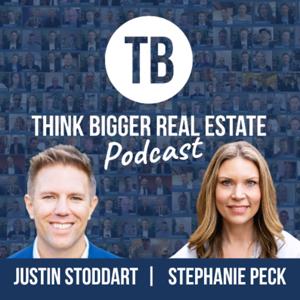


Hey, welcome back to the Think Bigger Real Estate Show. I am your host, Justin Stoddart. There's no doubt that real estate investing is a very commonly well known strategy by the wealthy on how they became wealthy. One of the ways that people do that and one of the methods through which they invest in real estate that becomes a great avenue is through self storage. And I'm fortunate today to have on a gentleman who is the Chief Investment Officer of the 25th largest Self Storage operator company in the US and I'm excited to have him on. Before I introduce him, let me just remind you the purpose of this show is, that you know, you are the sum average of the top five people that you spend the most time with. My goal is to help you spend time with people that are going to stretch your thinking, that are going to raise that sum average, and help you to have not just bigger thoughts, but bigger actions and a bigger life and a bigger impact. That's what I'm passionate about this. That's what this show is about. If you want a regular summary, giving show highlights and action steps go to thinkbigger.realestate and you can sign up for that. So now getting back to our guest, his name is Kris Benson. Again, he's the Chief Investment Officer for Reliant Investments, a fantastic company out of just north of Atlanta, Georgia. Kris, I want to thank you for coming on the show today.
I appreciate the opportunity. Justin, how are you?
I'm doing fantastic. I love this topic was interesting in college, I was in the entrepreneurial school, I was actually a construction management major, business minor and one of the classes that I took was an entrepreneurial class, and they invited in a gentleman who was stood about five feet five inches tall. But he, despite his small stature, he was extremely wealthy. He had built a fortune off self-storage. And I always thought to myself, what a fantastic way you have real estate investments with no plumbing, with no tenants, and yet reliable. Tell me a little bit about your passion for real estate investing and maybe how you came to a similar conclusion about this particular form of real estate investing.
Yeah, for sure be happy, I would say for my passion of real estate came from probably a journey not too dissimilar than a lot of people, a lot of your listeners have. For me, it was trying to find passive income, right? I have the Rich Dad, Poor Dad, probably many of the people listening had, I distinctly remember waking up in my late 20s and saying, I had a corporate job that I was making a great living at was wildly successful. And I remember waking up thinking, I don't think I can do yours. And for me, it was how was I going to replace my income and stop trading time for money and real estate was that journey for me. We did a number of different real estate asset classes Justin, we worked with residential real estate, that was challenging, it was going to be difficult for us to scale wanted. And so we ended up divesting of that portfolio, primarily duplexes, quads, that kind of thing. And we got into commercial multifamily 64 unit apartment complex. And that was really when the light bulb went off for us in regards to understanding the value of scale in the real estate world. And so, you know, how I got to storage was we were investing in some multifamily projects across the primarily as passive investors. So we're taking capital and I had a group that kind of grew along with me as I went through my real estate journey investors who were interested in having passive income streams as well. And so we were investing in some big primary markets across the United States. And one of the operators that we had invested with essentially say cap rates have pressed to a place where we're not comfortable, we're going to stop buying. And for me, that was a wake up call, where I said, Maybe I should be looking at other asset classes. And that's what got me to storage started doing homework, I'm a data guy. So I love to look at historical data to try to predict what I think's going to happen in the future. In storage has, if you want me to walk through it, I'd be happy to but I there were really three kind of pillars that I that I based mom was self storage. And that's really what got us in the game, or got me particularly in the game of storage,
Tell us you know, I am I love that kind of your progression to this point of like, I need to be a real estate investor that's going to create the ultimate life that I want. And then even your progression to, you know, through that to finding the right asset class that really fit you talk to us a little bit about what those three pillars are, you've got a super curious about why, why you chose the asset class that you did?
Sure. So the three things that I looked at, or that I wanted to understand is one the history, right. So understanding in in the history of the asset class, how is it performed, there's a data set that I can certainly send you to the link of the link to and your listeners or subscribers can have access to it's called the National Association of data. And it's a public data, and it's on the publicly traded rates across the United States. So you can look up a read on basically any asset class you want. So residential housing, if there's a residential housing, read Self Storage office, reads agriculture, it doesn't really matter. But it's a really nice way to compare apples to apples, how an asset classes done. So in the last 25 years storage is performed just under 17% a year, which is a pretty incredible number. I my world was in multifamily investing. And multifamily had just done just about under 13%, which is still but I was surprised to see that it they've been outperformed and really any of the major asset classes with more than a track record of 20 years storage had done better than so that was the big one for me the returns. First first first pillar and look at is I'm a big believer, the market cyclical. So everything that's going to happen has probably happened in the past. So I wanted to see what happened in the last recession was storage. So went back and looked at that same data set on 2000 789, in stores last less than 4% of the market. And just to give you some perspective, apartments, what percent of its value, and then you know, to give you a baseline on the equities market, the s&p 500 was down just over 22%. So you know, you're not losing money and the money you are losing is you've done better than most of the other, you know, established asset classes are wanting to write returns, and I got some downside protection and the hypothesis on that downside protection really is around in America, we see people don't get rid of stuff. No, you catch people on the way up when things are going well, they buy things and they keep them in storage. And when people downsize. If they have to downsize from house to an apartment, they don't get rid of their things out. And so I think it's a view of there's going to be a better day, and I'm going to need this stuff. And some of its just I think our American materialism so that demand for storage really is a little bit elastic. So those are my two pillars. And then the third one for me, which is you know why I'm sitting in Roswell, Georgia is you know, storage, less than 25. The asset class is owned by six publicly traded companies. So there's five reads, that everybody probably has seen signs for cube, smart, public storage extra, those are the big reads. And then the six company, it's not a read, but it's public, that's u haul and everything knows them from the moving trucks, you've also has a pretty substantial storage portfolio as well. So those six companies own about 25% of the market and the rest org. So there are companies like us regional operators, right, we have 53 properties across the eight states where the 25th largest, right, so between us and number one, boys, and ...
Justin Stoddart
Welcome back to The Think Bigger Real Estate Show. I'm your host, Justin Stoddart and I'm excited to bring you live from the from the Jersey Shore. Justin Bosak. Before we get into introducing today's guest, Mr. Bosak, we are going to I just want to reiterate the purpose of all of this, the reason why I get up every day, and I'm fired up to bring you the Think Bigger Real Estate Show. It's because when you start to think bigger, when you surround yourself with others, like today's guest, your mind starts to think differently, you start to think bigger. And as a result, your own possibilities start to expand, you start to see things that were right in front of you, but you didn't see them before. You start to hear things that were being spoken around you, but you didn't hear them before. The purpose of this show, again, is to expand that. Expand your mindset so that your possibilities in life start to get bigger and bigger. So as a reminder, if you go to the website, thinkbigger.realestate, you can get a weekly summary update of these shows with highlights, you're going to love that. So be sure and get signed up for that. about today's guest. Again, he is a gentleman who is growing very quickly, making a big impact along the Jersey Shore in New Jersey, his name is Justin Bosak. He owns REMAX Revolution, which is a 45 agent group. He runs the Oceans Six Group, which is the number two team in all of New Jersey, pretty fantastic for a young guy like you, Mr. Justin Bosak. He has a team of 14 that helps him create that kind of production, and several support staff as well. And today, we're going to talk a little bit about controlling your own economy. And how Justin has gone about doing that right now in the news. There's all kinds of talk about how we're overdue for a recession, how rates are low, but they won't stay low forever; how who knows what's going to happen with the trade wars. This message, the message that both Justin and I, Justin squared, both of us want to deliver to you today is that, the ultimate world, national local economy does not matter as much as your own economy. You have the biggest influence over your own economy, over everything else that's happening out there. And so we're going to dig into a little bit about how Justin has done, what he's done. So that we can all learn from that and have greater control over our own our own economy so that regardless of what happens, with rates, with China with whatever, that your economy will be strong. So Justin, I want to thank you for coming on the show today. excited to have you here and excited to share your energy and your passion for real estate with this audience.
Justin Bosak
Sure thing, brother. Thanks for having me.
Justin Stoddart
Yeah, my pleasure. Good to have you here. So let's talk a little bit about kind of your kind of rolling in real estate. How long have you been in the business? Justin?
Justin Bosak
Oh, years... its 2019. So that's 16 years now.
Justin Stoddart
Perfect. 16 years? You look pretty young. I would imagine you're in your mid 30s. Is that accurate?
Justin Bosak
38
Justin Stoddart
So 38. Okay, very good. I was born just a couple years after you just celebrated my big four oh, here a couple weeks ago. So it's pretty awesome up here, you're gonna love it even more than the 30s. So you obviously expert in real estate have been long enough? At what point did you start your own brokerage.
Justin Bosak
We just started the brokerage last year. So you know, kind of grew from, you know, developing a team and then you know, having our own innovative ideas, and we kind of blocked on some things that we wanted to do with the team. So it just was a natural fit that just grow and just era? Well, you know, if you're not gonna allow us to grow within a brokerage and do the things that we need to do to become number one, you know, we're going to have to take it to the next level and start our own brokerage.
Justin Stoddart
Interesting. So you realize your ambitions were bigger than the arena you were playing in? And you realize, like, I can't slow down for where I'm at. I'm gonna have to go create my own arena, correct?
Justin Bosak
Yeah, I mean, you know, I came through, you know, '06, '07, '08, you know, so you saw the high highs, the highs and the lowest lows. So, you know, my thought back then was "Listen, nobody ever gonna take away from me," you know, when I know something's right, and I gotta do something, I'm still work hard and keep at it. And you can let other people limit you know, your innovation and your growth. It's very important to be able to do what you feel is right for you and your business. So, don't ever let something you know, somebody stop you, or tell you what you know is right.
Justin Stoddart
Interesting, we oftentimes create glass ceilings, one, right is the arena that we play in. Secondly, I think is the arena that we think within right is oftentimes we think, Oh, I can't do that I don't have I'm not as talented as Justin Bosak, right? Oh, I don't have the same skills. I haven't been in the industry, as long as he has. I'm not in New Jersey, right. I'm in a much smaller market. There's all kinds of things that we say and we play these continual tapesthat we run through our head every day, that create our own reality. And what I hear you saying is that, once you start to change those tapes, you start to think a little bit bigger, you start to realize that there's more possibilities, and that you kind of get restless and you realize, like, I have to, I have to do something more, I can't know what I know, and feel what I feel, and stay doing what I'm doing.
Unknown Speaker
Yeah, for sure. I mean, it really just comes down to just taking notice of what's happening, you know. In your market, and then maybe having the understanding that, hey, in four or five years, you know, the top players may not be the top players, you know, the top companies may not be the top companies, the way business is done, it's going to change, and it's going to happen at such a fast rate. Regardless of what happens in the market, I think the market, you know, a crash or some kind of recession is only going to accelerate it that much further. I think there's some things that are here in the real estate industry, that are going to remain, you know, I saw after the last recession, some things went away, took a while for them to come back. But with technology and innovation, and you got all these big players all this big money in real estate, you know, there's so much attention on this business, and everybody's trying to squeeze every dollar they can out of us as Realtors, you know. So we have to really proactively take our business look at it as a whole and say, you know, how can I protect it? You know, if commissions are cut and the new norm is a one and a half percent on the list side, or one and a half percent on the sales side? What are you going to do about it? Is your life set off financially, you know, that you could weather that storm, you know, and that's the thing is preparing for the future. And I think real estate is going to go through some major changes, I really do.
Justin Stoddart
Ya know, it's interesting to realize what happened during the recession to our economy as a whole, right is that major corporations were forced to do more with less and so they brought in a lot of automation, obviously, they cut their workforce pretty significantly. And everyone thought that as the economy recovered, that they would hire again, and a lot of companies did not because they replaced their workforce to some degree with automation, with computers. And I think because our society started to turn that way, and technology had caught ...
Hey welcome back to the think bigger real estate show. I am your host and I am fired up today about who I have with me here in studio to teach you all about Instagram. She's dynamic and has done some amazing things in the real estate industry and the body building industry. Do me a favor show us your guns real quick. Check this out. Anyway, so she has built a following both for her business as well as for her bodybuilding career. And so I'll get into introducing her here in just a second but I just want to remind you at thinkbigger.realestate you can sign up to get notified every time there's not only a new episode, but also at the end of the week, I send out a summary of all the key highlights and action steps. So be sure to go to thinkbigger.realestate to get signed up for that so you don't miss out on amazing stuff like we have today...Here...Miss Stacey Dearth. So, Stacy first and foremost, thank you for being on the show today.
Thank you so much.
I love Stacy. She's fantastic. We get the great privilege of working together here Old Republic Title and let me tell you a little bit about her: a former top real estate agent in Arizona, where she actually led a team of 13 agents, right?
Yeah, at one point we were 13 deep.
Goodness. So,Top Producing agent. In addition to that, with all of that going on, she's also a mom of two beautiful children. And she has her IFBB Pro card. If you don't know what that means it's the International Federation of Body Builders and she's a professional, actually training to be back on stage here pretty soon. Hence, I made her do the unsolicited or the solicited, I should say, bicep flex there. So you can actually follow her on Instagram at @thatsassytitlegirl for her title and escrow business and then also @themusclemommy. You'll see more about her bodybuilding career, so you'll be able to see that she knows what she's doing. She's a pro in many areas of life. And we're excited today to bring you tips and tricks that you need to be knowing all about Instagram.
So I'll just kind of preface it by saying this that more and more eyeballs are on Instagram, less and less eyeballs are on email, if you as a real estate agent are counting on the fact that people are reading your newsletter, either receiving it in the mail, or receiving it in their inbox, and that they're consuming it entirely. I think you're missing out. Would you agree?
I would absolutely agree.
That there is more and more attention being given to the social mediums in particular Instagram. And it's a place where you need to be not only do you need to be there, present, but you need to be there correctly. Let's talk about what are what is one of the biggest maybe pet peeves or mistakes that you see real estate agents making when it comes to their Instagram account.
You know, I think we as real estate agents, and I can say we, since I spent 13 years doing that, I think that we are so pushing to market the properties that we have. And so you know, it's like get the property, get the property out. And so we're trying to sell we're trying to sell our properties on Instagram and social media and really I think that what we should all be focusing on is making connections on Instagram. So, you know, instead of instead of putting out, you know, this is the latest and greatest property, which is great, and we need to do that. We also need to be making connections, we need to be letting people in to the real us who we really are because people want to buy from people that they know and they trust them they like, and if they don't know us, trust us like us, then they're not going to buy anything from us, right.
I love it. You know, I see people I've actually gone to Realtor, not news feeds, it's their tiles or their profile. Is this what you call it?
And yeah, so they're their profile. So the grid with the grid there. Yep.
And all you see is houses, houses, houses, houses, and I think maybe real estate agents feel like that they have a following and Instagram and so they're good at like you said sell houses through it. And that's going to end even their clients like great our houseThis feature there, but that house is one of so many. And there's no human connection. I know when I see that I'm not drawn to want to stare at it, right? I'm not drawn to want to, like scroll through it for very long. Whereas when there's people and there's, there's kind of unique circumstances in settings that gets interesting, right?
Absolutely. I think, you know, you absolutely still need to put your listings out there. I used to like to put my listings kind of on my story and highlight them. Anything that was jaw dropping would go in my in my feed as a permanent tile there but, you know, I think that more importantly,I've sold houses directly from Instagram. I posted a house one time and someone commented, Oh, do you have anything else in that area? Yes, as a matter of fact, you know, I can absolutely didn't know the person hasNever met the person I we connected via direct message, got him hooked up with the lender got him pre qualified sold him a house. Did I sell that house on Instagram to that person? No, I didn't. But what happened was I made a connection with him. He had been following me. He had been following along he felt that he could trust me by what I had put out there and therefore he reached out. I sold him a house. I didn't pay for that marketing was free marketing.
Yeah, you know, but the key was that your entire profile wasn't filled with houses, right? It was it was occasionally in there. Absolutely. But you were more selling the fact of who you are as a person. The and I think you said it best when you said the miss the biggest mistake that real estate agents make when it comes to Instagram is that they're trying to sell as opposed to connect correct you connect with people then you can you can help them which includes a sale right at times. Absolutely, without the connection, the people aren't drawn to you. And you'll have their attention for that long as opposed to an extended period of time, where you can actually then serve them and help them which is selling. Right. I love it. So, second tip, maybe, that you could give us. And it's something that I've seen a weakness in my Instagram game. Right, right. We just pointed this out, talk to us a little bit about engagement, why that's so important.
You know, I think so many of us were so busy, and we carve out, you know, 30 minutes of time to do our Instagram. But what's happening is we're posting and we're leaving, and we're not engaging with other people. And so many times, people will, you know, reach out and it's happened to me before I've made a comment on someone's page or about their story and they don't respond back. That doesn't feel very good, right. When you respond back to people, when you engage with them, then they feel like they're making a connection. Once again, we're back to that connection again. And now you have this friendship or whatever it is, but you need to engage with people you need to respond to them. You need to if they've written you a question or they've written a response, respond to them, engage with their posts say that's amazing. That's, you know, I saw a post yesterday that was a Portland realtor had put out a little tidbit about what you could have in the Portland city limits, you know, you can have three chickens. If you don't like chickens, you can have dubs or pigeons, or pygmy goats, or whatever it is. And I was like, Yes, I want chickens. And so I responded to that, um, you know, and made a comment on their page, but just trying to engage with them now, I would expect that they respond back, right, we'll see. Right? Not yet, but we'll see.
But, um, but yeah, that's, you know, those are things that...
I promise, today's announcement is going to have a massive impact upon me, upon my family and upon my ability to serve all of you. As you know, I'm a think bigger kind of guy. I've actually been entertaining texts and direct messages since yesterday "Hey, man, what's going on? What's going on?" So anyway, for those that have been trying to guess, you probably will not have guessed. I'm pretty confident of that. So as I prepared my thoughts today, typically I don't write things out, but I felt this was important enough that I did. So I have to apologize if it looks like I'm reading, because I am a little bit. The specifics of today's announcement may not directly or indirectly impact you. However, I would invite you to listen very carefully. Because I promise you that the themes and principles that I share today will absolutely affect you. And similarly have the potential to have a massive impact upon you upon your family and upon you your ability to serve other people as well.
So a little background before I make today's announcement, as a kid growing up, I played football in middle school, high school, and actually a year of college. In high school was fortunate to play on some really good teams. In fact, the the head coach of the Cal Bears was our quarterback. He was an All-American quarterback in high school, and we were fortunate to win a couple of state championships. Football was a big part of my childhood. I loved playing.
I'll say that at some point, however, when I decided to hang up the cleats, when I decided I wasn't going to make money on football, I realized that I still had a passion for the game. I would get up each Saturday and watch College Gameday. For those that are college football fans, you know what I'm talking about. For those that are not bear with me. But College Gameday, replaced my fascination with playing and I began to become an amazing professional spectator.
I would get previews and predictions of that day's games, I had no idea until I was actually preparing this announcement that that this show, College Gameday is 180 minutes. Think about that, 180 minutes of previews, not of games, but of previews--pretty phenomenal. So not to mention, as soon as that was over, then these games started. And there's big game after big game after big game. And then in the evening, of course, you have to watch all of the highlights of all of the big games and big games and big games. Again, that's quite a commitment. You college football fans what I'm talking about.
You know, of course, being married and having kids lessens that commitment, yet even with this added responsibility, we were off doing other things with my family family, I oftentimes felt myself longing to be back in front of the big game. And it's that's kind of sad to say, right? Because, again, I've got, you know, pretty good family and a pretty good life.
Well rewind to just this past week and I'm actually watching, and this is really what led up to this experience, is on Thursday night, my alma mater played the in state rival, and they got hammered. So I dedicated four hours to that. Now, keep in mind, we were preparing to go on a trip over Labor Day weekend and my wife's asking me to help pack and I'm not being very helpful. In fact, I resent a little bit of her continual requests to go do this, go do that, when the big game is on, right, another big game.
That night, she went and I think she probably put the kids to bed herself, she actually went to the grocery store, she was working the next day, 13 hours as a nurse and she said, here's the list of stuff I need you to pack in the car before you come. I didn't pay very close attention. Needless to say, we got to our destination in Central Oregon and I had mispacked some things. Now she wasn't thrilled about that.
Now move to Saturday night. This is this is Saturday night. We're spending our last weekend of the summer in Central Oregon. And I I had designed Saturday's activities so that we could be back in front of the game by 4:30pm, which is when the team that I grew up loving and watching and having season tickets to, the Oregon Ducks, were playing the Auburn Tigers. And so again, I've kind of planned our day around being back in front of that. No judgment, right if you did the same thing, but keep in mind that I'm mildly helpful with dinner, like pretending to kind of cut vegetables and stuff and my eyes are really on the game. As the game goes on, and any of you that watched the game realized that there were some pretty tense moments. It came down to the end. And with about 20 seconds left, my wife says, "Hey, I need some help." The baby is melting down and I was like, hold on, there's 20 seconds left. And she said, "It's 20 football seconds. There's time. I need your help."
At one point, she actually didn't see this, which is probably good, "I actually glared at her. I glared," Are you kidding me? Needless to say, my beloved Ducks lost and I felt myself get a pit in my stomach. Not only sick about the fact that I dedicated another four hours, had neglected my wife and family during that time, but additionally, I had left with another loss.
Now some of you might be saying, "Well you should just choose better football teams, right?" Maybe BYU and Oregon aren't the teams. I don't think that's the problem. Let me explain. So you think about that eight hours and $50, let's call it for a YouTube TV subscription. And what was I left with? Being a poor dad being a poor husband and eight hours gone. Eight hours!
So this is the announcement. Now whether or not this directly applies to you. It will apply to you so stay with me. But I've consulted with my family and after years and years of dedicated commitment I'm announcing my retirement, announcing my retirement from being an avid football spectator. My fanhood is retiring. Many are going to say "You're so young, you have so many years ahead of you, like Andrew Luck, how could you possibly retire? Your career as an avid football fan is so bright, there's literally decades and decades still in you know. Others are going to say, you know, you're quitting, you know, you're giving up on us."
I've consulted with my family and after much deliberation, it's time. It's time to give it up. So many of you may think this is a joke, right? A little bit funny, but pay close attention to what I'm going to say after this because keep in mind that this has nothing to do with with college football, like very little to do with college football and everything to do with you no longer being a spectator of someone else's life. But you being an active, active fan in your own life.
Now you could take college football and you could insert in Netflix, you could insert in video games, you could insert in The Bachelor, Instagram, Facebook, you name it, right? Doesn't matter what it is. But all of us spend too much time being a spectator of someone else's life. As opposed to being a player in our own life.
No offense to Justin Herbert. Right. I've been a fan of his for the past three years excited for him to hopefully win the Heisman Trophy. But I think I've been more interested in Justin Herbert, the star quarterback of the Oregon Ducks winning, then having this Justin win, right?
When opportunity abounds around me. That's a problem. When I'm saying that I'm not necessarily where I want to be physically, professionally, financially, maybe some of you can relate to this, right? There are things in our life where the only thing keeping me from being that is that I don't have enough time. Think about that, you don't have enough time. I don't have enough time to be where I want to be in all these other areas, yet I dedicate how many hours to observing and being a spectator of someone else's life?! Hopefully this is res...
Justin Stoddart
Welcome back to the Think Bigger Real Estate Show. I'm your host Justin Stoddart and I'm very excited about this episode today, because I think it solves a big problem not only for real estate agents, but for your customers and for America as a whole. There's no doubt that debt is a growing epidemic in our country, and that far too many people in general live off debt. And today we're going to be talking about how you as a real estate agent can start to get more control over your personal finances, so that you can act more as an advisor to your clients. Again, the goal been helping you be an expert and be able to command being a well paid professional. So before we get into that, before I introduce today's guests, I'm going to just reiterate the purpose of this show, which is to help you think bigger because when you think bigger, your actions start to follow suit, and your opportunities and life. Again, follow that and my aim and passion is to help you have a life of great impact, which all require you to start thinking bigger.So, let me begin by introducing a good friend of mine. His name is Rod Cummings, I've known Rod for years. He's an entrepreneur, a professional, someone who I greatly admire and respect that he reached out to me to said, "Hey, Justin, I have a solution for real estate agents that they need to know about." And so I said, hey, let's bring him on the show. I agree with you that that is something that would be a benefit to them for their own life, as well as for helping you be a real differentiator in the marketplace. So I want to introduce Rod Cummings. Thanks for coming on the show today, my friend.
Rod Cummings
Oh, you bet. Thank you for having me on today, Justin. And it's awesome. I, the show that you created, I've watched some of your previous episodes and the impact you're bringing to the real estate marketplace is incredible. So thank you very much. Appreciate it.
Justin Stoddart
Right. So let's get into this topic. Obviously, you kind of you brought it to my attention. Not that I wasn't aware of the problem, but but kind of a solution. Talk a little bit about what we're going to cover today. And who you've brought along with you to help kind of have some additional experts helping us get kind of to the bottom of one way to go about doing this?
Rod Cummings
Well, absolutely. Well, about a year or so ago, I got involved with the two gentlemen that are on the screen here. They are currently associate partners with a company called Symmetry Financial Group and they're also advisory board members and they're very much involved with the launch of a new initiative within Symmetry called Debt Free Life. And when I was exposed to the program, back in February, I got extremely excited about it. And over the course of the last several months, they have been involved in the implementation of it. And when I learned about your podcast, I thought and what's happening the Portland market with the explosion in the real estate, and of course, the associated debt that goes along with it. I thought, Wow, what a better way than to jump on the show with you and explode expose the Portland Realtors and the Portland market to this opportunity and see where it goes.
Justin Stoddart
You know, I appreciate rob you know, it's an interesting from my vantage pointin that I get the chance to work with a lot of different real estate agents. And I think from the outset, people think that if you're a real estate agent that you're rich, right, maybe you drive a nice vehicle, maybe you, you know, people see your signs and stuff around, they see you selling homes. And there's just an assumed this assumption that real estate agents, you know, don't have any concern with money. And I know firsthand because you know, I deal with some, even some great agents who, who struggle with this, and I think everybody struggles with what is the best option for your money. Debt can be a real killer. And so I really appreciate you bringing this to my attention.
Rod Cummings
You bet. You bet. Well, I'll just let you know that both Matt and Brad will be involved the rollout of this new initiative, Debt Free Life, but they've actually had some examples of working with clients that have already put this into practice. And so I can't wait for you to hear what they've been able to do in this short period of time since this initiative launched and the impact that they're having both with in their own businesses and helping other agents like me, you know, able to bring this to the marketplace around the United States. So I'm excited to be to have them on the show today.
Justin Stoddart
Awesome. Well, they look a little bit of like, I don't I don't think that they're related. Haha... I just want everyone to know that's actually not a mirror image, these are actually two separate human beings.
Rod Cummings
I was wondering. Yeah, so we've got Matt Smith and his brother Brad Smith, as you can tell identical twins.
Justin Stoddart
I love it. I love it. Very good. Welcome, gentlemen. Thanks for coming on the show today.
Matt & Brad Smith
Appreciate it, Justin.
Justin Stoddart
Yeah, so let's let's, you know, let's kind of dive into this topic here. You guys probably have some specific stats on on debt. And again, I'm not just picking on real estate agents. This is you know, nationwide. Let's talk a little bit about this debt epidemic that really plagues our our country.
Matt & Brad Smith
Yeah, is an epidemic. I know that firsthand. Personally, I closed the business end of 2012 and I left that business with a lot of debt. And I know firsthand that it affects your stress level, your anxiety, your sleep, it affected my relationships with my family and my spouse, and you know, virtually every aspect of life. And so, you know, we're very passionate about helping people get out of debt, educating people. And we have very specific tools that help people accelerate their debt without spending anything more than they're currently spending. And I want I want to ask any listeners this question, and I want you to think about if you were to ask your clients this question, if I could show you a way to pay off all of your debt in less than your mortgage without spending anything more spend, is that something you'd be interested in seeing? I haven't yet met a person say no to that. And realtors are in a unique position that they're every client that they have versus unless they're paying cash is getting ready to go on debt and it is a thought it is a concern for a lot of people. And and other realtors are always looking for ways to add additional value to their clients to position themselves and differentiate themselves in the marketplace.So that's what we do when we work with realtors and mortgage brokers, with their clients and with themselves to help them pay off debt in an affordable way. Interesting.
Justin Stoddart
I love the topic. Let's Let's ask Matt, would you add anything to that? That that you would say that would kind of open people's eyes is maybe why this is such an important topic?
Matt & Brad Smith
Well, yeah. I'm getting some feedback. I don't know if you guys you're hearing that but maybe, sorry to pick on you. But I guess on your end, maybe you want to make sure everyone can hear what we're talking about. Is that better? A little bit. Okay, I've got my speakers as low as I can still be able to hear you guys.
Justin Stoddart
So, we'll take it, we'll take it. Yeah, I mean, we're in the insurance and finance, business. So we're always looking for ways to add additional value solve additional problems. Similar to you guys. I love I love how you intro the ...
Justin Stoddart
Welcome back to the Think Bigger Real Estate Show. I'm your host Justin Stoddart and I'm very excited about today's episode in which I have with me serial entrepreneur, and a financial professional that is actually host of the podcast Grandma's Wealth Wisdom and we're going to be talking about as a real estate agent, how you can show up more as an advisor than just as a customer service representative or salesperson. So, before I introduce today's guest, officially, let me just remind you that you can get show notes and highlights action steps by going to the website, think bigger real estate, sign up for our weekly update, as well as I've got a treat there for you when it comes to actually becoming more of an advisor. So today's topic fits in perfectly with that. And I want to thank Amanda Neely out of Chicago, Illinois, all the way from Chicago, coming on to the bigger real estate show. Amanda, thank you for coming on today.
Amanda Neely
Thank you for having me, Justin. I'm excited to be here.
Justin Stoddart
Yes. From one possible podcaster to another, it's a It's a pleasure to have you on so very cool. Now I know you are a business owner, you've started everything from coffee shops, to financial advisement businesses. And you're young, like I'm assuming you're young. You just got great cream or something. But I love the ambition. You know, I think sometimes people believe that they need to be in there, like in the late 50s before they can start getting after it. And you're kind of teaching the world otherwise, maybe kind of the millennial generation, I'm assuming.
Amanda Neely
Yep. Yep. So I hear a happy birthday is in order for you. Happy birthday? Yes. Then I'm an August baby. Myself, too. I just turned 35. So just a little bit behind you.
Justin Stoddart
Yeah, thank you for that. And Happy birthday.
Amanda Neely
Thank you.
Justin Stoddart
Now you've had your birthday, or you're going to have it this month?
Amanda Neely
I had it. I had it.
Justin Stoddart
I hope it was wonderful. Mine certainly was had a lot of people make me feel real special. Good. Very good. So let's talk a little bit about your podcast, grandma's wealth, wisdom, just tell us kind of in a nutshell. What's that all about? What would people expect to hear if they want to find your show?
Amanda Neely
Yeah, so a lot of times when people are thinking about their money, they are looking for what's the hottest, latest, most awesome product out there. But we like to return back to time tested time honored strategies. And in particular, the greatest generation, you know, they came of age during the great recession or depression, you know, in the 30s and 40s, early 40s. And we found have found that there's a lot to learn from, how they structure their financial lives and this post 2008 kind of life that we live in now. And so there's a lot more that's transferable than I think like what our parents would have used in the 80s and 90s.
Justin Stoddart
It is really interesting. That with the internet, right with podcasting, like there's a bajillion ideas, yet there are tried and true principles that when implemented, and, and utilize over time, they, they they have proven results, right. And there's a bunch of newer ideas that maybe don't have that same track record. So I love that you're kind of a voice for the millennial generation. On to these tried and true principles. Right? These these got a North Stars of financial wealth. Yeah,
Amanda Neely
yeah. And real estate is a big component within their because hat owning your own property, whether it's something you live in or that you rent to others, is a great way to create wealth that's worked for thousands and thousands of years.
Justin Stoddart
Great point, you know, and I love hearing you say that I think sometimes financial professionals are seen as, you know, antagonists to owning real estate, right, because it takes away their investment opportunity. And what I hear you and your counterpart, Mark Willis, who's been on the show, as well mentioned is that real estate is actually a very critical component of every buddies, wealth portfolio who is wealthy? Yeah,
Amanda Neely
yep, absolutely.
Justin Stoddart
And good thing, you're speaking to an audience of real estate professionals today. So you're in good hands with a mentality and philosophy like that.
Amanda Neely
Yeah, yeah. And, you know, grandma would have different views of how to use your whole in terms of, you know, pay off your mortgage as quickly as you can, where you might say, use that as leverage more or something like that. But the US the home as a source of where life happens, and where life is stewarded. And push forward is a great way to think about what a home can mean, not just in the wealth that it can create, but in the value that it brings to the lives of the people that are purchasing that home or, and are living in it. And that I think ties in really well with what we're going to kind of talk about today.
Justin Stoddart
You know, I think I love that you said that, because I think, you know, the life of a real estate agent, I get the great privilege of being around them all day long. And it can be a bit of a grind at times, right. And I think when people can step back and say, wait a minute, I'm helping people find, like, their favorite place on Earth, they're safe place, the place where they have their, you know, their, you know, oftentimes some of their greatest moments. And I, you know, a believer that, you know, the greatest work that we do oftentimes is within the walls of our own home. And that's not my own quote, I borrowed that one from a mentor but, but I think that when real estate agents start to recognize just how powerful their role in the world is, maybe it helps them rise above kind of that, you know, that grind. Let's, let's let's talk a little bit about because one of the things that you help people with when it comes to their financial life is helping them start with the end in mind, right. And I want agents, I invite agents to listen to this through a couple different ears, right, this one over here is going to listen to it as for your own personal finances, the other is going to be listened to it as the questions that you can adopt that Amanda is going to share with us today that you can begin asking your clients again, in order to rise above industry disruption, in order to rise above tech platforms that are discount brokers to rise above I buyers, you can't just have a flashier listing presentation, you actually have to provide more value have to provide more leadership. And so asking questions that get people to move and be influenced to make more and better decisions is critical. So I want you to teach us, Amanda, some of the questions that you have. We're going to keep today's show a little bit brief. But I'd like to have you teach us a little bit about what are some of the questions that agents should be asking themselves that they then could adopt to begin asking some of their clients to really, again, rise above kind of the commodities level of where real estate agents value proposition has been?
Amanda Neely
Yeah. So it's really pretty simple. And yeah, I like to go on a timeline kind of fashion, where I start with, where are you at right now? Like, what are some of the things that are happening in your life that could have a major impact on your financial future? Or like, what is the home you're looking for right now, in the case of a real estate agent, you know, you get the, the, you know, this many bedrooms, this many bathrooms, whatever it might be. And then but then also like sharing, like, well...
Welcome back to The Think Bigger Real Estate Show. I'm your host, Justin Stoddart. I'm very excited about today, you as real estate agents work very hard for your money, right? Most of you, some of you don't. Those that are high producers, those that love this show are very hard working. And wouldn't it be nice if you could keep more of the money you earn number one? And number two, wouldn't it be nice if you had a strategy to be able to differentiate yourself from the typical agent, differentiate yourself from technology disruptors, and give people a reason beyond just liking you as a human being, give them a real value proposition that makes them want to come to you because your commission becomes irrelevant, because you're that valuable. Today's topic is going to be all about that I have with me a true expert, national expert. His name is Toby Mathis. And let me get in his bio here in just a sec. But let me give everybody a reminder that we do a lot of content here on the think bigger real estate show, as you know, and I would encourage you if you've not yet signed up to get our weekly updates that go through and give you show notes and then also give you highlights and action steps. Go sign up for that at thinkbigger.realestate. Alright back to our guest today, Toby. Again, thank you for being on the show today. I'm super excited to introduce you. So let me to start by saying thank you for being here.
Hey, thanks for having me.
Yeah, this is good stuff, man. So for those that don't know, Toby, he is a teacher. First and foremost, he said, that's the thing that I want people to know, first and foremost about me as a he's a teacher. He's a writer. He's written over 1000 articles, a number of books. He's a tax lawyer out of Nevada. He and his firm serve on an ongoing basis, over 18,000 clients. And at any given time, they're servicing upwards of 50,000 clients, because of their tax strategies. They understand tax law. They understand the importance of real estate when it comes to tax law. And these guys have some stuff that are going to absolutely blow your mind today, Toby. Again, thank you for being on the show. I'm excited to share your knowledge at least not sure all of it because that would take forever but at least introduce you to the audience and let people know how they can get in contact with you. So appreciate being here.
Hey, it's again, it's fun to finally get to join him. Usually people don't bring a lawyer into the mix voluntarily. Usually it's got to be a beaten over the head. But if you learn how to use them appropriately, they can be quite an asset.
I love it. So you're in let's let's kind of get something out of the way here really quickly. This TB stands for think bigger. My goal is to help people think bigger and when they do their life gets better. What is Toby, you're obviously a big thinker, I mean to have the kind of impact that you're having, and servicing lot of people that you're servicing and something I didn't mention, you've got over 150 properties nationwide. So right you're in this real estate game, not just from the outside, but from the inside. What what what is the reason why you do all of that? I mean, what's behind you? is there is there family some sort of like big motivation that's like, you know, I have a driving force to make a big difference in the world because I want to what does that look like for you? Yeah, for me,
It's it all comes down to creating a legacy for my family. So when you first get involved in something, I always look and say what kind of what kind of impact in the world can I have? So I'm very much into the charities. From a tax lawyer standpoint, I can tell you there's nothing better than tax free, where you give, you can literally just give you one example, you could literally give a rental property that you've depreciated fully to a charity and write it off all over again. So for some of the high net worth people out there, they're going, what Yep, I can I can take 100% fair market value deduction tomorrow if I want to. So once you start realizing that there's laws built around that it gets, it gets to be a lot of fun. And so for me, my driving force is a you shouldn't be teaching something that you don't do. I believe that there's nuances to doing things. So if you're in real estate, for example, you better be talking to advisors that actually are in real estate, that you can't learn it out of a book he learned by doing. So I'm a big believer that I better be doing what my clients are doing, because there's what you can do, and there's what you should do. And I could I could get your taxes down to zero. I know that because I'm a tax lawyer, like there's so many different loopholes or incentives out there. But if I did, did I just hose your business? Like, how are you going to get alone? How are you going to grow? And so there's always this stuff where people will go to the accountant to the go to the lawyer, and they're teaching it from a philosophical idea or out of a book, but they're not thinking about real world impact. And as a result, I just say there's so much bad information out there that I really enjoy correcting it and I enjoy watching people just get huge results with very little effort. That's kind of that's rewarding. Awesome. So that's what that's what's driving these think bigger actions that you have. And this is the legacy and creating something great for your family as well as you seeing it. Kind of a big difference. It makes the lives of people I love that man. Let's let's look
Let's kind of go here. What's some of the biggest? And you've kind of already hinted at some of these. But what are some of the ways that a real estate agent not even including their own, like investment portfolio, right, that's a whole separate topic that maybe we'll go on in a different show. Maybe we'll have time today. We'll see. But let's say that I'm a real estate agent and I'm earning income. What are some of the biggest mistakes real estate agents make, then would make an immediate difference in the amount of taxes that they pay on their income?
Let's just increase your your take home pay by 10% on an average agent, so let's just say that the average agent is somewhere between 50 and $70,000 a year. The what we see is if you implement one small strategy, which is the tax designation for the at that actual business, you'll increase your take home pay by about 10%. So if you just want to increase your take home pay by a few thousand bucks, the easiest thing to do is make sure you're not operating on your schedule. See on a 1040 70% of the agents out there operate a silver that's what it's called. Because the accountants say, Oh, it's easy. It's one of the worst things you can do if I could, I'm going to approach this from a couple different angles, Justin. Number one.From an audit standpoint, if you are a sole proprietor making, let's say it's $100,000, but I'll just use that throughout hundred grand, you are 1200 percent more likely to be audited than your corporate counterpart. You are also going to lose that audit. And this is from the night 2018 IRS data book that they just published out a couple months ago. Like they'll tell you who they who they audit and how often they when they went about 94% of the time, the IRS, so you're 1200 percent more likely to be audited, you're going to lose 94% of the time. So why would an accountant put you in that situation plus, you're paying about $10,000 a year more in taxes as a sole proprietor and that's because 100% of your product are subject to something called Old Age death and survivors and Medicare commonly known as social security, you're getting hit on 100%. Whereas if you just designated yourself an escort, you would be able to eliminate about 70% of the money from that, that you make from that designation. You could literally buy a simple piece of ...
Hey, welcome back to the Think Bigger Real Estate Show. I'm your host Justin Stoddart, very excited about this topic that seems to be like a unicorn work life balance. Is there such a thing in real estate? Can you actually have it all? I have with me today, Beth Kellan, she's a Top Producing agent has been for years. And we're going to get into this as soon at a point in her life, that her highest producing year, she had very strict parameters, five miles of inner house and had to be done by 5:30pm and had a GCI of $620,000. That year, we're going to talk about how she did that. Before we get into that, I want to thank you again, for tuning into this show. And let you know that if you go to think bigger got real estate, on that website, you can sign up to get in your inbox every week. The highlights of this week shows and specific action steps. So be sure to sign up for that. Lot of people reaching out to me very grateful that they because they can't catch every episode. But this really gives them the cliff notes, the ability to apply things in their life, which is how you become a big thinker. So, Beth, let's get into this. Let me kind of begin by maybe introducing you, Beth Carolyn, again, Top Producing Windermere agent here out of the Portland Oregon market. You are licensed since 2001. And really caught hold of ninja selling, which was highlighted a few episodes ago in 2007. You're now a ninja certified mastery coach. I'm excited and grateful to have you on the show today. Thanks for being here.
Absolutely. Thanks for having me. It's such an honor.
Well, it's an honor for all of us to hear how you have done what you've done, and how you're now again, of moving beyond success to significance, right? Where you're looking to pour how to find success through other people, by being a coach by helping other people to do what you did. So let me just kind of restate that in case people missed this, which is you were at a point in your life where you had your little babies at home. And you decided like I've got to be done by 530? Because why? Tell me why was that? Yeah.
Yeah, 530 was when the daycare shuts down. My for the first several years of our kiddos lives, my husband worked nights. So he and I were like ships in the night, he would keep the kiddos during the days except for the few days that he had to work. And then he would go on to work at four. So I had to be the one to pick them up at 530 when daycare was over. So I can have a choice, I had to shut my day down at five in order to get to them. I don't know if you guys if you know this, but they charge you about $1 $5 a minute beyond 530. So you can get costly if you're not on time. Because I didn't realize I had four nights a week I had to pick up the kiddos and have them with me. And then the other three nights I wanted to see my husband on those nights that he was home.
Yeah. powerful stuff. So you just simply drew a line in the sand and said, Okay, my day ends at this time. Therefore, I must get a lot done before 5pm. Beth is now you've coached people that the hours that they dedicate to real estate, let's say it's eight to five, right? If If someone were to really get in and get after it, do you believe that that's enough time to create a successful real estate business if you're highly focused and have a solid plan?
Absolutely. I think that that the focus pieces but absolutely the key. We go about our days, and we do so much throughout the day, and how much of it is actually productive work?
Yeah, I think we all fall victim to that and right, or choose that right on victims the right word for the bigger real estate show. But but but we all make choices, right? That dilute our productivity that dilute our effectiveness, and keep us from really being on task, those things that matter the most. Um, let's talk a little bit about this case. So the timeframe is clear. You've got to be done by 5pm. Now you made the decision also to work within a very specific geographical ring from your home. Was it five miles? Is that what I remember? You told me
it was actually closer to 10. And I was a little bit too I would be choosier if it was closer. And of course, they had lots of help and would refer out if it was a little beyond the location of where I needed to be my kiddos where I live in southwest Portland, my kiddos were in daycare and triggered. So if I'm showing a property out in outer northeast, at 430, it was not happening.
Yeah. So you then I mean, how did you You didn't turn business down, you just created strong referral partners in the ne se kind of any area that was outside of that ring? To where you said, You know, I don't service that area. And probably it's it, I would imagine some degree, it's a cert, it was a service to your clients, to find people that really specialize in that area.
Absolutely. And it's still always a work in progress. And something that I strive to continue to work on is making those relationships feel seamless. And it is challenging, but when you don't have any other choice and your kiddos become the priority, you it somehow makes it happen. And I looked back on that year and I thought wow, I really did not work evenings this whole
last year, it was pretty amazing.
It's it's truly phenomenal. Interesting to have you say no to stuff, right, I think know, is one of the most powerful words that anybody that's highly successful. gets really comfortable saying is like, No, I can't do that. No, that's not a good customer for me. No, I don't work well there. If I because if you say yes to it, then you're saying no to picking up your kids. Right? Yes. You know, we tend to be those of us that are in sales tend to be very kind of Yes. driven. Yes. Customer Service. Right. But I think one of the more powerful things is to realize that yes, the customer's always right, yes, we service the customer at a really high level. But no, not everybody needs to be our customer know, like there's a there's a certain standard that people have to have to have to fit into in order to to meet our customer criteria. Would you say benefit that by you making that choice to say I'm going to say no, to those, you know, far northeast properties from where you are? Did you start to fill that that void with properties that were closer in? that were actually closer to where you were at? Yeah, good
question. It's interesting how it all kind of works out my principal broker, john Gregory always said that, you know, when you stick your hand in a candy jar, you go in the jar, and in order to pull out some candy, you have to let go of a few to get your hand out of the jar. Right. So it became that quality over quantity. And I, I also learned that if I was honest about who I am, and let my folks know that look, I'd be happy to show you that house, you know, at 430. But I have to be on the road by five o'clock to get to my kiddos. They were the people that I really wanted to be working with. were super respectful about that. And I went through this whole period where I tried to not be a mom when I was at work and not work when I was being a mom. When in reality, when I combine the two and let everybody know who I was, it became more natural and it was more of a harmony versus a work life balance.
I think that's probably a great way to put it is that balance can be a true unicorn, right? But you found like counterbalance, like there's times where I'm going to bring my kids with me mana showing, right. And you probably like you shared that with me before that you knew certain clients where that would be totally permissible. And then they'd probably love it. There are other clients that maybe wouldn't appreciate that as much. But you had the emotional intelligence to be able to tell the difference between the two, right?
Yeah. And so those evenings that I wouldn't work, it was like, I'd be happy to if the...
Hey, welcome back to the Think Bigger Real Estate Show. I am your host, Justin Stoddart and am very excited about today's episode. It's a topic that I'm passionate about. And you as a high performing real estate agent are, I'm sure passionate about solving the problem that we're going to lay out there, which is why is it oftentimes that we have such great intentions, and followed by good actions, that then at some point, they fall off, right, and we, we stopped doing those things that get us to where we want to go. That's what we're going to be talking about today. I have an expert with me today. Let me introduce her here in just a second. But before that, I just want to remind everybody that if you go to the website, think bigger real estate, you can sign up to get a weekly summary with highlights and action steps on how to implement the stuff that we're talking about here today. It's not good enough just to listen, you will improve your life by listening, but you'll improve it exponentially as you start to actually apply these things and get some accountability around it. We're going to talk about that as well. So let me introduce today's guest. Tanja, dealer attended dealer is a licensed broker here in state, Oregon. She's at Keller Williams, realty professionals and is a true professional. She's just got great energy just as a super person. She's been selling real estate for 12 years. And she really has become in that process, a student of personal development, as many of us are. And she started to learn some things about about her journey about her path, what was working what wasn't, and started to tweak some things. And as a result, people started to come to her and ask her how do you do that? And as a result, she now coaches other people, and helping them unlock kind of that same question that we have is why don't I always do the things that I know I should do to get the results that I want? So Tanya, thank you so much for being on the show today. I appreciate you being a big thinker. And just in case people are wondering, right this TV behind me here I have this specially made for today's episode that stands for tenure dealer.
Hi, I'm so excited to be here today. And I know last time I was at your office, I had to get a photo there because I love your message. And then obviously, it's my initials. So
here's that actually does not change every episode that actually stands for things. But since Danny is a big thinker, it it's very much coincides with the episode today. So So Tony, let's talk a little bit about this problem. I get a little bit maybe for you describe kind of what that looks like for you where you've got really good aspirations, intentions, even good habits. And sometimes they go away. Why is that? What, like, tell us more about your experience?
Yeah, no, totally. Um, what I noticed is that I was always coming up with big ideas and big goals. And I get super excited about it, when I sit down and write it all out and create this huge plan that I was going to do. And when I got started, I was super excited, I followed it did it all. And then I started to like, each day I wasn't following through, and then I just eventually just nothing, you know, happened. So what I decided to do was to shorten my time. So a lot of times people are like it takes, for instance, with Keller Williams takes 66 days to create a new habit, you're using all these different timeframes. And I learned that I could focus if I did something for 30 days, I could commit 100% go all in, if all I thought about was 30 days, and nothing else. And that's that's that was like, when I started accomplishing everything was just by doing 30 days at a time.
You know, it's interesting as I think about kind of my own path. And it's probably very similar to yours, in the sense that all have all create these beautiful plans. And I think planning can be fun, right? Because like we can create a perfect plan. And there's no mess ups to it. And it's like, this is exactly what life is going to look like. And we get going. And sometimes I think we get addicted to the planning phase, because it's easier. There's rejection, and we don't, right, it's just this kind of like we're in this dream casting mode of designing a perfect life, which I think is essential for anybody that wants to think big right? You actually have to do that. The next step though, is what's that good? You have to visualize? For sure, yeah, you have to write the challenges once you start to implement. If you always just go back to the planning phase without the action phase. And I would even say to the action phase, for a consistent enough period of time you actually get results. There involves the breakdown. And what I hear you saying Tanja, is that the challenge is that some of those time periods are too long for our attention span is what you found for you personally,
for me personally. And what I found is that, for me personally, by shortening it, and just having that narrow focus on that shorter time period, one, I actually get more done, because I think it'll take us as long to do something as we allow it. So if we allow ourselves only a shorter period of time, then we're going to find a way to accomplish that in a shorter period of time. And then also, you're starting to see results, which keeps you motivated. Because daily, every day you're accomplishing something new, even if it's just a baby step each day, by the end of that 30 days, you've created something super big, just by those baby steps every single day.
You know, it is interesting that, you know, you might say, Well, you can't certainly that the scientific reality is that it may take 66 days, on average, to create a habit, what I hear you saying is, okay, like we're not discounting that. Tony, focuses on 66 days, it gets easy to jump off the horse, right? Like how many milestone of being like I'm going to get to 3030 is I can do 30, I can only think for 30 days, hopefully, at that point that will carry you through to be like, let's do another 30. And let's do another six. And before you know you're there,
exactly, yeah. I learned on my program three separate times. So I'll do 30 days. And then I'll give myself basically like maybe a week off. And during that week, I'll kind of look at what I've accomplished, what I still need to accomplish. And then I'll set new tasks and new goals for the next 30 days. And so I kind of get a little bit of time off. So it's kind of like a refresher, you're like, Okay, I don't have to be so focused. And then you get to the planning stage, which everybody loves the planning stage, like you were talking about. It's the fun part. And then you start creating again, which is a exciting.
Awesome, so you do like these kind of 30 day sprints followed by a bit of kind of like a victory lap right? Like I did, yes.
Yeah, you know, I've heard it said that. Um, it's important when you're a high achiever that you need to let your test your chest hit the tape. Right yeah. And and and I think for those of us that study kind of energy and energy management, it's been said that you know, that life is a series of short Sprint's for high achievers, life is a series of short, Sprint's it's, it's not a marathon, maybe in length and duration it is, but those that achieve the highest levels actually break it down into the shorter sprints, like I hear you talking about, right? Yes, it's the tape. I did 30 days, walk a lap, you ready? Like getting the in the blocks for the next sprint?
Exactly. That's exactly. And I found it works amazing. Like it's, it's, I've accomplished so much in that short period of time, each time I've done it. And so I'm starting another 30 days, September 1 through September 30.
But now, you've gotten to the point. Now, in fact, let me ask this question. Now. Is this been both business as well as personal? I mean, this has ...
Welcome back to the Think Bigger Real Estate Show. I'm your host, Justin Stoddart and my passion is helping you to think bigger, because I know that when you think bigger your life, your business, everything improves. And I do that by bringing on amazing guests and today I have another one. His name's Matt Bonelli. He is a certified ninja selling coach. And we're going to get into more of everything that he can bring to your business and to the table. excited to introduce him. First and foremost, let me say, Matt, thank you for coming on the show today.
Justin, thanks so much for having me. Man. I'm looking forward to chatting with you and just talking real estate with you today.
Yeah, it's gonna be awesome from one had a real estate coach slash podcaster to another, this is gonna be a fun episode. Yeah, absolutely. For those that are interested in the content that I create on a, on a regular basis, you can go to think bigger dot real estate. And there, you can actually sign up for a summary, to get this week's episodes with a couple highlights and a couple of action steps. So that you can be in the know, I know, there's a lot of content that comes from this site, this channel. So I'd love to have you go there so that you get in your ear inbox each week. And update of amazing things like we're going to hear today. So with that being said, you know, it was interesting. Several years ago, I was invited to attend and even help, kind of facilitate, facilitate, but but be present for a ninja selling class. A couple friends of mine said you'd really love this. I had been coach when I had my general contracting company, how to go about, like building a business by referral. So I said, Great, I'll go and I was absolutely blown away by ninja selling by what it is. And again, what a great solution. It is so excited to really go deep on that. Let me tell you little bit more about Matt Bonelli, and I'm going to have him describe what ninja selling is all about. So again, Matt is actually out of Charleston, South Carolina, like that just sounds dreamy, my friend.
It's a beautiful place for sure.
Oh, but I'm gonna visit we're gonna have lunch. I don't know when but we're going to
come on down, man.
So um, he's a certified coach, begin with ninja selling ninja coast to coast podcasts encourage you to go find that. Add that to your favorites list. He's also a business owner, entrepreneur, outside of having been a very successful real estate agent. And now coaches all the everyday real estate agents around the country on these on these amazing topics, but he also owns businesses outside of this business. So anyway, the pleasure to have you on again, Matt, thank you for coming here. Let me let me jump into again, this thing bigger back here stands for more than just thinking bigger with real estate. You tell me that you're a father now have a young daughter two and a half months old. Congratulations. Thank you to help my audience is really kind of paradigm and and vantage point, extend beyond just business and realize what like why we do business why we do all of this talk to us really quickly. What's your favorite part about being a new Dad?
Man? Well, thanks again, Justin, for having me on and really appreciate it. And I appreciate that question too. Because I think you're right, you know, thinking bigger win, it comes to business is more than just the business. It's all about what that allows us to do in life. And I will say the best part about being a dad is just, I mean, for the past two and a half months, holding my little girl and just watching her grow. It's so it's incredible, you know, having this little being in your world, it gives you a new sense of encouragement, you know, new things that you want to do and kind of makes you want to, you know, everybody's kind of says the cliche of, you know, you make me want to be a better person, well, she definitely want makes me want to be a better person better at so many different areas, because she's got a long life to live. And I want to be there for as, as long as I can. I mean, I'm a young guy. But when I think about what she's going to be doing, getting married, and all that other stuff, I'm going to be there for that. And I want to be at my my highest level when I'm there. So that's
good stuff. That's, that's great. I also am a dad. And I'd have to agree with everything you've said there is that just the miracle of watching children grow and realize how impressionable they are, and how much we can we can impact their life, right their life, which then can go on to impact other lives. So very, very cool. Thanks for sharing that. All right, let's jump into give us kind of a brief synopsis about what is ninja selling for those that maybe are unfamiliar with it. And or those who maybe have been away from it help just kind of catch us up to speed. What is ninja selling?
Absolutely. And I will say anybody who's interested in Ninja selling, maybe you've heard about it, go by and Larry candles book titled ninja selling, it has everything in there that you need to know about what ninja selling is. And basically ninja selling is a system. It's a philosophy to basically not sell, it's really interesting that the title of ninja selling is ninja selling. But the whole philosophy is about not selling but helping clients find solutions. So it's a relationship based approach to attracting customers. And then a solutions based approach to helping people find real estate to buy or to sell their real estate, the 10 step buyer process and the 16 step seller process are proven to work extremely well to help create clarity among customers so that they can actually get from point A to point B in the timeframe that they want to do it. You know, a lot of real estate agents, a lot of programs out there designed towards this is how you can just get more transactions. And then just selling is designed to create more relationships and help more people get to where they want to go on time. And that's kind of the foundation and the core philosophy around it.
super powerful. You know, I think a friend of mine yesterday, we did an episode a lot I buyers yesterday, I had a friend post something on there talking about this, the hundreds of billions of dollars that are being invested in real estate tech right now, the amount of tech that's been developed to, to cultivate the relationship after the transaction is is almost entirely No. That's not their focus, right? It's to simply sell, serve people during the transaction and then be done right, collect the commission be gone. And I think, to you know, to a degree agent falling into that trap, as well as like, it's very transactional. I've gotten in the habit of actually interviewing other financial professions that are advisors so that I can better help real estate agents step into that role of being advisors, I think that's where the future's at, is to be more of a consultant, more of an advisor. And it is interesting how their perspective of real estate agents is that they're transactional, they have past clients, right? They serve them for a while, and then they're done with them. And I don't mean that in any bad way, like they have any any any, you know, ill feelings toward people, or that they're, you know, are mistreating people. But the the focus, I think, is not relational always. And I think as a result, these tech companies are are thriving, because they don't have much to compete against. Whereas when you compete against someone who is is a ninja selling agent, for example, right, that is really focused on relationships. That's a whole different competition, and one that I think technology has a really hard time beating. Would you agree?
I agree, 100%. And you just stats prove everything that all the tech companies need to know about doing the whole lead generation stuff, right? I mean, the nationa...
From the publisher's feed
The road to success for real estate agents is well-marked. The road to significance is not. Here, we help you to Think Bigger than just your business. We inspire you to seek success AND…

16,687 Listeners
697 Listeners

32,765 Listeners
1,106 Listeners
2,507 Listeners
13,964 Listeners

111,874 Listeners
4,457 Listeners

27,855 Listeners
907 Listeners

19,270 Listeners
114 Listeners
21 Listeners