
Sign up to save your podcasts
Or

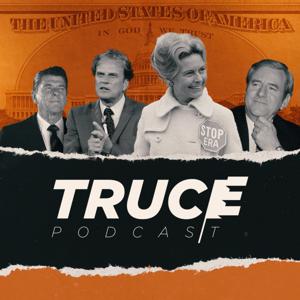


Based on Podcast App listening data
Become a patron of the show and help me make even more great episodes!
Donate by visiting www.patreon.com/trucepodcast
When you think of the world's worst mass murderers, King Leopold II doesn't usually come up. But due to his forced labor practices in the Congo, nearly 10 million people lost their lives. He did this by pretending that his actions in that region were a missionary effort. In reality, he forced Africans to harvest wild rubber or risk having their hands cut off.
The truth is even darker than that: it turns out that Leopold was far from the only person doing this. This same era was marked by many major world powers engaging in forced labor. From the US in the Philippines to Arab countries in eastern Africa, much of the modern world was built on forced labor.
Author Adam Hochschild joins us for this episode to discuss his book "King Leopold's Ghost".
I first heard about this story on the Noble Blood podcast and their episode "The Red Paint on Leopold II".
Discussion Questions:
Learn more about your ad choices. Visit podcastchoices.com/adchoices
Become a patron of the show and help me make even more great episodes!
Donate by visiting www.patreon.com/trucepodcast
The British slave trade had several well-known opponents: William Wilberforce and John Newton (who wrote "Amazing Grace") to name a few. But historian Adam Hochschild ("King Leopold's Ghost", "To End All Wars") argues that history has largely forgotten the most valuable member of the abolition movement: Thomas Clarkson. Clarkson was in charge of gathering and disseminating information across the British Isles. He fought for years to end the slave trade and then slavery itself.
This movement is important for many reasons. It was the first to use logos, a coordinated marketing campaign, and it established a high bar for investigative journalism. It was also an ecumenical movement.
In this episode we explore slavery, the importance of slave rebellions, the power of ecumenical efforts, and the book "Bury the Chains".
I mentioned the so-called Curse of Ham in the episode. Learn more about it here.
Helpful discussion questions:
Learn more about your ad choices. Visit podcastchoices.com/adchoices
Become a patron of the show and help me make even more great episodes!
Donate by visiting www.patreon.com/trucepodcast
So many Christians are angry at the Church. Not just the Church but their local churches as well. Producer Chris Staron decided to take a look inside one small congregation to see how Black Lives Matter, COVID, the 2020 Presidential Election, and more have impacted one community. How are people in Jackson, Wyoming responding in a time of dissension and deconstruction in the body of Christ?
Special thanks to Ray McDaniel and Karl Klemmer for talking with Chris for this interview.
Helpful Links:
Discussion Questions:
Learn more about your ad choices. Visit podcastchoices.com/adchoices
Become a patron of the show and help me make even more great episodes!
Donate by visiting www.patreon.com/trucepodcast
Truce usually uses research, music, sound effects, and expert interviews to tell complicated stories about the Christian Church. We've made something like 100 episodes! Our listeners recommended that we celebrate by asking Chris questions submitted by audience members.
Special thanks to Melvin Benson of the Cinematic Doctrine podcast for asking the questions!
Learn more about your ad choices. Visit podcastchoices.com/adchoices
Become a patron of the show and help me make even more great episodes!
Donate by visiting www.patreon.com/trucepodcast
Jackson, Wyoming is a small tourist town in the middle of nowhere. It is just a few miles south of Grand Teton National Park and Yellowstone. Millions of people pass through each year as tourists. It's a vacation hotspot. But for those who choose to stay in this region, Teton County is anything but a vacation. Rising income inequality and housing costs have created a hostile environment for working people. The median home price in Jackson went up 47% in 2020 alone, rising to $2.2 million while wages remain stagnant.
We've been talking for the last few episodes about myths of the American West, how cowboy myths about a lone rugged individual have shaped the US. Now it's time to understand how cowboy myths have impacted American Christianity.
Our guest today is Justin Farrell. He's a sociologist and professor at Yale. His book is Billionaire Wilderness. In it, Farrell recounts his studies of the ultra-wealthy. What makes them tick? What are they afraid of? Why do they dress the way they do? And what draws them to the far western border of Wyoming?
Discussion Questions:
Helpful Links:
Learn more about your ad choices. Visit podcastchoices.com/adchoices
Become a patron of the show and help me make even more great episodes!
Donate by visiting www.patreon.com/trucepodcast
Some of the wealthiest people in the world live (or pretend to live) in Jackson, Wyoming. That includes some of the biggest names in Hollywood. Digging into the property tax records, we discovered that one of the most successful actors in film history pays less in property tax than a single mom living on less land. What gives? Why are rich people paying less in property tax than working people?
The answer has to do with a thing called a conservation easement. A conservation easement is essentially an agreement between a landowner and the government that says, "I promise I'll keep my property from certain kinds of building projects". In return, the government gives the landowner massive tax benefits on the federal and local levels.
In this episode, Chris digs into the history of these instruments to understand what they are and how they are impacting rural Wyoming and the rest of the country.
UPDATE: The original version of this episode contained an error that has since been corrected. The original version stated that getting an $800,000 tax deduction was essentially the same as getting an $800,000 refund. That is incorrect. My apologies.
Helpful links:
Discussion Questions
Learn more about your ad choices. Visit podcastchoices.com/adchoices
Become a patron of the show and help me make even more great episodes!
Donate by visiting www.patreon.com/trucepodcast
The myth of the American cowboy features a lone man who makes his fortune on the open plains. He doesn't need the government, and he doesn't need some big corporation telling him what to do. But that myth is far from the reality in the west. Many cowboys worked for large corporate cattle operations. And when those operations were in danger, he relied on the government for help.
The Johnson County War started when the Homestead Act of 1862 brought new people to central Wyoming. The area just west of the Big Horn Mountains had been free-range grassland where anyone could let their cattle run free. The large cattle operations loved this setup because it saved them an immense amount of money and infrastructure. The new homesteads threatened their empires because they divided up the land and restricted their access. So the Wyoming Stock Growers Association banded together to send a message: get off our land. They send a murder squad to Johnson County, Wyoming to scare the people of Buffalo with a series of brutal murders.
What followed was one of the darkest chapters in Wyoming history. Where big businesses murdered with impunity, aided by the governor and sitting president.
Helpful links:
Discussion Questions:
Learn more about your ad choices. Visit podcastchoices.com/adchoices
From the publisher's feed
Ranked by our users in the last 21 days
1,127 Listeners

1,097 Listeners
4,426 Listeners
1,476 Listeners

2,054 Listeners

813 Listeners

3,924 Listeners

577 Listeners
217 Listeners
1,925 Listeners

560 Listeners
854 Listeners
130 Listeners
871 Listeners
913 Listeners