
Sign up to save your podcasts
Or



We're kicking off OCD Awareness Month with a solo episode. I open up about some of my childhood experiences with OCD, before I even had the language or understanding of what it was.
In this episode, I reflect on some of the thoughts, fears, behaviors, and patterns I experienced growing up, while normalizing how confusing and isolating OCD can feel.
As always, this episode is not a replacement for professional support. This episode reflects my own personal experience and is just the tip of the iceberg of my own OCD story.
I hope this episode can simply remind you that you're not alone and create a space for honest conversations about the many ways OCD can show up.
On the show, we'll be continuing the conversation throughout OCD Awareness Month with more episodes about OCD, including conversations with some wonderful guests. Coming soon!
STAY CONNECTED:
INSTA: @trustandthrive
TIKOK: @trustandthrive
EMAIL: [email protected]
Gilly Kahn, Ph.D. is a clinical psychologist, writer, and mother with ADHD. She practices in Atlanta and specializes in neurodiversity. She is the author of Allow Me to Interrupt: A Psychologist Reveals the Emotional Truth Behind Women’s ADHD. You can learn more about Gilly and her work by visiting her website at https://www.drgillykahn.com
In this episode, we explore ADHD beyond the common stereotypes, including how it can show up in high-achieving adults and the ways neurodivergence can shape our experiences, relationships, and ability to pursue goals.
We also discuss emotional dysregulation related to ADHD, common misconceptions, ADHD and autism, navigating barriers to diagnosis and support, and the grief that can come with recognizing how ADHD has impacted different areas of your life.
We also explore rejection sensitivity dysphoria (RSD), along with overlaps and important differences between ADHD and OCD. We hope this conversation can offer a nuanced look at living with ADHD in adulthood.
FOLLOW DR. KAHN:
INSTA: @drgillykahn
WEBSITE: www.drgillykahn.com
BOOK: Allow Me to Interrupt
STAY CONNECTED:
INSTA: @trustandthrive
TIKOK: @trustandthrive
THREADS: @trustandthrive
FACEBOOK: bit.ly/FBtaramont
EMAIL: [email protected]
Kathryn Hope Gordon, Ph.D. is a licensed clinical psychologist in the Boston area who specializes in cognitive-behavioral therapy. For the first 10 years of her career, she was a professor who taught classes and published research focused on eating disorders and suicide prevention.
Currently, she is the Director of Clinical Training for a virtual eating disorder treatment organization. Dr. Gordon is passionate about sharing science-informed therapy tools with as many people as possible through trainings, public speaking, and writing.
She is the author of The Suicidal Thoughts Workbook: CBT Skills to Reduce Emotional Pain, Increase Hope, and Prevent Suicide and The Suicidal Thoughts Guided Journal: CBT Practices to Soothe Emotional Pain, Build Coping Skills, and Find Hope.
In this episode, we share an open conversation about suicide prevention, including common misconceptions, warning signs, reducing stigma and shame, and the importance of talking about suicide openly. We discuss the importance of compassionate listening, meaningful support, and addressing broader societal factors, including access to care, discrimination, and unmet basic needs.
We also touch on how clinicians can approach suicide risk assessment with care, the importance of individualized support rather than responding out of anxiety, and considerations around hospitalization and avoiding further harm.
This episode, like with all episodes, is not a replacement for professional support or crisis care. We hope to remind you that you're not alone and that there is hope.
FOLLOW DR. GORDON:
INSTA: @drkathryngordon
WEBSITE: https://kathrynhgordon.com
WORKBOOK: The Suicidal Thoughts Workbook: CBT Skills to Reduce Emotional Pain, Increase Hope, and Prevent Suicide
JOURNAL: The Suicidal Thoughts Guided Journal: CBT Practices to Soothe Emotional Pain, Build Coping Skills, and Find Hope
CRISIS LINE: https://988lifeline.org/ - Please call or text 988 for support.
STAY CONNECTED:
INSTA: @trustandthrive
TIKOK: @trustandthrive
THREADS: @trustandthrive
FACEBOOK: bit.ly/FBtaramont
EMAIL: [email protected]
In this solo episode, I talk about Suicidal OCD, a subtype of OCD in which one may experience obsessions or intrusive thoughts related to suicide.
I also hold space for the importance of Suicide Prevention Awareness Month and the importance of speaking openly about a topic that leaves many feeling isolated.
As a disclaimer, this episode is not a replacement for professional support or a place to differentiate between OCD thoughts and suicidal ideation. If you're experiencing thoughts of suicide or feel unsure of what you're experiencing, I encourage you to reach out to a qualified mental health professional who can provide individualized care and assessment or one of the resources below.
988 Suicide & Crisis Lifeline (U.S.)
Call or text 988 or chat through the 988 Suicide & Crisis Lifeline. Free and confidential support is available 24/7.
988 Suicide & Crisis Lifeline
International Crisis Support
If you're outside of the United States, Find A Helpline can connect you with verified crisis and emotional-support services in more than 150 countries.
Find A Helpline
International OCD Foundation (IOCDF)
Information about OCD, evidence-based treatment, support groups, and a directory of clinicians who specialize in OCD and related disorders.
IOCDF Resource Directory
OCD & Suicidality
The International OCD Foundation also offers information about OCD and suicidality, including considerations for individuals with OCD, loved ones, and mental health professionals.
IOCDF: OCD and Suicidality
STAY CONNECTED:
INSTA: @trustandthrive
TIKOK: @trustandthrive
EMAIL: [email protected]
In this solo episode, I talk about what happens when Relationship OCD thoughts and patterns overlap with "real" relationship concerns. I share some of my own experiences and examples of how OCD can latch onto genuine concerns, disagreements, or areas of uncertainty and turn them into something that feels urgent and impossible to stop thinking about.
I also talk about the practice of recognizing when reflection may be shifting into rumination, the pressure to figure out what a concern "means" about your relationship, and the sense of urgency that can make it feel like you need an answer or decision right now.
I hold space for multiple realities: something can be worth addressing in your relationship while OCD or anxiety might also be amplifying the need for certainty around it.
As with all episodes on Relationship OCD, this episode is not intended to address relationships involving harm, abuse, or concerns about safety. Resonating with parts of this episode does not necessarily mean you live with OCD.
STAY CONNECTED:
INSTA: @trustandthrive
TIKOK: @trustandthrive
EMAIL: [email protected]
In this solo episode, I share some recent reflections on showing up online, dealing with comparison, and learning to be honest with myself about my capacity.
I talk about how I'm holding space for personal transitions, navigating social media while living with OCD, the pressure that can come with being consistent, and noticing when comparison creeps in. I also reflect on what it looks like to take breaks, to step away, and to recognize how our capacity can change day to day.
This episode is a reminder that it's okay to slow down and to hold space for complex emotions that come up.
STAY CONNECTED:
INSTA: @trustandthrive
TIKOK: @trustandthrive
EMAIL: [email protected]
Dr. Kevin Chapman is a Licensed Clinical Psychologist and internationally recognized expert in anxiety, CBT, and sport performance psychology. He is the founder and director of the Kentucky Center for Anxiety and Related Disorders (KYCARDS) and Mental Lock Sport Performance Psychology, where he specializes in anxiety, emotion regulation, and mental performance.
A former collegiate track and field and football athlete, Dr. Chapman now works with athletes at the highest levels, including Team USA Weightlifting, Racing Louisville FC, and Louisville City FC. He is also a published author, researcher, and frequent media contributor, with expertise in helping athletes navigate performance anxiety and strengthen their mental skills.
In this episode, we explore the psychology of performance anxiety, from athletics and high-pressure environments to everyday moments when anxiety can show up. We discuss the purpose of emotions, why trying to push anxiety away can often backfire, and the value in taking a nonjudgmental stance toward our internal experiences.
Dr. Chapman also shares more about the concept of emotional conditioning, the brain’s role in storing threatening or traumatic experiences, and how exposure therapy can help us build a different relationship with fear and anxiety. We talk about practical anxiety regulation and management skills, navigating pressure without letting emotions dictate our decisions, and what it can look like to live authentically by taking action in alignment with our values, rather than feeling controlled by our emotional experiences.
FOLLOW DR. CHAPMAN:
INSTA: @drkevinchapman
MORE INFO: Linktree
WEBSITE: www.drkevinchapman.com
STAY CONNECTED:
INSTA: @trustandthrive
TIKOK: @trustandthrive
THREADS: @trustandthrive
FACEBOOK: bit.ly/FBtaramont
EMAIL: [email protected]
In this solo episode, I explore the pressure many of us feel to optimize everything: our careers, productivity, relationships, interests, self-care, rest, therapy, and even "healing."
I talk about how time-consuming and how mentally draining it can be to try to make the "best" choice every time and make the most out of very experience. I also touch on how optimization can show up in relation to OCD and ADHD. I share how these thoughts and experiences have shown up in my own life, and how I've leaned into making room for imperfection, uncertainty, and doing things despite the outcome - as hard as it may be.
I also talk about how growing up as a child of immigrants can influence one's view of success, productivity, and making the most of opportunities.
As always, resonating with this episode does not mean you live with OCD, ADHD, or any specific diagnosis. You can relate to these topics for a variety of reasons. If you can relate, you're not alone.
STAY CONNECTED:
INSTA: @trustandthrive
TIKOK: @trustandthrive
EMAIL: [email protected]
In this solo episode, I break down some differences between rumination and reflection, and explore why rumination can be so sneaky. Using both personal and professional experiences, I share how we can start to recognize rumination, and discuss how it often shows up in OCD and anxiety.
I also discuss common signs of rumination, how it can function as a mental compulsion in OCD, why it often feels productive when it keeps us stuck, practical strategies to help you respond differently, and the importance of approaching yourself with self-compassion in these moments, rather than shame or self-criticism.
In addition, I talk about the grief that can come with recognizing how much time, energy, and emotional space ruination may have taken over the years. For example, someone may have grown up believing they were just really "self-aware," when in reality they may have been caught in a cycle of distressing rumination.
As always, I hope this episode can remind you that you're not alone.
STAY CONNECTED:
INSTA: @trustandthrive
TIKOK: @trustandthrive
EMAIL: [email protected]
Sarah Ann Saeger, LPC, LCADC, LAMFT, is an Internal Family Systems (IFS) therapist who specializes in complex trauma, addiction, and relationships. She is trained in IFS and an array of somatic,attachment-informed therapies. Sarah shares psychoeducation and reflections on parts work and the healing journey on her Instagram and Substack platforms. She is dedicated to helping survivors embrace the wisdom of their whole selves, and she supports survivors in her PA-based therapy practice.
In this episode, we explore parentification: what it is, how it develops, and the ways it can continue to shape our lives after childhood.
We discuss what can happen when a child grows up feeling responsible for the emotional well-being of others, learns to suppress their own needs, and takes on roles that were never theirs to carry. We also unpack the many nuances of these experiences, recognizing that family, culture, and generation has its own context.
In addition, we talk about what it can look like to incorporate Internal Family Systems (IFS) into the work of complex trauma and parentification. We discuss how these early roles can show up in adult relationships through familiar relational patterns and reenactments. This includes why we may find ourselves drawn to partners who reinforce what once felt familiar, along with the grief that can come from recognizing what we needed but didn't receive.
FOLLOW SARAH:
INSTA: @sarahannsaeger
MORE INFO: Linktree
WORKBOOK: The Internal Family Systems Workbook For CPTSD
STAY CONNECTED:
INSTA: @trustandthrive
TIKOK: @trustandthrive
THREADS: @trustandthrive
FACEBOOK: bit.ly/FBtaramont
EMAIL: [email protected]
From the publisher's feed
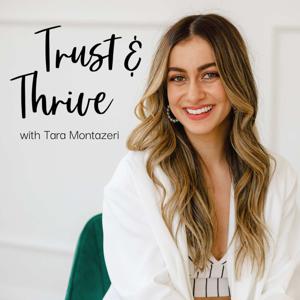
Welcome to the Trust and Thrive podcast! I'm Tara Montazeri, a Licensed Marriage and Family Therapist and host of the podcast. Through honest conversations, solo episodes, and interviews with…
Cover photo taken by @jedzantphotography
833 Listeners
761 Listeners
478 Listeners
164,539 Listeners
33 Listeners
272 Listeners

134 Listeners

15,413 Listeners
366 Listeners
175 Listeners

19,273 Listeners
1,443 Listeners

5,078 Listeners
429 Listeners

121 Listeners