
Sign up to save your podcasts
Or



Based on Podcast App listening data
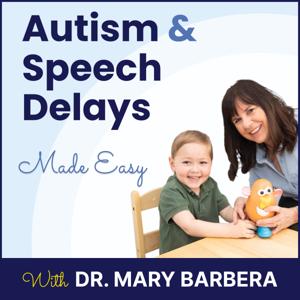
Dr. Mary Barbera shares five "autism rants" based on her 27 years of experience as a mom, nurse, and BCBA-D. These unpopular opinions challenge outdated advice and highlight what truly helps children with autism make progress, like acting early, using one cohesive plan, and empowering parents to lead daily routines. Whether you're overwhelmed by delays, therapy contradictions, or mixed messages, this guide gives you the clarity and tools to take effective action now.
Is your 18-month-old not talking yet? Dr. Mary Barbera shares five essential action steps to help parents navigate early speech delays with clarity and confidence. From checking developmental milestones to understanding early signs of autism and using a free digital assessment, this guide empowers you to take early, effective action without panic or overwhelm. Whether your child has a diagnosis or not, these strategies can spark real progress at home. Early help leads to big gains!
Dr. Mary Barbera and Rachel Smith share a simple, effective 3-step plan to stop toddlers from hitting and throwing things, even when they're overwhelmed or frustrated. Based on positive parenting and behavior science, this approach helps toddlers with or without delays learn calm behavior fast. Rachel used it to stop her son's hitting and throwing in just two days, and it can work for you too.
Dr. Mary Barbera answers the top questions about stimming and scripting in children with autism, explaining why they happen and when to be concerned. Stimming isn't bad, but when it's constant, unsafe, or disruptive, it's time to take action. Instead of trying to stop vocal stimming directly, Dr. Barbera recommends teaching language, play, and daily-living skills so stimming naturally decreases over time. Learn when to let it be, when to intervene, and how to use stimming as a clue to better support your child.
When toddlers show signs like hyperactivity, tantrums, or language delays, it can be hard to tell if it's ADHD, autism, or both. Dr. Mary Barbera shares how to spot early signs, understand the key differences, and take action before a diagnosis. Using her 4-step approach, assess, plan, teach, and evaluate, parents can start meaningful intervention right away. Whether your child has ADHD, autism, or early red flags, early support builds language, reduces problem behaviors, and leads to better long-term outcomes.
Dr. Mary Barbera explains what it means when toddlers are obsessed with the alphabet or numbers but struggle to talk. This pattern, often linked to hyperlexia, can signal giftedness or early signs of autism, especially when paired with delays in communication, pretend play, and social interaction. The key is using letter and number strengths as teaching tools while focusing on functional language, comprehension, and social skills. Learn how to assess your child's development and support real progress with balanced strategies that reduce obsession and promote talking.
If your child has been kicked out of daycare or preschool, you're not alone, this happens more often for kids with autism, ADHD, or developmental delays. Dr. Mary Barbera shares why expulsions happen, what it means, and how to move forward with confidence.
Learn key steps like tracking milestones, getting evaluations, and using positive ABA strategies at home. You'll also get tips on partnering with staff, preventing future expulsions, and finding environments better suited to your child's needs. With the right tools and support, your child can thrive - starting today.
The Barbera Early Childhood Assessment (BECA) is a free, 10-minute digital autism screener designed for parents, physicians, researchers, and autism professionals. Created by Dr. Mary Barbera, the BECA assesses self-care, language, and behavior to provide a quick, reliable snapshot of a child's development. It's ideal for early detection, tracking progress, and guiding intervention, without long waitlists or costly evaluations. With over 65,000 users and 3 million data points collected, the BECA is transforming how we screen for autism and developmental delays.
Many children with autism face hidden medical challenges that affect speech, behavior, and sleep. Dr. Richard Frye, a Harvard-trained pediatric neurologist, explains how folinic acid (leucovorin) may help, especially in kids with folate receptor autoantibodies. Backed by research, leucovorin has shown promise in improving communication and behavior. Listen in to Dr. Mary Barbera and Dr. Richard Frye and learn how to identify if your child might benefit, what to ask your pediatrician, and how functional medicine can support deeper healing.
Pathological Demand Avoidance (PDA) is a profile within autism marked by extreme resistance to everyday demands due to anxiety and a need for control. Though not officially recognized in the U.S., many families find PDA-informed strategies helpful. BCBA Amelia Dalphonse shares signs of PDA, like creative avoidance, surface sociability, and hidden anxiety and offers proven strategies focused on trust, flexibility, and indirect language. Understanding PDA can reduce power struggles and improve support. In this epsideo, Dr. Mary Barbera discusses PDA with Ameila Dalphonse.
From the publisher's feed

39,048 Listeners
1,330 Listeners

15,030 Listeners

111,799 Listeners

8,527 Listeners
418 Listeners

25,789 Listeners

27,762 Listeners

13,018 Listeners
4,492 Listeners

3,514 Listeners

19,254 Listeners

10,653 Listeners

8,796 Listeners