
Sign up to save your podcasts
Or

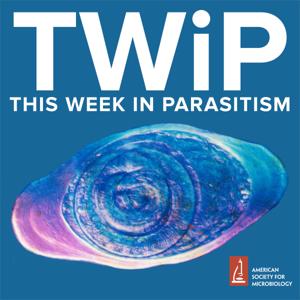

Hosts: Vincent Racaniello, Dickson Despommier, and Daniel Griffin
The TWiPinella solve the case of the Woman from Guinea, and describe the use of CRISPR/Cas9 to identify essential apicomplexan genes.
Links for this episode:This episode is sponsored by CuriosityStream, a subscription streaming service that offers over 1,400 documentaries and nonfiction series from the world's best filmmakers. Get unlimited access starting at just $2.99 a month, and for our audience, the first two months are completely free if you sign up at curiositystream.com/microbe and use the promo code MICROBE.
This episode is also sponsored by Drobo, a family of safe, expandable, yet simple to use storage arrays. Drobos are designed to protect your important data forever. Visit www.drobo.com to learn more.
Become a patron of TWiP.
Case Study for TWiP 118Little bit of a twist - a human family with eosinophilia. Conveyed by good friend/colleague ID physician. Australia, NSW, 45 yo Dad, having problem with mild abdominal distention. Seen by doc in Sydney, CBC shows eosinophil count of 10,500. Wife of same age reports feeling fine, but gets CBC and also shows eosinophils of 5,200. Two daughters, 17 and 19, no symptoms, bloods: 900 and normal eosinophils. One week prior to dads symptoms, sister in law came (also in NSW) and stayed, developed severe diarrhea, discomfort, bloating, weight loss, eosinohils 4,700. Eat raw fish (not known if fresh or salt) purchased at local markets. No overseas travel or out of urban environment. No pets, no home grown foods. Went back to previous labs and found normal eosinophil levels. Full workup for strongyloides, all negative. No HIV. No toxic habits, no remarkable medical history.
Send your case diagnosis, questions and comments to [email protected]
 View all episodes
 By Vincent Racaniello

4.9
451451 ratings
Hosts: Vincent Racaniello, Dickson Despommier, and Daniel Griffin
The TWiPinella solve the case of the Woman from Guinea, and describe the use of CRISPR/Cas9 to identify essential apicomplexan genes.
Links for this episode:This episode is sponsored by CuriosityStream, a subscription streaming service that offers over 1,400 documentaries and nonfiction series from the world's best filmmakers. Get unlimited access starting at just $2.99 a month, and for our audience, the first two months are completely free if you sign up at curiositystream.com/microbe and use the promo code MICROBE.
This episode is also sponsored by Drobo, a family of safe, expandable, yet simple to use storage arrays. Drobos are designed to protect your important data forever. Visit www.drobo.com to learn more.
Become a patron of TWiP.
Case Study for TWiP 118Little bit of a twist - a human family with eosinophilia. Conveyed by good friend/colleague ID physician. Australia, NSW, 45 yo Dad, having problem with mild abdominal distention. Seen by doc in Sydney, CBC shows eosinophil count of 10,500. Wife of same age reports feeling fine, but gets CBC and also shows eosinophils of 5,200. Two daughters, 17 and 19, no symptoms, bloods: 900 and normal eosinophils. One week prior to dads symptoms, sister in law came (also in NSW) and stayed, developed severe diarrhea, discomfort, bloating, weight loss, eosinohils 4,700. Eat raw fish (not known if fresh or salt) purchased at local markets. No overseas travel or out of urban environment. No pets, no home grown foods. Went back to previous labs and found normal eosinophil levels. Full workup for strongyloides, all negative. No HIV. No toxic habits, no remarkable medical history.
Send your case diagnosis, questions and comments to [email protected]

544 Listeners
2,057 Listeners
28 Listeners
38 Listeners

604 Listeners
767 Listeners
523 Listeners
172 Listeners
12 Listeners
20 Listeners
4 Listeners
24 Listeners

822 Listeners

6,481 Listeners
238 Listeners
1,250 Listeners
24,561 Listeners
16,995 Listeners
278 Listeners
517 Listeners
4 Listeners
93 Listeners