
Sign up to save your podcasts
Or



Based on Podcast App listening data
Your kids are more capable than you think. Katie Kimball, creator of Kids Cook Real Food and founder of the LifeSkillsNow summer camp, shares the practical systems that take kids from passengers to contributors -- and why cooking is the gateway to all of it.
****************
RESOURCES
Connect with Katie:
Follow Deanna Yates, the host of Wannabe Clutter Free on:
****************
What if the key to a calmer home (and a lighter mental load) was already walking around your house asking for snacks?
In this episode, Deanna Yates sits down with Katie Kimball of Raising Healthy Families, a former classroom teacher, two-time TEDx speaker, and mom of four. Katie created Kids Cook Real Food (named the best online cooking class for kids by the Wall Street Journal) and runs LifeSkillsNow, a virtual summer camp that teaches kids everything from cooking and budgeting to entrepreneurship and mending their own clothes.
This conversation is all about kids as contributors, not passengers. Katie shares how her teaching background shaped the way she thinks about agency, choice, and raising the bar for what kids can actually do. She talks through the moment she realized her mental and physical load didn't have to fall entirely on her, the summer she intentionally taught her kids to cook, and the chore system her family is still using ten years later.
You'll also hear why Katie calls cooking the gateway life skill, how the skills gap happened across generations, and the three-part framework she uses to help any parent hand something off to their kid in a way that actually sticks.
If you have ever stood in your kitchen thinking it would be faster to just do it yourself, this episode is for you.
EPISODE HIGHLIGHTS:
TIMESTAMPS:
****************
Music: Fresh Lift by Shane Ivers - https://www.silvermansound.com
****************
We’d love to hear how you’re applying the strategies discussed in this episode. Share your stories and tips with us on social media (@wannabeclutterfree). Don’t forget to subscribe for more insightful episodes designed to make your busy life a bit easier.
Learn more about your ad choices. Visit podcastchoices.com/adchoices
You can declutter your entire home and still end up right back where you started. I know because I’ve lived it. This episode is the piece that makes everything permanent. I’m teaching you the closing shift, the exit bin, and why stacking habits beats scheduling them every time.
In this episode you’ll learn:
Resources mentioned:
If this episode resonated with you, share it with one person who needs to hear it.
Subscribe so you never miss an episode, and if you have two minutes, leaving a review on Apple Podcasts makes a real difference.
TIMESTAMPS
00:00 Introduction to Clutter-Free Living
02:18 The Journey to Minimalism
04:45 Establishing a Daily Routine
07:13 The Closing Shift Explained
09:44 The Exit Bin Strategy
12:28 Habit Stacking for Success
14:23 The Invisible Weight of Clutter
21:03 Looking Ahead: Future Topics
Learn more about your ad choices. Visit podcastchoices.com/adchoices
Behavioral scientist Leidy Klotz reveals how your home feeds or starves three core psychological needs, why clutter blocks connection, and how to make your spaces actually work for your family.
****************
RESOURCES
Connect with Leidy:
Follow Deanna Yates, the host of Wannabe Clutter Free on:
****************
What if the reason you feel stuck, distracted, or disconnected at home has less to do with your habits and more to do with your spaces?
Leidy Klotz, an engineering professor at the University of Virginia, is the author of Subtract and his brand-new book In a Good Place. He has spent over a decade studying the relationship between our physical environments and our psychological well-being, and today he is breaking it all down for us.
This conversation changed how I think about my home. We are not just talking about decluttering (although we do get into that). We are talking about why our spaces either feed or starve our deepest needs, and what we can do about it.
In this episode you will learn:
Content note: Leidy shares openly about his daughter Josie, who passed away unexpectedly at four years old. Her story is woven throughout this conversation and is both heartbreaking and deeply beautiful.
Time Stamps:
05:40 The intersection of environment and behavior
11:24 The three core psychological needs: agency, growth, and connection
17:25 Agency and connection in the home (plus tips for renters)
20:30 How clutter literally blocks connection
26:50 Behavioral changes through environmental cues
32:23 The family that moved dinner outside
36:06 Functional fixedness: why adults are worse at this than kids
40:42 Nostalgia, the renovation trap, and protecting what matters
50:57 Josie's Way: remembering through spaces and stories
****************
Music: Fresh Lift by Shane Ivers - https://www.silvermansound.com
****************
We’d love to hear how you’re applying the strategies discussed in this episode. Share your stories and tips with us on social media (@wannabeclutterfree). Don’t forget to subscribe for more insightful episodes designed to make your busy life a bit easier.
Learn more about your ad choices. Visit podcastchoices.com/adchoices
You started decluttering. It felt amazing. And then somewhere around day 7, your house felt just as cluttered as when you started, even though you know you did the work. That moment has a name. I call it the motivation cliff, and in this episode I'm explaining exactly why it happens and what to do about it.
In this episode you'll learn:
This episode is Part 3 of a series. Start with Episode 304 (the 15-minute declutter method) and Episode 305 (the Joy Anchor Method for sentimental items) if you haven't already.
Comment HOME on my latest Instagram post (@wannabeclutterfree) and I'll send you the link to Effortless Home.
Resources mentioned:
If this episode resonated with you, share it with one person who needs to hear it.
Subscribe so you never miss an episode, and if you have two minutes, leaving a review on Apple Podcasts makes a real difference.
TIMESTAMPS
00:00 Why the decluttering quit day hits around day 7
01:16 What the motivation cliff is and how to recognize it
04:01 The recalibration dip explained
08:37 Tool 1: Count items out the door, not how your home looks
13:04 Tool 2: Joy during the process, not after it
19:11 Tool 3: Finish what you start, even if it’s small
24:04 How Effortless Home and the 500 Item Challenge tracker can help
28:35 What’s coming next in the series
Learn more about your ad choices. Visit podcastchoices.com/adchoices
If you’ve ever held onto something not because you need it but because of what it means to you, this episode is for you.
I’m teaching you the Joy Anchor Method, a simple way to keep what matters and let go of what’s weighing you down.
What you’ll learn:
Comment PHOTOS on my latest Instagram post (@wannabeclutterfree) to get the link to Photo Freedom Formula.
Next episode: The Motivation Cliff – Why You Quit Decluttering at Day 7 (And How to Not)
Resources mentioned:
If this episode resonated with you, share it with one person who needs to hear it.
Subscribe so you never miss an episode, and if you have two minutes, leaving a review on Apple Podcasts makes a real difference.
TIMESTAMPS
00:00 The Emotional Weight of Sentimental Clutter
03:01 Understanding the Joy Anchor Method
10:34 Implementing the Joy Anchor Method
21:30 Creating a Photo Bridge for Memories
31:34 Navigating the Motivation Cliff
Learn more about your ad choices. Visit podcastchoices.com/adchoices
If you’ve ever said “I want to declutter but I don’t know where to start,” this episode is your answer.
I’m breaking down the sequencing mistake that makes decluttering feel impossible, the 15-minute pulse check method you can use in any room today, and a reframe that changed how I think about letting go.
Plus, I’ll tell you about Effortless Home, my room-by-room system for busy families who want a clutter free home without the weekend overhaul.
What you’ll learn:
Next episode: How to Declutter Sentimental Items Without Guilt (The Joy Anchor Method)
Resources mentioned:
If this episode resonated with you, share it with one person who needs to hear it.
Subscribe so you never miss an episode, and if you have two minutes, leaving a review on Apple Podcasts makes a real difference.
TIMESTAMPS
00:00: Introduction to Decluttering
00:23: Identifying the Problem - "You have a sequencing problem."
01:41: Where most people go wrong with decluttering
4:29: Step One - Where to Start for Decluttering Success
07:23: Step Two - 15 Minute Pulse Check
08:51: The Sorting Categories to Get You Moving Quickly
15:41: The Mindset Shift that Flips Decluttering
Learn more about your ad choices. Visit podcastchoices.com/adchoices
Do you feel like you're constantly managing your home instead of enjoying it? Like no matter how much you declutter, the chaos just keeps coming back?
In this solo episode, Deanna breaks down why routines are the missing piece and how building the right ones can completely change the way your home feels.
Resources mentioned:
Links:
In this episode you'll learn:
If this episode resonated with you, share it with one person who needs to hear it.
Subscribe so you never miss an episode, and if you have two minutes, leaving a review on Apple Podcasts makes a real difference.
TIMESTAMPS
00:00 — Introduction
Learn more about your ad choices. Visit podcastchoices.com/adchoices
Professional organizers and sisters Meg DeLong and Ea Fuqua share practical, sustainable strategies for organizing your home based on function and intention rather than perfection. Discover how to create spaces that support your lifestyle and embrace real-life solutions without pressure.
****************
RESOURCES
Connect with Meg & Ea:
Follow Deanna Yates, the host of Wannabe Clutter Free on:
****************
What does it actually look like when a professional organizer walks through your front door for the first time?
Spoiler: it probably doesn't look like what you're imagining — and it definitely doesn't require a Pinterest-perfect pantry.
Meg DeLong and Ea Fuqua are sisters and the founders of The Tidy Home Nashville. In nearly seven years of professional organizing, they've seen it all. And their message?
Refreshingly real. Function first. Perfection never. And for the love of all things tidy, stop organizing your fridge.
They also just released their first book, Tidying Up, and today they're breaking it all down for us.
In this episode, you'll learn:
Time Stamps:
01:33 - What a first consultation actually looks like (and why you don't need to pre-clean)
09:20 - Function over pretty: building systems that fit how you actually live
22:30 - Why big decluttering sessions backfire — and what to do instead
32:07 - Their new book Tidying Up: room-by-room, no perfection required
44:30 - The anti-fridge stance + intentional living as an organizing philosophy
55:55 - Getting the whole family on board + where to find Meg & Ea
****************
Music: Fresh Lift by Shane Ivers - https://www.silvermansound.com
****************
We’d love to hear how you’re applying the strategies discussed in this episode. Share your stories and tips with us on social media (@wannabeclutterfree). Don’t forget to subscribe for more insightful episodes designed to make your busy life a bit easier.
Learn more about your ad choices. Visit podcastchoices.com/adchoices
Feeling burned out and stretched too thin? Former attorney turned burnout expert Michelle Niemeyer shares her "bending time" framework to help you find clarity, fill your energy reserves, and get more done in less time without losing yourself in the process.
****************
RESOURCES
Connect with Michelle Niemeyer:
Follow Deanna Yates, the host of Wannabe Clutter Free on:
****************
What if the reason you can't get it all done isn't a time problem but an energy problem?
Michelle Niemeyer is a speaker, consultant, and former attorney who burned out after 20+ years in law. That burnout led to an autoimmune diagnosis and became the wake-up call that changed everything.
She shares The Art of Bending Time, a framework that helps you expand what you can accomplish by getting clear on what matters, cutting the junk, and filling your energy reserves. The conversation also explores burnout warning signs, why women struggle with guilt around self-care, and how families can function as a team.
In this episode, you'll learn:
Time Stamps:
****************
Music: Fresh Lift by Shane Ivers - https://www.silvermansound.com
****************
We’d love to hear how you’re applying the strategies discussed in this episode. Share your stories and tips with us on social media (@wannabeclutterfree). Don’t forget to subscribe for more insightful episodes designed to make your busy life a bit easier.
Learn more about your ad choices. Visit podcastchoices.com/adchoices
Your clutter isn't a personal failing. It's the intended result of a system that profits from your overwhelm. Episode 300 is about opting out -- and taking back your power.
Resources Mentioned:
Three hundred episodes. When I started this show, I thought decluttering was about getting rid of stuff. And it is. But it's not only that.
The more I've done this work, the more I've realized the stuff was never really the problem. The problem is what keeps creating the stuff. For episode 300, I finally go there.
Your clutter is not an accident. It is not a personal failing. It is, in significant part, the intended result of a trillion-dollar industry that profits from your overwhelm, your insecurity, and your desire to feel better right now.
Desire is manufactured. Algorithms aren't showing you what you love -- they're showing you what you're most likely to buy. The "treat yourself" culture is a sales strategy. And the chaos that keeps you too exhausted to pay attention? Worth money to the people selling it.
But here's where it gets good: once you see it, you can't unsee it. And that's where your power starts.
Buying less is not deprivation. It's defection. Every time you walk past a sale and keep walking, you are opting out of a system that is counting on you not to. Every purchase is a vote for the kind of world you want to live in.
In this episode I cover:
If this episode resonated with you, share it with one person who needs to hear it. Text it to a friend who's been drowning in stuff and can't figure out why. The message that clutter is not your fault (and that you have more power than you think) deserves to reach more people. You're how it gets there.
Subscribe so you never miss an episode, and if you have two minutes, leaving a review on Apple Podcasts makes a real difference. Thank you for 300 episodes.
TIMESTAMPS
0:00 -- Welcome + 300 episodes milestone
2:38 -- The story that changed how I see everything (the Amazon tab moment)
5:46 -- How desire is manufactured (ads, algorithms, "treat yourself" culture)
9:36 -- Why your overwhelm is worth money to someone
11:27 -- No New Things by Ashlee Piper + the reframe
12:42 -- Not buying is not deprivation. It's voting with your dollars
16:10 -- Feeling smaller and disconnected -- and what's still in your control
18:36 -- Mental clutter: what short-form content is doing to your sense of enough
19:57 -- The highlight reel fallacy
22:17 -- 5 practical experiments to start opting out
26:24 -- The hole in the boat: why decluttering without stopping the inflow never works
27:30 -- 300 episodes: what I actually believe
28:37 -- My one ask for episode 300
Learn more about your ad choices. Visit podcastchoices.com/adchoices
From the publisher's feed
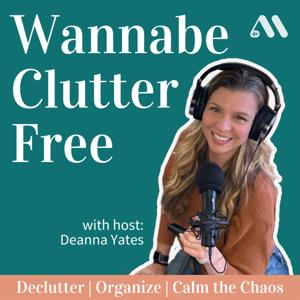
Ready to finally calm the overwhelm and create a home and life you actually enjoy? The Wannabe Clutter Free podcast is here to help you clear the clutter, simplify your routines, and find freedom…
Ranked by our users in the last 21 days
1,307 Listeners

2,478 Listeners
518 Listeners
2,087 Listeners
988 Listeners
275 Listeners
1,230 Listeners
1,003 Listeners
203 Listeners
841 Listeners
939 Listeners

678 Listeners
814 Listeners

350 Listeners
294 Listeners