
Sign up to save your podcasts
Or

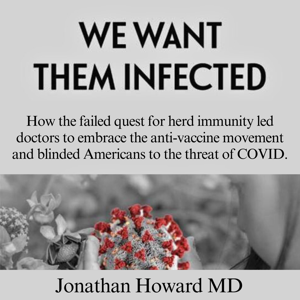


Jonathan Howard and Wendy Orent return for a wide-ranging conversation about the state of public health, vaccine policy, and the consequences of ideas they've been documenting since the early days of We Want Them Infected.
They begin with reports of additional measles deaths and the continued spread of the disease among under-vaccinated communities. From there, Jonathan and Wendy examine Andrew Wakefield's appearance at the Children's Health Defense Summit, RFK Jr.'s comments about vaccines, AI, and chemtrails, and growing tensions within the MAHA movement.
The conversation also turns back to COVID. Jonathan highlights research on COVID vaccination in young children and repeat infections, while the pair revisit the BMJ's pandemic-era coverage—including arguments that encouraged childhood infection—and contrast it with more recent scrutiny of vaccine safety monitoring.
They also discuss Jay Bhattacharya's leadership at the NIH, his reported resistance to efforts to politicize NIH grant funding, his addition to the NIH "Hall of Heroes," and his previous support for allowing lower-risk populations to face COVID infection.
Finally, Jonathan and Wendy examine FDA leadership, changing childhood vaccine policy, and reports of major staffing losses and program cuts at the CDC.
The episode closes where it began: with measles once again causing preventable illness and death—and the unsettling realization that many of the public-health consequences Jonathan and Wendy warned about are no longer hypothetical.
In This EpisodeNew measles deaths and the consequences of declining vaccination
Andrew Wakefield and the Children's Health Defense Summit
RFK Jr.'s comments on vaccines, AI, and "medical tyranny"
Chemtrails and conspiracy theories entering public-health discussions
Growing divisions within the MAHA movement
Corporate influence and the MAHA Summit
Research on repeated COVID infections and chronic health conditions
Evidence on COVID vaccination and severe disease in young children
Vaccine-associated myocarditis and the risk-benefit discussion
The BMJ's pandemic-era arguments about childhood COVID infection
Jay Bhattacharya, NIH funding, and Harvard
The NIH "Hall of Heroes"
The Great Barrington Declaration and infection-based pandemic strategies
FDA leadership and questions surrounding the MMR vaccine
Staffing losses and program cuts at the CDC
Why Jonathan and Wendy remain concerned about the return of vaccine-preventable diseases
Jonathan Howard and Wendy Orent examine a widening crisis in American public health: preventable measles deaths, conflicting vaccine messages from federal leaders, and growing distrust of the institutions charged with protecting the public. They revisit Robert F. Kennedy Jr.'s 2019 trip to Samoa and newly reported documents that conflict with his confirmation-hearing testimony, then discuss the response to measles-associated infant deaths in Pennsylvania.
The conversation also covers new evidence on COVID-19 vaccine effectiveness and safety, independent guidance from major medical organizations, and polling that shows Americans continue to trust their own clinicians more than federal health agencies. Finally, Jonathan and Wendy discuss the personal and scientific costs of lab-leak accusations, the pressure on virologist Robert Garry, and a reported plan to move infectious-disease research projects from NIH to the Department of Defense.
In This EpisodeWhat newly disclosed Samoa correspondence suggests about Kennedy's prior statements to Congress
How measles spreads through under-vaccinated communities and places infants and medically vulnerable children at risk
Why the hosts object to public officials casting doubt on measles-associated deaths before emphasizing prevention
The role of school vaccine requirements and the community-wide consequences of individual vaccination decisions
A 2026 systematic review of COVID-19 vaccine effectiveness and safety for the upcoming respiratory season
Why physician groups are issuing vaccine guidance amid uncertainty at the federal level
The divide between trust in personal healthcare providers and trust in the CDC FDA and NIH
How lab-leak politics and funding uncertainty are affecting virology research and the next generation of scientists
The proposed transfer of NIH infectious-disease projects to military biodefense programs and the hosts' concerns about Robert Kadlec's record
RFK Jr lied in Senate confirmation hearings newly revealed documents indicate
Samoa's prime minister criticises RFK Jr's vaccine views after deadly measles outbreak
His Daughter Was America's First Measles Death in a Decade
COVID-19 Vaccine Effectiveness and Safety for the 2026–2027 Respiratory Season
Evidence Base for 2026–27 Respiratory Season Immunizations
Vaccine recommendations from leading physician organizations
Polls show Americans have lost confidence in federal government and public health leaders
Lawmakers criticize deal that would send NIH funds to Department of Defense
We Want Them Infected examines the physicians, academics, and public figures who promoted herd-immunity strategies and minimized the harms of COVID-19. Jonathan Howard and Wendy Orent connect those arguments to today's public-health debates and ask what happens when misinformation moves from the margins into positions of power.
Support the ShowIf this conversation was valuable, follow the podcast, leave a rating or review, and share the episode with someone who cares about public health, science, and accountability.
Note: This episode contains commentary and opinion from the hosts. The show notes summarize the discussion and are not medical advice.
Jonathan Howard and Wendy Orent open with new evidence on myocarditis risk among vaccinated and unvaccinated young people, revisiting how vaccine-associated myocarditis was amplified while the cardiac and mortality risks of infection were minimized. They then turn to the resurgence of measles, the consequences of falling vaccination rates, and the gap between public-health leadership and the urgency of the moment.
The heart of the episode is a wide-ranging critique of the lab-leak movement. Howard and Orent outline why they believe the available molecular, epidemiological, and geographic evidence supports a zoonotic origin for SARS-CoV-2. They argue that the debate has too often become a political weapon aimed at scientists and public-health officials, while zoonotic spillover, wildlife trade, habitat disruption, and pandemic preparedness receive less attention.
The conversation focuses especially on the contradiction between expressing intense concern about the first infection while partnering with or defending figures who promoted herd immunity through widespread infection. Through discussions of Matt Ridley, Alina Chan, Richard Ebright, Bryce Nickels, Jay Bhattacharya, and others, the hosts describe what they call "toxic apathy": treating the origin of infection number one as paramount while overlooking the preventable infections, hospitalizations, and deaths that followed.
In This EpisodeWhy infection itself—not vaccination—was associated with the highest myocarditis, pericarditis, and mortality risk in the study discussed
How fear-driven messaging about rare vaccine side effects may have shaped decisions among young people and parents
The expanding measles crisis, falling MMR coverage, and the threat of subacute sclerosing panencephalitis (SSPE)
Why the hosts believe public-health leaders must communicate far more forcefully about measles vaccination
The molecular, evolutionary, geographic, and epidemiological case the hosts present for zoonotic emergence
Why secrecy by Chinese authorities does not, by itself, establish that SARS-CoV-2 originated in a laboratory
How lab-leak advocacy became intertwined with attacks on Anthony Fauci, Francis Collins, and other scientists
The rhetoric used against researchers who support a zoonotic origin and the consequences of turning a scientific question into a loyalty test
Matt Ridley's 2020 advocacy for infection-derived herd immunity and the claim that student infections could protect older adults
Alina Chan's collaboration with Ridley and the hosts' critique of separating origin claims from pandemic-era policy positions
Why knowing the origin of SARS-CoV-2 would not erase the need to prepare for both laboratory accidents and zoonotic spillover
The episode's central warning: origin narratives should never become an excuse to abandon mitigation during the next pandemic
The hosts contend that pandemic preparedness requires more than assigning blame for how SARS-CoV-2 first entered the human population. It requires confronting misinformation, protecting people from preventable infection, supporting vaccination, preparing for multiple pathways of emergence, and judging public-health leaders by real-world outcomes.
Referenced in the ConversationCIDRAP reporting on mRNA vaccination and myocarditis risk in teens and young adults
The Great Barrington Declaration
Viral: The Search for the Origin of COVID-19 by Alina Chan and Matt Ridley
Science-Based Medicine
Centers for Disease Control and Prevention — Measles
We Want Them Infected examines the doctors, academics, pundits, and political movements that promoted widespread infection during the COVID-19 pandemic—and the lasting consequences of those ideas for public health.
Listen, Follow, and ShareSubscribe wherever you listen to podcasts, share this episode with someone who follows public health and pandemic policy, and leave a review to help more listeners find the show.
DisclaimerThis podcast is for informational and educational purposes only and does not constitute medical advice. The views expressed are those of the speakers. Always consult a qualified healthcare professional regarding personal medical decisions.
It's 2026, but according to Jonathan Howard and Wendy Orent, some of the most powerful voices in American public health still can't stop relitigating 2020.
In this episode of We Want Them Infected, Jonathan and Wendy break down a series of recent interviews and public appearances featuring Jay Bhattacharya, Robert F. Kennedy Jr., Donald Trump, Stephen Miller, and others. They examine claims about the childhood vaccine schedule, splitting the MMR vaccine into separate shots, vaccine safety, measles outbreaks, and the continued effort to blame today's public-health problems on decisions made during the COVID-19 pandemic.
They also revisit Bhattacharya's pandemic-era predictions and contrast them with his current role and responsibilities, including his responses to questions about declining public trust, vaccine misinformation, and the deadly CDC shooting.
Later, Jonathan and Wendy discuss the tragic death of Cambridge professor Jason Arday and the online rhetoric surrounding the story, leading to a broader conversation about "crank magnetism" and how extreme beliefs can cluster together.
In This EpisodeWe Want Them Infected examines the ideas, people, and policies that shaped the COVID-19 pandemic and continue to influence public health today. Hosts Jonathan Howard and Wendy Orent revisit the claims made by prominent pandemic contrarians and compare them with what happened in the real world.
A major surgical society has invited a former FDA commissioner to headline its clinical congress, introducing him with a bio that lists the bestsellers and the endowed chairs and mentions none of the pandemic-era claims, the accusations leveled at colleagues, or the circumstances of his departure. The hosts read the introduction in full, then read what it leaves out — and use it to make a broader point: the most dangerous thing happening in medicine right now isn't any single false claim, it's the speed with which discredited records are being smoothed over and their authors welcomed back onto main stages.
From there the conversation turns to a widely shared magazine essay arguing that public health should make common cause with the MAHA movement, and to the Substack defense of that essay written by the hosts of a podcast built around cross-divide conversation. The hosts read both at length and take them apart, drawing a distinction they say the "dialogue" camp collapses: how a physician talks with a vaccine-hesitant patient in an exam room is not the same act as platforming movement leaders who have invoked Nuremberg trials and Holocaust imagery against doctors. One is medicine. The other, they argue, launders danger into an intellectual parlor game.
The episode closes on what is being done to scientists in the meantime — a researcher detained at an airport, a retired NIH scientist taken from his home in handcuffs, an 85-year-old former agency director facing hearings whose stated purpose was imprisonment — and on the quieter counter-story: the people who have left the anti-vaccine movement, and the patient, unglamorous outreach that actually changed their minds.
Topics Include
A surgical society's sanitized introduction of a former FDA commissioner — and everything the bio omits
The medical-error-as-third-leading-cause-of-death statistic and its origins
Why records should still be cited after someone leaves power
Headlines: reported White House pressure on HHS over childhood vaccines; new data on flu vaccine effectiveness against pediatric mortality
The Atlantic's "Public Health Needs MAHA" essay and the rebuttals from Science-Based Medicine and others
"Name one hit" — what MAHA has actually delivered on pesticides, food, and chronic disease
Podcasting as an end in itself: the "Why Should I Trust You?" roster and the ethics of platforming
Violent rhetoric in the anti-vaccine movement: Nuremberg framing, Holocaust comparisons, and fundraising off both
Reactionary centrism and the demand that the people who were right apologize to the people who weren't
Public health didn't lose trust — it was politicized
Fauci: the noble lie on masks, the decision to take the Fifth, and the campaign against him
Scientists detained, arrested, and blamed for origins they had nothing to do with
How deconversion actually happens — Vaxopedia, a five-minute conversation with a nurse, and the parents who changed their minds
About the Show
We Want Them Infected is hosted by Dr. Jonathan Howard, a neurologist and psychiatrist in New York City, and Wendy Orent, a science writer specializing in the evolution of infectious disease. The show covers medical misinformation, public health policy, and the people shaping both.
The views expressed are those of the hosts and guests.
What happens when government scientists decide they can no longer stay silent?
In this episode of We Want Them Infected, Jonathan Howard and Wendy Orent welcome Dr. Jenna Norton and Dr. Sylvia Chou—two former NIH scientists who helped organize and sign the Bethesda Declaration, an open letter raising concerns about political interference in biomedical research at the National Institutes of Health.
The conversation explores why hundreds of NIH employees came together to publicly challenge policies they say undermined scientific integrity, disrupted clinical research, and created a culture of fear within one of the world's leading research institutions.
Dr. Norton and Dr. Chou discuss the events leading to the Declaration, the difficult personal decisions they faced, and what they believe has changed one year later. They also examine the broader implications for public trust, scientific independence, and the future of federally funded medical research.
Whether you agree or disagree with their conclusions, this episode offers an inside perspective from scientists who experienced these events firsthand.
In This EpisodeSubscribe to We Want Them Infected for thoughtful conversations examining the policies, decisions, and scientific debates that continue to shape public health.
Is the "Make America Healthy Again" movement beginning to unravel?
Jonathan Howard, MD, and Wendy Orent examine a wave of recent public health stories that they argue reveal growing dysfunction within the Department of Health and Human Services under Secretary Robert F. Kennedy Jr. From staffing shortages and agency leadership vacancies to vaccine policy changes and expanding infectious disease outbreaks, they discuss what they believe are the real-world consequences of current federal health leadership.
The conversation also explores new measles outbreaks, cyclospora foodborne illness, influenza vaccine effectiveness, updated COVID vaccine research, child labor debates, NIH funding, scientific independence, and the continuing influence of prominent pandemic-era commentators.
Whether you agree or disagree, this episode tackles some of the most consequential public health debates unfolding today.
In This Episode"Public health leadership isn't judged by rhetoric—it's judged by outcomes."
"Preventable diseases don't care about political ideology."
"Science requires evidence, not personalities."
Resources MentionedWe Want Them Infected examines public health, infectious disease, vaccine policy, misinformation, and science through evidence-based discussion featuring neurologist Dr. Jonathan Howard and science journalist Wendy Orent.
Follow the ShowSubscribe wherever you get your podcasts and leave a review to help more listeners discover the show.
In Episode 102 of We Want Them Infected, hosts Jonathan Howard and Wendy Orent are joined by Jenna Norton, a public health scientist and NIH program officer who became one of the leading voices opposing what she describes as the politicization of biomedical research.
The conversation begins with a discussion of a recent article by John Ioannidis criticizing "misinformation labeling," prompting a broader conversation about scientific accountability, public trust, and the responsibility to challenge misinformation.
Dr. Norton then shares an insider's perspective on the dramatic changes inside the National Institutes of Health following the arrival of new leadership. She explains how grant cancellations, staffing reductions, halted clinical trials, and increasing political oversight led her and dozens of colleagues to organize the Bethesda Declaration, an open letter expressing concern over threats to scientific independence.
*]:pointer-events-auto R6Vx5W_threadScrollVars scroll-mb-[calc(var(--scroll-root-safe-area-inset-bottom,0px)+var(--thread-response-height))] scroll-mt-[calc(var(--header-height)+min(200px,max(70px,20svh)))]" dir="auto" data-turn-id= "request-WEB:9cf48e8d-9eb3-49bc-9071-d09f0014ec8a-14" data-turn-id-container= "request-WEB:9cf48e8d-9eb3-49bc-9071-d09f0014ec8a-14" data-testid= "conversation-turn-2" data-turn="assistant">The discussion explores:
The episode concludes with a discussion about proposed federal funding changes, the future of biomedical research, and why protecting scientific integrity matters for every American—not just scientists.
Guest BioJenna Norton is a health equity and public health scientist serving as a program officer at the National Institutes of Health, where her work has focused on kidney disease, urology, and health disparities within the National Institute of Diabetes and Digestive and Kidney Diseases. She is one of the principal organizers and signers of the Bethesda Declaration, a public statement from NIH employees expressing concerns about political interference in biomedical research and the erosion of scientific independence. Dr. Norton has written publicly about scientific integrity, whistleblower protections, and evidence-based policymaking, emphasizing that she speaks in her personal capacity rather than on behalf of the NIH.
Key TopicsIn this episode of We Want Them Infected, Jonathan Howard, MD, and Wendy Orent return with another "Therapy Time" session, breaking down the latest controversies in public health, vaccine policy, and medical misinformation.
They examine a recent Wall Street Journal documentary on the Great Barrington Declaration and discuss what they describe as the ongoing effort to rewrite the history of the COVID-19 pandemic. The conversation explores the role of public health experts, media narratives, and the consequences of what they view as COVID amnesia.
Jonathan and Wendy also discuss the growing measles outbreaks across the United States, declining vaccination rates, misinformation surrounding vitamin A as a measles treatment, and the broader impact of vaccine skepticism on public health.
Additional topics include RFK Jr.'s influence over U.S. health policy, changes within federal health agencies, the future of vaccine recommendations, scientific funding, medical research, and the ethical questions surrounding global health decisions.
Throughout the episode, they highlight the importance of frontline physicians, researchers, and healthcare workers who continue to combat infectious diseases and advocate for evidence-based medicine.
Episode Highlights
The Wall Street Journal documentary on the Great Barrington Declaration and the debate over COVID-era policies
Why Jonathan believes COVID's impact on young and otherwise healthy patients is being minimized
The controversy surrounding the idea of herd immunity through widespread infection
The American Diabetes Association controversy involving criticism of NIH leadership
RFK Jr.'s role in public health policy and reactions from major medical organizations
The resurgence of measles and what declining vaccination rates mean for public health
Misinformation surrounding measles treatments, including vitamin A
The future of vaccine recommendations at the CDC and FDA
Concerns over political influence in scientific research and federal funding
The rise of unproven medical treatments marketed to vulnerable families
Ethical debates around global infectious disease response, including Ebola
The healthcare workers and scientists continuing to protect public health
Memorable Quote
"The people taking care of Ebola patients are the bravest people in the world."
— Wendy Orent
Resources & Articles Mentioned
The Great Barrington Declaration
The Wall Street Journal documentary on COVID-era debates
The New York Times reporting on RFK Jr.'s leadership of HHS
STAT News reporting on RFK Jr.'s health policy promises
CDC reports on measles outbreaks in the United States
Reporting on vitamin A toxicity linked to misinformation about measles treatments
The Guardian reporting on vaccine misinformation studies
Reporting on NIH funding and scientific research changes
This week on We Want Them Infected, Jonathan Howard and Wendy Orent take a step back from the headlines to examine the academics, journalists, physicians, and commentators who helped legitimize and elevate the MAHA movement. They revisit articles, endorsements, and public statements that portrayed figures like Jay Bhattacharya, Marty Makary, and Vinay Prasad as reformers poised to restore trust in science and public health. With the benefit of hindsight, they explore how those predictions have aged, what has happened inside major health agencies, and why accountability matters when influential voices help shape public opinion.
From the publisher's feed
8,441 Listeners

3,475 Listeners
2,052 Listeners
2,387 Listeners
3,950 Listeners
550 Listeners

1,934 Listeners
5,781 Listeners
8,316 Listeners
50,432 Listeners

2,059 Listeners
3,446 Listeners
792 Listeners

62 Listeners

6,183 Listeners