
Sign up to save your podcasts
Or

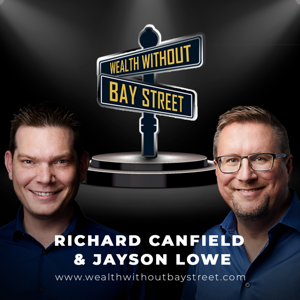


Success or regret often comes down to one thing: guidance. In this episode, Richard Canfield and Jayson Lowe reveal how to combine crypto and the Infinite Banking Concept (IBC) to keep control, minimize risk, and protect your wealth through every market swing.
Learn the basics of Infinite Banking
Everywhere you look, it’s “buy XRP,” “stake this,” “ride the bull run.” Yes, gains can be huge. However, without a plan to control the flow of money, you’re still at the mercy of banks, taxes, and volatility. Most people are told to buy, hold, and pray or worse, to cash out at the wrong time and hand a big slice to the taxman.
Infinite Banking is a process, not a product. The product, dividend-paying whole life insurance from a reputable mutual company, is simply the tool.
Crypto is a separate asset. You decide how to acquire it: cash, margin, or policy loan. When you choose a policy loan, you’re using OPM (Other People’s Money), in this case, the insurer’s, while your policy keeps compounding.
If you’re going to borrow, would you rather borrow against an asset that can’t go backward (your policy cash value) or an asset that swings wildly (your crypto)? Exactly.
Cold-storage keys. Exchanges that blow up. A partner who isn’t hands-on with wallets. Meanwhile, life happens. If you pass away, policy death benefits are liquid, tax-free, and show up when needed most. That removes stress in a stressful moment. Your heirs aren’t forced to liquidate crypto at a bad time.
Charlie Munger warned about the dangers of liquor and leverage. Leverage can ruin smart people if it’s reckless. The same is true here. Don’t drain 90% of your available policy loan balance to make a one-time payment into a spike. Do keep buffers, repay steadily, and avoid “Vegas on black” decisions. If you borrow with no plan to repay, that’s not an IBC problem; it’s a behaviour problem.
If any of these are true, pause. Then regroup with a coach.
Does borrowing against my policy pause compounding?
No. Your cash value keeps growing. You’re borrowing against the asset, not liquidating it.
Is this only for significant policies?
No. Start where you are. Grow. Over time, your system becomes a reliable source of opportunity capital.
What about taxes?
Policy loans don’t create a taxable event. Selling crypto can. Structure matters. Get guidance.
Isn’t silver or cash simpler than crypto?
Maybe. However, the financing decision is the same. Cash, silver, or Bitcoin you still either use your dollars or OPM from your policy.
External resources (optional):
One wrong move and the taxman wins. One misstep and volatility turns into a headache, not a win. Instead, get clarity and a plan tailored to you.
→ Book a no-pressure Clarity Call
We’ll show you how to use Infinite Banking to fund (not chase) your crypto strategy without draining savings or triggering taxes.
Money touches every part of our lives, but what if the very system behind it is designed for control, not freedom? In this episode, Richard Canfield and Jayson Lowe sit down with David Morgan, known as the Silver Guru, to expose the storm building beneath our financial system. From the rise of central bank digital currencies (CBDCs) to the role of silver and Infinite Banking in protecting families, this conversation reveals practical steps to reclaim control before the next shock hits.
Who is David Morgan?
David is widely known as the “Silver Guru.” He’s the author of The Silver Manifesto, the voice behind The Morgan Report, and the creator of the upcoming documentary ‘Breaking Free from the Stress, Fear, and Control of Money” by Silver Sunrise, which explores how centralized money erodes liberty. Because he’s spent decades analyzing monetary policy and precious metals, his perspective is both historical and refreshingly practical.
For many people, “money” is whatever appears in their bank account. However, currency isn’t always a form of money. Real money stores value over time. Fiat currencies, such as USD, CAD, and EUR, do not. Therefore, the more we rely on debased currency, the more control we hand to the issuers.
CBDCs (central bank digital currencies) are often pitched as ‘innovation.’ However, in reality, they enable programmable restrictions. As a result, your ability to buy, travel, save, or donate could be throttled by policy or algorithm or both.
Bottom line: Programmable money = programmable behavior.
Silver is tangible, divisible, and historically reliable as a store of value. Additionally, it serves as a monetary ‘vote’ outside the fractional reserve system. Furthermore, in local markets and real communities, trust in tangible value often outweighs reliance on digital apps.
But don’t view silver as a magic bullet. Instead, treat it as a pillar in a broader plan that includes cash flow, financing discipline, and education.
If you practice Infinite Banking (IBC), you already know that the aim is to control the banking function in your life. In other words, you finance life from your own system rather than someone else’s.
Want the family-level view? See how our Family Banking System® keeps more financial energy cycling inside the household, not leaking out to third parties. And if you’re new to the concept, start with “Becoming Your Own Banker“ to grasp the process, not just the product.
Related reading on our site: 290: Infinite Banking Risks—What They Are & How to Avoid
The solution is independence on many levels: emergency cash, tangible assets, decentralized value, and a financing system you control..
Isn’t silver too volatile?
Yes, silver can move fast. However, its long-term role is a store of value outside the fiat system. Manage position size, and think in years, not weeks.
How does IBC help here?
IBC centralizes your financing inside a mutual structure you co-own. Consequently, you gain liquidity, flexibility, and control while keeping capital compounding.
Should I sell silver to raise cash?
Not necessarily. Depending on your overall plan, borrowing against existing assets (policy values or metals through approved lenders) can preserve ownership while meeting cash needs. Continually assess interest costs, collateral risks, and buffers.
Will CBDCs replace cash immediately?
Unlikely. They’ll coexist first; then, gradually, cash access shrinks. That’s why building parallel resilience now is so essential.
Book a no-pressure call with our team. We’ll map out how Infinite Banking + sound money can fit your situation step by step. Schedule a Clarity Call
Or start learning within our client education ecosystem: quarterly coaching, one-on-one guidance, and a library of practical tools to help you implement with confidence.
When people hear “Infinite Banking,” they’re told it’s either a magic bullet or a massive risk. The truth lives in between. This post strips away hype and reveals the real risks, most of which stem from behaviour, not the product, and how to mitigate them. If you want long-term control over how you finance life, start here and turn IBC into a durable advantage, not a headache.
You’ve probably seen both extremes online. Some people refer to Infinite Banking as the “magic bullet.” Others say it’s too risky. However, the truth lies in between.
There are no disadvantages to being in control of your money. The actual risks stem from
Everyone wants a one-size-fits-all solution. Unfortunately, it doesn’t exist. Infinite Banking isn’t a magic wand. Rather, it’s a concept you can use to finance life while building wealth elsewhere, whether through businesses, real estate, or investments. Learn more about how a Family Banking System® can be a foundation for building generational wealth.
We often hear: “I’ll use Infinite Banking to get rich buying cars.”
That’s a sign of confusion. Infinite Banking is a process, not a get-rich-quick scheme. If you haven’t read Nelson Nash’s book Becoming Your Own Banker, you don’t have the whole picture.
You’re not “taking money out.” Instead, you’re borrowing against your cash value. It’s a loan, secured by your policy, while your cash continues to compound. As a result, getting this wrong creates unnecessary risk.
Yes, loans are flexible. You can repay them on your own schedule. However, flexibility without discipline is dangerous.
Nelson Nash said it best: “Don’t steal the peas.” If you borrow, repay. Moreover, repay with a little extra whenever possible. That’s how your system grows.
Plenty of agents can sell you a policy. But not everyone can coach you through the process. For example, if someone sends you an illustration within 30 seconds of contact, that’s a red flag.
Instead, look for a guide who:
The internet is full of hype: “IBC with this product is better!” or “Try this hack with your policy!” Instead of chasing noise, return to first principles.
According to the Nelson Nash Institute, the Infinite Banking Concept is tied directly to Nash’s process. Anything else is just marketing noise.
The rules are easy to grasp; however, applying them over the long term takes dedication
Infinite Banking itself isn’t risky. Instead, the risks come from:
Therefore, if you get clarity, practice discipline, and follow Nelson’s rules, you’ll have one of the most powerful ways to finance life on your terms and keep wealth in your family, not out the door.
Ready to explore if Infinite Banking is right for you? Book a call with our team and get clarity, not gimmicks.
When families first discover the Infinite Banking Concept (IBC), they often ask the same essential questions. What’s the real benefit of policy loans? Do loan repayments grow the policy? Should every dollar flow through the system?
In this episode of Wealth On Main Street, Richard Canfield is joined by US Agents Chey O’Brien and Garrett Gastil to break down some of the most common Infinite Banking FAQs. Together, they explore Nelson Nash’s “Becoming Your Own Banker“ and share how to apply its lessons in everyday life.
One of the biggest questions clients ask:
“What’s the benefit of flowing money back through loan repayments? It doesn’t grow the policy, it just gives me access to capital again.”
Here’s the answer:
Repaying loans is about stewardship and discipline. Nelson Nash called this ‘Don’t steal the peas.’ In simple terms, always return capital to your system so it’s ready for the next opportunity.
Infinite Banking isn’t a “set it and forget it” product; it’s a lifestyle. Just as an athlete improves with practice, families can also strengthen their financial systems through repetition.
Some people choose to run every expense through their policies. On the other hand, others, like one colleague mentioned, take larger loans quarterly to fund household expenses.”
The key lesson: Consistency matters more than perfection.
Nelson Nash’s Money Pool diagram (page 26) shows how an insurance company works:
As a policyholder, you’re a co-owner of the company. That means:
This level of control is what makes IBC more reliable than HELOCs or CDs.
On page 45 of Becoming Your Own Banker, Nelson compares two sisters:
Both self-finance cars, but only the sister with IBC has:
The lesson? You can “bank” with other tools, but Infinite Banking is the most efficient tool available.
Infinite Banking is simple, but not always easy. However, the real challenge is building the right habits. As a result, families must practice consistently and use the most efficient system available.
As Chey, Garrett, and Richard remind us, you don’t have to run every dollar through a policy. What matters is creating a system that works for your family, staying disciplined, and remembering that control is your most significant financial advantage.
Ready to see if Infinite Banking is right for you? Book your call with Ascendant Financial today.
Some conversations go beyond money; they touch faith, family, and legacy. In this episode, Jayson and Richard sat down with Nate Scott and Holly Reed to reflect on the story of Living Wealth, the company their father, Raymond Poteet, founded in 1972. What began as a life insurance agency grew into a mission to help families break free from financial slavery through the Infinite Banking Concept (IBC)
Living Wealth started with a simple commitment: serve people with integrity and faith. For years, Ray built a successful insurance practice. Then, a mentor’s passing changed everything. On his desk, Ray found R. Nelson Nash’s Becoming Your Own Banker. He picked it up, read it cover to cover, and immediately saw a bigger mission.
Ray even called Nelson directly back then; his number was printed in the book, and within a day, Ray was attending an IBC event in Kansas City. From that moment, he followed Nelson across the country for nine months, learning the process inside out.
As Holly shared:
“It wasn’t about money anymore. It was about breaking financial slavery for parents, families, and individuals and teaching them how to pass on a legacy.”
Ray’s gift wasn’t just in teaching; it was in being fully present. Whether mentoring a millionaire business owner or a missionary struggling to make ends meet, Ray gave the same focus and care.
Nate recalled:
“He wasn’t a respecter of persons. Whoever he was with, he gave 100% of his attention. That’s what made him different.”
Ray’s biggest success story wasn’t measured in numbers, but in people, like helping a prison pastor adopt his grandchildren after tragedy struck. For Ray, that was real wealth.
In 2025, Living Wealth joined Ascendant Financial. This wasn’t about replacement but continuation, carrying Ray’s mission forward.
Holly explained the decision:
“My dad respected Jayson. He trusted him. Ascendant is a family business too, built on the same values. For us, it was about carrying the legacy, not letting it end.”
Nate agreed:
“If Ray were here, he’d be full steam ahead. He would’ve said, ‘Whatever’s best for clients, let’s go.’”
Many people misunderstand IBC as just buying a policy. In truth, it’s a process. It’s about control, building equity without interruption, recapturing interest that would otherwise leave the family, and creating a family banking system.
Ray used to say, “The wealthy don’t tell their kids to grow up and move out to start over. They say: add to the family system, keep the money in the family, and build it bigger for the next generation.”
Today, Ascendant Financial carries forward the Living Wealth legacy, mentoring families and helping them build financial freedom through Infinite Banking.
For Nate and Holly, their father’s influence is still alive. When asked what she would say if Ray were here, Holly’s response was simple:
“Thank you. You changed our family, and you changed families everywhere.”
Want to build your own Family Banking System?
Start by reading Nelson Nash’s Becoming Your Own Banker and connect with Ascendant Financial to see how Infinite Banking can transform your family’s future.
What happens when you commit to the Infinite Banking Concept (IBC) for five years? How does it shape your business, your family, and the way you think about money?
In this episode of Wealth On Main Street, Richard Canfield is joined by two brothers, Garrett and Miles Gastil. Meanwhile, Miles shares his five-year journey practicing Infinite Banking as a contractor, father, and entrepreneur.
Garrett introduced Miles to Infinite Banking through Nelson Nash’s book Becoming Your Own Banker. At first, Miles hesitated. However, within just a couple of weeks and several conversations, the idea clicked.
From that point forward, both brothers went all in. They explored ways to maximize their systems, sometimes aggressively at first. Over time, they realized the importance of pacing themselves and focusing on long-term goals.
Miles describes his first five years as “all gas and building.”
He has used policy loans for:
In other words, he views this stage as a form of capitalization. While not every loan was repaid quickly, his focus was on building a system that would support future opportunities.
As a result, Miles now sees Infinite Banking as a foundation for both his personal and business life.ss of capitalization, discipline, and long-term growth.
Over time, both Garrett and Miles began to see Infinite Banking differently.
Moreover, Miles noted that there is often more risk in not acting than in moving forward. Staying in the same place felt riskier than betting on himself with Infinite Banking.
Nelson Nash often said that the most prominent problem families face is a lack of control. Therefore, Infinite Banking solves that problem by giving families:
On the other hand, traditional banking methods often restrict access and create dependence.
As a contractor, Miles knows the importance of equity in tangible assets. Infinite Banking helped him shift perspective.
For example, Miles chooses to build equity in his policies, his home, and his business. By doing so, he keeps control in his own hands rather than leaving it with banks. Power.
Infinite Banking is not about chasing quick wins. Instead, it is about discipline, consistency, and creating long-term financial control.
As Garrett and Miles shared, the real value is not just in uninterrupted compounding but in the security, control, and legacy it provides for families.
Ready to see if Infinite Banking is right for you? Book your call with Ascendant Financial today.
What does it mean to retire on your own terms and create a ripple effect of wealth that lasts for generations?
What does it mean to retire on your own terms and create generational wealth that lasts? In this episode of Wealth On Main Street, Richard Canfield and Thomas O’Connell explore the Infinite Banking Concept and how it empowers families to build freedom and legacy.
Thomas didn’t start his career planning to be a financial professional. With a degree in criminal justice and political science, he found himself unexpectedly drawn into the world of insurance. Early on, he noticed there was something more to life insurance than just a death benefit.
Even before Nelson Nash published Becoming Your Own Banker, Thomas saw the potential for cash value policies to serve as tools for long-term financial stability. That curiosity led him to seek out Nelson in person. A two-day seminar changed the course of his career forever.
“I was in. From that first event, I knew Infinite Banking was the right path,” Thomas recalls.
For Thomas, meeting Nelson wasn’t just about learning financial strategies; it was about embracing a mindset. Nelson’s humility, intentionality, and long-term generational thinking left a deep mark.
“He didn’t say much, but when he spoke, you knew it was worth listening to,” Thomas shares.
Nelson’s vision of building systems that outlive us continues to guide Thomas’s work today. From teaching advisors to mentoring younger generations, Thomas embodies the spirit of stewardship Nelson modelled.
One of Thomas’s key lessons: Infinite Banking is not a product, it’s a lifestyle.
By using dividend-paying whole life insurance policies as a personal banking system, families create and, not or, solutions.
As Thomas explains, this flexibility makes IBC a foundation for generational wealth. It allows families to weather challenges, reset when needed, and keep capital working, rather than surrendering it to outside institutions.
Thomas has seen firsthand how Infinite Banking changes lives:
Even in the most challenging moments, when clients pass away, Thomas has had the privilege of delivering security to families.
“When a spouse asks, ‘What am I going to do?’ I can say, ‘You don’t have to do anything. Everything is taken care of.’ That’s the real power of this system.”
Moreover, Thomas emphasizes that wealth is about more than dollars; it’s about mindset. As a result, he challenges the common idea of spending it all and instead encourages families to think like Nelson..
“It’s our obligation to leave the next generation better off,” Thomas says.
This generational stewardship is why Thomas is passionate about projects like the upcoming Nelson Nash Institute book, which will collect client success stories to inspire families and advisors alike.
When asked who he most wants to impact, Thomas’s answer was simple:
“My daughter. My nieces and nephews. If my daughter ever has kids, I don’t know if I need to be a hero, but I want to be someone they can respect and point to and say he lived it the right way.”
Like Nelson, Thomas sees himself as a teammate, working to build legacies that ripple far beyond his own lifetime.
Infinite Banking is more than a financial strategy; it’s a way of life that empowers families to take control, reduce dependency on external systems, and create a foundation of resilience for generations.
Thomas O’Connell’s story reminds us that when you align values, stewardship, and financial systems, the impact extends far beyond what we can imagine.
To hear Thomas’s full story and insights, tune in to the episode of Wealth On Main Street.
Learn more about the Infinite Banking Concept and how Canadians are applying it today.
From the publisher's feed
13,958 Listeners

1,697 Listeners

33 Listeners

247 Listeners
62 Listeners
74 Listeners

80 Listeners
46 Listeners

55 Listeners

29 Listeners
23 Listeners

0 Listeners

120 Listeners

15 Listeners
11 Listeners