
Sign up to save your podcasts
Or

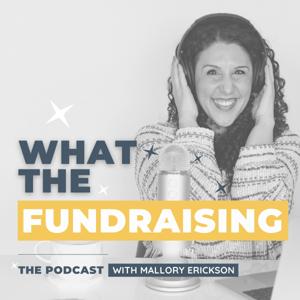


Sharing that I’m a person with ADHD (Attention Deficit/Hyperactivity Disorder) has definitely sparked feedback and conversation, which should come as no surprise. As Margaux Joffe, my guest on this episode of What the Fundraising is perfectly positioned to explain, neurodivergence is a reality across all kinds of workplaces in every imaginable sector. “It represents the diverse range of human brains and neurocognitive functioning that exists in our species,” says Margaux, an innovator and advocate for people with disabilities of all kinds, but most especially those who are not “neurotypical.” She is helping us understand both the challenges and enormous strengths available to those of us whose brains work differently in a number of different ways.
This first part of our in-depth exploration focuses on identifying boundaries in the workplace (or a lack thereof) and how to put in place systems to support ourselves or those we lead in staying focused, productive and fulfilled in our missions. You’ll come away with some practical tools to deploy and a clear understanding of just how much those of us with ADHD and other disabilities (some 1 billion globally) have to offer when it comes to energy, ideas and fresh approaches. It starts with working across disciplines to ensure accessibility, inclusivity and respect for differing styles of learning and execution. Margaux, who founded the Kaleidoscope Society platform especially for adult women with ADHD, brings not just her personal story but a wealth of experience that will fire you up about disability inclusion inside our organizations – and celebration!
Get all the resources from today’s episode here.
Follow along on Instagram
Connect with Mallory on LinkedIn
Many thanks to our sponsor, Feathr for making this episode possible. Our friends at Feathr help nonprofits like yours level up their digital campaigns every day through their nonprofit marketing platform. Don’t rely on magic this year. Check out Feathr to streamline your digital marketing campaigns and exceed your goals. Learn more and get started today at Feathr.co.
If you haven’t already, please visit our new What the Fundraising community forum. Check it out and join the conversation at this link.
If you’re looking to raise more from the right funders, then you’ll want to check out my Power Partners Formula, a step-by-step approach to identifying the optimal partners for your organization. This free masterclass offers a great starting point
When it comes to accessibility, do foundation’s insides match their outsides? This episode of What the Fundraising – the second of two parts – takes a closer look at how (or whether) funders embrace the full spectrum of disabilities, not just in the projects they fund but in the accessibility of their funds in the first place. Staying aligned to our missions means ensuring our systems are integral – and inclusive. My guest, Margaux Joffe, a groundbreaking voice on behalf of those with ADHD and neurodiversity in general, is helping us take a deep dive into how to be intentional about opening up the funding process by building better, more accessible, systems. “It’s a mindset shift that we all need to make,” says our guest, “actually understanding that people with disabilities are also working in our companies and are leading. They are visionaries.”
Accessibility is an issue that impacts our nonprofit workplaces just as surely as it impacts the “beneficiaries” we seek to support. My discussion with Margaux covers important measures that any funder can undertake to improve accessibility with the end-to-end grant application experience. For starters, that means recognizing that one in three U.S. households include someone with a disability of one kind or another, many of which are “invisible.” The good news is that there are all kinds of strategies to implement and certified experts available to advise us on the latest web accessibility industry standards. Margaux also highlights the importance of pushing the nonprofit platforms we all use to make their digital technologies more accessible to all. You’ll come away from this conversation with actionable ideas for making inclusion a baseline feature of your grantmaking process and framework for meaningful collaboration at every stage of the fundraising journey.
If you missed the first part of this two-part discussion, you can find Part I at XXXX. And you’ll also want to check out Margaux’s exciting initiative, the GreatADHDReset, which is all about helping us find compassionate solutions to optimize our unique brains on our own terms!
Get all the resources from today’s episode here.
Follow along on Instagram
Connect with Mallory on LinkedIn
Many thanks to our sponsor, Feathr for making this episode possible. Our friends at Feather help nonprofits like yours level up their digital campaigns every day through their nonprofit marketing platform. Don’t rely on magic this year. Check out Feathr to streamline your digital marketing campaigns and exceed your goals. Learn more and get started today at Feathr.co.
If you haven’t already, please visit our new What the Fundraising community forum. Check it out and join the conversation at this link.
If you’re looking to raise more from the right funders, then you’ll want to check out my Power Partners Formula, a step-by-step approach to identifying the optimal partners for your organization. This free masterclass offers a great starting point
Is so-called “dumb luck” really so dumb? Or is it, in fact, the result of an invitation? As my guest on this episode of What the Fundraising explains, there’s an art and science to this thing called “serendipity.” Christian Busch, author of "The Serendipity Mindset: The Art and Science of Creating Good Luck," is showing us how to cultivate the unexpected, with insights about why an abundant approach opens doors (and how staying small can literally cause us to miss good fortune right in our path). In addition to sharing fascinating research, Christian is also providing concrete strategies for shifting our luck – as fundraisers and humans. As he explains, incremental adjustments in the permission we give and the environment we create can make all the difference.
And if you think luck somehow isn’t credible because, well … it’s just luck, Christian demonstrates the many ways that are not true. We can create an actionable road map to good fortune through flexible attitudes and frameworks. It serves no one to be overly attached to outcomes, says Christian, who highlights examples of organizations that have reaped the benefits of richer, more sustained connections. Make no mistake, says Christian, who also directs New York University’s CGA Global Economy Program, “You can prepare for the unexpected by creating the foundations for it.” Transformational change starts with the decision to open up our worlds and missions to results we can’t even imagine. Is your organization ready to invite – and harness the power of – serendipity? If so, jump in and join the conversation!
Get all the resources from today’s episode here.
Follow along on Instagram
Connect with Mallory on LinkedIn
Many thanks to our sponsor, Feathr for making this episode possible. Our friends at Feather help nonprofits like yours level up their digital campaigns every day through their nonprofit marketing platform. Don’t rely on magic this year. Check out Feathr to streamline your digital marketing campaigns and exceed your goals. Learn more and get started today at Feathr.co.
If you haven’t already, please visit our new What the Fundraising community forum. Check it out and join the conversation at this link.
If you’re looking to raise more from the right funders, then you’ll want to check out my Power Partners Formula, a step-by-step approach to identifying the optimal partners for your organization. This free masterclass offers a great starting point
When my guest on this episode of What the Fundraising peers into the future, she sees a world in which well-being isn’t an afterthought but the centerpiece of creativity, innovation, and productivity. As Co-Founder and CEO at Quan, Arosha Brouwer is creating a platform to support sustainable workplace environments through science-based inquiry and behavioral insight. Whether in a for-profit or nonprofit context, the focus is on measuring team and individual performance not just by net productivity but on holistic, long-term outcomes.
Arosha brings to Quan tools acquired over years of working to optimize operations in both the private and public sectors – perspectives equally applicable to the burnout-prone world of fundraising. She reflects on the hand-in-hand relationship between resilience and vulnerability as well as why the healthiest workplaces create structures that support psychological safety and the freedom to fail without fear. Above all, says Arosha, Quan’s mission lies in helping leaders support teams in identifying and protecting space for creativity and longevity. “If you’re constantly doing,” she says, “then you’re not stepping back to have those moments of insight that could be the inflection point to do something drastically better.” You’ll come away from this episode with a new understanding of how self-care and wellness fit into – and are in fact essential to – doing our best work and being of service to others.
Get all the resources from today’s episode here.
Follow along on Instagram
Connect with Mallory on LinkedIn
Many thanks to our sponsor, Feathr for making this episode possible. Our friends at Feather help nonprofits like yours level up their digital campaigns every day through their nonprofit marketing platform. Don’t rely on magic this year. Check out Feathr to streamline your digital marketing campaigns and exceed your goals. Learn more and get started today at Feathr.co. And don’t forget to tell them that I sent you!
If you haven’t already, please visit our new What the Fundraising community forum. Check it out and join the conversation at this link.
If you’re looking to raise more from the right funders, then you’ll want to check out my Power Partners Formula, a step-by-step approach to identifying the optimal partners for your organization. This free masterclass offers a great starting point
This episode is a quick personal note from me to you. It includes some recap, a look ahead and what I am thinking about for the sector and fundraisers in 2023 and beyond. It also includes my deep gratitude for you, this community, our guests and our amazing sponsors.
Some of the episodes I highlight in the recap include:
Britt Frank - THE SCIENCE OF STUCK & HOW TO MOVE FORWARD IN YOUR FUNDRAISING
Gabriel Kram - TRUE SELF-CARE: TENDING TO COMMUNITY, ANCESTRY, AND OUR NERVOUS SYSTEMS
Ruthie Lindsey - THE TRUTH ABOUT SELF-LOVE, HEALING, AND THE PATH TO REMEMBERING OUR DEEPEST SELVES
Libby DeLana - TAKING THE NEXT RIGHT STEP: HOW A MINDFULNESS PRACTICE BUILDS ALIGNMENT
Woodrow Rosenbaum - MOBILIZE YOUR MISSION: DATA-DRIVEN DECISION MAKING IN A RECESSION
Sasha Dichter - MEASURING FOR SUCCESS: ALIGNMENT, DATA, AND DONOR CONFIDENCE
Mariam Nusrat - MOBILIZE YOUR MISSION: WHAT GAMIFICATION CAN TEACH US ABOUT ENGAGEMENT, RETENTION, & BUILDING COMMUNITY
Dominque Morgan - OVERHEAD MYTH, MISSION CREEP, SCARCITY MINDSET: A STUCK SECTOR AND WHAT WE CAN DO ABOUT IT
Lynne Twist - HOW TO LIVE A COMMITTED LIFE & RAISE MONEY FROM THE HEART
Simone Seol - WHY BRAVERY & NUANCE MATTER: OUR MARKETING & FUNDRAISING MINDSET DEFINES THE DONORS WE ATTRACT
Natalia Sanyal - HOW TO WRITE ANTI-OPPRESSIVE MARKETING AND COPY THAT CONVERTS
Seth Godin - EFFECTIVE FUNDRAISING AND POWER PARTNER PRINCIPLES
Thank you for spending your time with us this year. I’m so grateful for you and the hard work you do to make our world a better place. I hope this holiday season you shine your light back on yourself for some celebration, rest, and rejuvenation. I am wishing you a happy holiday season and happy new year. I’ll see you again on January 3rd, 2023.
Follow along on Instagram
Connect with Mallory on LinkedIn
If you haven’t already, please visit our new What the Fundraising community forum. Check it out and join the conversation at this link.
If you’re looking to raise more from the right funders, then you’ll want to check out my Power Partners Formula, a step-by-step approach to identifying the optimal partners for your organization. This free masterclass offers a great starting point
It’s easy to feel intimidated – or even a little clueless – when it comes to leveraging potential funding sources like stock, cryptocurrency, ETFs, or IRAs. But when we’re avoidant, says my guest on this episode of What the Fundraising, we’re leaving money on the table. Vance Roush, Founder & CEO at Overflow isn’t suggesting that people running nonprofits need to become experts in any of these non-cash vehicles. We just need to partner well! That’s why this former Google employee, who recently raised $8 million in 45 days to secure a new church for the growing congregation he founded, developed a platform to manage and educate both donors and fundraisers. “We have an opportunity to unlock unprecedented amounts of generosity if we can remove that friction,” says Vance, who is tremendously optimistic about the future of solving problems like climate change and homelessness. Why? Because there is a palpable entrepreneurial energy among young people who want to do more than make apps and widgets. Vance has seen first-hand a growing wave of collaboration and innovation that he believes will move the needle on the most intractable social inequity.
You’ll learn about how Overflow is working to create a giving platform that – with a single button – opens up entirely new windows of possibility for donors with stock, crypto, and other non-cash resources. The net result? An increase in average donation amounts. And who doesn’t want that? So, as Vance says, it’s time to harness Silicon Valley’s venture-capital approach to fundraising by getting bold, risking failure, and inviting our prospective funders to go on the journey with us!
Get all the resources from today’s episode here.
Follow along on Instagram
Connect with Mallory on LinkedIn
If you haven’t already, please visit our new What the Fundraising community forum. Check it out and join the conversation at this link.
Please note: This episode is a part of a very special series called The People Behind the Products. More than ever, nonprofits care about the company behind their technology and service providers. What’s the underlying mission and vision of the company? What do they stand for? And how are they thinking about the sector and serving nonprofits? This series is an opportunity to get to know some of my favorite nonprofit technology companies so that the next time you’re making a tech decision, you can understand a little bit more about the people behind the product. There is no sponsorship or industry money behind the production of this series and the editorial content was at the sole discretion of the What the Fundraising team.
Note the disparity: while commercial businesses have a near 90% returning customers, the nonprofit sector has a staggering 40-45%. Surprising? Then you’ll want to spend some time with Jay Love, Co-Founder of Bloomerang, and my guest on this episode of What the Fundraising. After 11 years as the CEO and Co-Founder of eTapestry, Jay started Bloomerang specifically to address the donor retention issues we have in the nonprofit sector. In addition to our talk about donor retention, you’ll get insight into Jay’s 4-decade journey in this sector and his up-close look at the evolution of technology and data management. Jay walks us through the evolution of donor data storage from post-it notes and file cabinets, to disks and hard drives, and then finally to cloud storage. The history is eye-opening and helpful to understanding where we are today, why we see resistance in certain tech adoption areas, and how we can best utilize the incredible tools we have available to us.
Jay also shares valuable insight into what it takes for nonprofits to succeed in their fundraising, and what keeps donors engaged with their nonprofit partners. A lot of it, as you’ll hear, boils down to two things: authenticity and appreciation, both of which are made easier with the right technology partners. In this era of the digital revolution, data holds so much power and requires a lot of responsibility. Jay talks to us about the most important ways to maintain data hygiene and the right ways to utilize (and protect) donor data. He also explains why transparency and proper handling of data are a must in nonprofits to support donor trust and engagement. But don’t worry, data hygiene doesn’t mean ‘perfect data’ and we talk about the difference and the ways in which most donors have grace for nonprofits when there is an error in lifetime giving data or another metric. The opportunities we gain by utilizing our data and personalizing communications far outweigh the issues with small mistakes here and there. This episode will help you know what to prioritize and why!
Get all the resources from today’s episode here.
Follow along on Instagram
Connect with Mallory on LinkedIn
Please note: This episode is a part of a very special series called The People Behind the Products. More than ever, nonprofits care about the company behind their technology and service providers. What’s the underlying mission and vision of the company? What do they stand for? And how are they thinking about the sector and serving nonprofits? This series is an opportunity to get to know some of my favorite nonprofit technology companies so that the next time you’re making a tech decision, you can understand a little bit more about the people behind the product. There is no sponsorship or industry money behind the production of this series and the editorial content was at the sole discretion of the What the Fundraising team.
Giving Circles have been around as a concept since the 1980s, but in combination with new technologies, those circles are wider and more generous than ever before. As we learn from Emily Rasmussen, my guest on this episode of What the Fundraising, having a platform around which to congregate strengthens the communities that are fueling movements. She founded Grapevine in 2018 specifically to facilitate multiple small donations – maximizing their impact and helping to connect the dots between people and organizations. We know that more collaboration equals more momentum. Pooling resources only expands the pie (which is another reason why a scarcity mindset does no one any favors).
In this conversation, you’ll learn about the different models for Giving Circles, what kinds of networks have been most successful thus far, and how technology can aggregate and amplify the interests of small donors and the community. Emily is sharing key ingredients to keep in mind when setting up a Giving Circle modality and highlights the importance of putting an intentional framework in place. “Nonprofits are recognizing this model and seeing the power,” says Emily. “This is a movement. It's only accelerating!” We’re leaving you with lots of points of entry for moving your nonprofit into the fast lane with this form of turbocharged fundraising – and the community purpose it stewards and grows.
Get all the resources from today’s episode here.
Follow along on Instagram
Connect with Mallory on LinkedIn
Ready to streamline and modernize your organization’s fundraising strategy? Smash through stumbling blocks with my VIP Day, an intensive one-to-one executive coaching experience. You can also click here to learn how I can work with you to pinpoint problems, develop a clear plan, and create content and design habits to support your nonprofit in achieving its goals.
Please note: This episode is a part of a very special series called The People Behind the Products. More than ever, nonprofits care about the company behind their technology and service providers. What’s the underlying mission and vision of the company? What do they stand for? And how are they thinking about the sector and serving nonprofits? This series is an opportunity to get to know some of my favorite nonprofit technology companies so that the next time you’re making a tech decision, you can understand a little bit more about the people behind the product. There is no sponsorship or industry money behind the production of this series and the editorial content was at the sole discretion of the What the Fundraising team.
Have you met people in the fundraising space who think tech is a silver bullet? And because of that, they invest a lot of time and resources in making decisions around the tech adoption and fail to anticipate the implementation of the tech solution. It’s quite common, and the truth is that I was guilty of it as an Executive Director too. But we need to start talking about technology differently, as an facilitator and support system, with fundraiser enablement at the center of the product. And that’s exactly what we’re diving into today.
In this episode, Tim Sarrantonio, Director of Corporate Brand at NeonOne, shares his insight into the sector, and the new NeonOne CRM elements that he is particularly excited about. While Tim has been at NeonOne for 10 years, his journey in the sector began as a grant writer. Today, he shares nuggets of wisdom to help make fundraising easier with technology, and how to make the fundraiser's job easier with training, support, and community. NeonOne is all about Connected Fundraising and in this episode we get to dig into what that means and how that impacts the product, priorities, and process for continuous growth and improvement.
Get all the resources from today’s episode here.
Follow along on Instagram
Connect with Mallory on LinkedIn
And if you haven’t already, please come on over and visit our lively new What the Fundraising community forum. You can join the conversation at this link.
Please note: This episode is a part of a very special series called The People Behind the Products. More than ever, nonprofits care about the company behind their technology and service providers. What’s the underlying mission and vision of the company? What do they stand for? And how are they thinking about the sector and serving nonprofits? This series is an opportunity to get to know some of my favorite nonprofit technology companies so that the next time you’re making a tech decision, you can understand a little bit more about the people behind the product. There is no sponsorship or industry money behind the production of this series and the editorial content was at the sole discretion of the What the Fundraising team.
How’s your data hygiene? No need to panic! As we learn on this episode of What the Fundraising, our metrics don’t need to be perfect. In fact, according to my guest, Nejeed Kassam, Founder & CEO of Keela and Co-Founder of Fundraising Kit, missteps and gaps are a given. But that’s not the bigger problem here. The first hurdle is the tendency to bury our heads in the sand. Prone to perfectionism, many of us in the nonprofit world are afraid that our data isn’t pristine enough, and our numbers are not impressive enough. The truth is, says Nejeed, things are seldom as bad as we fear and always better positioned for success – when we actually look at the numbers! And the Keela platform that he and his team have developed is designed to make your nonprofit’s numbers empowering, not intimidating!
Founded in 2013, Keela’s mission is driven by people like Nejeed, for whom giving back is a core value. Using a targeted, multi-channel communications and marketing approach, the Keela platform was designed expressly to ease the burden on the humans providing the heart and soul of fundraising. So if you’re feeling fearful of all things data-driven, this episode is your point of entry. Take the plunge and you’ll see: What we imagine is never worse than what we actually know – and have the tools to address. There is a powerful upside potential of deploying technologies like artificial intelligence and pinpointed communications if we’re open enough to try them.
Get all the resources from today’s episode here.
Follow along on Instagram
Connect with Mallory on LinkedIn
Please come on over and visit our lively new What the Fundraising community forum. You can join the conversation at this link.
Please note: This episode is a part of a very special series called The People Behind the Products. More than ever, nonprofits care about the company behind their technology and service providers. What’s the underlying mission and vision of the company? What do they stand for? And how are they thinking about the sector and serving nonprofits? This series is an opportunity to get to know some of my favorite nonprofit technology companies so that the next time you’re making a tech decision, you can understand a little bit more about the people behind the product. There is no sponsorship or industry money behind the production of this series and the editorial content was at the sole discretion of the What the Fundraising team.
From the publisher's feed

38,033 Listeners

43,373 Listeners
6,706 Listeners

111,856 Listeners
1,641 Listeners

56,472 Listeners
884 Listeners
16 Listeners
57,613 Listeners
262 Listeners
6,433 Listeners

19,320 Listeners

10,834 Listeners
13,628 Listeners

12,477 Listeners