
Sign up to save your podcasts
Or

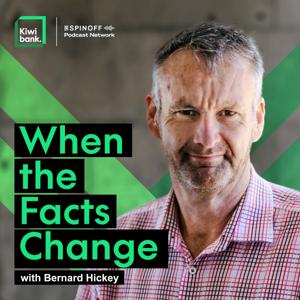


Bernard Hickey is joined by Ockham founder Mark Todd to dig through a massive year for housing. They talk about the record high number of houses being built despite all sorts of supply chain grief and skills shortages, plus whether the ‘Townhouse Nation’ law changes rammed through Parliament will actually make a difference, or leave us regretting the prescriptive legislation in years to come.
Learn more about your ad choices. Visit megaphone.fm/adchoices
When the Facts Change is taking a short break over summer. We'll be back with new episodes soon, but until then here's one of our most popular episodes of 2021.
From July: Over the last 30 years, a generation of voters and politicians made a decision to stop investing in infrastructure – it’s expensive, and it means you can’t cut taxes or keep rates low. Now we’re seeing the collective catastrophe of this underinvestment landing on our heads in the form of labour shortages and massive housing affordability problems. In this episode, Bernard Hickey reveals an intergenerational wealth transfer worth $1 trillion, and how it could be atoned for and reversed – if only to ensure the culprits can enjoy watching their grandchildren grow up healthy, warm and in person. Guests: Ockham Residential founder Mark Todd and Stephen Sutorius, owner of Thames Pacific.
Learn more about your ad choices. Visit megaphone.fm/adchoices
When the Facts Change is taking a short break over summer. We'll be back with new episodes soon, but until then here's one of our most popular episodes of 2021.
From June: For a growing number of Wellingtonians, the dream of owning a home in the city is all but dead. And it's the same story in other parts of the country too – successive governments have sat on their hands afraid that doing anything to create more housing might drive down prices, and as a result median rents and house prices have skyrocketed out of reach. To find out more about the costs of this housing inaction and Wellington's Spatial Plan, Bernard talks to Ashok Jacob from Renters United, Alison Anitawaru Cole from Victoria University, director of the Growing Up in New Zealand study Susan Morton and Kiwibank senior economist Jeremy Couchman.
Learn more about your ad choices. Visit megaphone.fm/adchoices
The UN Climate Change Conference in Glasgow earlier this year removed all doubt about how fast we need to cut climate emissions. If we’re to keep warming below 1.5 degrees, we need to make big changes by 2030 – two or three decades to build rail lines and wait for Tiwai Point to close won’t cut it any more. So what needs to be done to rapidly engineer a just transition to zero carbon in less than a decade? Bernard Hickey talks to Our Energy CEO John Campbell about how virtual energy trading of distributed solar energy generation could help, and climate activist Paul Winton explains why we have to reconfigure our existing roads for cycling, walking and buses ASAP.
Learn more about your ad choices. Visit megaphone.fm/adchoices
The social discount rate is one of the tools the government uses to calculate the cost benefit analysis on long-term investments. And according to a report released earlier this week, our social discount rate has been too high for more than 30 years. In this episode, Bernard Hickey looks at the way the government makes decisions around intergenerational issues like climate change, child poverty and housing affordability, and how things like discount rates have disadvantaged future generations. To find out more, he talks to parliamentary commissioner for the environment Simon Upton, who’s calling on Treasury to lower New Zealand’s discount rate, and public sector analyst Jess Berentson-Shaw from The Workshop, who has seen how the use of high discount rates has frozen the public service in time.
Learn more about your ad choices. Visit megaphone.fm/adchoices
Like the rest of the world, Aotearoa’s ports are clogged with containers, trucks, ships and growing shipping bills. But it’s not all because of Covid worker shortages and lockdowns. In this episode, Bernard Hickey looks at how the many weird economic effects of Covid are playing out through the world’s logistics chains, from frantic factories to empty store shelves and even Adele’s new album. Guests: Chris Edwards, president of the Custom Brokers and Freight Forwarders Federation, and professor Tava Olsen, director of the Centre of Supply Chain Management at the University of Auckland Business School.
Learn more about your ad choices. Visit megaphone.fm/adchoices
Steve Jurkovich has been CEO of Kiwibank for three years, during which time he has introduced a raft of changes – from embracing te ao Māori to registering as a B Corp. He tells The Spinoff's Duncan Greive what's driven this reimagining of the organisation.
Learn more about your ad choices. Visit megaphone.fm/adchoices
This week new National leader Chris Luxon was asked a question that was posed to Jacinda Ardern and Judith Collins before last year’s election: Do you want house prices to fall? It’s a curly one for politicians to answer – how do they make housing more affordable while at the same time preventing the market from collapsing? In this episode Bernard Hickey attempts to figure out how it could be done, and how long it might take to happen. He talks to Sense Partners economist Kirdan Lees, who co-wrote the ground-breaking analysis of the bipartisan ‘Townhouse Nation’ accord, architect and urban design writer Jade Kake and Green MP for Auckland Central Chlöe Swarbrick.
Learn more about your ad choices. Visit megaphone.fm/adchoices
New Zealand’s Labour Cost Index showed a 2.4% wage increase last year. But when you set that against an inflation increase of 4.9% over the same period, in real terms the average New Zealander took a 2.5% pay cut. In a tight labour market, we should in theory all be marching into our boss’s office and asking for a raise – so why isn’t this happening? To find out, Bernard Hickey talks to CTU chief economist Craig Renney and Kiwibank economist Mary Jo Vergara.
Learn more about your ad choices. Visit megaphone.fm/adchoices
Back in March, a virtually unheard-of digital artist called Mike Winkelmann, aka Beeple, made a collage of 5,000 pieces of his digital art into an NFT and sold it via auction house Christie’s. When the hammer finally fell, bids had reached over US$69million. In just the last couple of weeks, some similarly eye-watering prices have been fetched in New Zealand’s fine art market, with Michael Parekowhai’s sculpture 'A Peak In Darien' selling at auction for a record-breaking NZ$2.05million. In this episode, Bernard Hickey looks at how the rise of NFT art and the state of the world’s art markets in general have a direct connection to what’s happening in financial markets and the monetary system globally, and where it’s all headed.
Learn more about your ad choices. Visit megaphone.fm/adchoices
From the publisher's feed

7,563 Listeners

5,525 Listeners

33 Listeners

16 Listeners

12 Listeners
12 Listeners

1 Listeners

6 Listeners

31 Listeners

14 Listeners

51 Listeners

161 Listeners

2 Listeners

2,828 Listeners
91 Listeners

0 Listeners

3,049 Listeners
5 Listeners

5 Listeners

5 Listeners

0 Listeners

0 Listeners