
Sign up to save your podcasts
Or

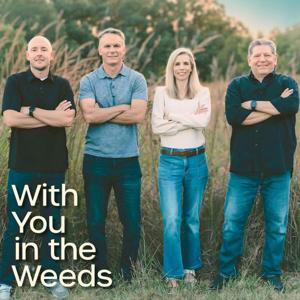


Who you surround yourself with shapes who you will become. If you want to avoid becoming a toxic person in a hurtful relationship, you’ll want to listen as John and Lynn define and explain the 5 symptoms of toxic relationships:
- Harmful words
- Selfish ambition/pride
- Envy
- Manipulation
- Deceit
When you can recognize these 5 symptoms, not only will you be able to avoid them in your relationships, with God’s help you can prevent them in yourself.
If you find this episode helpful, please text this episode to a friend, leave us a review, and email us with any topics you’d like to hear us discuss.
Broken trust hurts, but it can be rebuilt. Lynn, Shay, and Austin walk through 5 concrete steps to take when you’ve had trust broken in a relationship:
T - Take a step back
R - Reflect on who you’re dealing with
U - Understand the impact
S - Set boundaries
T - Test over time
If these steps seem daunting, then you’re in good company because most of us didn’t have this modeled when we were growing up. But it’s never too late to learn something new.
Practicing and implementing these 5 steps in your life will slowly but surely add marbles back into your relational jar of trust.
If you find this episode helpful, please text this episode to a friend, leave us a review, and email us with any topics you’d like to hear us discuss.
Trust is the energy that creates and maintains healthy relationships. Without it, your relationships cannot thrive or survive.
Lynn, Shay, and Austin dig deeper into what trust actually is, how it’s built and broken, and the damage broken trust causes in friendships, marriages, jobs and families.
If you’re hurting because of broken trust, this episode will normalize your pain and give perspective and explanations as to why this feels so gut-wrenching.
If you find this episode helpful, please text this episode to a friend, leave us a review, and email us with any topics you’d like to hear us discuss.
You want to be at peace with everyone, but can every conflict be resolved? Maybe not, but there are 4 key commitments you can make to help you manage conflict in your life.
John and Shay explain these 4 commitments and how to apply them in practical ways:
1. Take ownership
2. Practice discernment
3. Set boundaries
4. Persevere
If you find this episode helpful, please text this episode to a friend, leave us a review, and email us with any topics you’d like to hear us discuss.
Why are you in conflict? It’s really simple: you want something. And when you don't get what you want, or your desires are at odds with someone else's, you're in conflict before you know it.
John and Austin discuss 4 questions you need to answer if you want to get to the root conflict in your life:
1. What type of person are you in conflict with? Figuring this out will determine how you approach resolution, or if resolution is even possible.
2. What is this conflict about? Dig below the surface to the deeper issue.
3. How are you engaging in this conflict? Most likely you're either pursuing, attacking or triangulating.
4. How is this conflict impacting you? Being aware of the physiological, emotional and spiritual elements of conflict will enable you to manage it.
If you find this episode helpful, please text this episode to a friend, leave us a review, and email us with any topics you’d like to hear us discuss.
Shame says, "You're disqualified from being loved." But your connection with Jesus means that you are eternally loved, and nothing can separate you from that love.
So how should you respond to the shame signal when it shows up?
John, Lynn, and Austin explain how we need both connection & correction in order to manage our shame. Learn how this critical framework offers an antidote to the painful experience of shame.
Did you find this episode helpful? Then text this episode to a friend, leave us a review, and email us with any topics you’d like to hear us discuss.
Did you know that shame is more than just a painful emotion that affects your self-perception and self-worth? It's an infection of the soul. Yet it's so subtle that it may be hard to recognize. Lynn, John, and Austin explain 5 characteristics of shame to help you learn where and how it may be impacting you:
S - Shame is Sneaky
H - Shame makes us Hide
A - Shame Attacks our personhood
M - Shame Magnifies our weaknesses & failures
E - Shame Erodes everything
If you find this episode helpful, please text this episode to a friend, leave us a review, and email us with any topics you’d like to hear us discuss.
There are many Christians who believe that we need guilty feelings and a punishing conscience to help us grow and keep us from sinning. But this is a direct product of our tendency to perform under the law, and is the opposite of what the Bible teaches.
Our guilty feelings need to be put under the laser beam of the gospel and analyzed by our Father who loves us. Our conscience may condemn us, and we need to be reminded that nothing can ever separate us from God's love.
John and Shay will help you navigate what to do with a guilty conscience and how to bring guilty feelings into the light of God's truth.
Did you find this episode helpful? Text and share it with a friend and leave us a rating or review! Follow us on Instagram @withyouintheweeds and let us know what topics you’d like to hear us discuss.
An immature person uses anger to bend and shape reality and relationships to meet their demands. A mature person will learn what their anger is showing them and manage it constructively in ways that bring redemption.
In light of how important it is for us to mature in our ability to manage anger, John, Lynn and Austin give an overview of how to address anger when it shows up:
A - Admit it
N - Notice other emotions
G - Get regulated
E - Engage Your Story
R - Remind, Repair, Repent
This episode is practical, hopeful and offers necessary tools for how to manage anger.
Did you find this episode helpful? Text and share it with a friend and leave us a rating or review! Follow us on Instagram @withyouintheweeds and let us know what topics you’d like to hear us discuss.
Is being angry a sin? The internal experience of anger is powerful and can feel overwhelming. Yet anger is a natural, God-given emotion that is designed to help us accomplish two things: to protest something bad and protect something good.
But when anger shows up, we may turn into “the hulk” and our anger can become destructive instead of constructive. John and Austin discuss the importance of experiencing anger and why we should let “the hulk” into the room instead of locking the door.
Did you find this episode helpful? Text and share it with a friend and leave us a rating or review! Follow us on Instagram @withyouintheweeds and let us know what topics you’d like to hear us discuss.
From the publisher's feed

1,118 Listeners
465 Listeners

305 Listeners

2,376 Listeners

1,911 Listeners

2,580 Listeners
118 Listeners

1,060 Listeners

445 Listeners

908 Listeners

330 Listeners

1,816 Listeners

901 Listeners

2,113 Listeners

316 Listeners