
Sign up to save your podcasts
Or

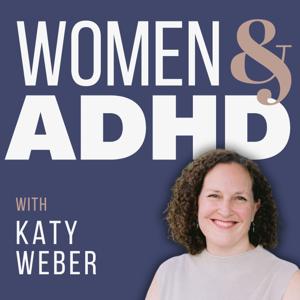
By Katy Weber
A late diagnosis turned her world upside down. Now Katy Weber interviews women who discovered they have ADHD in adulthood, while exploring the topics and life experiences unique to adult-diagnosed
... more

4.9
613613 ratings


The podcast currently has 219 episodes available.
The most played episodes among Podcast App listeners.
Episode 216 with Elizabeth Ahmann & Micah Saviet Elizabeth Ahmann, ScD, RN, PCC, NBC-HWC is an ADHD and health and wellness coach, professor, researcher, and Micah Saviet, LCSW-C, NBC-HWC is a trauma-informed, neurodiversity-affirming clinician. Their book, Flourishing with Adult ADHD, offers a research-informed, strengths-based, and trauma-informed framework for supporting adults with ADHD beyond symptom management. Grounded in neuroscience, psychology, public health, and wellness research, the book challenges deficit-based models and provides practical, affirming guidance for professionals supporting adults with ADHD. Rather than focusing solely on coping strategies, this book centers flourishing — supporting adults with ADHD in developing self-trust, self-compassion, emotional regulation, clarity, and lives aligned with their values. We talk about how coaching and therapy can work together, why Liz and Micah originally wrote the book for clinicians but found it resonated with adults with ADHD, and their hopes for the future of ADHD care, from better training to broader acceptance. Key topics:Micah shares that he was diagnosed with ADHD at age 11 and describes how his hyperactivity was noticeable early on.Liz explains that she has not been diagnosed with ADHD, but family experience, especially with her husband, led her into ADHD coaching.The conversation reframes ADHD as a difference in attention and regulation, not simply a deficit.Micah and Liz explain that their book grew out of research on ADHD coaching and focus groups with experienced coaches.Shame comes up repeatedly as one of the biggest barriers to growth, self-understanding, and flourishing for adults with ADHD.They emphasize that many therapists and coaches still lack meaningful training in ADHD, especially adult ADHD, masking, and neurodivergence.The episode draws a clear distinction between a deficit-based medical model and a client-centered, strengths-based approach.They discuss how coaching and therapy can complement each other rather than compete, especially when grief, trauma, and executive functioning challenges overlap.Validation, self-compassion, psychoeducation, and mindfulness are presented as foundational tools for helping clients move away from self-criticism.The conversation also addresses diagnosis, stigma, trauma, education trauma, and the social conditions that can make ADHD feel more impairing than it is in isolation. Website: https://www.pathways-ahead.com/ ; https://www.adulttraumaandadhdsolutions.com Instagram: @adulttrauma_adhdsolutions LinkedIn: https://www.linkedin.com/in/micah-saviet/ ; https://www.linkedin.com/in/lizahmann/ Links & Resources:Flourishing with Adult ADHD: The Evidence-Based Guide to Well-Being for Therapists, Coaches & ClientsKristin Neff’s self-compassion resources - - - - - Episode edited by E Podcast Productions - - - - - Women & ADHD coaching: www.womenandadhd.com/coaching - - - - - Work 1-on-1 with Katy: www.womenandadhd.com/katy - - - - - Order the “Hey, it’s ADHD!” course: www.womenandadhd.com/adhdcourse - - - - - Did you love this episode? Click here to pledge a one-time donation to the podcast! - - - - - If you are a woman who was diagnosed with ADHD and you’d like to apply to be a guest on this podcast, visit womenandadhd.com/podcastguest. Instagram: @womenandadhdpodcast Tiktok: @womenandadhdpodcast Twitter: @womenandadhd Facebook: @womenandadhd Advertising Inquiries: https://redcircle.com/brands Privacy & Opt-Out: https://redcircle.com/privacy

Episode 209 with Jenna Free “I think the biggest issue is with the current ADHD narrative. People are confusing ‘fight or flight’ and ADHD; they're putting it in a bundle and calling it ADHD. Then people believe, ‘Well, this is how hard it needs to be.’” Jenna is a therapist living in Calgary, Alberta, who not only specializes in ADHD but also has ADHD herself. Jenna was diagnosed with ADHD at 32 while in grad school with two young children – so yes, she gets the overwhelm. But instead of accepting the standard narrative that ADHD women are just destined to live in a constant state of frantic energy followed by crashes, she started asking a different question: What if the struggle isn't actually inevitable? What if what we're calling "ADHD symptoms" are actually signs of a nervous system stuck in chronic fight-or-flight? In this episode, we'll dive into Jenna's journey, her insights on ADHD regulation, and how she helps others through her ADHD regulation groups and certification program. We also chat about her brand new book, “The Simple Guide to ADHD Regulation: The Secret to Finding Balance, Getting Things Done, and Enjoying Your Life.” Key topics discussed: The difference between ADHD traits and fight-or-flight responsesInternal vs. external regulation strategiesWhy overwhelm is actually a cognitive distortion and sign of dysregulationThe role of belief work in nervous system regulationHow regulation can actually increase productivity and capacityThe power of group work for ADHD healingChallenging the narrative that ADHD struggle is inevitable Website: jennafree.com Instagram: @adhdwithjennafree Links & Resources: Jenna’s book: The Simple Guide to ADHD Regulation: The Secret to Finding Balance, Getting Things Done, and Enjoying Your Life Jenna’s podcast: ADHD with Jenna Free Dr. Anita Johnston's The Log - - - - - Episode edited by E Podcast Productions Find the transcript of this episode at www.womenandadhd.com/transcripts - - - - - Women & ADHD coaching: www.womenandadhd.com/coaching - - - - - Work 1-on-1 with Katy: www.womenandadhd.com/katy - - - - - Order the “Hey, it’s ADHD!” course: www.womenandadhd.com/adhdcourse - - - - - Did you love this episode? Click here to pledge a one-time donation to the podcast! - - - - - If you are a woman who was diagnosed with ADHD and you’d like to apply to be a guest on this podcast, visit womenandadhd.com/podcastguest. Instagram: @womenandadhdpodcast Tiktok: @womenandadhdpodcast Twitter: @womenandadhd Facebook: @womenandadhd Advertising Inquiries: https://redcircle.com/brands Privacy & Opt-Out: https://redcircle.com/privacy
Episode 214 with Dr. Brady Bradshaw In this special interview episode, guest host and ADHD Life Coach Lindsey Buchanan sits down with her sister, psychiatrist Dr. Brady Bradshaw, MD, for an honest, evidence-based conversation about ADHD and autism in girls and women. Drawing on both medical expertise and deeply personal experience — Lindsey has her own ADHD diagnosis and is the mother of a daughter with Level 1 autism — this episode covers the symptoms, the overlap, the myths, and the path forward for families navigating neurodivergence. In this episode, we cover: Autism in Girls & Women:Why ADHD in females is so frequently missed or misdiagnosedThe difference between how ADHD presents in boys vs. girls (external vs. internal symptoms)Key signs to look for: busy brain, daydreaming, excessive talking, forgetfulness, losing things, sleep disturbancesThe role of hormonal shifts (puberty, postpartum, perimenopause) in unmasking ADHD symptomsHow high intelligence and anxiety can "protect" ADHD girls from detection — but at a serious costWhat happens when smart girls hit the ceiling — the college transition and why it's a high-risk timeThe connection between undiagnosed ADHD and unhealthy coping mechanisms (vaping, caffeine, energy drinks)Why seeking a diagnosis doesn't automatically mean starting medication Autism in Girls & Women:The neurodivergence umbrella: understanding where ADHD and autism both fitThe important statistic: the majority of people with autism also have ADHD — but not vice versaUnderstanding Autism Spectrum Disorder Levels 1, 2, and 3 — and why Level 1 (formerly Asperger's) is so easy to missCore diagnostic criteria: deficits in social communication AND insistence on sameness/repetitive behaviorsHow masking works in autistic girls with high intelligenceWhy puberty is another "watershed moment" for autism diagnoses in girlsHow insistence on sameness and rigidity is anxiety-driven — and what it actually feels like for the childThe difference between ADHD rigidity and autism rigidity (and why it matters) Debunking Myths:The science is clear: vaccines do NOT cause autismWhy dietary changes (gluten-free, dairy-free) will not "fix" or cure autismThe role of food sensitivities in autism — and when to actually see a GI doctorWhy the desire to find a "cause" can lead families toward misinformation After the Diagnosis — What's Next:Why parent education and parent coaching is the highest-yield first stepHow ABA therapy may not be right for every Level 1 autism child (and what PDA — Pathological Demand Avoidance — means for treatment)The importance of speech therapy, OT, and physical therapy — when applicableWhy understanding a diagnosis is therapeutic in itselfLindsay's personal recommendation: the Mothers Together support group on Marco Polo Websites: bradybradshawmd.com ; womenandadhd.com/lindsey Links & Resources:Is This Autism? by Donna Henderson — recommended for understanding autism in girls and Level 1 autismADHD 2.0 by Ned Hallowell & John Ratey — Dr. Bradshaw's top ADHD book recommendation - - - - - Episode edited by E Podcast Productions - - - - - Women & ADHD coaching: www.womenandadhd.com/coaching - - - - - Work 1-on-1 with Katy: www.womenandadhd.com/katy - - - - - Order the “Hey, it’s ADHD!” course: www.womenandadhd.com/adhdcourse - - - - - Did you love this episode? Click here to pledge a one-time donation to the podcast! - - - - - If you are a woman who was diagnosed with ADHD and you’d like to apply to be a guest on this podcast, visit womenandadhd.com/podcastguest. Instagram: @womenandadhdpodcast Tiktok: @womenandadhdpodcast Twitter: @womenandadhd Facebook: @womenandadhd Advertising Inquiries: https://redcircle.com/brands Privacy & Opt-Out: https://redcircle.com/privacy
Episode 215 with Katy Weber & Kalin Johnson Welcome back to our new series, “Unmasking Our Health,” in which host Katy Weber teams up with medical expert Dr. Kalin Johnson, PharmD, to look beyond the neurodivergent brain and explore what it means to live in a neurodivergent body. After years of interviewing late‑diagnosed women and seeing the same patterns — chronic pain, fatigue, autoimmune issues, hormonal chaos, gut problems, “mystery” symptoms — Katy created the Unmasking Our Health series to explore the bigger questions behind neurodivergence: What if ADHD isn’t just about our brains, but about our whole bodies — and how and why is the medical system missing the full picture? In part one of a 2-part series, we unpack hypermobile Ehlers-Danlos syndrome (hEDS) and hypermobility, and why these connective tissue conditions so often show up alongside ADHD and autism. This episode focuses on the lived experience, the diagnostic gray areas, and the body-wide symptoms that can look unrelated until you understand the connective tissue thread running through them. We discuss how hypermobility is different from flexibility, why the Beighton score can miss real cases, and why symptoms like bruising, pain, dizziness, brain fog, and poor stamina often get mislabeled as “just clumsiness” or “just anxiety.” In this episode, we cover: The difference between hypermobility spectrum disorder and hypermobile EDS, including the extra diagnostic criteria for hEDS beyond joint laxityKalin explains the difference between flexibility and hypermobility using the rope-versus-bolts analogyThe Beighton score is helpful as a screening tool, but it only checks five joints and can miss people whose hypermobility shows up elsewhere, especially with ageKalin shares her diagnosis story, including years of worsening symptoms, specialist dead ends, and being told it was mental health before the physical pattern was recognizedWe discuss why ADHD and autism appear more often in hypermobile people, with possible shared genetics, connective tissue differences in the brain, autonomic nervous system dysregulation, and altered sensory processingThe connections between hEDS and POTS, orthostatic intolerance, fatigue, GI symptoms, interoception differences, mast cell issues, and inflammationCommon real-life clues like “party tricks,” joint pain in yoga, easy bruising, weak grip, poor stamina, and the feeling of being “a creaky old lady” after sitting too longWhy car rides, standing still, and long periods of upright posture can be especially hard because of blood flow, proprioception, and joint instabilityWhy some people with hEDS need more numbing medication at the dentist, and why urinary leakage, pelvic floor fatigue, and foot pain can all be part of the same connective tissue storyPractical next steps: track symptoms, document family history, protect joints and autonomic function, and look for a provider or physical therapist familiar with hEDS Note: Nothing in this episode constitutes medical advice. Always consult with your physician and pharmacist before starting, stopping, or changing any medication. Kalin’s website: kalinjohnson.com Instagram: @kalinpharmd Links & Resources:NYT Magazine article: Inflammation Keeps Us Alive. It's Also Making Us Sick.ADDitude Magazine: Bendy Bodies, ADHD Brains: Connecting the DotsThe Beighton Scoring SystemHypermobility Screening ToolGrowing Up with Ehlers-Danlos Syndrome: 27 Telltale SignsHave a topic you want Katy and Kalin to cover? Contact us - - - - - Episode edited by E Podcast Productions - - - - - Women & ADHD coaching: www.womenandadhd.com/coaching - - - - - Work 1-on-1 with Katy: www.womenandadhd.com/katy - - - - - Order the “Hey, it’s ADHD!” course: www.womenandadhd.com/adhdcourse - - - - - Did you love this episode? Click here to pledge a one-time donation to the podcast! - - - - - If you are a woman who was diagnosed with ADHD and you’d like to apply to be a guest on this podcast, visit womenandadhd.com/podcastguest. Instagram: @womenandadhdpodcast Tiktok: @womenandadhdpodcast Twitter: @womenandadhd Facebook: @womenandadhd Advertising Inquiries: https://redcircle.com/brands Privacy & Opt-Out: https://redcircle.com/privacy
Episode 203 with Dr. Anupriya Gonge. “For mothers, the executive functioning demands keep shifting. Just as you find your rhythm, everything changes again.” Dr. Anupriya Gogne is a board-certified addiction psychiatrist who specializes in women’s mental health, She is also the Division Director of Outpatient Psychiatry at Brown University Health in Rhode Island. Over the past eight years, she has worked closely with adult and perinatal women navigating a wide range of psychiatric challenges. After her own late-in-life ADHD diagnosis, Dr. Gogne began to reframe much of what she was seeing in her clinical work — particularly in high-achieving women who had spent years feeling overwhelmed, misunderstood, or misdiagnosed. This personal and professional insight led her to write the book “Neurodevelopmental Disorders in Adult Women: Special Considerations in the Perinatal Period,” which offers a clinical guide for trainees and practitioners and sheds light on the often-overlooked experiences of neurodivergent women and mothers. We discuss how ADHD often presents differently in women, especially during the perinatal period, and how executive dysfunction can be mistaken for laziness, depression, or character flaws. Dr. Gogne shares her own experience of being a high-functioning but chronically exhausted student and professional, and how the diagnosis helped her understand her lifelong struggles with attention, restlessness, and self-criticism. We talk about the gendered ways society responds to executive dysfunction in mothers vs. fathers, the importance of strengths-based and trauma-informed care, and the intersection of ADHD with culture, trauma, and hormonal transitions. Dr. Gogne also shares how cultural norms in India shaped her ability to mask and compensate for her symptoms, and why she believes ADHD is not a disorder, but rather a state of nervous system dysregulation that deserves more compassionate and individualized treatment. In this episode, we discuss: Dr. Gogne’s late ADHD diagnosis and its impact on her clinical workThe need for strengths-based, individualized approaches in perinatal psychiatryHow mothers and fathers experience executive dysfunction differentlyHow trauma and hormonal shifts intersect with executive dysfunction Website: https://www.brownhealth.org/providers/anupriya-gogne-md Links & Resources: Neurodevelopmental Disorders in Adult Women: Special Considerations in the Perinatal Period by Dr. Anupriya Gogne (Get 20% off with code: SPRAUT) - - - - - Episode edited by E Podcast Productions Find the transcript of this episode at www.womenandadhd.com/transcripts - - - - - Women & ADHD coaching: www.womenandadhd.com/coaching - - - - - Work 1-on-1 with Katy: www.womenandadhd.com/katy - - - - - Order the “Hey, it’s ADHD!” course: www.womenandadhd.com/adhdcourse - - - - - Did you love this episode? Click here to pledge a one-time donation to the podcast! - - - - - If you are a woman who was diagnosed with ADHD and you’d like to apply to be a guest on this podcast, visit womenandadhd.com/podcastguest. Instagram: @womenandadhdpodcast Tiktok: @womenandadhdpodcast Twitter: @womenandadhd Facebook: @womenandadhd Advertising Inquiries: https://redcircle.com/brands Privacy & Opt-Out: https://redcircle.com/privacy
The podcast currently has 219 episodes available.
1,332 Listeners
2,097 Listeners

3,598 Listeners
419 Listeners

38 Listeners
2,878 Listeners
709 Listeners
171 Listeners
178 Listeners

19,340 Listeners

284 Listeners
97 Listeners

24 Listeners
83 Listeners