
Sign up to save your podcasts
Or

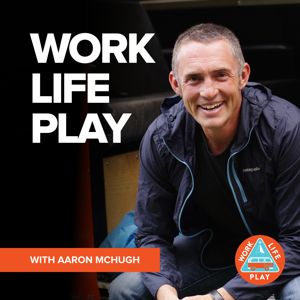


This is your permission slip to cut yourself some slack. Take a break. Take a day off. Skip school. Skip work. Wear flip-flops. Punt on a meeting. Say No. Don't go. Stay home. Call in sick. Be late. Take a nap. Do half as much and call it good enough. Tell "perfection" to take a flying leap. Go on a two-week vacation. Use your floating holiday tomorrow. See a movie at lunchtime. Stay in your jammies all day. Order pizza. Watch Netflix all day. Sleep in. Schedule a meeting in your work calendar titled "Strategy planning" and go take a walk outside. Take a nap in your car at lunch. Let the kids do their laundry. Order takeout. Cancel plans with friends. Don't attend the school fundraiser. Turn your phone off and let it go to voicemail. Go off the grid. Catch your breath. Be kind to yourself and say "enough, I'm tired."
If you wrote yourself a permission slip for rest, what would it say?
My guest today is Jesse Mecham, author of his new book You Need A Budget. The money powers our lives and is a resource required for living the life we want. Jesse's team, and I agree, believes that when you approach your money with intention, you can more predictably influence the desired outcomes. I love Jesse's message, and I'm convinced that regardless of how much or how little money we have, we can give our resources purpose and clarity.
Ben Moon is a Pacific City, Oregon based photographer and filmmaker who enjoys working with a diverse range of adventurers, athletes and musicians. Surviving cancer in his twenties inspired a greater connection and appreciation for others and the natural world. Ben finds human emotion to be a source of constant fascination. He is best known for his viral short film Denali, which explored the friendship between Ben and his dog. #DenaliFilm on Vimeo.com/122375452
Part 2 of my interview with Greg McKeown, author of Essentialism: The Disciplined Pursuit of Less. In this episode, he continues with practical advice on getting clear on the bigger picture and enabling for more regular course corrections. Even Greg struggles to be an Essentialist all of the time. Where and how do you start with Essentialism? How do you begin taking back control over the minutes and moments that you can influence? How to focus on the things you can control.
Download the full Q&A Essentialism Transformation guide at aaronmchugh.com/lessbutbetter
My interview with Greg McKeown, author of the New York Times Bestseller, Essentialism: The Disciplined Pursuit of Less, produced poignant questions that warrant an accompanying question guide. I believe lasting transformation can occur when we internalize these issues and principles. Greg delivered so much succinct and dense insights during our interview that I chose to break the conversation into two parts. I hope that you will earnestly consider the implications of these questions in your work, life and, relationships. What is Essentialism? "Essentialism is not one more thing-It's about a whole new way of doing everything. Doing less, but better, in every area of our lives." Our Challenge "We forget that we don't have to do what we've done in the past." The benefits of Essentialism "If you don't prioritize your life, someone else will."
Download the Transformation Q&A guide from my interview here.
Ashton Gustafson believes that there is more to life than prestige, accomplishment, trophies and ladder climbing. He believes that if we listen, taste, and smell the melody, the texture, and observe the nuances-we will find what we are all looking for. Ashton leads a rich podcast called Let The Music Play and has killer guests like Rob Bell and Richard Rohr to top chefs. Ashton loves life and is incredibly curious.
I have an experiment for you. I know the holidays are stressful, over-scheduled, over-spending, over-eating and lots of time with friends and family. Here's my idea-What if we left no good thing unsaid?
We spend a lot of time with family during the holidays, and that can be very stressful. I heard once, "The reason they know how to push your buttons is that they installed them." So if our buttons can be pushed quickly and we can push buttons with other people just as fast, what if we made a different choice this year? What if we lead with love and grace instead?
One Christmas I realized I'd not entirely told my friends and family how much I loved them, individually, why I loved them. I thought maybe Norman Maclean was right, "It is those we live with and love and should know who elude us." Why is it so difficult to speak a good word over the people we love most? At their funeral, we would gush "He was my favorite uncle, I loved how he always asked me about my life."
My challenge to us all is this holiday season, we write a note, a letter, a card an honorable toast we give an extra-long hug and tell the people that you love most why you love them. Sure it could go sideways, they could misunderstand, but I've found when your genuine motive is love, that's easy to receive openly. Hold your tongue on the tough stuff this year. Don't worry it will be there next year too :)
Say the good things that are true inside, but rarely are expressed to the people you love most. Don't wait until they are gone to say how much you love them. Take the opportunity to tell them how valuable they are to you now.
Guy Kawasaki was chief evangelist of Apple during the early 1980's Macintosh era. In this punchy, simple and short conversation Guy answers the following questions:
The full transcript from our conversation is available on the show notes here.
From the publisher's feed

15,993 Listeners

1,695 Listeners
41,409 Listeners

14,273 Listeners

1,393 Listeners
307 Listeners

111,863 Listeners

14,913 Listeners
37 Listeners

290 Listeners

2,215 Listeners

29,166 Listeners
509 Listeners
1,820 Listeners

4,228 Listeners