
Sign up to save your podcasts
Or



Based on Podcast App listening data
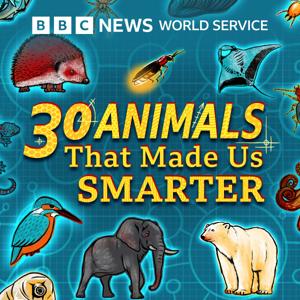
Get ready to meet 30 more amazing animals. From cats to camels, ants to elephants, discover the unexpected things they can do that have inspired new technologies that make us smarter. Season 2 begins on 28 June.
#30Animals
The "nerd-fest" live show! A scorpion and tarantula on stage, biomimicry bingo and animal music, recorded at the BBC Radio Theatre in London. Welcome to the season finale, with your suggestions of animals which are inspiring us.
When a fly hits a spider’s web the web sends vibrations to the spider crouched at its edge. This is known as remote sensing. The webs may help us design sensors to detect vibrations in the earth and the built environment. These vibrations could be turned into electricity. This could lead to small scale energy harvesting.
The wings of one of the most beautiful butterflies could transform paints and textiles. Scientists are fascinated by how the blue morpho produces its shimmering blue effect.
Unlocking the secrets of the dazzling colours in the tail of the peacock. It is designed to attract females but has caught the eye of scientists, as they mimic it to develop high-resolution reflective colour-screen displays.
How road, subway and computer systems could be helped by trails created by turtle ants.
Babies in the womb could be saved with the help of a glue based on proteins found in mussels. Performing surgery on foetuses in the womb is an astonishing medical feat but closing the delicate amniotic sac after surgery is difficult. A synthetic adhesive could do the job and help save lives of the youngest patients.
Imagine a building based on the shape of an egg – all thanks to the butterfly. Nature has long been a source of inspiration for the design of buildings, like the Sagrada Familia basilica in Barcelona. This is the story of a butterfly house inspired by the shape of the eggs of the White Royal butterfly and the patterns on their shells. www.bbcworldservice.com/30animals
The way dolphins communicate is being studied to create tsunami early warning systems. They produce click sounds to help navigate and hunt for prey. They listen back to the echoes to help create a 3D image and visualise their surroundings.
Picture the scene after a serious earthquake or a tornado. A flying robot inspired by bats could help survey the damage. There may be burst gas pipes, live electrical wires and many other dangers. Scientists have been studying bats to design an “eye in the sky” for use in exactly these situations.
From the publisher's feed
Amazing things humans have learnt from the animal kingdom. Inspiring, fascinating, bingeable.
Ranked by our users in the last 21 days

31,929 Listeners

7,568 Listeners

1,079 Listeners

873 Listeners

1,049 Listeners

5,524 Listeners

1,808 Listeners

1,794 Listeners

1,023 Listeners

2,015 Listeners

13,740 Listeners

1,183 Listeners

241 Listeners

111,727 Listeners
258 Listeners

852 Listeners

3,215 Listeners

1,006 Listeners

1,996 Listeners

15,582 Listeners

1,605 Listeners

2,827 Listeners

220 Listeners