
Sign up to save your podcasts
Or

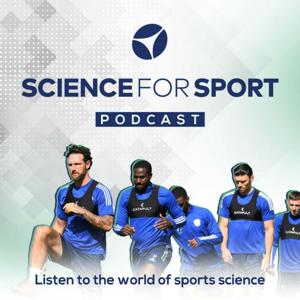

In this episode of the Science for Sport Podcast, Richard Graves is joined by Olympic silver medallist and high performance coach Eric Franke.
Eric competed for Germany in bobsleigh, winning Olympic silver in Pyeongchang 2018 alongside multiple World Championship medals across two-man and four-man competition. Since retiring from elite competition, he has moved into high performance coaching, working with athletes in speed development, sprint mechanics and sliding sports.
This conversation explores what it really takes to perform under Olympic pressure, the physical demands of bobsleigh, and why speed still doesn’t always get the attention it deserves in team sport environments.
Eric breaks down the qualities needed to accelerate a heavy sled on ice, the difference between being fast and being effective in a sport-specific context, and why developing speed requires more than simply adding sprint drills into a programme.
He also reflects openly on his own career, including the mistakes he made as an athlete, the value of testing and tracking progress honestly, and how his coaching philosophy has developed around communication, individualisation and helping athletes become more independent decision-makers.
For sports science professionals, coaches and practitioners working in elite sport, this episode offers a detailed look at speed development, athlete management, pressure, and the transition from elite performer to high performance coach.
In this episode you will learn
About Eric Franke
Since retiring from competition, Eric has moved into high performance coaching, with a particular focus on speed development, sprint performance and athlete decision-making. He works with athletes across different performance environments, including bobsleigh and skeleton, helping them improve physical qualities while developing a deeper understanding of their own training process.
His coaching approach is shaped by his own experience as an elite athlete, combining technical speed development with individualised communication, clear training frameworks and an emphasis on helping athletes become more self-sufficient.
FREE 7d SCIENCE FOR SPORT ACADEMY TRIAL
SIGN UP NOW: https://bit.ly/SFSepisode241
Learn Quicker & More Effectively
 View all episodes
 By Science for Sport

4.7
3232 ratings
In this episode of the Science for Sport Podcast, Richard Graves is joined by Olympic silver medallist and high performance coach Eric Franke.
Eric competed for Germany in bobsleigh, winning Olympic silver in Pyeongchang 2018 alongside multiple World Championship medals across two-man and four-man competition. Since retiring from elite competition, he has moved into high performance coaching, working with athletes in speed development, sprint mechanics and sliding sports.
This conversation explores what it really takes to perform under Olympic pressure, the physical demands of bobsleigh, and why speed still doesn’t always get the attention it deserves in team sport environments.
Eric breaks down the qualities needed to accelerate a heavy sled on ice, the difference between being fast and being effective in a sport-specific context, and why developing speed requires more than simply adding sprint drills into a programme.
He also reflects openly on his own career, including the mistakes he made as an athlete, the value of testing and tracking progress honestly, and how his coaching philosophy has developed around communication, individualisation and helping athletes become more independent decision-makers.
For sports science professionals, coaches and practitioners working in elite sport, this episode offers a detailed look at speed development, athlete management, pressure, and the transition from elite performer to high performance coach.
In this episode you will learn
About Eric Franke
Since retiring from competition, Eric has moved into high performance coaching, with a particular focus on speed development, sprint performance and athlete decision-making. He works with athletes across different performance environments, including bobsleigh and skeleton, helping them improve physical qualities while developing a deeper understanding of their own training process.
His coaching approach is shaped by his own experience as an elite athlete, combining technical speed development with individualised communication, clear training frameworks and an emphasis on helping athletes become more self-sufficient.
FREE 7d SCIENCE FOR SPORT ACADEMY TRIAL
SIGN UP NOW: https://bit.ly/SFSepisode241
Learn Quicker & More Effectively

1,995 Listeners

123 Listeners
318 Listeners
1,190 Listeners

8,674 Listeners
4,046 Listeners

8,018 Listeners

21 Listeners

657 Listeners
188 Listeners
556 Listeners

29,240 Listeners

334 Listeners

16 Listeners
42 Listeners