
Sign up to save your podcasts
Or

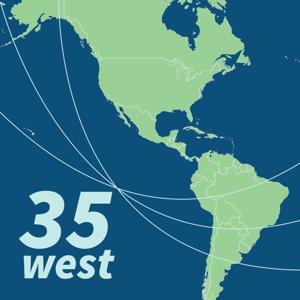


The past year has showcased both the resiliency and failures of democracies throughout Latin America and the Caribbean. With key elections coming up in 2022, the region will continue to grapple in meaningful and challenging ways with its democratic future.
In this episode Margarita R. Seminario sits down with Father Matthew Carnes, the interim director for academic affairs at the Georgetown Americas Institute. Together, they analyze the challenges and opportunities democracies faced in 2021, discuss how these will evolve in the new year, and highlight the role of civil society actors in safeguarding the region's democratic health.
In this special Spanish-language episode, Margarita R. Seminario sits down with Marcos Peña, principal investigator of a recently published CSIS report titled “A New Political Leadership for the Twenty-First Century.”
They discussed an alternative leadership model, one that is “more human, more collaborative, more group oriented, more connected with emotions, and humbler to be effective.” Their discussion focused on the nine dimensions that should be included in the democratic political leader’s toolbox and highlighted how these “tools” feed and complement each other. These tools also offer different ways to help leaders be more connected with their humanity and with their emotions, thus allowing them to be more effective in their roles and establishing a more sustainable balance in performing their job duties in the long term.
“Un nuevo liderazgo político para el siglo XXI.”
En este episodio especial en español, Margarita R. Seminario se sienta a conversar con Marcos Peña, investigador principal de un informe del CSIS recientemente publicado titulado “Un nuevo liderazgo político para el siglo XXI.”
Ellos conversaron sobre un modelo de liderazgo alternativo, uno que es “más humano, más colaborativo, más orientado a grupos, más conectado con las emociones y más humilde para ser efectivo.” La conversación se centró en las nueve dimensiones que deberían incluirse en la caja de herramientas del líder político democrático y destacó cómo dichas “herramientas” se complementan entre sí y ofrecen diferentes formas de ayudar a los líderes a estar más conectados con su humanidad y con sus emociones y, por lo tanto, ser más eficaces en su función y más sostenibles a largo plazo.
On Sunday, November 7, the Ortega-Murillo regime in Nicaragua held sham elections that reaffirmed the regime’s grip on power in the country. This is the latest in a series of efforts by the regime to consolidate authoritarianism in Nicaragua, following years of human and political rights violations.
In this episode, Ryan C. Berg sits down with Bianca Jagger, Founder and Chair of the Bianca Jagger Human Rights Foundation and a tireless defender of social justice in her native Nicaragua. Together, they discuss the consolidation of an authoritarian regime in Nicaragua and the role of the U.S. and the international community in restoring democracy to Nicaragua. Further, they outline concrete actions the international community can take to increase pressure on the Ortega-Murillo regime moving forward.
The Gallup Organization and several partner organizations produce the annual "World Happiness Report". This report seeks to measure wellbeing beyond GDP. The 2021 research focused on the effects of Covid-19 on the structure and quality of people's lives and evaluated how governments around the world dealt with the pandemic.
In this episode, Margarita R. Seminario sits down with Gerver Torres, a research adviser with the Gallup Organization to discuss the information and data behind the World Happiness Report and the impact of Covid-19 on different social groups in Latin America as well as the importance of government transparency and government responses to the pandemic. Further, they also discuss how this research may be used by governments in the region to develop public policies that capture the importance of the pursuit of happiness and wellbeing as a sustainable development goal.
The Maduro regime's environmental degradation in Venezuela is nearing a point of no return. The effects of this environmental assault are not contained within Venezuela's borders, and disproportionately affect Indigenous communities throughout the Amazon Basin. Ryan C. Berg sits down with Luis Felipe Duchicela, Senior Advisor for Indigenous People's Issues at the U.S. Agency for International Development, and Cristina Burelli, Director of the V5Initiative, to discuss the impacts of environmental degradation on Indigenous communities in Venezuela and throughout the Amazon Basin. Together, they highlight the cultural diversity found in the Amazon Basin, discuss the environmentally damaging policies and practices of the Maduro regime, and expound on the various impacts these have on Indigenous peoples. Further, they chart a path forward for an inclusive and sustainable recovery for Venezuela and the region, specifically highlighting the role of Indigenous communities in this process.
Recommendations for further reading
The threats from hurricanes, the losses to floods, and the lack of disaster preparedness all impact on people’s decisions in the Northern Triangle to migrate to the United States. Margarita R. Seminario sits down with Dr. Betilde Muñoz-Pogossian, Director of the Department of Social Inclusion at the Organization of American States to discuss her recent publication “Environmental Explanations of Central American Migration: Challenges and Policy Recommendations". This report underscores how exposed Guatemala, El Salvador, and Honduras are to climate events and how, compounded with lack of economic opportunities and security vulnerabilities, climate change impacts their decision to migrate to the United States. Furthermore, it provides specific policy recommendations on a whole-of-government and whole-of-nation approach to respond to climate-related drivers of migration.
Margarita R. Seminario sits down with Moises Rendon, CSIS Senior Associate and the former director of the Future of Venezuela Initiative. Moises introduces the world of cryptocurrencies and outlines key differences between decentralized and public currencies, such as Bitcoin, and state-sponsored cryptocurrencies, like the Venezuelan Petro. They discuss why cryptocurrencies have become so popular in Venezuela, and how they are transforming the humanitarian sector.
This episode was first released on March 18, 2021.
On July 28, Pedro Castillo Terrones, was inaugurated as Peru’s 63rd constitutional president. Castillo’s victory came after a highly contentious electoral process that was characterized by health and safety concerns due to the Covid-19 pandemic and false accusations of electoral fraud. Castillo ultimately won by 44,263 votes. In this episode, Margarita R. Seminario sat down with Dr. Jo-Marie Burt of George Mason University and discussed how a rural schoolteacher and union leader like Castillo captured the imagination of poor, rural, indigenous Peruvians who have lived excluded and marginalized for decades. Dr. Burt shared her insights on the recent elections, what to expect during the first 100 days of the Castillo administration, and she highlighted some policy concerns and recommendations for the US government regarding engagement with Peru.
Dr. Burt also recently published a book called “Transitional Justice in the Aftermath of Civil Conflict Societies: Lessons from Peru, Guatemala and El Salvador” found here: http://www.dplf.org/sites/default/files/pictures/transitional_justice_final.pdf
Haiti on a good day is highly complex. The recent set of events triggered by the assassination of President Jovenel Moïse created a power vacuum and threw the Caribbean nation into even deeper turmoil. Margarita R. Seminario sits down with Georges A. Fauriol, Senior Associate at the Center for Strategic & International Studies, to discuss the current crisis in Haiti and how key actors, like the Haitian government, civil society, private sector, and the international community, can play an effective role in sketching a more stable path forward. Fauriol also sketches recommendations for the Biden-Harris administration and the U.S. Congress.
Margarita R. Seminario sits down with Michael Eddy, Acting Deputy Assistant Administrator for the Latin America and the Caribbean Bureau of the U.S. Agency for International Development to discuss Illegal, Unreported, and Unregulated (IUU) Fishing in the Western Hemisphere. Highlights of their conversation include: who is impacted by IUU fishing and how, the challenges of combatting IUU fishing, the importance of multilateral efforts and interagency collaboration, as well why this is a priority for the Biden-Harris administration.
This podcast was made possible through the generous support of the U.S. Agency for International Development through Environmental Incentives. To learn more about the work of the U.S. Agency for International Development on IUU Fishing, please go to: https://www.usaid.gov/biodiversity/illegal-unreported-and-unregulated-fishing
From the publisher's feed

7,587 Listeners
250 Listeners

599 Listeners

1,055 Listeners

141 Listeners

772 Listeners

718 Listeners
2 Listeners

152 Listeners
6 Listeners
85 Listeners
17 Listeners

364 Listeners

402 Listeners
1 Listeners

143 Listeners
27 Listeners

21 Listeners
25 Listeners
490 Listeners

494 Listeners
4 Listeners

478 Listeners
2 Listeners
15 Listeners
5 Listeners

265 Listeners
47 Listeners

0 Listeners
3 Listeners
13 Listeners
9 Listeners
4 Listeners
1 Listeners