
Sign up to save your podcasts
Or

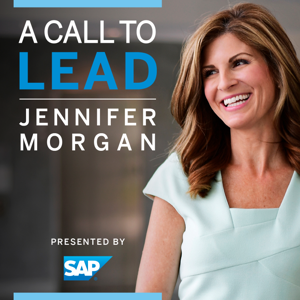


Today on A Call to Lead, we have a very special guest: Dr. Jill Biden. Dr. Biden's Memoir, Where the Light Enters, was released earlier this month and I hosted her for a live discussion several months ago at SAP's North America Headquarters near Philadelphia. During the eight years that Jill served in the Obama White House where her husband, Joe, was Vice President, Jill advocated for military families, women and children, STEM education, and more, while never pausing her career as a teacher. Then and now, Jill teaches English at a community college in the suburbs of Washington, D.C. In this interview, she talks about learning leadership from remarkable people, some famous and many more not famous at all. And she shared her view of the famously close relationship between former Vice President Biden and former President Obama. Here are five points that my team and I found valuable to share with you:
You can learn more by visiting: www.sap.com/acalltolead. And you can subscribe and listen to episodes on Apple Podcasts, Google Play, Spotify, and Stitcher. We welcome your feedback on the pod! Tweet me @JenniferBMorgan and use the hashtag #acalltolead or e-mail us at [email protected].
Where to Listen: Subscribe and listen to episodes on Apple Podcasts, Google Play, Spotify, and Stitcher.
---
Jennifer Morgan is a member of the Executive Board of SAP SE and President of SAP's Cloud Business Group.
I hope you enjoy Part 2 of my conversation with Malcolm Gladwell recorded during a recent live podcast taping. Celebrated journalist, best-selling author, and keen observer of the ways that people lead and succeed, Malcolm continues, in this Q&A portion of our discussion, to talk about how leaders, in every profession, should think about changing how and where we find talent. Here are two interesting points from Malcolm to add to the five points that I shared with you from Part 1 of the interview.
Malcolm shared his view on building a truly diverse team, pointing out that getting this right starts with the right definition of what it means to have a diverse team. "A lot of what we're seeing in the diversity problem is an artifact of the way we choose to look.... building a diverse workforce is made infinitely easier once you change your definition of who you're looking for."
Malcolm also talked about how institutional cultures can harden over time – and that change agents and leaders, particularly those in long-established organizations, have to look for openings and opportunity to drive change. "Institutional cultures are enormously durable. They come with a set of expectations, assumptions, patterns, and practices that persist long past their sell-by date and long past their usefulness. The trick for companies that want to change is to exploit moments of opportunities for transformation."
On this week's episode of A Call to Lead, I talk with Malcolm Gladwell, renowned journalist and best-selling author who is one of the world's foremost observers of how we live and work and lead. Malcolm has plenty to say, and it's all incredibly thoughtful, different, and relevant. He expounds on how people and businesses function amidst tech revolutions and demographic booms. He riffs on how perhaps arbitrary rules change outcomes of chess championships, LSAT scores, and potential careers. And he explains why we may need "a major re-evaluation, in every profession, of where we find talent." Malcolm and I cover that and much more. It was such a great conversation that we'll release it in two parts with the second episode dropping in the coming days. Here are five nuggets that my team and I find particularly intriguing from part 1.
You can learn more by visiting: www.sap.com/acalltolead. And you can subscribe and listen to episodes on Apple Podcasts, Google Play, Spotify, and Stitcher. We welcome your feedback on the pod! Tweet me @JenniferBMorgan and use the hashtag #acalltolead or e-mail us at [email protected].
Where to Listen: Subscribe and listen to episodes on Apple Podcasts, Google Play, Spotify, and Stitcher.
---
Jennifer Morgan is a member of the Executive Board of SAP SE and President of SAP's Cloud Business Group.
On this new episode of A Call to Lead, you'll meet Dana Perino. Dana has seen leadership from some very interesting and unique vantage points. She served as the first female White House press secretary in a Republican administration for President George W. Bush. Today, Dana is a bestselling author, mentor, podcast host, anchor of Fox News' The Daily Briefing with Dana Perino, and co-host of Fox News' The Five. In our conversation, Dana shares lessons learned from her career journey including time in one of the most high pressure, public jobs there is: White House Press Secretary. Here are five things that my team and I found particularly insightful:
You can learn more by visiting: www.sap.com/acalltolead. And you can subscribe and listen to episodes on Apple Podcasts, Google Play, Spotify, and Stitcher. We welcome your feedback on the pod! Tweet me @JenniferBMorgan and use the hashtag #acalltolead or e-mail us at [email protected].
Where to Listen: Subscribe and listen to episodes on Apple Podcasts, Google Play, Spotify, and Stitcher.
---
Jennifer Morgan is a member of the Executive Board of SAP SE and President of SAP's Cloud Business Group.
On this week's episode of A Call to Lead, you'll meet Bob Nardelli, who has an extraordinary breadth of expertise from a series of CEO jobs: GE Power Systems, then Home Depot, and then Chrysler. Bob, who spent three decades at GE, has an incredible perspective on business, operations, and leadership in times of disruption. Here, he shares lots of great advice about building teams and finding opportunity amidst near constant global change. Here are five things that my team and I found particularly insightful:
You can learn more by visiting: www.sap.com/acalltolead. And you can subscribe and listen to episodes on Apple Podcasts, Google Play, Spotify, and Stitcher. We welcome your feedback on the pod! Tweet me @JenniferBMorgan and use the hashtag #acalltolead or e-mail us at [email protected].
On this week's A Call to Lead, we bring you one of the greatest entrepreneurs and business builders the world has ever seen: Sir Richard Branson. I had the pleasure of talking with Sir Richard at a recent event hosted by SAP Qualtrics. We discussed what makes a great, creative leader and the gaps in consumer experience he saw and exploited in building the iconic Virgin brand and disrupting industries ranging from music to airlines to telecom to space travel. Sir Richard's team was kind enough to let us take a few of the highlights from our conversation and create a short episode of A Call to Lead. Here are five points that the team felt stood out from my conversation with this one of a kind businessman, adventurer, philanthropist, and global icon.
Balance and wellness start with the individual but scale with a global mindset. Sir Richard noted that at Virgin, "We have a something…where the first thing you do is draw a circle around yourself. You make sure that you're looking after yourself, that you find time to keep fit, to keep healthy. You get the right balance...Then increase the circle a bit bigger, around your family, around your friends...around your town, your country, and ultimately when you have a global brand, you can draw a circle around the world."
We've heard this from other guests before, but Sir Richard talked (again) about the importance of leaders stepping outside their opinions to listen, learn, and challenge their assumptions: "You've got to be a good listener. If you're running a company, or if you're running a department, you know what you think. You don't need to hear your own voice speaking."
Loyalty matters. But loyalty is earned by the small things. Sir Richard talked about how important it is to put a spotlight on the all-stars that come up with great ideas. "If somebody comes up with a good idea, write it down. Thank the person. Give them credit for the idea, and they will stay with your company. They'll be very loyal."
Culture matters and so does having an engaged workforce. Sir Richard talked about how that focus is pervasive at Virgin. "Everyday, you've got to be able to go into work feeling great about it. And if you feel that your company is not behaving in the right way, try to force change within your company. Ask the company to experiment."
Building a performance-driven culture means offering great experiences to your people. Sir Richard talked about how he encourages all the Virgin companies to offer unrestricted vacation time to all employees. "At Virgin, we encourage all our companies to give indefinite holiday time. Paid. People get the work done, and they give back 100% in return. So in treating people as adults, the company will get everything back from those people."
We hope you enjoy this episode! You can learn more by visiting: www.sap.com/acalltolead. And you can subscribe and listen to episodes on Apple Podcasts, Google Play, Spotify, and Stitcher. We welcome your feedback on the pod! Tweet me @JenniferBMorgan and use the hashtag #acalltolead or e-mail us at [email protected].
Where to Listen: Subscribe and listen to episodes on Apple Podcasts, Google Play, Spotify, and Stitcher.
---
Jennifer Morgan is a member of the Executive Board of SAP SE and President of SAP's Cloud Business Group.
On this week's episode of A Call to Lead, you'll meet Van Le, Co-Founder of Xinja. I sat down with Van on a recent trip to Australia, where Xinja is the country's first "neobank," empowering customers to bank 100% digitally, via a mobile app. Van is an expert on mobile technology and customer experience. She also has an inspiring personal story. She arrived in Australia as an 11-month-old refugee from Vietnam, grew up in Perth, got a law degree, and later traded law for entrepreneurship. I sat down with Van in Sydney, Australia. We shared ideas about technology, team-building, and the parallels between parenthood and leadership. Here are some highlights from what Van told me:
You can learn more by visiting: www.sap.com/acalltolead. And you can subscribe and listen to episodes on Apple Podcasts, Google Podcasts, Spotify, and Stitcher. We welcome your feedback on the pod! Tweet me @JenniferBMorgan and use the hashtag #acalltolead or e-mail us at [email protected].
This week on A Call to Lead, you'll meet Julie Sweet, who is CEO of Accenture North America. Julie's story is remarkable. She was raised by hard-working parents who told their daughter that she could do anything. Julie ran with that ethos all the way to Columbia Law School and a partner position at law giant Cravath, Swaine & Moore. Then she did something really unconventional: Julie quit Cravath, joined Accenture as general counsel, and rose quickly to head Accenture's North American unit, where she oversees one of Accenture's largest, most strategically-important businesses. In this podcast, Julie talks about what we all have to do amidst the tech revolution and disruption: learn continuously, develop flexibility, welcome divergent views, and collaborate constantly. Here are five things that Julie said that struck my team as particularly interesting:
You can learn more by visiting: www.sap.com/acalltolead. And you can subscribe and listen to episodes on Apple Podcasts, Google Play, Spotify, and Stitcher. We welcome your feedback on the pod! Tweet me @JenniferBMorgan and use the hashtag #acalltolead or e-mail us at [email protected].
This week, A Call to Lead takes us to São Paolo, Brazil, where I sat down with João Paulo Ferreira, the CEO of Natura, a fast-growing multi-billion-dollar beauty company that is both innovative and purpose-driven. João Paulo, a globetrotting former Unilever executive who goes by JP, drives purpose in so many ways—in the products Natura sells, in the way Natura operates its supply chain and its "social network" of salespeople , and even in the way the company operates its distribution center—highly customizing its facility for differently abled employees workers. JP offers fresh lessons in innovative, mission-driven leadership. Here are five points from our conversation:
You can learn more by visiting: www.sap.com/acalltolead. And you can subscribe and listen to episodes on Apple Podcasts, Google Podcasts, Spotify, and Stitcher. We welcome your feedback on the pod! Tweet me @JenniferBMorgan and use the hashtag #acalltolead or e-mail us at [email protected].
In the latest episode of A Call to Lead, I sat down with Sukhinder Singh Cassidy, who has seen it all in the tech and startup worlds. Sukhinder was an early leader at Google, where she headed Asia-Pacific and Latin America operations. She went on to run startups that merged tech and fashion (Polyvore and Joyus) before taking the helm of StubHub, the online ticket exchange company owned by eBay. On the side (because Sukhinder is a master multitasker, as we all aspire to be), she founded and has continued to build theBoardlist (an online platform to help women get on corporate boards) while she serves on the board of Urban Outfitters. I could give you a dozen pieces of leadership wisdom from this conversation with Sukhinder, but I'll keep the list to five points and hope you'll listen to the entire podcast to hear the rest.
1. Sukhinder talked about what she called "operating range," what she defines as one's ability to stay strategic or operate at a tactical level when needed. "One thing I look for in [people I hire] is a principle I call operating range—the ability to think about something at 30,000 feet and at 300 feet. The ability to roll your sleeves up and be at 30 feet if that's what it takes to get the job done."
2. We discussed how important it is as a people leader to let go of trying to manage everything and instead, try to build a team that will help manage your energy and focus. "When you're operating through other people, you have to decide whether you're managing everything or you're happy to let people manage you."
3. It's important to embrace being in situations where you're uncomfortable - it's those situations, and sometimes moments of failure when you learn the most. "Don't be intimidated by the thing you don't know. Try it. I guarantee you're going to come out of it having learned something you don't know today. And by the way, failure is quite okay."
4. Sukhinder and I both serve on the boards of large companies and we talked about the fact that the results are clear on diversity in the c suite and the boardroom - companies with more diversity (of all types) at the top drive better bottom lines and better results. "If you want to modernize the boardroom, you need to modernize who's in the boardroom - who brings perspectives that are relevant to these new challenges.
5. We discussed what a challenging operating environment it is for CEOs and executives today - the sheer number of stakeholders, variables, and risks, sometimes unforeseen, seem to grow each day. And you have to operate with your head up as a result. "If I'm just heads down and I'm not aware of all the forces going on around me, my ability to do my job is fundamentally altered because out of left field is going to come something at me, which I thought I was in control of—and lo and behold, I'm not. You have to know when to be heads up. You have to know when to be heads down.
You can learn more by visiting: www.sap.com/acalltolead. And you can subscribe and listen to episodes on Apple Podcasts, Google Podcasts, Spotify, and Stitcher. We welcome your feedback on the pod! Tweet me @JenniferBMorgan and use the hashtag #acalltolead or e-mail us at [email protected].
From the publisher's feed

16,055 Listeners
1,459 Listeners
16,852 Listeners
1,653 Listeners
3,979 Listeners

8,527 Listeners
9,070 Listeners

10,186 Listeners
2,207 Listeners
640 Listeners
179 Listeners

214 Listeners
156 Listeners
381 Listeners

720 Listeners