
Sign up to save your podcasts
Or

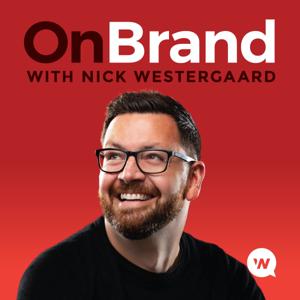

“My whole life has been a big improvisation — I follow my nose.” Improvisation has played a big role in Alan Alda’s career in more ways than one. From his early theatrical work to founding the Alda Center for Communicating Science to his latest book — If I Understood You, Would I Have This Look on My Face? The one, the only Alan Alda is On Brand this week (as Alan jokes, “I only brought one of me!”).
About Alan Alda
Alan Alda has earned international recognition as an actor, writer, and director. He has won seven Emmy Awards, received three Tony nominations, is an inductee of the Television Hall of Fame, and was nominated for an Academy Award for his role in The Aviator. Alda played Hawkeye Pierce on the classic television series M*A*S*H, and his films include Crimes and Misdemeanors, Everyone Says I Love You, Manhattan Murder Mystery, Bridge of Spies, and many more.
Alda is an active member of the science community, having hosted the award-winning series Scientific American Frontiers for eleven years and founded the Alan Alda Center for Communicating Science at Stony Brook University. Alda is the author of three bestselling books, If I Understood You, Would I Have this Look on My Face?, Never Have Your Dog Stuffed: And Other Things I’ve Learned and Things I Overheard While Talking To Myself.
Episode Highlights
Avoiding lecture mode. “I’ve interviewed hundreds of scientists.” However, Alda found that often, when explaining their work they go into “lecture mode.” That’s where you need to focus on relating instead of just communicating.
On relating vs. communicating. “Relating is everything. Communication is developing the best possible way to say something. But is the audience getting it? Do they understand what they need to understand? It’s not-relating vs. relating.”
Order matters. “Start with a story that matters to your audience.” This might not be the order that you would first think of to tell your story in.
Why you should care about empathy. After talking with Alan, I’m inclined to stop using the word ‘target’ in reference to an audience. Instead, think of them as a communications partner. “Empathy means including the other person in your presentation. You need to practice over and over.” Not just your presentation but empathy, reading the other person. “It’s not about you. It’s about them. Focus on what the other person needs. That’s what a good salesman does.”
To learn more, go to alanalda.com and the Alan Alda Center for Communicating Science.
Learn more about your ad choices. Visit megaphone.fm/adchoices
 View all episodes
 By Nick Westergaard

4.8
9393 ratings
“My whole life has been a big improvisation — I follow my nose.” Improvisation has played a big role in Alan Alda’s career in more ways than one. From his early theatrical work to founding the Alda Center for Communicating Science to his latest book — If I Understood You, Would I Have This Look on My Face? The one, the only Alan Alda is On Brand this week (as Alan jokes, “I only brought one of me!”).
About Alan Alda
Alan Alda has earned international recognition as an actor, writer, and director. He has won seven Emmy Awards, received three Tony nominations, is an inductee of the Television Hall of Fame, and was nominated for an Academy Award for his role in The Aviator. Alda played Hawkeye Pierce on the classic television series M*A*S*H, and his films include Crimes and Misdemeanors, Everyone Says I Love You, Manhattan Murder Mystery, Bridge of Spies, and many more.
Alda is an active member of the science community, having hosted the award-winning series Scientific American Frontiers for eleven years and founded the Alan Alda Center for Communicating Science at Stony Brook University. Alda is the author of three bestselling books, If I Understood You, Would I Have this Look on My Face?, Never Have Your Dog Stuffed: And Other Things I’ve Learned and Things I Overheard While Talking To Myself.
Episode Highlights
Avoiding lecture mode. “I’ve interviewed hundreds of scientists.” However, Alda found that often, when explaining their work they go into “lecture mode.” That’s where you need to focus on relating instead of just communicating.
On relating vs. communicating. “Relating is everything. Communication is developing the best possible way to say something. But is the audience getting it? Do they understand what they need to understand? It’s not-relating vs. relating.”
Order matters. “Start with a story that matters to your audience.” This might not be the order that you would first think of to tell your story in.
Why you should care about empathy. After talking with Alan, I’m inclined to stop using the word ‘target’ in reference to an audience. Instead, think of them as a communications partner. “Empathy means including the other person in your presentation. You need to practice over and over.” Not just your presentation but empathy, reading the other person. “It’s not about you. It’s about them. Focus on what the other person needs. That’s what a good salesman does.”
To learn more, go to alanalda.com and the Alan Alda Center for Communicating Science.
Learn more about your ad choices. Visit megaphone.fm/adchoices
2,698 Listeners
518 Listeners
1,442 Listeners
1,932 Listeners
114 Listeners

1,258 Listeners
12,754 Listeners
8,748 Listeners

856 Listeners
1,018 Listeners
175 Listeners
354 Listeners
154 Listeners
361 Listeners
27 Listeners