
Sign up to save your podcasts
Or

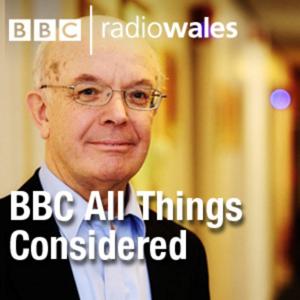


Jonathan Thomas and guests examine the life and legacy of Pope Francis, from his beginnings in Buenos Aires to his leadership as the head of the Catholic Church. The passing of the 88 year old Pontiff this week came the day after he offered his final Apostolic Blessing on Easter Sunday. Francis famously told all priests to be “shepherds with the smell of the sheep," to connect and empathise with the people they serve. Thousands flocked to Rome for his funeral yesterday; a public reaction that has been echoed globally. We hear of the public response to his death from those visiting St David’s Metropolitan Cathedral in Cardiff, and a group of young pilgrims visiting Rome. And we explore the hallmarks of Pope Francis' pontificate. How he will be remembered by both his supporters and critics?
We look ahead to the conclave – the election of a new Pope – and the global significance of this at a pivotal time in the Church.
With contributions from:
Archbishop Mark O'Toole, who mas made a Bishop by Pope Francis;
In recent years, mainline denominations in Wales have faced a continual decline. Meetings have been held to address these losses, focusing on training and retaining clergy, and utilizing church buildings as resources rather than burdens. However, earlier this month, the Bible Society released a report titled ‘The Quiet Revival,’ highlighting a surprising trend: many churches in England and Wales are experiencing growth, particularly among Gen Z. This demographic has shown a significant increase in church attendance, suggesting that things may not be as lost as they seem.
Our guest today is Owen Cottom. Seven years ago, Owen planted a church in Cardiff, which has grown to over 100 attendees on Sundays, representing more than 15 nations. His church is part of a global group of Charismatic Churches. Building on his success in Cardiff, Owen has helped plant another church in Blaenau Ffestiniog. This year, he published two books: one on pursuing a new day of mission and revival in Wales, and the other a series of prayers to accompany the first book. Owen is also part of 100iCymru (100 for Wales), a collective of church planters with a vision to plant 100 churches in Wales over the next 10 years.
In this interview we explore the way resurrection hope has shaped his ministry, what 100iCymru see happening around Wales, and their hopes for the future.
As the 'Strike' exhibition wraps up at Cardiff Museum, Azim Ahmed embarks on an exploration into the role of churches during the strikes. What actions did they take, and were they sufficient? Through this journey, we uncover covert meetings between church leaders and politicians, and the emotional tale of a Welsh politician who lost faith—both in the church and spiritually—due to its perceived silence. This narrative shines a light on power, faith, and the complexities of moral responsibility in times of upheaval.
For centuries the singing of psalms has been a cornerstone of Christian worship and in Wales today psalms are sung in the splendour of great cathedrals and in the quiet devotion of Catholic monasteries.
While the singing of psalms has long been cherished, in some churches and denominations psalm singing has been replaced by more modern songs and worship. But a new movement called 'Psalm Roars' is challenging that notion. Led by vicar Tim Vasby Burnie, 'Psalm Roars' aim to make psalm singing accessible to everyone, regardless of whether you have a musical background, and to encourage singing that is “enthusiastic, robust, loud, and inclusive.”
Jonathan Thomas attends a 'Psalm Roar' and meets enthusiastic people learning all about psalm singing. He speaks to one of the most pre-eminent modern hymn writers of today, Keith Getty, who sets psalms to music, bringing them to contemporary audiences. Jonathan visits Llandaff Cathedral and meets Stephen Moore, Director of Music, where psalms are sung daily by the cathedral choirs. At Belmont Abbey, Abbot Brendan Thomas explains the ancient tradition of psalmody in the Benedictine Order, where psalms have been sung since its foundation in the sixth century.
Neurodivergency is an umbrella term that includes people with Tourette’s, Autism, ADHD, Dyslexia and more. To mark ‘Neurodiversity Celebration Week’ Jonathan Thomas asks whether faith communities do enough to support people with additional needs.
Pembrokeshire born artist and writer Sophie Killingley has recently been commissioned to write a book, ‘Blessed are the Neurodivergent’. She shares her experience of raising her two Autistic children, and how churches could be more welcoming to all.
We visit ‘Little Cherubs’ in the Rhondda Valley, a group set up by Hannah Leyshon to support neurodiverse children and their families. We’ll hear from Methodist minister Jon Miller in Carmarthenshire, who’s found that his adult diagnosis has helped him understand how his mind works, and also to value the strengths neurodiversity can bring. We’ll ask what churches can do to be more accommodating to neurodiverse people, with advice from Anne Laure Jackson who runs a Sensory Healthy Church programme to help churches to be more inclusive. We hear from Emily Prance at St. Mark's Church in Cardiff about the changes they've made to help families with additional needs.
The Baptist Union of Wales has recently recognised a new type of minister. A 'Category 7 Minister' has a licence to pioneer. It may not be clear what a Pioneer Minister does, but there are more of them than we might think, across all the Christian denominations. For today's programme, Rosa Hunt travels to Anglesey and interviews 5 people involved in pioneering ministry.
We meet the Reverend George Bearwood in Holyhead, who as well as being an Anglican vicar, has his own heavy metal radio show; Rev Deb Stammers, a Baptist minister in Holyhead, who is also a pioneer worker in the small village of Llanerchymedd; John Hay, who wrote a feasibility study about the future of Methodist churches on the Island; Hywel Meredydd, who planted a new church nearly 50 years ago in Llangefni, in a church formally pastored by Christmas Evans; and Rachel Radbourne, who leads a growing church for young families.
Later this week, on March 8, we’ll celebrate International Women’s Day. It's a time to acknowledge the achievements of women, as well as championing equality. And today, on All Things Considered, in an episode originally broadcast in 2024, we consider the way women are presented in the New Testament, their place in Jesus’s ministry and the early church. We ask whether women were silenced in the Bible and explore the extent to which we have an accurate picture of the way the culture and the church viewed women, both then and now. To discuss these issues, Jonathan Thomas speaks with:
Helen Bond, Professor of Christian origins at the University of Edinburgh
Throughout history, faith-driven philanthropists, from the Cadbury family to the Aga Khan to the Bloombergs, have given generously to help those in need. But does wealth always lead to generosity? Is it possible to be wealthy and live according to faith values? And in an age of social media influencers and lavish lifestyles, how are young people’s financial values being shaped?
Azim Ahmed is joined by four guests to discuss the issues: Rhys Parry is a Christian business consultant known as the Money Monk and a trainee Anglican priest. Dr Asif Zaman is a principal lecturer and Head of Department at Cardiff Metropolitan University, with a specialism in Islamic Finance. Dr Gemma Simmonds is a sister of the Congregation of Jesus, Ecumenical Canon of St. Asaph Cathedral and a senior research fellow at the Margaret Beaufort Institute of Theology in Cambridge. Rabbi Raphael Zarum is a dean at the London School of Jewish Studies and currently holds the Rabbi Sacks Chair of Modern Jewish Thought.
It’s estimated that around 100 million people sing hymns by Keith and Kristyn Getty around the world each year. Originally from Northern Ireland, they now live in America, with their 4 children. And their songs are seemingly universal. According to Christianity Today, they’ve “changed the way evangelicals worship.” Across Wales, in English and Welsh, you won’t have to search far to hear a Getty hymn being sung on a Sunday morning.
‘What self-respecting murder mystery doesn’t have a priest.’ So said the Rev Lisa Coupland in the recent hit psychological reality TV series, The Traitors, where players have to decide who they can trust. The ‘Faithful’ spend their time trying to work out who the Traitors are, and the Traitors, ‘murder’ the Faithful one by one. It is a game that has taken the country by storm.
From the publisher's feed
Religious affairs programme, tackling the thornier issues of the day in a thought-provoking manner
Ranked by our users in the last 21 days

7,592 Listeners

369 Listeners

879 Listeners

1,042 Listeners

5,498 Listeners

1,793 Listeners
952 Listeners

1,825 Listeners

1,040 Listeners

2,089 Listeners

486 Listeners

2,009 Listeners

487 Listeners

110 Listeners

45 Listeners

166 Listeners
62 Listeners

727 Listeners

160 Listeners
136 Listeners

3,213 Listeners

718 Listeners

1,006 Listeners

15,589 Listeners