
Sign up to save your podcasts
Or

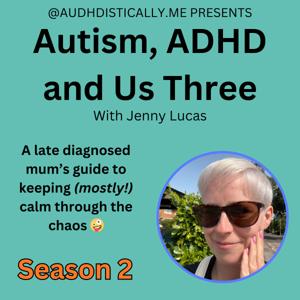


Welcome back to Autism, ADHD and Us Three.
In Season 4, Episode 3, Jenny is joined by Jen Bunting, the Sensitive Child Whisperer, who supports sensitive and neurodivergent children and their families through her CalmTalk method.
This conversation starts with anxiety, but quickly becomes something bigger: what happens when you spend years experiencing things intensely without having the language to explain why.
Jen shares what it was like growing up with anxiety that showed up physically as tummy aches, illness and overwhelm, while the adults around her struggled to understand what was happening. Jenny shares her own experience of debilitating anxiety after leaving Scotland for university at 18, and they explore how frightening it can be when your body is screaming that something is wrong but nobody, including you, understands what it means.
They also talk about the beliefs that can form underneath those experiences: I’m weird. I’m broken. There’s something wrong with me. I should be able to cope with this.
And then comes the really juicy bit: what if you stopped making yourself do things simply because that’s how people are “supposed” to do them?
From Jen deciding that supermarkets aren’t worth the sensory and emotional cost, to Jenny questioning why the fuck she was Marie Kondo-folding everybody else’s T-shirts when nobody else cared, this episode is about permission slips, people pleasing, masking, shame and learning to spend your limited energy on the things that actually matter to you.
They also explore how these beliefs begin in childhood, why behaviour often makes more sense when adults look beneath the surface, and how parents can help sensitive and neurodivergent children feel safer being exactly who they are.
Jen explains the thinking behind her CalmTalk method, her work with parents and practitioners, her children’s book Just As You Are, and the new book she is writing about beliefs, shame, masking and helping children develop a stronger sense that they are okay as they are.
Sometimes understanding your neurodivergence isn’t about discovering what you need to fix. It’s about realising you were never supposed to be living everybody else’s version of your life in the first place.
Useful links💜 Jen on Instagram: @thehighlysensitivechild
🌿 CalmTalk: https://calmtalkmethod.com
✨ Audhdistically Me: https://audhdistically.me
📱 Jenny on Instagram: @audhdisticallyme
autism, ADHD, AuDHD, neurodivergence, late diagnosis, anxiety, childhood anxiety, sensory overwhelm, shame, masking, people pleasing, core beliefs, self acceptance, unmasking, nervous system safety, neurodivergent children, neuroaffirming parenting, burnout, authenticity, CalmTalk method, Jen Bunting, Sensitive Child Whisperer, Autism ADHD and Us Three, Audhdistically Me, Jenny Lucas
```Welcome back to Autism, ADHD and Us Three. In this episode, Jenny is joined by children's nurse and sleep consultant Michelle Cyril to talk about neuroaffirming sleep and why traditional sleep advice often does not work for neurodivergent children and teenagers.
Michelle shares the moment she realised that the strategies she used professionally were not working with her own neurodivergent children. Together, Jenny and Michelle explore sensory regulation, busy brains and bodies, transitions, PDA and what it really means to work with a child's brain instead of against it.
Michelle also talks about the period she spent working with neurodiversity consultant Madeleine Woolgar, whose approach changed how she supports her own children. Madeleine's work is tailored to the individual family she is working with, so her specific recommendations are not covered here. Her details are in the links below.
Jenny and Michelle discuss why calm and stillness are not always the answer, how movement and sensory activity can help some children settle, and why your child's natural sleep window may look completely different from other children's. Michelle explains why an earlier bedtime does not necessarily mean more sleep and how parents can rethink routines, baths and expectations.
They also talk about the pressure parents put on themselves when sleep is difficult, why bedtime struggles are not a sign of failure, and how looking after your own regulation can make evenings easier for everyone.
Ultimately, neuroaffirming sleep is about understanding the child in front of you and creating routines that support their brain, body and nervous system.
Useful links
Family Sleep Specialist: https://www.familysleepspecialist.co.uk/
Michelle's free parent resource: https://familysleepspecialist.co.uk/Parent
Neurodivergent Sleep Help Facebook group: https://www.facebook.com/groups/neurodivergentsleephelp
Madeleine Woolgar, Neuro Embrace: https://www.neuro-embrace.com/
Madeleine on Instagram: https://www.instagram.com/neuroembracingmadeleine
---------------------------------------
Join Reclaim Yourself: https://www.audhdistically.me/join-the-membership
Work with Jenny: https://www.audhdistically.me/work-with-me
Positivity Pause newsletter: https://www.audhdistically.me/get-my-newsletter
Buy Jenny's book: https://amzn.to/4o58FQf
Audhdistically Me: https://www.audhdistically.me
Instagram: https://www.instagram.com/audhdistically.me
Keywords
Neurodivergent sleep, neuroaffirming sleep, autism sleep, ADHD sleep, AuDHD children, neurodivergent teenagers, PDA, bedtime routines, sensory needs, sensory regulation, busy brain at bedtime, sleep window, low sleep needs, teenage sleep, bedtime battles, neuroaffirming parenting, parenting neurodivergent children, nervous system regulation, neurodiversity consultant, Madeleine Woolgar, Autism ADHD and Us Three, Audhdistically Me, Michelle Cyril.
Welcome back to Autism, ADHD and Us Three. It's the first episode of Season 4 - can you believe it?!
In this episode, Jenny is joined by Daniel Curtis for a wide-ranging conversation about neurodivergence, diagnosis, masking, authenticity and what happens when you finally begin to understand yourself differently.
Daniel shares his experience of being diagnosed with ADD and the psychiatrist who told him, very bluntly, that he was “bluffing the world every day”. Rather than simply giving him a diagnosis and sending him on his way, she asked him a much bigger question: now that you know this about yourself, what are you actually going to do differently?
This episode explores masking, vulnerability, creativity, parenting neurodivergent children, the emotional impact of diagnosis and why there is no single correct way to process discovering that you are neurodivergent. Jenny and Daniel talk about the fear that can still surround diagnostic labels, why understanding a child’s neurodivergence can help us support them more effectively and the complicated mix of relief, anger, grief and self-understanding that can follow a diagnosis later in life.
They also explore why authenticity requires vulnerability, why we often connect more deeply with people who are willing to show their imperfections and how understanding yourself can change the way you move through the world.
The conversation turns to purpose, fulfilment and supporting other people through experiences you once had to navigate alone, as Jenny reflects on why so much of her own work comes from wanting other neurodivergent people to feel understood and less alone.
At the heart of the conversation is one simple idea: you do not need to have everything figured out. Sometimes you just need to work out what the next right thing is.
Useful links
Find out more about Daniel Curtis:
https://www.danielcurtishq.com/
Join the Reclaim Yourself membership waitlist or check whether doors are open:
https://www.audhdistically.me/join-the-membership
Work with Jenny, including 1:1 coaching and text coaching options:
https://www.audhdistically.me/work-with-me
Sign up for Jenny’s weekly Positivity Pause newsletter:
https://www.audhdistically.me/get-my-newsletter
Buy Jenny’s book:
https://amzn.to/4o58FQf
Visit Audhdistically Me:
https://www.audhdistically.me
Follow Jenny on Instagram:
https://www.instagram.com/audhdistically.me
Keywords
Late diagnosed autism, late diagnosed ADHD, AuDHD, ADD, adult ADHD diagnosis, adult autism diagnosis, neurodivergence, neurodivergent adults, masking, autistic masking, ADHD masking, unmasking, authenticity, vulnerability, self-discovery, neurodivergent identity, self-acceptance, late diagnosis, neurodivergent parenting, parenting autistic children, parenting ADHD children, diagnostic labels, autism diagnosis, ADHD diagnosis, neurodivergent creativity, executive functioning, mental health, personal growth, self-awareness, neurodivergent community, neurodivergent support, resilience, Autism ADHD and Us Three, Audhdistically Me, Daniel Curtis.
Welcome back to Autism, ADHD and Us Three. In this community Q&A episode, Jenny answers 10 questions sent in by listeners and Instagram followers about late-diagnosed autism, ADHD and AuDHD identity. This is the final episode of Season 3 as the podcast will be taking its summer break in July and August.
This episode explores the huge emotional reckoning that can come after diagnosis or self-discovery, including identity confusion, masking, self-diagnosis, exhaustion, executive dysfunction, relationships, friendships and redefining success on your own terms.
Jenny talks about why self-diagnosis is valid, why you are not lazy, why masking can be so hard to untangle and how late-diagnosed neurodivergent adults can begin building lives that actually respect their nervous systems, energy and needs.
If you have ever wondered who you are now, whether you have made it all up, why you are so tired or what success even looks like anymore, this episode is for you.
------------------------------------------
Useful linksJoin the Reclaim Yourself membership waitlist or check whether doors are open:
https://www.audhdistically.me/join-the-membership
Work with Jenny, including 1:1 coaching and text coaching options:
https://www.audhdistically.me/work-with-me
Sign up for Jenny’s weekly Positivity Pause newsletter:
https://www.audhdistically.me/get-my-newsletter
Buy Jenny’s book:
https://amzn.to/4o58FQf
Visit Audhdistically Me:
https://www.audhdistically.me
Follow Jenny on Instagram:
Keywords
Late diagnosed autism, late diagnosed ADHD, AuDHD, autistic ADHD adults, neurodivergent women, self-diagnosis, autistic self-discovery, ADHD self-discovery, masking, unmasking, executive dysfunction, autistic burnout, ADHD burnout, neurodivergent exhaustion, self-acceptance, neurodivergent identity, adult autism diagnosis, adult ADHD diagnosis, AuDHD relationships, neurodivergent friendships, sensory overload, late diagnosed AuDHD women, autistic women, ADHD women, Reclaim Yourself membership, Audhdistically Me, Autism ADHD and Us Three.
If you are parenting a disabled or neurodivergent child and sometimes feel like the world was not built with your family in mind, this episode will land.
In this episode of Autism, ADHD and Us Three, Jenny sits down with Dana Garrett to talk about parenting, advocacy, communication, community, and the very real emotional load of caring for a child with additional needs.
Dana shares her experience as the mother of a mostly non-verbal daughter, and opens up about everything from diagnosis and communication differences to sibling dynamics, self-care, and the power of creating stories that help children feel seen.
Together, they explore how behaviour is often communication, why caregivers need support too, and how inclusive books and communities can make life feel less isolating for families navigating disability and neurodivergence.
Inside this episode:
This is a warm, honest conversation about advocacy, resilience, and the need for families like ours to feel held, understood, and less alone.
🎧 Chapters
00:00 Introduction to Dana Garrett
01:40 Early Development and Diagnosis of Elena
05:26 Communication Beyond Words
09:42 Understanding Behavior as Communication
12:12 Advocacy and Navigating Social Situations
13:34 The Journey of Self-Publishing Children's Books
17:44 Supporting Siblings of Neurodivergent Children
20:46 Creating Inclusive Stories
24:03 The Importance of Community
27:29 Self-Care Strategies for Caregivers
33:21 Upcoming Retreats and Workshops for Caregivers
💛 Connect with Dana Garrett
Author website:
https://danagarrett.com
Rare Blooms Foundation:
https://rarebloomsfoundation.org
Instagram:
https://www.instagram.com/danagarrett/
Facebook:
https://www.facebook.com/danagarrett/
💫 Resources Mentioned
Elena and Wyatt's Adventures on Amazon:
https://www.amazon.com/s?k=Elena+and+Wyatt%27s+Adventures
Self-love journals for caregivers on Amazon:
https://www.amazon.com/s?k=self-love+journals+for+caregivers
Breathe: The New Science of a Lost Art by James Nestor:
https://www.amazon.com/dp/B07VJX4V4X
Coherent Breathing Technique:
https://www.ncbi.nlm.nih.gov/pmc/articles/PMC6362514/
💛 Work With Me & Next Steps
New here? Start here:
https://welcome.audhdistically.me/start-here
Sign up for The Positivity Pause newsletter:
https://www.audhdistically.me
Connect with me on Instagram:
https://www.instagram.com/audhdistically.me
Hello lovely humans, and welcome back to another episode of Autism, ADHD and Us Three. If you’re new here, I’m so glad you’ve found us. And if you’re a regular listener, thank you for being part of this space 💜
If you enjoy the podcast, it would mean the world if you could leave a quick review. It helps more people find these conversations and feel a little less alone.
In this episode, I’m joined by Yenn Purkis, an autistic and ADHD advocate, author of 18 books, TEDx speaker and PhD candidate. We talk about how Yenn was unexpectedly pulled into advocacy, and the moment that shifted everything for them. From there, we explore the realities of being visible, the impact of deficit-based narratives around autism, and why so many common assumptions about autistic people are still so harmful.
We also dive into gender identity, inclusion, and what it really means to stand up and be seen in a world that doesn’t always feel safe to do so.
This conversation is honest, thoughtful and at times challenging, but also incredibly grounding for anyone navigating identity, late diagnosis, advocacy or burnout.
00:00 Introduction to advocacy and autistic identity
01:34 The journey into advocacy
04:54 Writing as a tool for change
10:37 The evolution of public speaking
15:26 Changing perspectives on neurodiversity
19:39 Balancing advocacy and academia
20:36 Embracing passion and overcoming adversity
24:50 Redefining work and income streams
28:05 Identity and advocacy in the non-binary and asexual community
32:11 Navigating pushback and promoting visibility
34:52 Debunking myths about autism
41:51 Future aspirations and life philosophy
--------------------------------
You can find Yenn and their work here:
Website https://www.yennpurkis.com
Books on Amazon*https://amzn.to/4dg03Eg
If something in this episode resonated with you, I’d love you to share it with someone who might need to hear it too. And if you want more conversations like this, you can follow along wherever you listen to your podcasts.
*Affiliate links are used in these show notes.
If you thought finally getting your autism or ADHD diagnosis would feel like pure relief… and instead you feel exhausted, foggy, emotional or completely flattened… this one’s for you.
In this solo episode of Autism, ADHD and Us Three, Jenny breaks down something nobody really warns you about. The post-diagnosis crash.
She explains why so many late-diagnosed neurodivergent adults experience burnout after finally getting answers, and why this isn’t weakness, regression or you not coping well enough. It is physiology.
Jenny explores what happens inside the nervous system after decades of masking, hypervigilance and pushing through environments that were never built for your brain. She talks about the relief that comes with diagnosis, and why that relief can actually trigger shutdown, exhaustion and emotional fallout.
Inside this episode:
This episode is a permission slip to slow down. To stop turning yourself into a project. To let your body land after years of survival mode.
If you are in that shaky “who am I now?” space… you are not alone.
🎧 Chapters
00:00 Introduction and episode overview
01:05 Relief and the unexpected crash
01:34 Why burnout happens after diagnosis
02:30 What is happening inside the body and brain
03:34 Masking, hypervigilance and chronic stress
05:48 The nervous system under long-term pressure
07:42 Diagnosis as a circuit breaker
08:36 Physical signs of recalibration
09:29 Identity shifts and psychological changes
10:54 Grief after diagnosis
12:13 The post-diagnosis crash explained
12:53 ADHD hyperfocus and autistic deep processing
13:44 Medication and increased sensory awareness
15:09 Nervous system regulation and perceived regression
17:02 Acceptance and self-compassion
20:42 What to actually do during burnout
21:34 Myths about strength and recovery
22:55 Practical regulation and self-care
23:50 Small steps that help
24:46 Community and support
28:00 Final encouragement
💛 Work With Me & Next Steps
Join my free 5 day live experience Unlearning the Bullshit
https://welcome.audhdistically.me/unlearning-bs-registration
New here? Start here:
https://welcome.audhdistically.me/start-here
Sign up for The Positivity Pause newsletter:
https://www.audhdistically.me
Connect with me on Instagram:
https://www.instagram.com/audhdistically.me
In this episode, Jenny Lucas speaks with Leanne Tran, a registered psychologist specializing in assessments for autism, ADHD, and specific learning disorders. They discuss the importance of early diagnosis and support for neurodiverse children, the impact of parental neurodiversity, and the assessment process. Leanne shares insights on navigating the challenges of accessing support in rural areas and the significance of individualized support in schools. The conversation emphasizes the need for understanding self-identity in neurodiverse children and innovative approaches to parental support.Contact Leanne Tran:
https://learn.leannetran.com.au/
https://www.instagram.com/leannetranpsychology/
Contact Jenny Lucashttps://welcome.audhdistically.me/start-here
https://www.facebook.com/Audhdistically.me
https://www.instagram.com/audhdistically.me/
https://www.tiktok.com/@audhdistically.me
Keywords
neurodiversity, autism, ADHD, assessments, parental support, self-identity, rural access, school support, psychological assessments, early diagnosis
Chapters
00:00 Introduction to Neurodiversity and Early Support
02:48 Understanding Parental Neurodiversity
05:16 The Importance of Self-Identity in Assessments
08:00 Navigating the Assessment Process
10:35 Challenges in Accessing Assessments
13:15 Working with Schools for Support
16:02 The Role of Online Resources
18:45 Innovative Support Strategies for Parents
21:22 Conclusion and Resources for Families
In this powerful and deeply validating episode of Autism, ADHD and Us Three, Jenny is joined by TEDx speaker and bestselling author Taiba Bajar, whose personal and professional work has supported thousands of families navigating autism regression, burnout, and neurodivergent parenting.
Taiba shares her own son’s story of autistic regression which included a sudden loss of speech, connection, and developmental milestones, and the heart breaking gaslighting many parents face when they try to speak up about it. Together, she and Jenny explore the emotional toll of being dismissed, the grief of watching your child change before your eyes, and the quiet strength it takes to keep fighting for answers.
Taiba also breaks down her 7-Step Autism Action Plan, as featured in her book Unlock Autism: A Parent’s Guide to Help Your Child Recover Skills and Reduce Symptoms. From gut healing and oxytocin support to functional blood testing and nervous system care, she outlines practical, parent-led strategies that aim to reduce symptom severity without erasing identity.
This is not about fixing children. It’s about giving them the physiological safety and support to thrive and helping parents feel empowered instead of exhausted.
Keywords
Autism regression
Autistic burnout in adults
Neurodivergent parenting
Late autism diagnosis
Gut-brain connection
Unlock Autism book
Functional autism support
Symptom relief vs acceptance
Trauma-informed parenting
ADHD and sensory issues
---------------------------Website: www.autismbrainempowerment.comInstagram: https://www.instagram.com/autismbrainempowerment/LinkedIn: linkedin.com/in/taibabajar
If you’ve ever found yourself whisper-screaming “Why won’t they just DO it?” in the hallway while your child refuses to put socks on for the tenth time… this one’s for you.
In this episode of Autism, ADHD and Us Three, Jenny sits down with Emma McDonnell, a neurodivergent mother navigating life, education, and holidays with children who have Pathological Demand Avoidance (PDA) which is a profile of autism that turns traditional parenting advice completely on its head.
Emma shares her real, raw journey from career woman to full-time carer, unpacking the WTF is happening?! moments that come with raising PDAers, and the mindset shifts that helped her move from panic to presence.
Together, they explore:
– Why compliance isn’t the goal
– How self-compassion might actually be your best parenting strategy
– The emotional landmines of holiday expectations
– And why “well-being” doesn’t have to mean spa days or 5am journaling
This episode is a permission slip for anyone parenting neurodivergent children through systems that don’t understand them and doing it while running on fumes.
Keywords
PDA parenting
Autism and demand avoidance
Neurodivergent motherhood
Holiday stress & family dynamics
Mental health and well-being
Education & unmet needs
Trauma-informed parenting
Self-compassion for mums
Autistic children and school
Emotional regulation in ND families
-----------------------------
Email: [email protected]: emma-mcdonnell.comInstagram: @theemmamcdonnell
From the publisher's feed
251 Listeners

28,985 Listeners
306 Listeners

4,531 Listeners

18,833 Listeners
106 Listeners

497 Listeners