
Sign up to save your podcasts
Or

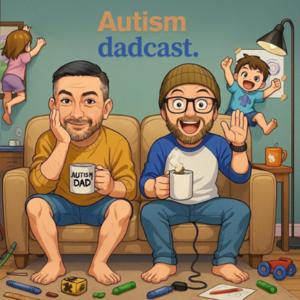


Fifty episodes in, and last week we asked for one thing: a party that would put a proper plan for SEND families on the table. This week, one did.
Gaz and Andy start with the Oxford Half Marathon and the £1,360 you helped raise for Ambitious About Autism, including one anonymous £700 that took the pressure right off. Thank you, whoever you are.
Then a listener in our Discord sent in Restore Britain's new SEND policy, and we read it line by line. A lot of it is common sense. Help without needing a diagnosis first. Timely assessments. An end to the postcode lottery. Units inside mainstream schools as well as more specialist schools. A big push on practical, hands-on learning, because school isn't for everybody, and some of the kids who got written off as trouble are running their own firms thirty years on.
Some of it raises hard questions. Who decides there is overdiagnosis? Who decides what a "genuine" disability is? Gaz puts it plainly: if you think there's overdiagnosis, show us the evidence. Andy makes the case for paying for help early, before a child who got none ends up somewhere far more expensive.
This is not an endorsement of any party. It is two dads asking every party to do the same thing: talk to the families it affects, and show us how it's costed.
Then, because last week got serious, your funniest stories. The dad on a work call who got handed something that wasn't a toy. The naked trip down the soft play slide. A lesson in what rhymes with duck. And the half-hour drive for Thomas's sausages that ended on the kitchen floor.
Timestamps
00:00 Cold open
00:19 Intro
00:27 Back from the Oxford Half, and £1,360 raised
04:04 The Indi app, and why we said yes
08:46 What we're wearing
10:13 A party finally publishes a SEND policy
12:42 Overdiagnosis: who decides?
14:01 Help without needing a diagnosis first
14:50 Timely assessments and the postcode lottery
16:00 More specialist schools, and units in mainstream
17:03 School isn't for everybody
19:12 The line that will divide people
24:15 Pay now, or pay for prisons later
25:30 Judging a party on one issue
29:18 Politically homeless
32:04 Your funny stories
32:36 The dad on the work call
36:30 What rhymes with duck
38:17 Backup sausages
39:45 You think it's only happening to you
40:52 Studio news, guests, and the book
Indi app: use code ADC40 for 40% off your first three months after the free trial.
Gaz and Andy are two dads raising autistic children, talking about the bits nobody else says out loud.
Link tree in bio.
Some families are now facing a two-year minimum wait just to be assessed for autism. Around 295,000 people are on the waiting list in England. A private clinic can do it in weeks, if you can pay.
Gaz and Andy start with the "golden ticket" debate. The diagnosis opens the door to support, so what happens to the families who cannot afford to skip the queue? Andy remembers the first time he filled in the benefits form for Lydia, writing down her worst day when every instinct as a parent was to build her up. Andy asks how often a private assessment ever says no, and Gaz looks it up while they record. Nobody is tracking it.
Then school. A new study links exclusion to worse mental health later on, and there is a big difference between a child who won't behave and a child who can't cope. Two hundred million pounds of new teacher training sounds good, but knowing what autism is and knowing what to do when a child will not walk into the classroom are two very different things. Andy says something he never expected to say: he feels lucky that Lydia's needs are so profound, because the children in between are the ones still fighting to be believed.
Along the way: feeling politically homeless as SEND parents, the petition that went past 100,000, and a fear only an autism parent would have. Not what is causing the power cut, but how you get your child through it. Gaz rings home in the middle of recording to sort it.
And the National Autistic Society now says autism is genetic. So why do so many of us still lie awake asking whether it was something we did?
Timestamps
00:00 Cold open
00:13 Intro
00:22 A week that flew by
01:13 A two-year minimum wait for an autism assessment
02:02 295,000 people on the waiting list
03:12 The diagnosis as a "golden ticket"
05:13 The form that makes you describe your child's worst day
07:11 Private diagnosis: how often does it say no?
09:03 Does money buy a faster route to support?
10:19 "She's fine at school. It's at home she isn't."
12:07 School exclusion: won't behave, or can't cope?
14:34 "Would you mind not bringing your child in today?"
16:20 £200 million for SEND teacher training
19:30 "I feel lucky her needs are so profound"
22:33 The teenager nobody believes
23:45 Politically homeless
27:39 What a real SEND policy would look like
34:33 The petition that went past 100,000
41:31 Stockpiling, and a power cut with an autistic child
45:39 Gaz rings home mid-episode
48:02 The National Autistic Society says autism is genetic
50:50 "Was it something we did?"
52:34 UK, US, Australia: everyone is waiting
53:29 Mailing list, guests, the studio and the Discord
55:25 The Oxford Half Marathon, and the fundraiser we forgot
Gaz and Andy are two dads raising autistic children, talking about the bits nobody else says out loud.
Everything we do is in the link tree in our bio.
Not the episode we planned to record.This week a three year old went missing from a playground in Suffolk and was found in a pond the next day. He was non-verbal, partially deaf and on the autism pathway. Thirteen hundred members of the public joined the search.This is not an investigation, and it is not a judgement on a devastated family. It is about a danger that thousands of families live with every single day and almost nobody is warned about: elopement.Elopement is when an autistic person leaves a safe space, a responsible adult or a supervised area without the knowledge or agreement of the person supporting them. It can look like bolting, slipping silently through an exit, following a strong interest, or getting away from something overwhelming. It is not naughtiness. It is not defiance. It is not proof that a parent does not care. And it is not something a child stops doing because you call their name.The numbers are hard to read. Forty-nine percent of autistic children aged four to ten have tried to leave at least once, four times the rate of their own brothers and sisters. Fifty-three percent went missing long enough to cause real alarm. The average time missing is 41.5 minutes. Sixty-five percent had a close call with traffic. Autistic children are 160 times more likely to die from drowning than other children.Gaz and Andy talk about their own near misses, why "never take your eyes off them" is useless advice, what actually lowers the risk, and the one warning every parent should be given on the day of diagnosis and never is.Replace judgment with awareness, and awareness with action.Timestamps00:00 Not the episode we planned04:30 Absconding, eloping, wandering: none of the words fit05:11 Ten seconds, and a barefoot run down the street08:19 Nobody tells you this on the day of diagnosis09:05 What elopement actually is, in plain English09:56 Calling their name does not stop them11:35 What pulls them: water, traffic, trains, and the way out13:47 Forty-nine percent, four times the rate, 41.5 minutes15:27 160 times more likely to drown16:27 Swimming lessons, and the risk they can create17:34 Reins, biting, and the grandparent problem19:30 The mental load: scanning gates, exits, roads and water21:28 "Never take your eyes off them"22:39 Safety comes in layers26:39 "Watch harder", trackers, and what they cannot do30:26 Why people reach for blame33:23 What families can actually do38:06 The photograph you take before you leave the house41:55 If your child goes missing, call 999 straight away44:32 Should elopement risk be written into an EHCP?48:17 Thank you to thirteen hundred people49:47 Replace judgment with awarenessFor Noah.Everything we do is in the link tree in our bio.
Andy put a post up asking autism parents to name the one fear they have never said out loud. 858 people answered, and 103 of them said almost exactly the same thing.
So we sat down and read them. Not the tidy ones, the ones people only admit when nobody can see their name next to it. Mourning the child you thought you were getting. Envying families who can wake up and just go somewhere. Feeling like you are managing your child rather than enjoying them. Wondering, honestly, what your life would look like if this had gone differently.
And underneath nearly all of them, the same question that every one of us circles back to at three in the morning: what happens to them after I am gone.
If you have ever had a thought you were ashamed of, this episode is 858 people telling you that you are not the only one who has had it.
Timestamps
00:00 Cold open
00:13 Intro
00:39 The Indi app and a summer of tracking
02:25 The post that got 858 replies
03:33 The child you thought you were getting
07:12 Watching other families do the ordinary
12:38 "It's not a superpower, and I'm tired of pretending"
16:00 Neuro spicy, and who gets to pick the words
23:11 Managing, not living
26:33 What it costs the other children
30:52 The fear nobody says out loud
32:47 What happens when I die
42:42 Studio news, guests, and the fantasy league
47:13 Why we now support a Serie B team in Italy
Gaz and Andy are two dads raising autistic children, talking about the bits nobody else says out loud.
Link tree in bio.
Robbie Williams announced at 52 that he is autistic, and said he has "a little bit of autism". Within a day the community had split over the phrasing.Gaz and Andy use it as a way into the question that keeps coming back. If one word covers Robbie Williams, and the same word covers Lydia, who is five, non-verbal and working with Makaton cards, does it still tell anyone anything? And if it doesn't, would splitting autism into levels help, or would it quietly move support away from the families already fighting hardest to get it?Along the way, Lydia brings her mum her shoes and says ""Daddy"" for the first time. Thomas drops his communication card in a packed Aldi, and two strangers know exactly what it is.Timestamps00:00 Robbie Williams, 52, and ""a little bit of autism""07:42 Has the word ""autism"" stopped meaning anything?09:23 ""I have to explain that she's not Robbie Williams""11:25 What levels would do to the families in the middle14:03 ""Mild"" autism, and who gets to decide it's mild16:25 Making profound autism visible enough to change policy18:16 Lydia brings her shoes and says ""Daddy""20:26 A spectrum ""widened to the point of collapse""21:53 Private clinics, and the money behind a diagnosis22:54 Should the diagnosis just be the starting point?25:21 Why is the EHCP process still on paper?26:58 The enemy isn't another autistic family30:11 Does ""autism"" tell you enough about the person?32:12 The autism community police35:04 ""Thomas isn't suffering. I am.""37:23 Aldi, and the stranger who knew what the card was for41:27 Who would be in charge of drawing the lines?44:23 If it's already split where you live, tell us how it works47:21 The autism dads' night out51:07 Country Fest, and two men judging dogsLink tree in bio.
Andy put a video up asking one question: which phrase from a professional never left you? His own was a paediatrician who would not answer whether Lydia was autistic, and instead said "we just need to ensure she reaches her potential, whatever that looks like."
Around 685 parents answered. It is the only post we have ever done that got more comments than likes.
So we sorted the lot and read them back. The denial, the low expectations, the gatekeeping, the ones that were meant kindly and landed like a brick, and the small number that got it exactly right. Over half of the worst of it came from a professional or a school. This one is heavy in places and very funny in others, and if you have ever been told your child does not look autistic, you are going to recognise most of it.
Timestamps
00:00 Thomas spells Playbarn on his iPad and reroutes the whole day
02:49 The video Andy posted, and the phrase that never left him
06:26 685 replies, and more comments than likes
07:30 The split: denial, low expectations, cruelty, blame
09:18 Over half of it came from a professional or a school
10:34 "He doesn't look autistic" and what spazzy is actually short for
15:10 The comebacks parents keep ready
15:48 The grandad in the supermarket
18:15 "Your autistic children may never thrive in school"
19:02 Why families actually want a diagnosis
22:35 "She isn't worth the funding" and the iceberg
23:24 "Masking is a skill you should be proud of"
24:38 The tongue tie nobody would treat
25:51 Written off, and proven wrong
32:05 The ones that were meant kindly
34:53 The worst thing anyone said
35:50 The comments about the comments
36:01 What autistic adults asked us to hear
37:38 The professionals who got it right
40:36 A diagnosis doesn't change who your child is
41:10 Hope without a promise
41:25 Eye contact, and who it is really for
45:04 Takiwatanga: in his or her own time
46:01 "So am I. Don't worry. We see each other."
47:20 Lydia's sleep, transitions and the summer holidays
Timecodes are taken from the raw recording and need tightening once the cold open is on the front of the final cut.
Latest episode in the link tree in bio.
Across the world, parents of autistic children are being offered something that
sounds almost miraculous. Clinics promise better speech, better eye contact,
calmer behaviour, and in some cases claim to repair or reverse autism. The price
runs from £10,000 to £40,000, and often more than once.
Over the last few months we've been approached by clinic after clinic wanting to
come on the show and sell it to you. We said no. Instead we went and read the
studies.
This one isn't about having a go at parents. Every parent looking at this is
acting out of love, and we've both been desperate enough to try anything. But
love doesn't mean a clinic gets to make huge claims without evidence. Stem cell
therapy is a legitimate area of research. It is not currently a proven treatment
for autism, and there's a difference between something being researched and
something being proven.
We also get into the ITV whistleblower, and the GB News piece asking whether
"those people" should have access to children.
Timestamps
00:00 Hope, science, or a very expensive gamble
02:21 We are not attacking parents
10:15 What autism actually is
13:18 What stem cells actually are
15:56 The 2017 Duke study, 25 kids and no placebo
18:47 The 2020 Duke study, and what it found
24:38 Claim: a 95% success rate
29:08 Why you'd swear blind it worked
31:45 Thomas and Lydia progressed. Neither had stem cells
35:37 Claim: it repairs the autistic brain
38:12 Claim: most children improve
40:45 Claim: our treatment is evidence based
43:02 The risks nobody puts in the brochure
48:00 What that money could buy instead
50:45 The influencer taking commission
54:02 Have a word with yourself
66:45 "Have you missed the treatment window?"
72:32 Myths and facts
82:55 The ITV whistleblower
86:50 GB News and "those people"
Latest episode in the link tree in bio.
This week Gaz and Andy sit down with Jolanta Lasota, Chief Executive of Ambitious about Autism, at their college in Isleworth. 16 years leading the charity and mum to a 21-year-old autistic son, Jolanta has seen the whole picture, from the early years right through to adulthood and employment.
We talk about why purpose matters more than exams, the young man who is non-speaking and holds down two jobs, the boy who was allowed to come to school in his pyjamas, and naming the grief nobody warns you about. Jolanta describes raising an autistic child as walking through woods with no path and no torch, and says the job is to be the one who carries the light. Honest, hopeful, and one of our favourite conversations yet.
Timestamps
- 00:00 Welcome, and where we are today
- 00:27 [GUEST]'s journey, 16 years at Ambitious about Autism
- 01:07 What's really changed in how we understand autism
- 05:57 The sensory pod that blew us away
- 06:58 The schools, the age groups, and post-19 provision
- 10:36 Why "purpose" matters more than a curriculum
- 12:20 "Walking through woods with no torch": what family life feels like
- 13:27 The non-speaking young man with two jobs
- 15:03 Are employers actually changing?
- 15:49 Policy, the white paper, and autism as a political football
- 20:06 Being the "happy helper", never enemy-ising people
- 22:14 What school looks like at four to seven
- 24:40 Focus on strengths, don't drill them on what they can't do
- 27:09 Gaz's own school story: six D's and learning differently
- 33:03 The weight of GCSEs and "lost leaders"
- 38:02 Don't underestimate them: the iPad "daddy" moment
- 40:28 Parents' guilt, and why it won't always be okay
- 43:47 Grief without a death
- 45:06 What's next for Ambitious about Autism
- 49:13 Thanks and close
Paul Mullin has scored goals in front of millions and become a household name through Welcome to Wrexham. But this one is about the part of his life the cameras rarely catch: being dad to Albi, his autistic son.
Gaz and Andy sit down with Paul for an honest, Albi-centric conversation about the regression that stopped his little boy in his tracks, the guilt that kept him up at night, and why he wouldn't change a single thing about his son. Plus the moment Albi found a way to tell him 'you're my best friend' without saying a word.
If you have ever felt like the only dad going through this, this one is for you.
Timestamps
00:00 Welcome Paul Mullin
01:00 The first signs, and Albi after his 12-month jabs
02:00 Regression: like a click of the fingers
04:00 The guilt, and crying himself to sleep
04:30 I wouldn't pay a penny to change him
05:35 Denial, and getting the diagnosis
07:20 Speaking about it on Welcome to Wrexham
08:24 The hope that kills you
11:38 Why 'he'll be fine' doesn't help
13:00 Did he grieve? The problem-solver dad
16:14 Being a footballer dad: time away and routine
19:12 How Albi communicates now
22:15 Holidays: frozen meals, dry ice and the airport
25:40 Coming home: holidays, holidays, holidays
27:50 Razor-sharp awareness: he just knows
29:20 The crafty negotiator: jet skis and boats
33:40 The best friend clip
35:07 Macho on the pitch, in tears at home
35:48 Autism in Racing and giving back
38:26 Nobody ever asks the dad how he is
43:00 Advice to a dad just starting the journey
New episodes of the Autism Dadcast every week.
Real talk, real dads, real autism.
Listen, follow and find everything in our link tree in bio.
One missed board and one wrong word at in the morning, and Thomas's whole morning falls apart.
This week Gaz and Andy unpack how much detail autistic kids track, why a single word can rewrite their day, and how much they understand even mid-meltdown.
Plus Lydia becomes swimmer of the week, the new-neighbour conversation every autism parent knows, and an honest, conflicted take on the under-16 social media ban and what it overlooks for autistic teens.Timestamps00:00 Charlie's shop opening and meeting Sophie the BTS superfan02:00 Lydia's swimming breakthrough: swimmer of the week03:40 Thomas's Monday meltdown: how one wrong word derailed the morning06:10 He knew the score: what the meltdown hid09:15 The new neighbour, the fence, and explaining autism again11:05 Attention to detail: the thing they do best14:35 The under-16 social media ban: where we land26:15 What the ban gets wrong about autistic kidsLatest episode and Discord in the link tree in our bio. Merch from Neurospicy & Co at neurospicyandco.uk, 10% off with code DADCAST.
From the publisher's feed

334 Listeners

915 Listeners
920 Listeners

25 Listeners
249 Listeners
326 Listeners
84 Listeners
25 Listeners
7 Listeners
27 Listeners
575 Listeners
88 Listeners
10 Listeners
26 Listeners