
Sign up to save your podcasts
Or

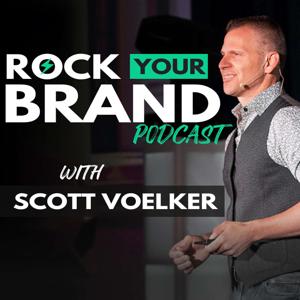


It’s Friday again. Do you know what THAT means? It means that it’s time for Scott Voelker to field your Amazon private label questions again… and it’s one of the highlights of his whole week. If you’re a seasoned Vet at private label sales, or brand new, chances are that you’re going to hear a question on these Friday “Ask Scott” episodes that helps you move your Amazon business forward. And if you’d like to ask your own question, Scott’s going to tell you how you can do that on this episode, so be sure to listen.
Have you heard of Scott’s “999 Method” of tracking your competitor’s sales?
A listener wants to know if there is a way he can estimate how much of a product is being sold by one of his competitors. There are all kinds of reasons you might want to do that, and Scott walks through them briefly on this episode. But he also points out two ways you can do that very thing, one using software (Jungle Scout) and another that you can do on your own, over a period of just a few days, and it will cost you nothing. Scott calls it the “999 method” and you’ll find out how you can do it, on this episode of The Amazing Seller.
I hear you talk about waiting for UPS to pick up some of your items. How do you get a UPS account and how much does it cost?
When the time comes to ship your products to Amazon’s warehouse, there are a couple of ways you can do it. First, you can load up the boxes in your car and drive them down to your nearest UPS store or packaging store and let them take it from there. Or, you can have UPS come to your house and pick up the products. If you’re only shipping one box, it may be a bit too costly to have them come to your house, but if you have multiple boxes, it may be the most cost effective. Hear Scott’s explanation of this simple task, on this episode.
I’m about to start using Amazon PPC. What kind of conversions am I looking for to know if I’ve got a good campaign going?
One of the most confusing parts of promoting your private label products on Amazon is learning how to build and manage effective pay per click campaigns. A listener who is just starting out on PPC asked what kind of conversion numbers she should be looking for from a campaign, and even though the variables are many, Scott’s got a general guideline that he suggests any Amazon seller should look for. He’s also going to explain what those numbers mean for you and your product sales.
Do you know how to dial in your Amazon PPC campaigns to be the most effective?
No matter how cool or beneficial your private label product is, you’ve got to get people to your product page before you’re going to make much profit selling it. That’s where Amazon PPC comes in (pay per click). It’s Amazon’s tool for placing advertising on a customer’s search results page that has to do with the items they are searching for… and it’s YOUR way to get your products seen by people who are looking for exactly what you’re selling. But PPC is not an easy thing to fine tune, and on this episode Scott walks you through the exact steps he uses when he’s setting up his own Amazon PPC campaigns.
.
OUTLINE OF THIS EPISODE OF THE AMAZING SELLER
It’s not uncommon for people who are thinking about starting an Amazon private label business to step into the ring expecting great things right away. It’s nice when that happens, but the truth is that it doesn’t happen very often. There’s lot of hard work required to get to the point that truly significant profit is coming in… that’s because most people don’t take into account the product costs, FBA fees, advertising costs, and other variables that bite into your profit margins. On this episode Scott reveals his December 2015 numbers, sales and costs, so you can get a realistic picture of what a successful Amazon business is really like.
The 4th quarter was not the outstanding success for Scott that some sellers experienced.
Most of the buzz in the Amazon sales community is that the 4th quarter is a time of incredible income and sales. The reason for the expectation is that Christmas (gift giving) is part of that time frame. While it is true that retail sales are generally much higher than normal, the 4th quarter is not that way for everyone. Scott’s one of those people. Why wasn’t it a big gain for him? The reason is very simple… and one Scott intended. What? Why would he intend to make less sales during the 4th quarter? Listen to this episode to find out his well reasoned purpose behind it.
One of the effects of competition in your niche.
When Scott first started his Amazon business in the fall of 2014, he got into a niche that didn’t have much competition. His products were seeing $10 to #12 margins regularly at that time. But as time has gone by more sellers have entered that niche area. As a result, the competition has become as much about pricing as anything else. What happens in that case? Everyone starts dropping their prices in an effort to get the lion’s share of the market, which isn’t really very good for anyone. Scott’s margins have dropped significantly since then. On this episode Scott talks for a good while about the dynamics of pricing wars and what you can do to protect yourself (and your private label products).
Why Scott believes it’s good to have a number of unique products for sale simultaneously.
It’s always better to NOT have all your eggs in one basket. Not only are you vulnerable to greater loss when your income is dependent on one product line, you’re also not enjoying the stability that can come from having multiple products. Why stability? Because the down trends in one niche will likely be offset by the “up” trends of products in another niche at any given time. That means your overall income is less of a roller coaster and more of a gentle incline. Scott’s got some intriguing thoughts on this subject and shares what he’s doing to expand his products on Amazon, so be sure you listen.
It’s easy to get discouraged when you’re selling private label on Amazon.
Almost every week in the TAS Facebook community somebody shares a screenshot of their product sales. It’s not uncommon to see $20K months, $30K months, and even more. It’s fine to have that as an ambition, but there are a few things you need to keep in mind so that you don’t become discouraged that your product sales are not at those levels. #1 - Those numbers don’t show all the fees and costs associated with making the sales. The actual profit is much less than those numbers. #2 - The people who are getting those kinds of sales have likely been working at it for a good deal of time. You can’t and shouldn’t expect your sales to match theirs right off the bat. And # 3 - well, you’ll have to listen to the episode to hear Scott’s other thoughts about this imp
Every person who lists a private label product on Amazon is playing in Amazon’s playground. That means Amazon makes the rules, and man, do they set the rules! There are all kinds of guidelines and rules that govern how you list your products and a host of other things. You want to make sure you’re doing things right. Amazon is not shy about banning people from their sales platform for breaking the rules. Recently, some changes are happening within those rules, and they’re things you need to know about if you’re going to stay within the guidelines. Today’s episode features Karon Thackston, an Amazon listings copywriter whose business creates done-for-you Amazon listings for sellers. She’s got the low down on all the changes, so make sure you listen.
Rolling it out changes a little bit at a time.Karon Thackston and her team deal with Amazon listings all day, every day. It’s their job to write incredible product descriptions and copy for Amazon sellers. As part of her role she interacts with seller support technicians often. Lately, she’s struck up a relationship with a support guy named Peter who’s been helping her address some of the inconsistencies within Amazon’s rules and system. Many of the changes we’re beginning to see are a result of these interactions. On this episode you’re going to hear how Amazon is rolling out small changes in certain product categories and how they might wind up being added to other categories as well.
Why do some product listings have images in their descriptions but I can’t put them in mine?Listing your products on Amazon means that you have to play by Amazon’s rules. One of those rules has to do with the way product listings are formatted. Up until this point, basic Amazon sellers are not allowed to put images within their listings. But you still see images in some listings. That’s because Amazon extends special privileges to big name brands and what they call A+ sellers, as well as their own Amazon branded listings. It’s somewhat of an unfair advantage those companies have, but again, it’s Amazon’s rules that govern the listings.
Character restrictions for bullet points in your product listing have changed!Previously, bullet points could only be so long, but Amazon has increased those (in certain categories) to 200 characters. Now your bullet points can be longer. But don’t get too excited. Today’s guest, Karon Thackston recommends that you not overstuff your bullet points with unneeded words and descriptions. She believes it will actually detract from your listing and cause shoppers to click away. Find out why she thinks so on this great interview episode of the Amazing Seller.
Entering your keywords on the Amazon backend is not as simple as it may look.There can be lots of confusion about what format your keywords should be in when you enter them in your product description. Should they be comma separated? What about spacing? Should I include multi-word keywords? These and other issues are very important because the Amazon software handles each of them differently. Karon Thackston is on the show today to clearly define these keyword issues to help you get your products seen and purchased. You’ll want to hear this one, for sure.
From the publisher's feed
Brand Creators is the podcast for coaches, consultants, and service professionals who want to build a business people know, trust, and buy from.
Hosted by Scott Voelker…
You'll learn how to leverage YouTube, podcasting, email marketing, partnerships, referrals, and evergreen content to create authority assets that generate leads and clients long after they're published.
If you're ready to stop chasing algorithms, posting every day, and wondering where your next client is coming from, you're in the right place.
Stop creating content. Start building authority.
3,442 Listeners

16,836 Listeners

4,575 Listeners
1,571 Listeners
192 Listeners

21,194 Listeners

14,171 Listeners

3,263 Listeners

3,066 Listeners
884 Listeners
317 Listeners
143 Listeners

945 Listeners

930 Listeners
154 Listeners